



























 Dar certo
 Meditação


 Podcast
  E-book


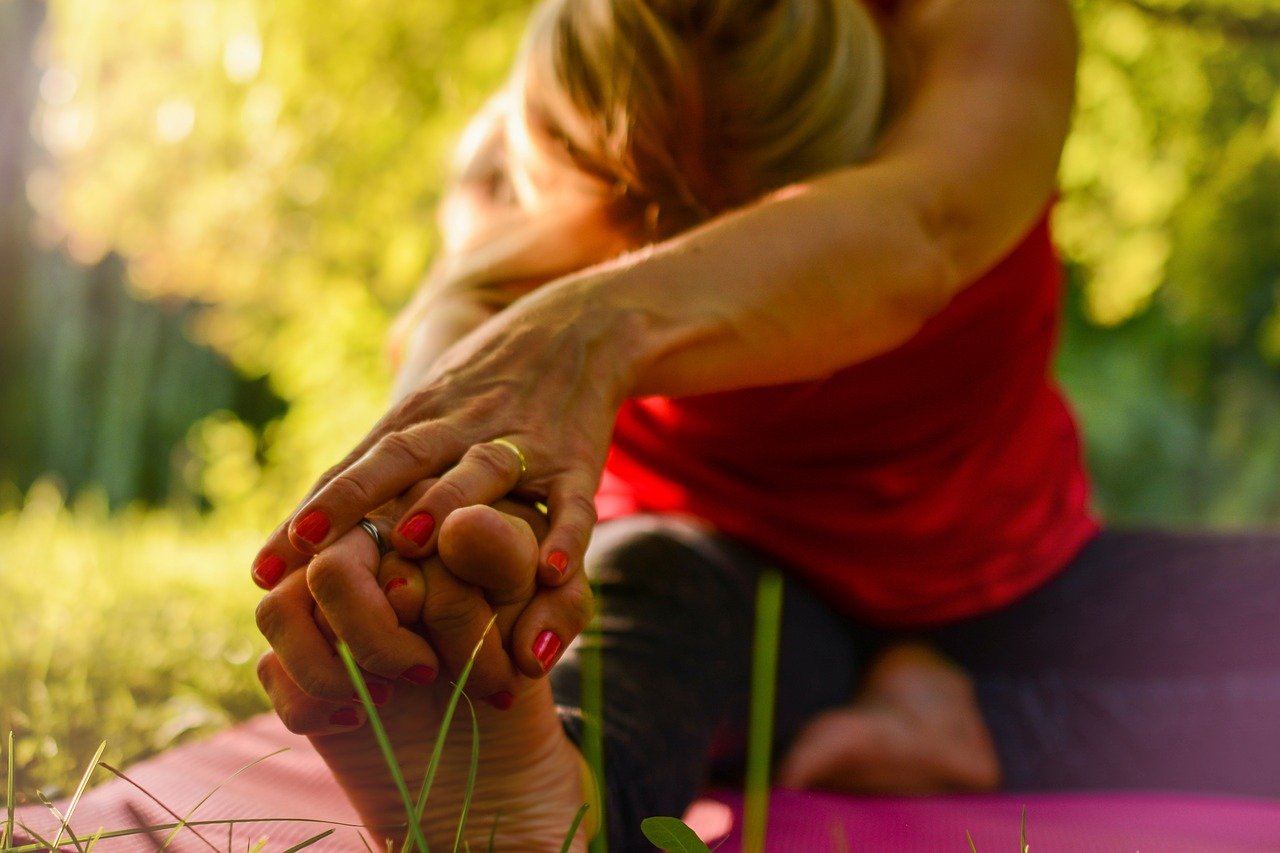
If you complete all the beginners yoga poses and became master, now it is the time to move towards the advance yoga poses for intermediates which give you more effectiveness and more strength.
To find out 10 Beginners Yoga poses click here. This advance poses will give you more challenge in your yogic path.
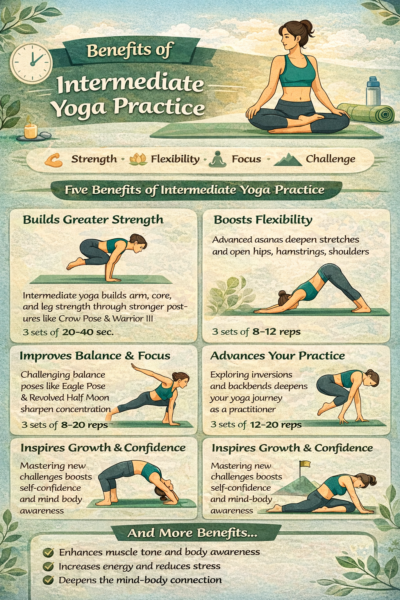
Therefore, here we pick up 7 effective Yoga poses for the intermediates with step by step instructions.
7 Effective Yoga Poses for Intermediates.
- Bhujangasana or Cobra Pose.
- Virabhadrasana I or Warrior Pose I.
- Vrishk Asana or Tree Pose.
- Paschimatt Asana or Seated Forward Bend Pose.
- Urdha Mukha Shvasana or Rising Face Dog Pose.
- Bhadrasana or Gracious Pose.
- Trikona Asana or Triangle Pose.
Bhujangasana or Cobra Pose for Intermediates.
“Bhujangasana” is also called “Cobra Pose”. It is a lie down back twisting asana and a part of hatha and modern yoga as exercise.
Histórias relacionadas
 Melhores posturas de ioga para aliviar a dor do nervo ciático
  Ganesha Mudra: Benefícios, Efeitos Colaterais, Como Fazer e Precauções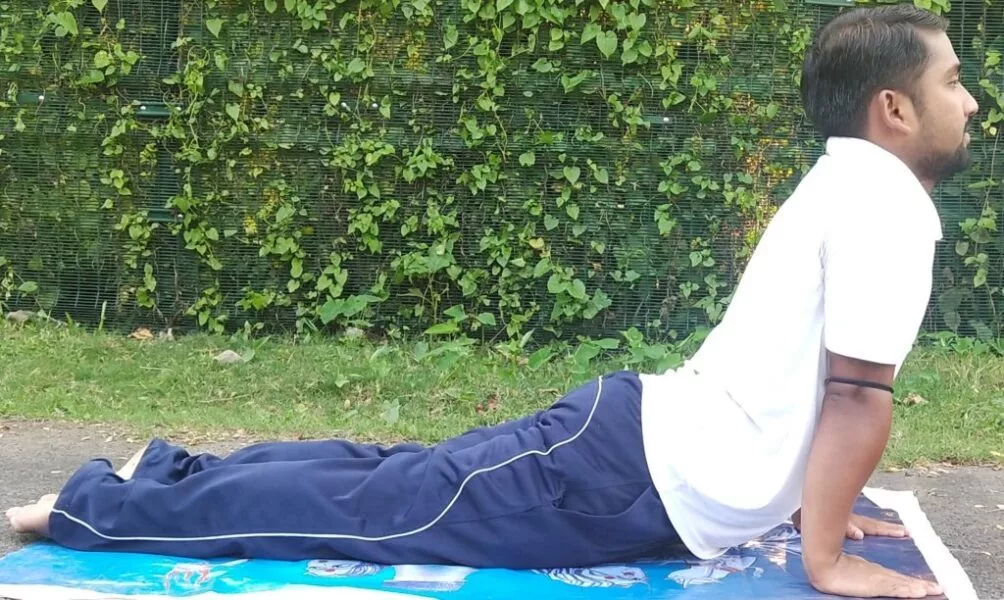
Steps of Bhujangasana or Cobra Pose.
Passo 1.
Lie on the floor with the support of abdomen. Spread the arms along with the body.
Passo 2.
Fold the arms over the shoulders and place it at the bottom of the surface.
Passo 3.
Lift the arm, neck and shoulders. Raise the body upward and make an arch by looking forward. Maintain it for 10-15 seconds.
Contraindications or Limitations of Bhujangasana or Cobra Pose.
- Do not allow people suffering from gastric ulcers, microorganisms and tuberculosis.
Benefits of Bhujangasana or Cobra Pose.
- Strengthen shoulders and neck.
- Improve the health of abdomen.
- Strengthen chest muscle.
- Increase blood flow.
- Reduce lethargy and stress.(1)
- Develops flexibility of the upper and middle back.
- Beneficial for those who are suffering from respiratory disorders like asthma.(2),(3)
Repetições.
Recommended 2-3 repetitions.
Virabhadrasana I or Warrior Pose I for Intermediates.
This asana, also known as “Warrior I Pose”. Virabhadra is an epic character created by Lord Shiva and this posture develops its name from there. It is one of the effective yoga poses for intermediates.
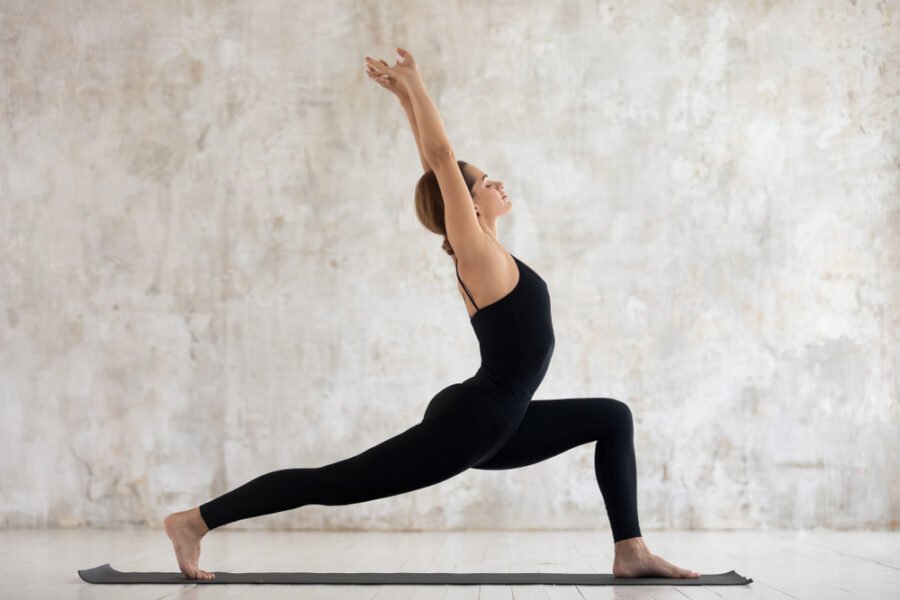
Steps of Virabhadrasana I or Warrior Pose I.
Passo 1.
Create a Mountain Pose and stretch your feet at about 4 feet. Raise your arms vertical to the surface and keep them parallel to each other. Now, stretch the hands through the little finger sides toward the roof.
Passo 2.
Rotate your left foot in 45-60 degrees to the right and right foot 90 degrees to the right. The right heel should be align with the left heel.
Passo 3.
Breathe out and rotate your upper body to the right, square off the front of your pelvis as much as possible with front edge of the mat.
Passo 4.
By left heel firmly attached the floor, slowly breath out and twist your right knee over the right ankle.
Etapa 5.
Spread strongly through your arms support and lift the rib cage away from the pelvis. Hold your head and look forward.
Passo 6.
Take gentle breath and keep this position for 30 seconds.
Contraindications or Limitations of Virabhadrasana I or Warrior Pose I.
- Person with heart problems, shoulder injury and high blood pressure should avoid this exercise.
Benefits of Virabhadrasana I or Warrior Pose I.
- Stretches the chest muscle.
- Strengthens thighs, ankles and calves.
- Beneficial for shoulders, neck and belly.
- Improve lungs health.
- Strengthens the arms and back muscles.
Repetições.
Recommended 3-4 repetitions.
Vriksh Asana or Tree Pose for Intermediates.
It is an easy way to balance. Like a tree, the legs look like roots, arms are like branches and pliers, lancers are like the trunks of the tree. All these make a shape of a tree. With the practice of this asana, the movements of the body become like trees. That is why it is called Vriksh Asana or Tree Pose.
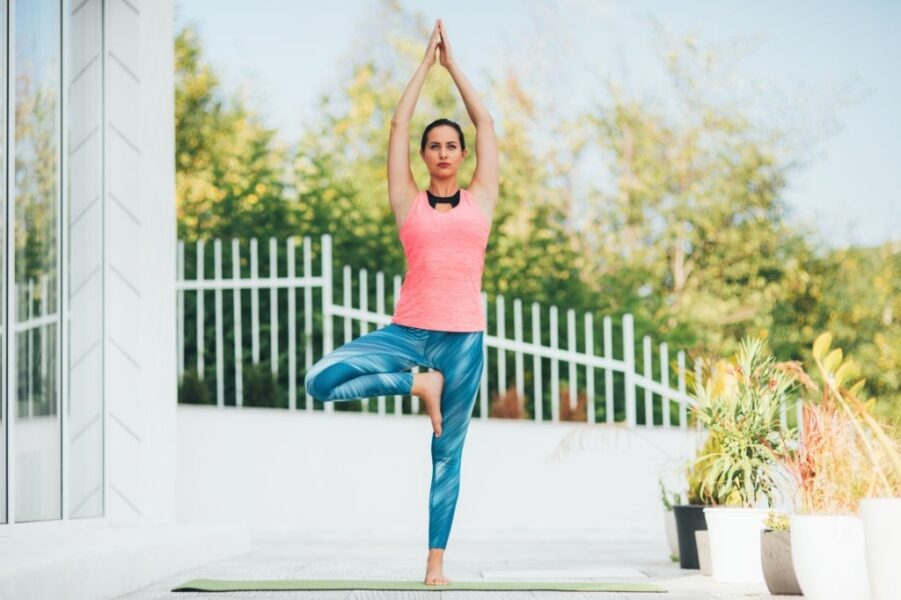
Steps of Vriksh Asana or Tree Pose.
Passo 1.
Stand with the feet together. The arms are both sides and look at the front.
Passo 2.
Fold the right leg from the knee. Place the soles of the right leg as high as possible and put it inside the left thigh.
Passo 3.
By balancing on the left foot, raise both arms above the head and now brought the hand to the chest with both arms folded over each other.
Passo 4.
In this position, stay for 10-15 seconds.
Etapa 5.
To get back the normal position, both arms are brought down next to the body. Put the right leg down to the surface and stand straight. Repeat the entire process alternatively with the left foot.
Contraindications or Limitations of Vriksh Asana or Tree Pose.
- The person who have dizziness should not practice this asana.
Benefits of Vriksh Asana or Tree Pose.
- Rejuvenate the entire body.
- Stretches the legs, back and arms.
- Balance your mind.
- Improve attentiveness and concentration.
- Reduce problems of slipped disc.
- Improve body balance.
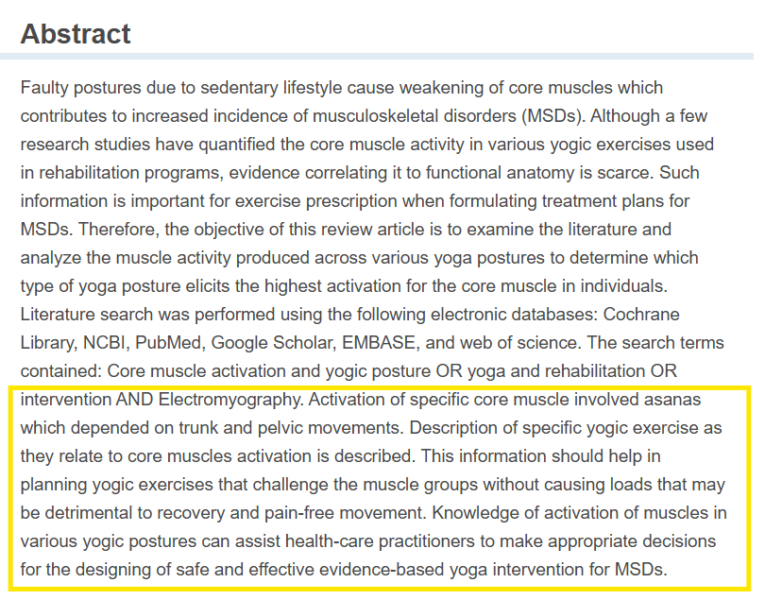
- Improves core muscles.(4)
Repetições.
Recommended 3-4 repetitions.
Paschimott Asana or Seated Forward Bend Pose for Intermediates.
In Sanskrit ‘Paschim’ means back (back). In this posture we mainly focus on the back of the body. It is also called “Seated Forward Bend Pose“.
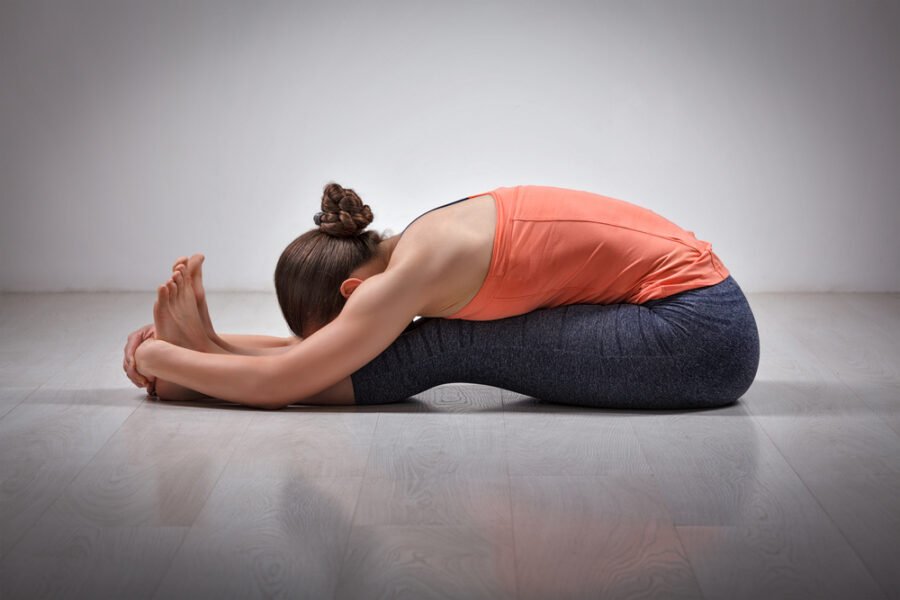
Steps of Paschimott Asana or Seated Forward Bend Pose.
Passo 1.
Sit with both legs in front. Fold the elbow and make a hook with fingers.
Passo 2.
While breathe out lean the body down towards and hold the claws with the help of fingers.
Passo 3.
Move the head between the arms. Trying to get the forehead towards the knees while keeping the legs slightly bent.
Passo 4.
Keep this position for 5-10 seconds.
Etapa 5.
To get back to the normal position lift the head slowly with gentle breath. Leave the claw and bring the chest upward. Bring the right hand to the right and the left hand to the left and sit normally.
Contraindications or Limitations of Paschimott Asana or Seated Forward Bend Pose.
People suffering from cardiovascular diseases, stomach ulcers, chronic episodes should not be practiced.
Benefits of Paschimott Asana or Seated Forward Bend Pose.
- Calms mind also give relieves from depression and stress.(5)
- Improve digestion.
- Give relaxation from menopause and menstrual distress.(6)
- Reduced Anxiety, fatigue and headaches.
- Strengthen the shoulders, hamstrings and spine.
- Activate kidneys, liver, uterus and ovaries.
- Can heal insônia.(7)
- Can cure high blood pressure, infertility and sinusitis.
- Increase appetite and reduce obesity.
Repetições.
Recommended 2-3 repetitions.
Urdhva Mukha Shvanasana or Rising Facing Dog Pose for Intermediates.
“Urdhva Mukha Shvanasana” also known as “Rising Facing Dog Pose”. It is a part of the popular Surya Namaskar and quite similar like “Bhujangasana“.
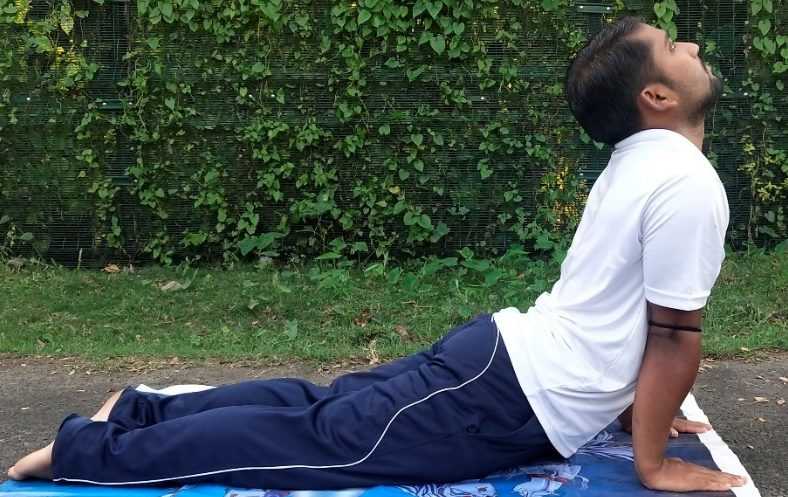
Steps of Urdhva Mukha Shvanasana or Rising Facing Dog Pose.
Passo 1.
Lie horizontally on the surface. Expanse your legs with the tops of your feet. Twist your elbows and extent your palms on the surface next to your waist. So that your forearms are reasonably vertical to the surface.
Passo 2.
Breathe in and press your hands on the floor. Then straight your arms and lift your upper body upward with a gentle breath.
Passo 3.
Push the tailbone near the pubis and lift toward the navel. Keep it stable but do not stabilize the buttocks.
Passo 4.
Fixed the shoulder against the back. Lift the body and look upward.
Etapa 5.
Hold this position for 20 to 30 seconds, with a gentle breath.
Contraindications or Limitations of Urdhva Mukha Shvanasana or Rising Facing Dog Pose.
- Person should avoid, those have back injury, headache and pregnancy.
Benefits of Urdhva Mukha Shvanasana or Rising Facing Dog Pose.
- Develops posture.
- Strengthens the arms, spine and wrists.
- Improve health of abdominal organs.
- Relieve depression, fatigue and sciatica.
- Beneficial to asthma.
- Stretches the muscle of chest, lungs, shoulders and abdomen.
- Hardens the muscles of buttocks.
Repetições.
Recommended 2-3 repetitions.
Bhadrasana or Gracious Pose for Intermediates.
“Bhadrasana” also known as “Gracious Pose”. It is a seated asana also a part of hatha and modern yoga. Bhadrasana is proper form of meditation seat.
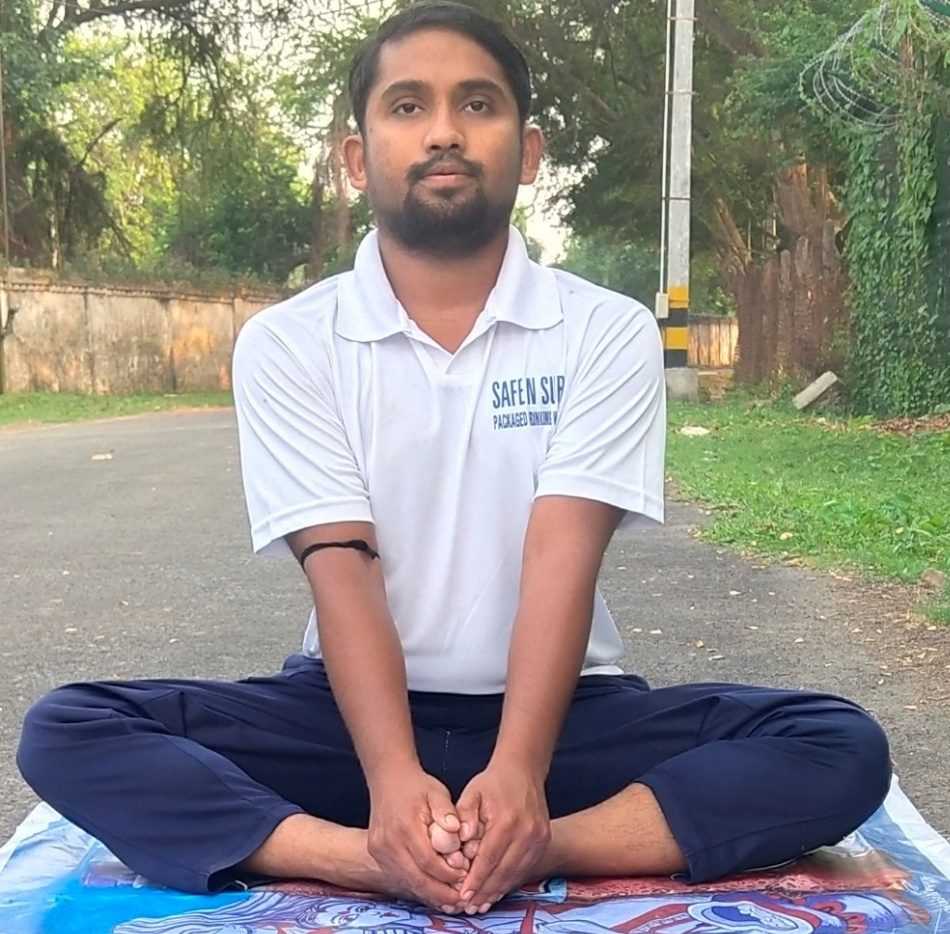
Steps of Bhadrasana or Gracious Pose.
Passo 1.
First spread the legs in front and sit straight. Now (according to the picture) put the leaves and stalks of the two legs together.
Passo 2.
Now keep both hands on both toe together and keep the spine straight.
Passo 3.
Hold breath for 20 to 30 seconds.
Contraindications or Limitations of Bhadrasana or Gracious Pose.
- Person those are suffering from severe arthritis must avoid this exercise.
Benefits of Bhadrasana or Gracious Pose.
- Improves flexibility of legs.
- Increase digestion.
- Decrease labour pain.
- Improves brain power, focus and concentration.
- Reduce fatigue.
- Build up thighs, backbone, hips and buttocks.
- Beneficial for those who are suffering from varicose veins and painful leg muscles.
- Decrease infertility.
Repetições.
Recommended 4-5 repetitions.
Trikon Asana or Triangle Pose for Intermediates.
This asana is also known as “Triangle Pose”, the body creates an appearance of ‘Triangle’, so it is called “Trikon Asana” and an another effective yoga poses for intermediates.
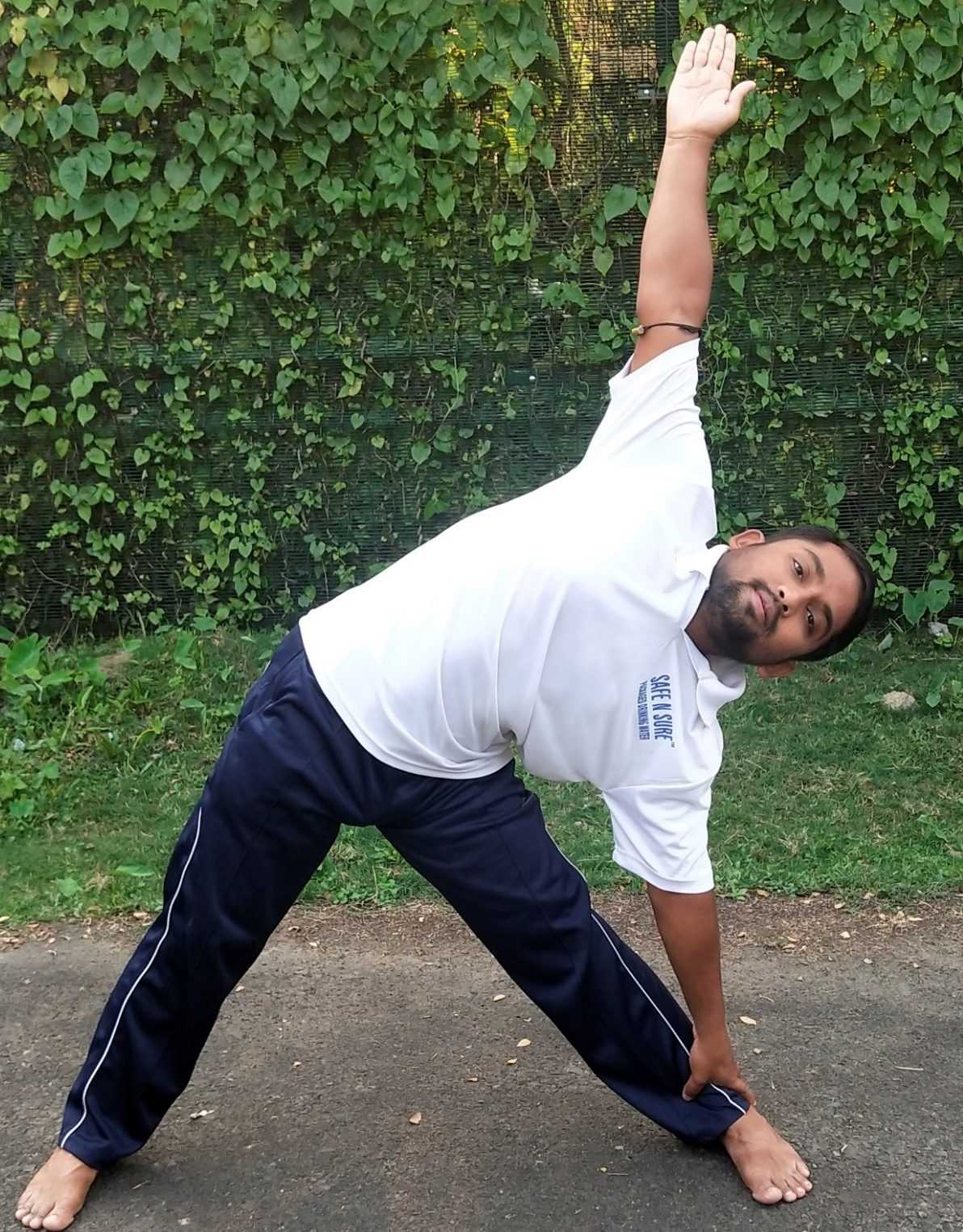
Steps of Trikon Asana or Triangle Pose.
Passo 1.
Stand straight, feet together and hands next to thighs. Keep your feet 1-2 feet away.
Passo 2.
Take gentle breath, spread the arms on both sides and lift them upwards. The arms must be parallel to the body.
Passo 3.
While exhaling, bow to the left and place the left hand on the left foot.
Passo 4.
Move the right arm up. Both sides will be at 180 degree. With this condition, maintain 5 to 10 seconds of rest with normal respiration.
Etapa 5.
Alternately the right arm brought to the left side.
Passo 6.
For get back to the normal position, lift the left palm, straighten the arm and bring the arms to the floor. While exhaling, put the arm down and bring the hands to the side of the thighs. Take your legs together.
Contraindications or Limitations of Trikon Asana or Triangle Pose.
- Do not practice this asana if you have more back pain.
Benefits of Trikon Asana or Triangle Pose.
- Build up the legs, arms, chest, knees and ankles.
- Increases mental and physical equilibrium.
- Helps to improve digestion.
- Releases the hips, hamstrings, calves, shoulders and spine.
- Reduces estresse, anxiety, sciatica and back pain.(8)
Repetições.
Recommended 2-4 repetitions.
Perguntas frequentes.
1. Who should practice intermediate yoga?
Intermediate yoga is suitable for people who already have a basic foundation in yoga, understand alignment, and can hold foundational poses comfortably. It’s ideal for those looking to build strength, flexibility, balance, and confidence beyond beginner-level practice.
2. What are the main benefits of intermediate yoga compared to beginner yoga?
Intermediate yoga focuses more on muscle engagement, balance challenges, deeper stretches, and advanced coordination. It helps improve core strength, flexibility, mental focus, posture, and overall body control more effectively than beginner routines.
3. How often should intermediate yoga be practiced for best results?
Most yoga experts recommend practicing 3–4 times per week. This frequency allows enough challenge for growth while giving the body time to recover, adapt, and prevent overuse injuries.
Resumindo.
Last but not the least, all of this yoga poses for intermediates will toned your muscles and give you an alarming, attractive posture and look. However, for healthy conditioning of the body and muscle it is also important to plan a diet which will help you to transform. Apart from this you may bookmark our best 5 freehand exercise for the beginners.
+8 Sources
A Freaktofit possui diretrizes rigorosas de fornecimento de informações e se baseia em estudos revisados por pares, institutos de pesquisa educacional e organizações médicas. Evitamos o uso de fontes terciárias. Você pode saber mais sobre como garantimos a precisão e a atualização do nosso conteúdo lendo nossa Política de Privacidade. política editorial.
- Health Impacts of Yoga and Pranayama: A State-of-the-Art Review; https://www.ncbi.nlm.nih.gov/pmc/articles/PMC3415184/
- The Role of Yoga in Bronchial Asthma; https://juniperpublishers.com/jcmah/pdf/JCMAH.MS.ID.555708.pdf
- Impact of adjunct treatment with yoga on severity, illness score, and drug
dosage in controlled asthmatic children; http://njppp.com/fulltext/28-1567519369.pdf - Anatomical Correlation of Core Muscle Activation in Different Yogic Postures.; https://europepmc.org/article/pmc/pmc5433114
- Impact of Yoga Therapy on Stress Level among Nursing Students; https://www.ijhsr.org/IJHSR_Vol.8_Issue.9_Sep2018/21.pdf
- Effect of Yoga on Primary Dysmenorrhea and Stress in Medical Students; http://www.iosrjournals.org/iosr-jdms/papers/Vol4-issue1/P0416973.pdf
- The Efficacy of Yogic Intervention on Insomnia Disorder; https://www.hilarispublisher.com/open-access/the-efficacy-of-yogic-intervention-on-insomnia-disorder.pdf
- Effectiveness of Iyengar yoga in treating spinal (back and neck) pain: A systematic review; https://www.ncbi.nlm.nih.gov/pmc/articles/PMC4278133/