








































 Dar certo
 Meditação


 Podcast
  E-book


The journey to overcome addiction is no small feat. However, integrating fitness into this process can make a significant difference. Often, there are misconceptions about fitness, saying it is all about rigorous gym routines, but in reality, it’s much more diverse and adaptable, especially in drug recovery.
At its core, effective fitness strategies in drug recovery are about finding the right balance of physical activity to support both mental and physical healing.
As a result, this article aims to shed light on practical fitness strategies that can complement the recovery journey, offering insights and tips to make this path more manageable and effective.
Understanding the Role of Fitness in Drug Recovery.
Fitness plays a key role in drug recovery beyond physical well-being. It’s a tool that enhances mental health, which is equally important in this journey. When you engage in regular physical activity, your body releases endorphins, natural mood lifters that can reduce stress and anxiety. This biological change is a big plus for anyone in recovery.(1)
Histórias relacionadas
 Rotina de treino vazada de Sophie Rain: os verdadeiros segredos de fitness revelados
  A importância de se manter ativo à medida que envelhecemos
 At the same time, establishing a routine with exercise can bring a sense of structure to daily life, something often disrupted by addiction. Fitness also boosts self-esteem and confidence, helping you feel more in control and capable of handling recovery challenges.
In essence, incorporating fitness isn’t just about staying physically active. It’s about nurturing overall health and creating a stable, positive mindset supporting recovery.
Developing Your Unique Fitness Plan.
Creating a personal fitness plan during drug recovery is a step towards regaining control of your health and well-being. Therefore, start by assessing your current fitness level. It’s okay to begin slowly. The goal is consistent progress, not immediate perfection. Then, set realistic goals.
Whether walking for 20 minutes a day or joining a weekly ioga class, choose activities you enjoy and can stick to. In truth, your plan should be flexible.
If something isn’t working, trying different activities until you find what suits you best is okay. This approach keeps you engaged and prevents boredom. In addition, by listening to your body and adjusting your plan as needed, you maintain motivation and ensure your fitness journey aligns with your recovery needs.
In short, a well-thought-out fitness plan is a powerful tool in your recovery arsenal, offering physical and mental benefits.
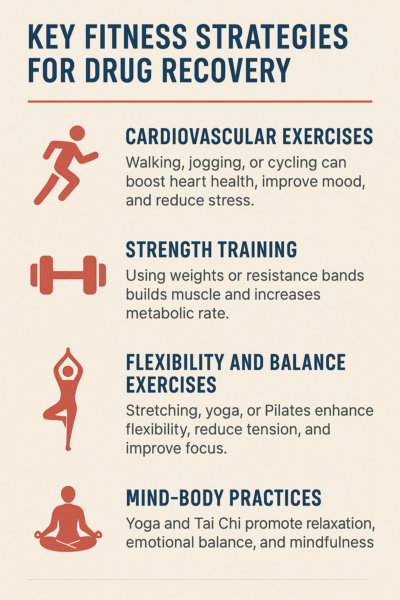
Key Fitness Strategies for Drug Recovery.
Implementing key fitness strategies in drug recovery can significantly enhance the recovery process. Here are some effective approaches:
- Cardiovascular Exercises: Walking, jogging, or cycling can boost heart health and endurance. They also release endorphins, improving mood and reducing stress.
- Strength Training: Using weights or resistance bands helps build muscle, improve bone density, and increase metabolic rate. It’s not just about lifting heavy; it’s about building a stronger body and mind.(2)
- Flexibility and Balance Exercises: Stretching, yoga, or Pilates improve flexibility, reduce muscle tension, and enhance mental focus. They also encourage mindfulness, a valuable skill in recovery.
- Mind-Body Practices: Yoga and Tai Chi, for example, offer a holistic approach. They combine physical movement with mental focus and breathing techniques, promoting relaxation and emotional balance.(3)
Each of these strategies plays a unique role in supporting recovery. They improve physical health and aid in managing emotions and stress, which is important for long-term recovery success.(4)
Nutrition and Hydration: Complements to Fitness.
Nutrition and hydration are key complements to your fitness routine, especially during drug recovery. Good nutrition fuels your body, providing the energy you need for physical activity and aiding in repair and recovery post-exercise.(5) Therefore, focus on a balanced diet: incorporate a variety of fruits, vegetables, lean proteins, whole grains, and healthy fats. This variety ensures you get all the necessary nutrients.
Hydration is equally important. Drinking enough water energizes you and helps flush toxins from your body. It’s a simple yet effective way to support your fitness goals and overall health.
Also, be mindful of your body’s cues. Feeling sluggish or tired could be a sign of nutritional gaps or dehydration. In the end, by paying attention to your diet and water intake, you’re not just supporting your fitness efforts but laying a foundation for a healthier lifestyle in recovery.
Overcoming Challenges and Staying Motivated.
Navigating challenges and staying motivated during your fitness journey in drug recovery is no easy feat, but it’s entirely achievable with the right support and mindset. It’s common to face obstacles such as lack of energy, time constraints, or self-doubt. However, overcoming these challenges is possible.
One effective way to stay motivated is by seeking support from professionals and peers who understand your journey. Harmony Ridge Recovery Center is a prime example of an addiction recovery facility that offers a supportive community where individuals struggling with addiction can connect, share experiences, and uplift each other.
In addition, this center provides the resources and guidance needed to overcome challenges and stay motivated throughout your recovery journey. Their comprehensive approach ensures that you receive holistic support tailored to your needs, making it a worthwhile investment in your long-term health and well-being.
Monitoring Progress and Adjusting Your Approach.
Monitoring your progress and adjusting your approach is essential for maintaining momentum and achieving long-term success in your fitness journey during drug recovery. Here are some steps to help you stay on track:
- Track Your Progress: Keep a journal or use a fitness app to record your workouts, nutrition intake, and how you feel physically and mentally. That allows you to see patterns over time and identify areas for improvement.
- Set Milestones: Break down your larger fitness goals into smaller, achievable milestones. Celebrate each milestone reached, whether it’s running a mile without stopping or increasing the weight in your strength training routine.
- Assess Regularly: Periodically reassess your fitness plan to determine if it’s still serving you well. Are you seeing progress? Are you still enjoying the activities you’ve chosen? Be willing to make adjustments as needed to keep your routine fresh and effective.
- Seek Feedback: Don’t hesitate to contact fitness professionals or peers for feedback on your progress and approach. They may offer valuable insights or suggestions you hadn’t considered for improvement.
Perguntas frequentes.
1. Can exercise really help with drug withdrawal symptoms?
Yes. Regular physical activity helps your body release endorphins, which are natural chemicals that reduce pain, improve mood, and lessen anxiety. Many recovering individuals report fewer cravings and better emotional stability when they stay active.
2. What type of exercise is best for someone recovering from addiction?
There is no single “best” exercise. The ideal routine is one you can commit to consistently.
Low-impact cardio (walking, biking), yoga, stretching, and light strength training are common starting points because they support both mental and physical recovery without overwhelming the body.
3. How often should I work out during recovery?
A good guideline is 30 minutes of moderate activity, 3–5 times per week.
However, this varies based on your situation, stamina, and doctor’s advice. Start small—even 10 minutes a day is beneficial—and increase gradually.
4. What if I feel unmotivated or depressed? Should I still exercise?
Feeling unmotivated in early recovery is normal. Exercise may feel difficult at first, but it is proven to help with mood, energy, and sleep.
If you feel emotionally overwhelmed, choose gentle activities like stretching, yoga, or short walks. Consistency is more important than intensity.
5. Is it better to exercise alone or with a group while recovering?
Both approaches work, but many recovering individuals find that group fitness, gym classes, or walking groups provide accountability, routine, and social connection.
Exercising with peers in rehab centers or community programs can reduce isolation and increase motivation.
Resumindo.
Incorporating effective fitness strategies into your drug recovery journey can make a profound difference in your overall well-being. By prioritizing physical activity and nutrition and staying connected with supportive communities, you’re working towards a healthier body and nurturing a positive mindset, empowering yourself to overcome obstacles.
No matter how small, every step forward brings you closer to a brighter and more fulfilling future. Therefore, keep moving forward, stay resilient, and confidently embrace the journey.
+5 Fontes
FreakToFit Adotamos diretrizes rigorosas de fontes e nos baseamos em estudos revisados por pares, institutos de pesquisa educacional e organizações médicas. Evitamos o uso de referências terciárias. Você pode saber mais sobre como garantimos a precisão e a atualização do nosso conteúdo lendo nossa Política de Privacidade. política editorial.
- Methodological and Statistical Considerations for Exercise-Related Hormone Evaluations; https://link.springer.com/article/10.2165/00007256-199520020-00004
- Effects of Strength Training on Health; https://journals.lww.com/acsm-csmr/abstract/2012/07000/resistance_training_is_medicine__effects_of.13.aspx
- Nicotine and Tobacco Research; https://academic.oup.com/ntr/article-abstract/17/7/NP/1027124?redirectedFrom=fulltext&login=false
- Let Them Roam Free?; https://link.springer.com/article/10.2165/11315210-000000000-00000
- Tribally Affiliated Child-Care Center Environment and Obesogenic Behaviors in Young Children; https://freaktofit.com/effective-fitness-strategies-in-drug-recovery-a-comprehensive-approach/