








































 Workout

 Meditation


 Podcast
 E-book


The Fast Facts
- Endometriosis is a chronic gynecological condition that occurs when the endometrium, the tissue that normally lines the inside of the uterus, grows outside of the uterus.
- Dandasana, or staff pose, is a seated posture that helps stretch the spine and lengthen the muscles along the back of the body.
- In this article, we explore seven of the best yoga poses to ease endometriosis symptoms that you can easily try at home or in class with your instructor’s guidance.

Endometriosis is a chronic gynaecological condition. It’s most common during a woman’s reproductive years, which are generally between ages 15 and 49. Practicing Yoga regularly can ease endometriosis symptoms & improve your overall well-being. It helps to reduce pain, relieve tension & provide relaxation. In this article, we explore seven of the best yoga poses to ease endometriosis symptoms that you can easily try at home or in class with your instructor’s guidance. We also share some basic yoga terminology as well as precautions and tips on how to get started practicing yoga safely if you’re new to it.
What Is Endometriosis?
Endometriosis is a chronic gynecological condition that occurs when the endometrium, the tissue that normally lines the inside of the uterus, grows outside of the uterus.
It is most common during a woman’s reproductive years, which are generally between ages 15 and 49. Endometriosis can cause pain, heavy bleeding, and infertility. There are no cure for endometriosis, but there are treatments that can assist to manage the symptoms.
Related Stories
 10 Best Yoga Poses For Thyroid With Steps
 Chin Mudra: Benefits, Side Effects, How To Do and Contraindications

Causes of Endometriosis.
No one knows the exact causes of endometriosis, but there are a few theories. One theory is that it’s caused by retrograde menstruation, which is when menstrual blood flows back through the fallopian tubes and into the pelvis instead of out of the body.
Another theory is that endometriosis is caused by embryonic cell growth. This means that cells from the lining of the uterus (endometrium) grow elsewhere in the body.(1)
7 Yoga Poses to Ease Endometriosis Symptoms.
1 Dandasana.
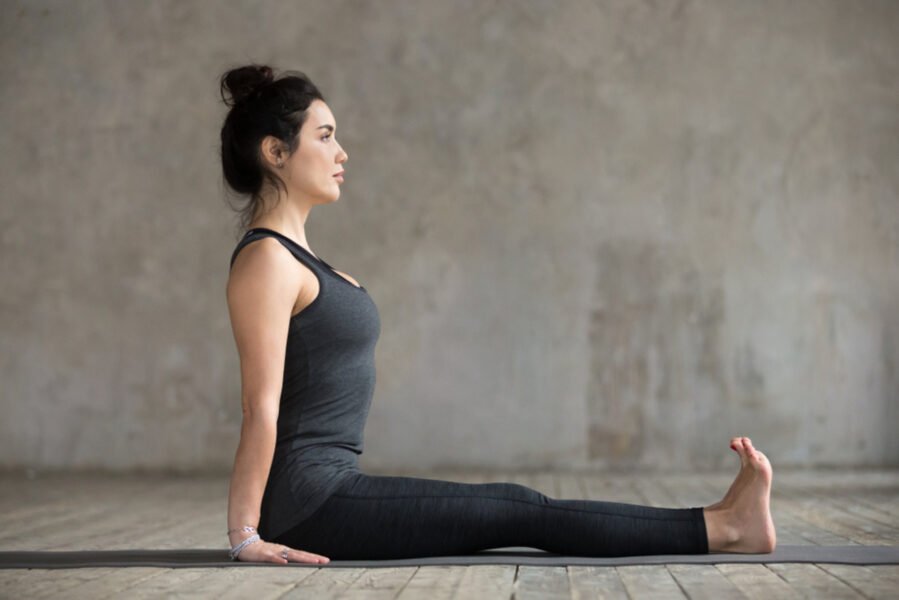
Dandasana, or staff pose, is a seated posture that helps stretch the spine and lengthen the muscles along the back of the body. It also strengthens the shoulders and opens up the chest.
How To Do Dandasana?
- To do dandasana, sit on the ground with your legs extended straight in front of you.
- Place your hands on the ground beside you, keeping your fingers pointing forward.
- Press down into your hands as you lift your hips and tailbone off the ground.
- You must feel a stretch through your hamstrings & lower back. Hold for 30 seconds to 1 minute before returning to sitting position. Repeat this process three times for best results.
- Start by doing 3 rounds of five repetitions of each pose.
| Read Now: Tabata Yoga : History, Benefits & Types |
2 Virabhadrasana I.
This pose is also known as Warrior I. It helps to improve balance and stability. It also strengthens the ankles, thighs, and chest. Plus, it stretches the shoulders, neck, and groin.

How To Do Virabhadrasana I?
- To do this pose, stand with your feet together. Step your left foot back about four feet.
- Turn your left foot out at a 45-degree angle and press down into the heel.
- Bend your right knee over your right ankle so that your thigh is parallel to the ground.
- Reach your arms up overhead, keeping them in line with your ears. Gaze forward. Hold for 5 breaths before switching sides.
3 Trikonasana.
This standing yoga pose stretches the muscles of your back, chest, and shoulders while lengthening your spine. It also helps improve your balance and coordination.

How To Do Trikonasana?
- To do Trikonasana, stand with your feet about 31⁄2 to 4 feet apart.
- Turn your right foot out 90 degrees so your toes are pointing to the right.
- Align your left heel with the arch of your right foot.
- Bend your right knee over your right ankle, keeping your shin perpendicular to the floor.
- As you exhale, place your left hand on the outside of your right thigh.
- Inhale as you extend your left arm up toward the ceiling, palm facing forward.
- Exhale as you lean to the right, bringing your left shoulder toward the outside of your right knee.
| Read Now: Yoga For Spine Alignment : Best 4 Poses |
4 Sukhasana.
Also known as easy pose, Sukhasana is a great way to encourage relaxation. It helps ease tension in the lower back and hips, which can be common areas of pain for women with endometriosis.

How To Do Sukhasana?
- To do sukhasana, sit on the ground with your legs crossed in front of you.
- You can place your hands on your knees or in your lap, whatever is comfortable.
- Close your eyes and take deep breaths, focusing on relaxing your whole body.
- If sitting isn’t the most comfortable position for you, try reclining by resting on your side with your legs bent at a 90-degree angle.
- You can also lie flat on your back and stretch out one leg at a time while taking deep breaths.
- Finally, this pose may also be done while standing up against a wall if it feels more stable for you.
5 Baddha Konasana.
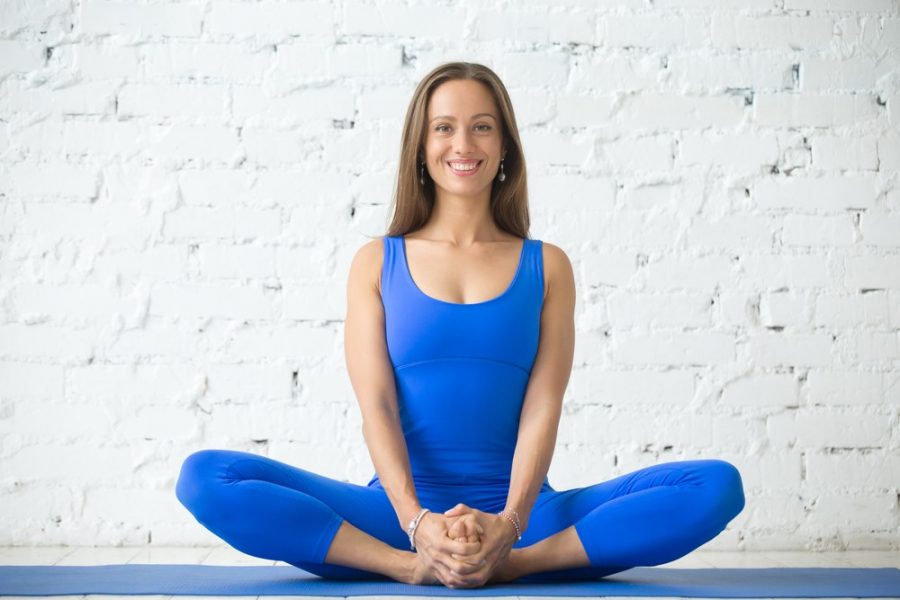
This pose, also known as Bound Angle Pose, is a great way to ease endometriosis pain. It helps to open the hips and release tension in the lower back.
How To Do Baddha Konasana?
- Sit up tall with your legs out in front of you.
- Bend your knees & bring the soles of your feet together. Draw your heels close to your pelvis.
- Thereafter use your hands to hold onto your ankles or feet. Slightly and gently press your knees and thigh down toward the floor.
- You should feel a gentle stretch in your inner thighs and groin. Hold this pose for up to 30 sec to 1 minute.
6 Virabhadrasana II.
Virabhadrasana II is a standing pose that helps strengthen the legs, ankles, and feet. It also stretches the chest, shoulders, and neck. This pose can help ease endometriosis pain by relieving tension in the lower back and pelvis.

How To Do Virabhadrasana II?
- To do Virabhadrasana II, start in Warrior I pose with your right leg forward and your left leg back.
- Bend your right knee so it’s directly over your ankle and lower into a lunge.
- Then, straighten your right leg and turn your left foot out at a 45-degree angle.
- Place your hands on your hips and look over your left shoulder.
- Hold for 5 breaths before repeating on the other side.
7 Savasana.
Savasana, or corpse pose, is a restorative yoga pose that helps ease endometriosis symptoms by promoting relaxation. It’s one of the simple yoga pose.
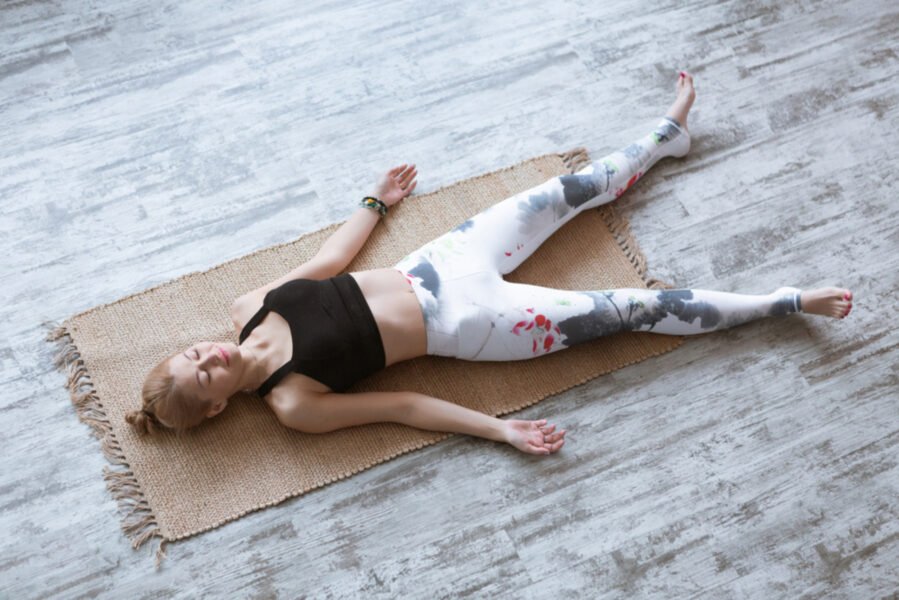
How To Do Savasana?
- Lie on your back with your legs and arms relaxed, palms facing up.
- You may place a blanket under your knees for support.
- Stay in this pose for 5-10 minutes, letting your mind and body completely relax.
- Then start getting ready for the next activity of the day. When you need a little extra boost, use your yoga mat as a grounding tool before starting this pose.
- Start by rolling out any tight muscles in your back first with some gentle stretching exercises like child’s pose.
- Then do an easy vinyasa flow series like surya namaskar or supta matsyendrasana until you feel completely rejuvenated!
Risks of Doing Yoga With Endometriosis.
Although yoga can be beneficial for endometriosis, there are some poses that may aggravate symptoms. Inversions, for example, can cause increased pain and bleeding.
It’s important to talk to your doctor before starting a yoga practice, and to let your instructor know about your condition. Avoid any poses that cause pain or discomfort, and focus on gentle, restorative poses instead.
Tips For Practicing Yoga With Endometriosis.
- Don’t push yourself too hard. If a pose is painful, stop and rest.
- Practice regularly for the best results.
- Listen to your body and don’t overdo it.
- Talk to your doctor before starting a yoga practice.
- Find a yoga teacher who is familiar with endometriosis and can modify poses as needed.
Bottom Line.
Last but not the least, endometriosis is a chronic gynecological condition. It’s most common during a woman’s reproductive years, which are generally between ages 15 and 49. Yoga may ease endometriosis symptoms & improve your overall well-being. It helps to reduce pain, relieve tension & encourage relaxation. The best thing about yoga is that it doesn’t require any special equipment or clothing—you just need to find some time in your day. You may want to experiment with different poses until you find ones that work for you. Here are seven of my favorites.
+1 Source
Freaktofit has strict sourcing guidelines and relies on peer-reviewed studies, educational research institutes, and medical organizations. We avoid using tertiary references. You can learn more about how we ensure our content is accurate and up-to-date by reading our editorial policy.
- Theories on the Pathogenesis of Endometriosis; https://www.ncbi.nlm.nih.gov/pmc/articles/PMC4334056/