
















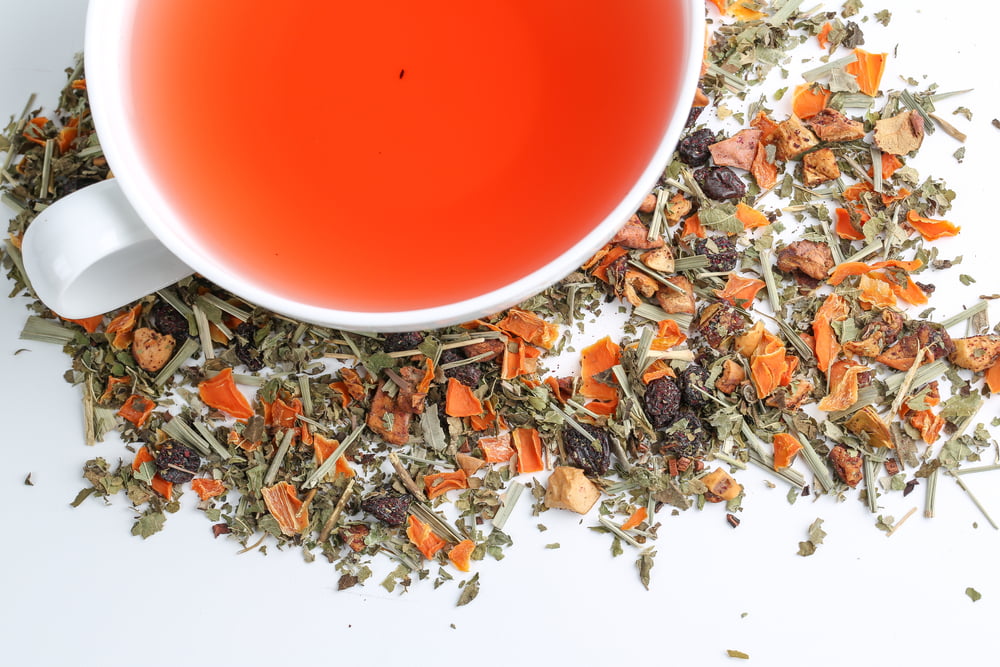
Honeybush tea is a popular herbal tea made from the leaves of the Cyclopia intermedia shrub, native to South Africa. It is known for its sweet, honey-like aroma & taste. While it has long been enjoyed for its comforting flavor, research is uncovering many of the health benefits of honeybush tea. However, it contains no caffeine, making it a perfect choice for those looking for an herbal alternative to traditional black or green teas. This article will explore the 14 surprising benefits of honeybush tea that you may not have known about.
nutritional value of Honeybush Tea.
1 cup of honeybush tea serves
- Calories: 0kcal.
- Protein: 0gm.
- Fat: 0gm.
- Carbohydrates: 0gm.
- Sugar: 0gm.
- Fiber: 0gm.
14 Surprising Benefits of Honeybush Tea.
1. Boosts Immunity.
One of the main benefits of honeybush tea is that it boosts your immunity. Honeybush tea contains polyphenols, which have been known to have antioxidant and anti-inflammatory properties.
These polyphenols help protect against free radical damage, reduce inflammation and boost your immune system.
Related Stories
 Does Breast Milk Really Heal Eczema : Know From Experts
 What Do Carrot Leaves Look Like
Studies have also shown that honeybush tea can be effective during pregnancy in reducing the risk of low birth weight and premature birth. This is attributed to its high levels of polyphenols and antioxidants that boost immunity and help protect both mother and child from disease.(1)
2. Effective During Pregnancy.
Honeybush tea has been found to be an effective remedy for pregnancy-related ailments such as nausea, vomiting, and fatigue. Studies suggest that it can help to relieve symptoms such as morning sickness, reduce contractions, and alleviate mood swings. Honeybush tea is a safe alternative to many other herbal teas, since it does not contain caffeine or any other stimulants.
Studies have also shown that honeybush tea can be beneficial in reducing the risk of gestational diabetes. Women who drank honeybush tea had lower levels of insulin and glucose in their blood. This suggests that drinking honeybush tea during pregnancy could help to prevent diabetes.
Moreover, honeybush tea has antioxidant and anti-inflammatory properties, which can help to protect both mother and baby from free radical damage. Additionally, drinking honeybush tea during pregnancy may help to reduce the risk of preterm delivery, pre-eclampsia, and other complications associated with pregnancy.

3. Aids in Digestion.
Honeybush tea is an excellent source of digestion-friendly ingredients, such as polyphenols and flavonoids. Studies have shown that these components can help to reduce indigestion and other gastrointestinal problems.
The antioxidant properties of honeybush tea can also help to reduce inflammation in the digestive tract, providing relief from conditions like irritable bowel syndrome and Crohn’s disease.

Honeybush tea can also help with the absorption of essential vitamins and minerals, and can promote regularity in the intestines.
This can help to improve digestion overall and make your body more efficient at eliminating waste and toxins. In addition to this, honeybush tea has been linked to a reduction in bloating and gas, providing further relief from uncomfortable digestive symptoms.(2)
4. Reduces Inflammation.
Honeybush tea is known to reduce inflammation. Studies have shown that honeybush tea contains anti-inflammatory compounds that can help reduce inflammation in the body.
It is thought to be especially beneficial for people suffering from inflammatory conditions such as arthritis, asthma, and other joint and muscle issues. Research has also found that honeybush tea can reduce inflammation in the gut, helping to ease digestive disorders such as IBS, Crohn’s disease, and ulcerative colitis.
Furthermore, honeybush tea may help reduce inflammation in the skin, making it beneficial for those with eczema and psoriasis. The anti-inflammatory properties of honeybush tea make it an ideal choice for anyone looking for a natural way to reduce pain and swelling.(3)
5. Prevents Cancer.
One of the major health benefits of Honeybush Tea is its ability to help prevent cancer. Studies have found that Honeybush Tea contains polyphenols, flavonoids, and other compounds that possess antioxidant and anti-inflammatory properties.
These compounds can help protect your cells from damage caused by free radicals and oxidative stress, which are both linked to an increased risk of cancer. Research has also found that regular consumption of Honeybush Tea can help inhibit the growth of cancer cells and tumors, while also providing protection against DNA damage.
In addition, some studies suggest that drinking Honeybush Tea may reduce your risk of colon and rectal cancers. Therefore, Honeybush Tea could be a great addition to any diet if you’re looking for a natural way to reduce your risk of cancer.(4)
6. Improves Heart Health.
Honeybush tea has long been associated with a variety of heart health benefits. It is known to reduce bad cholesterol and increase good cholesterol levels. Studies have also shown that it helps reduce hypertension, which is a major risk factor for heart disease.
Additionally, it can help prevent atherosclerosis, which is a condition in which plaque builds up on the walls of arteries, leading to hardening of the arteries. This can lead to serious complications, including heart attacks and strokes.
Furthermore, the polyphenols found in honeybush tea may help reduce the risk of developing coronary heart disease and other cardiovascular diseases.(5)
7. Skin Care.
Honeybush tea has numerous skin benefits. It is packed with powerful antioxidants and can help keep your skin looking young and healthy. Honeybush tea is said to be effective in reducing wrinkles, dark spots, and pigmentation. It also helps to prevent premature aging, as well as improving the texture and elasticity of your skin.
Furthermore, it has anti-inflammatory properties that can reduce redness and puffiness, while also soothing dry and irritated skin. Honeybush tea can also help protect your skin from UV damage, which can cause premature aging.
Additionally, honeybush tea is known to reduce acne and blemishes, due to its anti-bacterial properties. Finally, honeybush tea can help to keep your skin hydrated and glowing. With regular consumption of honeybush tea, you can enjoy these many skin benefits!(6)
8. Fights Free Radicals.
Free radicals are molecules in our bodies that can cause damage to cells, leading to many age-related diseases, such as cancer and heart disease. Honeybush tea contains antioxidants, which can help protect our cells from damage caused by free radicals.
The antioxidants in honeybush tea, such as vitamin C, carotenoids, and flavonoids, can help neutralize the harmful effects of free radicals. Drinking honeybush tea regularly can help protect against cell damage and reduce your risk of age-related diseases.
Furthermore, studies have shown that the antioxidant levels in honeybush tea are higher than those found in green tea and other teas, making it an excellent choice for those looking to boost their antioxidant intake.(7)
9. Rich in Antioxidants.
Honeybush tea is packed with powerful antioxidants that can help boost your immune system and protect your cells from damage caused by free radicals. Antioxidants are also known for their anti-aging properties, helping to keep your skin looking youthful and healthy.
Honeybush tea is particularly rich in polyphenols, which can help prevent a variety of illnesses and diseases, including heart disease, cancer, diabetes, and neurological disorders.
Studies have also shown that honeybush tea can reduce inflammation and increase the production of good bacteria in the gut, promoting better digestion.
Additionally, its antioxidant properties make it beneficial for weight loss, as it can help boost metabolism and burn fat. The tea can also improve bone health, helping to protect against osteoporosis and other degenerative diseases.(8)
10. Improve Bone Health.
One of the surprising benefits of honeybush tea is its ability to improve bone health. Studies have found that regular consumption of honeybush tea can help reduce the risk of developing osteoporosis, a condition where bones become weakened and brittle.
This is because honeybush tea contains phytoestrogens, which are plant-based compounds that mimic the action of estrogen in the body. Estrogen helps to maintain bone density, so drinking honeybush tea could potentially help protect against bone loss and osteoporosis.
It has also been found to reduce bone breakdown, which is especially important for postmenopausal women who are at an increased risk of developing osteoporosis.(9)
11. Relief of Menopausal Symptoms.
Menopausal symptoms can be quite unpleasant for many women, making them feel uncomfortable and even in pain. Fortunately, the antioxidant and anti-inflammatory properties of honeybush tea make it a great natural remedy for dealing with some of the most common menopausal symptoms.
Studies have shown that honeybush tea is effective in reducing the severity of hot flashes, one of the most common symptoms of menopause. This is likely due to its ability to reduce inflammation and stimulate circulation, both of which can help lower body temperature and provide a cooling effect.
Honeybush tea is also thought to be beneficial for addressing other menopausal symptoms, such as insomnia, mood swings, joint pain, and vaginal dryness. The anti-inflammatory compounds present in honeybush tea can help reduce joint pain and discomfort while the antioxidants can help regulate hormones, leading to improved sleep and better mood.
Lastly, honeybush tea can help moisturize and soothe the tissues of the vagina, helping relieve any dryness or discomfort.
Therefore, if you’re dealing with menopausal symptoms, it’s worth giving honeybush tea a try. While it may not provide complete relief from all your symptoms, it’s certainly worth trying to see if it can help improve your overall health and quality of life.(10),(11)
12. Effective for Weight Loss.
Honeybush tea is an effective weight loss tool. It has a low calorie content, which means that it can help you lose weight without having to drastically change your diet. Studies have shown that honeybush tea can help reduce body fat and waist circumference.
Furthermore, honeybush tea contains compounds known as polyphenols, which have been linked to decreased fat accumulation in animal studies. These compounds work to inhibit the absorption of fat from food, thereby aiding in weight loss.
Additionally, honeybush tea has appetite suppressing properties, which can help you feel full longer and reduce cravings. So, if you’re looking for a natural way to shed a few extra pounds, adding honeybush tea to your daily routine may be just the solution!(12),(13)
13. Alleviated Respiratory Symptoms.
Honeybush tea has anti-inflammatory and antimicrobial properties, which can help to relieve symptoms associated with respiratory problems such as colds, asthma, and bronchitis. Studies have found that regular consumption of honeybush tea can reduce the severity of these conditions, as well as reduce the need for over-the-counter medicines or prescription drugs.
The anti-inflammatory action of the tea is believed to help open up blocked airways, making it easier to breathe. Honeybush tea is also a natural expectorant, which helps to reduce mucus in the lungs. This can help to prevent secondary infections and clear away phlegm more quickly.(14)
14. Improve Sleep Quality.
Honeybush tea is a great natural remedy for sleep-related issues. It is known to promote relaxation and calm the nerves, helping to induce sleep. Honeybush tea also helps to regulate melatonin levels, the hormone responsible for regulating sleep cycles.
Studies have found that honeybush tea is able to reduce the amount of time it takes to fall asleep, as well as improve the quality of the sleep experienced. Not only does this make it an ideal choice for anyone suffering from insomnia, but it also makes it a great choice for those looking for a better night’s rest. Additionally, honeybush tea has been shown to help with jet lag, making it an ideal choice for travelers.
Side effects and precaution of honeybush tea.
Though honeybush tea has numerous health benefits, it may cause certain side effects or adverse reactions. It’s important to be aware of potential side effects and take precautions when drinking this tea.
1. Nausea and Stomach Discomfort.
The most common side effect associated with honeybush tea is nausea and stomach discomfort, which can occur if the tea is consumed in large quantities. People who are pregnant should limit their consumption of honeybush tea, as there is not enough scientific evidence to determine its safety during pregnancy.
2. Interact with Medications.
Honeybush tea can also interact with certain medications, such as anticoagulants, antidepressants, and calcium channel blockers. If you are taking any medications, consult your doctor before drinking this tea.
Additionally, people with kidney disease, liver disease, diabetes, and heart problems should avoid drinking this tea. Those with allergies should also proceed with caution, as honeybush tea contains trace amounts of gluten, dairy, and nut derivatives.
To reduce these potential side effects, it is best to consume this tea in moderation and avoid drinking it late in the day.
how to drink honeybush tea?
Honeybush tea has many health benefits and can be easily enjoyed by following these simple steps.
Step 1. First, bring a pot of water to a boil and add one teaspoon of honeybush tea leaves per cup of tea desired.
Step 2. Let the leaves steep in the boiling water for 5-7 minutes, depending on how strong you like your tea. You can add more or less tea leaves to adjust the flavor as desired.
Step 3. When the tea is finished steeping, strain the tea and pour it into your favorite mug. You can also add a few slices of lemon or honey to enhance the flavor of the tea. Enjoy your honeybush tea hot or cold depending on your preference!
If you’d like to make iced honeybush tea, simply prepare the tea according to the above steps but allow it to cool to room temperature. Then, pour it over a glass of ice and enjoy.
No matter how you decide to drink your honeybush tea, you’ll be sure to experience all of its amazing health benefits.
Bottom Line.
Honeybush tea is an amazing beverage with many health benefits. It can boost your immunity, aid digestion, reduce inflammation, prevent cancer, improve heart health, and even help with skin care. It is rich in antioxidants and has been found to be beneficial for bone health, weight loss, respiratory symptoms, and sleep. Although it has some side effects and precautions, drinking honeybush tea can have a positive impact on your overall health. With its rich flavor and numerous health benefits, honeybush tea is definitely worth trying.
+14 Sources
Freaktofit has strict sourcing guidelines and relies on peer-reviewed studies, educational research institutes, and medical organizations. We avoid using tertiary references. You can learn more about how we ensure our content is accurate and up-to-date by reading our editorial policy.
- Fact Sheet on Honeybush Tea; https://www.researchgate.net/publication/273083376_Fact_Sheet_on_Honeybush_Tea
- Polyphenols from Honeybush Tea ( Cyclopia intermedia ); https://www.researchgate.net/publication/10715607_Polyphenols_from_Honeybush_Tea_Cyclopia_intermedia
- Commercial Honeybush (Cyclopia spp.) Tea Extract Inhibits Osteoclast Formation and Bone Resorption in RAW264.7 Murine Macrophages—An in vitro Study; https://www.ncbi.nlm.nih.gov/pmc/articles/PMC4661614/
- Fact Sheet on Honeybush Tea; https://cansa.org.za/files/2021/03/Fact-Sheet-on-Honeybush-Tea-March-2021.pdf
- Rooibos (Aspalathus linearis) and Honeybush (Cyclopia spp.): From Bush Teas to Potential Therapy for Cardiovascular Disease; https://www.intechopen.com/chapters/67374
- Anti-wrinkle effects of fermented and non-fermented Cyclopia intermedia in hairless mice; https://www.ncbi.nlm.nih.gov/pmc/articles/PMC4232710/
- Stability, clinical efficacy, and antioxidant properties of Honeybush extracts in semi-solid formulations; https://www.ncbi.nlm.nih.gov/pmc/articles/PMC4653346/
- Honeybush Extracts (Cyclopia spp.) Rescue Mitochondrial Functions and Bioenergetics against Oxidative Injury; https://www.ncbi.nlm.nih.gov/pmc/articles/PMC7428828/
- Commercial Honeybush (Cyclopia spp.) Tea Extract Inhibits Osteoclast Formation and Bone Resorption in RAW264.7 Murine Macrophages—An in vitro Study; https://www.ncbi.nlm.nih.gov/pmc/articles/PMC4661614/
- The Potential of South African Herbal Tisanes, Rooibos and Honeybush in the Management of Type 2 Diabetes Mellitus; https://www.ncbi.nlm.nih.gov/pmc/articles/PMC6321617/
- Phenolic metabolites from honeybush tea (Cyclopia subternata); https://pubmed.ncbi.nlm.nih.gov/15315375/
- Polyphenol-Enriched Fractions of Cyclopia intermedia Selectively Affect Lipogenesis and Lipolysis in 3T3-L1 Adipocytes; https://pubmed.ncbi.nlm.nih.gov/28938495/
- Cyclopia maculata (honeybush tea) stimulates lipolysis in 3T3-L1 adipocytes; https://pubmed.ncbi.nlm.nih.gov/23880330/
- South African herbal teas: Aspalathus linearis, Cyclopia spp. and Athrixia phylicoides–a review; https://pubmed.ncbi.nlm.nih.gov/18621121/