
















Single leg hip thrust is a challenging exercise to engage your glutes and hamstrings. They are going to help you to build better glutes and improve overall strength.
Hip thrust is a powerful movement where you use your glutes to drive your hips up to the ceiling. As you can imagine, the single-leg version uses only one leg to accomplish this. It’s an excellent exercise to use for almost anyone, but as always, it’s really useful only if it’s done in the right way.
How to Do Single Leg Hip Thrust?
- At first set up a flat bench, or a soft box. (Note: If you’re working out at home, a couch for it also works effectively).
- Thereafter, raise yourself up on the bench, so that your shoulder blades are on the corner of the bench, and your feet are on the floor. Your butt won’t reach the floor here.
- Then, raise one leg off the ground and hold it in the air. Keep your chin tied, and your eyes forward.
- Push the ground through the heel of the foot, and push your hips up to the ceiling, squeezing your glutes.
- Lower your hips back toward the ground, and go again.
Single Leg Hip Thrust Muscles Worked.
It mainly target the glutes. Besides, the supporting muscles are hamstrings, quads, spinal erectors and adductors.
Coaching Signs.
- Drive hard through the heel of the working foot. It’s okay if you want to lift your toes off the floor.
- To avoid driving from your elbow, remove your elbow from the bench and cross your arms somewhere on your body.
- Let the non-working leg just hang, it should do nothing.
- Stop a little on top of the rep to squeeze the glutes.
- To help you better understand this exercise and how to bang the most for your buck.
Common Mistakes.
1. Pushing Your Elbow.
One of the most common technique mistakes see on a regular basis is that you never want to push your elbows during this workout. Regardless of the numbing details, the load shifts away from your hips when you push from your elbows which prevents your glutes from working and reduces the effectiveness of the drill.
Related Stories
 Big 5 Sporting Goods : Know Its Unknown Facts
 Funny Motivational Water Bottle : Types & Features
In other words, pushing your elbow makes this exercise a waste of time. So, the next time when you practice this exercise, make sure your arms are completely relaxed and all your weight is shifting directly to the upper part of your back.
If you’re still facing trouble not using your elbows, thrust the single leg hip by crossing your arms over the chest. This position forces you to put all your weight straight into your upper back which loads your hips and forces your glutes to work.
2. Hyperextending Your Lower Back.
In short, your lower back makes it harder to use your glutes, which, like pushing your elbows, makes the single-leg hip a waste of time.
To that end, when you’re doing this exercise you must be sure your back is flat (personal trainers call this position “neutral”) by bringing your ribs down and lightly flexing your abdomen.

3. Not Using Your Glutes.
If you’re not using your glutes, you’re not doing this exercise properly. And, unfortunately, most of the people aren’t using their glutes. One of the most common reasons people have trouble using their glutes is because they drive with their toes rather than their heels.
Types of Single Leg Hip Thrust.
1. Dumbbell Single Leg Hip Thrust.
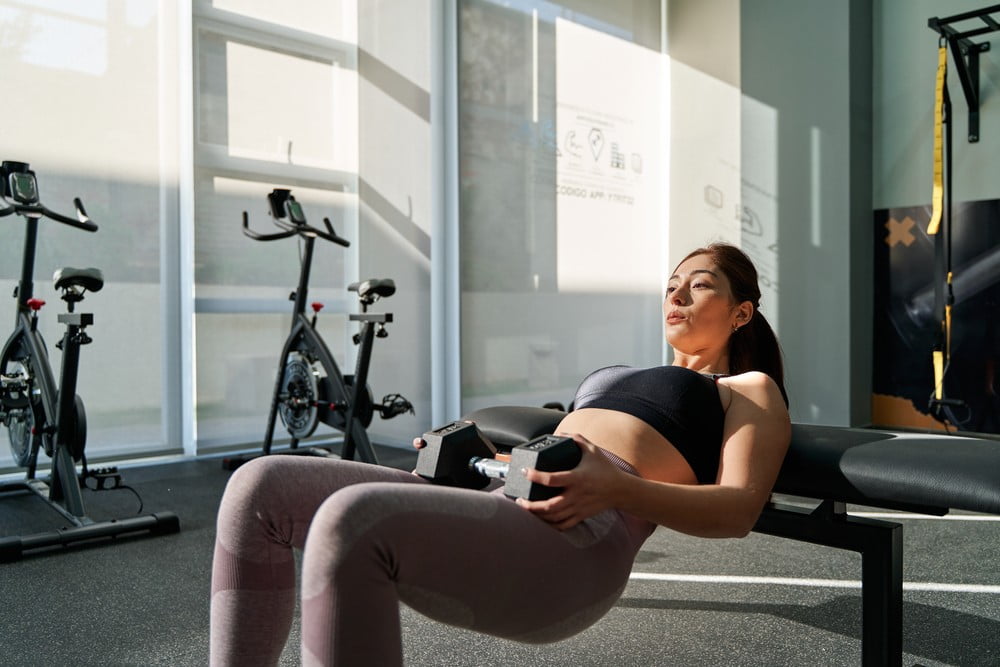
- Start in a carefree position with your back on a bench and a dumbbell located in the crease of your hip.
- Hold one foot at a 90-degree angle to the hip and the other foot up your hips by running it to the floor and squeeze your glute.
- Lower your hips back to the initial position and repeat for the desired number of repetitions. Repeat on both sides.
2. Single Leg Hip Thrust with Shoulders on Bench.
- Lie down with the upper part of your back flat on a bench and your legs flat on the floor in front of you.
- Lift your left leg off the ground, then slowly raise your hips up until your body forms into a straight line from your shoulders to your knees.
- Your left thigh at the top of the rep should be perpendicular to the floor.
- Stop for a count and then slowly return to the initial position.
- Do not let your left foot touch the ground between reps.
3. Single Leg Hip Thrust with Band.
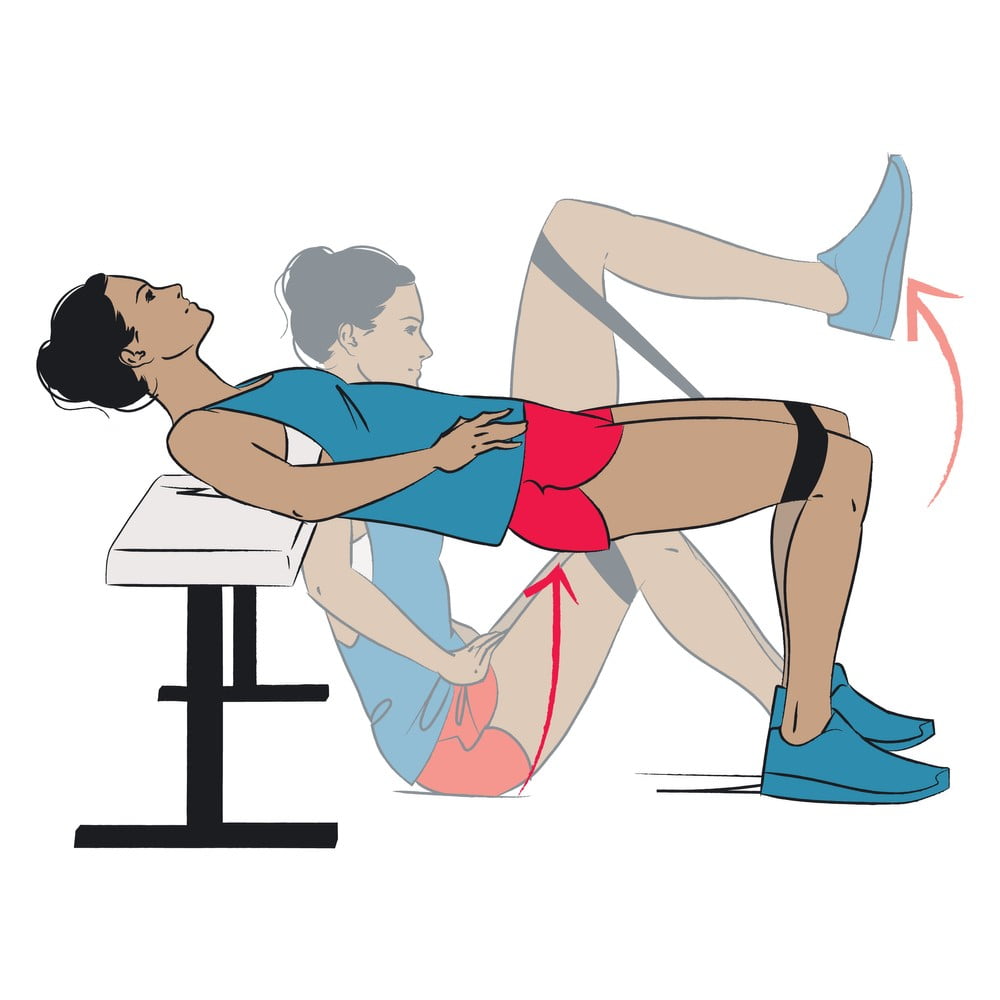
- Place the resistance band around your hips.
- Lie on the ground on your back.
- Raise one of your legs, and your hips
- Lift it up towards the ceiling, pushing it into the heel resting on the floor. Hold on for 2- 3 seconds. Return to the starting position and then repeat it for 10-15 times.
4. Landmine Single Leg Hip Thrust.
If you have access to a landmine set-up, it’s a great way to get heavier with your single-leg hip thrust. You don’t have to worry about being in control of a heavy dumbbell; You can simply place the tip of the barbell on top of your working leg and it remains very stable. For this reason, it is the resistant single leg hip thrust method preferred by almost all advanced lifters. Note that to hit the opposite limb you have to move the bench to the other side of the bar in between the legs.

| Read Now: 10 Unknown Facts About Fitness |
Alternatives.
The alternatives of single leg hip thrust are:
- Deadlifts.
- Stiff leg deadlifts.
- Smith rack donkey kicks.
- Kettlebell swings.
- Good morning.
- Cable pull through.
Bottom Line.
Variations of this exercise can be done by everyone regardless of your initial level of strength. The build-up of single leg strength will surely shift to a strong bilateral hip thrust over time, so don’t be afraid to include one of these in your next schedule!