


















Creatine is an important dietary supplement used by athletes and bodybuilders to help build muscle and increase strength. It is most effective when taken in a cycle, with a period of rest in between. The main goal of taking creatine is to get as much of it into your muscles as possible, and this is done by saturating your muscles with the supplement. But how do you know when your muscles are fully saturated with creatine? In this article, we will discuss the signs that can help you determine when your muscles have reached maximum saturation from creatine.
What is Creatine?
Creatine is an organic acid that occurs naturally in the body, primarily in muscle tissue. It is a popular supplement used by athletes and bodybuilders to increase muscle mass, strength, and performance. It is typically taken in powder or capsule form and is known for its ability to increase energy and provide enhanced muscle recovery.
Benefits of Creatine.
- Increased strength and power output.
- Improved muscle recovery and growth.
- Increased energy levels.
- Improved endurance and muscle performance.
- Helps maintain healthy body composition.
- Improved cognitive function.
What is Creatine Saturation?
Creatine saturation is when the muscle cells have reached their maximum capacity of creatine. It is an organic acid that is found naturally in the body and plays an important role in muscle energy metabolism. Creatine saturation occurs when the muscles have used up all the available creatine stores and are not able to store any more.
How Do I Know When My Muscles Are Fully Saturated From Creatine?(1)
1. Decreased muscular endurance.
When the muscle cells have reached their maximum capacity of creatine, the muscles will not be able to sustain high-intensity exercise for a prolonged period of time.
Related Stories
 What Will Happen After a Month of Training One Arm (or Leg) Only?
 12 Best Calisthenics Biceps Exercises for Effective Muscle Growth
2. Reduced strength.
When the muscle cells have reached their maximum capacity of creatine, the muscles will not be able to produce as much force as they normally would during a given physical activity.
3. Muscle cramps.
When the muscle cells have reached their maximum capacity of creatine, the muscles are more prone to cramping due to the decreased endurance and strength.

4. Delayed onset muscle soreness (DOMS).

When the muscle cells have reached their maximum capacity of creatine, the muscles may experience soreness and stiffness after strenuous exercise.

5. Decreased muscle fiber recruitment.
When the muscle cells have reached their maximum capacity of creatine, the muscles may not be able to recruit as many muscle fibers as they normally do during a given physical activity.
6. Decreased recovery time.
When the muscle cells have reached their maximum capacity of creatine, the muscles may take longer than usual to recover from strenuous exercise.

7. Reduced muscle glycogen storage.
When the muscle cells have reached their maximum capacity of creatine, the muscles may not be able to store as much glycogen as they normally would.
8. Decreased anaerobic power.
When the muscle cells have reached their maximum capacity of creatine, the muscles may not be able to produce as much power during anaerobic activities.
9. Reduced aerobic capacity.
When the muscle cells have reached their maximum capacity of creatine, the muscles may not be able to sustain aerobic activities for a prolonged period of time.
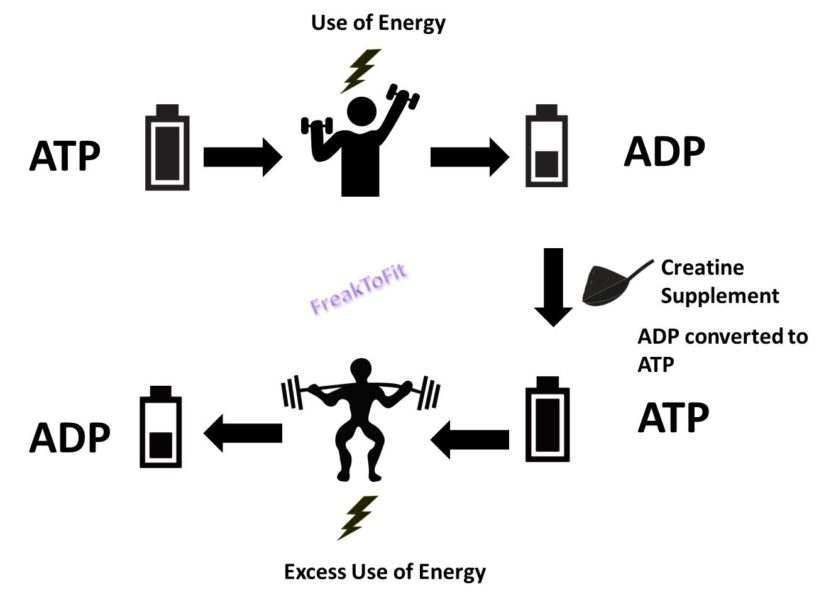
10. Lower ATP production.
When the muscle cells have reached their maximum capacity of creatine, the muscles may not be able to produce as much ATP as they normally would.
Frequently Asked Questions.
1. How long does it take for creatine to fully saturate your muscles?
Muscle saturation typically takes 5–7 days if you follow a loading phase (around 20g per day split into 4 doses). Without loading, taking 3–5g daily usually leads to full saturation within 3–4 weeks. Once saturated, maintaining 3–5g per day is generally sufficient.
2. Do I need to cycle creatine, or can I take it continuously?
Current research suggests that cycling creatine is not necessary for most healthy individuals. Long-term use at recommended doses (3–5g daily) has been shown to be safe in healthy adults. However, some athletes prefer cycling out of habit or personal preference rather than physiological necessity.
3. What happens if I stop taking creatine after my muscles are saturated?
If you stop supplementing, your muscle creatine levels will gradually return to baseline over 3–4 weeks. You may notice a slight decrease in muscle fullness (due to water retention changes) and possibly minor reductions in strength or power output, but you will not “lose” actual muscle tissue immediately.
Bottom Line.
After understanding how creatine works and how to properly supplement it, it is important to know when your muscles are fully saturated with creatine. Knowing when your muscles are saturated with creatine can help you maximize your workouts and will help you get the most out of your supplementation. Staying aware of your body’s response to creatine and being able to identify when your muscles are saturated with it can be beneficial to your overall fitness goals.
+1 Source
FreakToFit has strict sourcing guidelines and relies on peer-reviewed studies, educational research institutes, and medical organizations. We avoid using tertiary references. You can learn more about how we ensure our content is accurate and up-to-date by reading our editorial policy.
- Muscle creatine loading in men; https://pubmed.ncbi.nlm.nih.gov/8828669/