









22 Best Food For Inflammation And Body Pain Japanese Towel Exercise: A New Way To Reduce Belly Fat Lotus Mudra: Benefits, Side Effects, How To Do and Precautions The Diet of a Professional Football Player What is OMAD (One Meal A Day) Diet : Types and Health Benefits 3 Best Alternatives of Covaxin And Covishield For Covid-19 Best 7 Positive Health Effects or Benefits of Surya Namaskar 12 Best Calisthenics Biceps Exercises for Effective Muscle Growth 10 Essential Yoga Poses Every Athletic Woman Should Practice for Strength and Recovery Exercise After Dysport: A Comprehensive Guide Is Sprite Gluten-Free? A Simple Breakdown for Health-Conscious Readers What is Queer Imposter Syndrome: Causes, Symptoms, Test and Treatments Best Resistance Training Programs to Prevent Muscle Loss on GLP-1 Therapy Before and After Lymphatic Drainage Massage: What to Expect, Benefits, Recovery Timeline, and How It Works Adi Mudra: Benefits, Side Effects, How To Do and Precautions What is Hurdle Stretches: Types, Benefits and How To Do 10 Most Effective Yoga Asanas For Weight Gain What are the Side Effects or Risk of Plasma Therapy for Covid-19? Wolff Parkinson White Syndrome: Symptoms and Treatment Simple 9 Exercise for Muscular and V Shape Back Is Crying a Sign of Weakness? Hasta Mudras: Benefits, Types, How To Do and Precautions 7 Major Components Of CBD Vape Pens That You Should Know About 10 Super Food For Rapid Weight Loss For Vegetarian Breathe Easy: Navigating Your Fitness Journey Despite Allergies Varada Mudra: Benefits, Side Effects, How to Do and Precautions How To Heal Your Vestibular Migraine With The Right Diet Angina: Causes, Treatment and Preventive Measures Understanding Their Unique Properties Shrooms Can We Drink Water After Yoga: 10 Important Tips Hang Clean and Press Exercise : Advantages and Steps Is It Possible to Lose Fat and Gain Muscle at the Same Time Through Aerobic and anaerobic training? Top 5 Collagen Hydrolysate Benefits Ranked 11 Super Food to Reduce Stress Level Within A Few Weeks How Much You Should Sleep to Gain Muscle Mass? 5 Yoga Asanas Often Paired with Cow Pose for Better Flexibility and Balance Where Are the Macronutrients Located on a Nutritional Label? A Salted Nut Roll Shot Recipe How Do You Maintain Your Mental Health? Laq Exercise : Types and Steps
Book an Appointment Appointment Ask a Question Ask Question Talk to an Expert Talk2Expert Questions and Answers Q&A Health Tracker Tools Health Tracker Workout and Fitness Workout Nutrition and Diet Nutritious Yoga and Meditation Meditation Health and Well Being Well-Being Mood Music Mood Music Social Service Social Service Listen to Our Podcast Podcast Ebook Store E-book
✓ Evidence Based
11k
Reads
1.3k

Top 5 Exercises That We Can Do At Home To Avoid Sagging Arms

6 min read |
Add FreakToFit on Google

What does this do?

Adding FreakToFit as a preferred source on Google helps customize your search results with more of the sites you trust.

Our editorial process ensures that the information we provide is well-researched and reliable. Learn about our commitment to quality in our editorial policy.

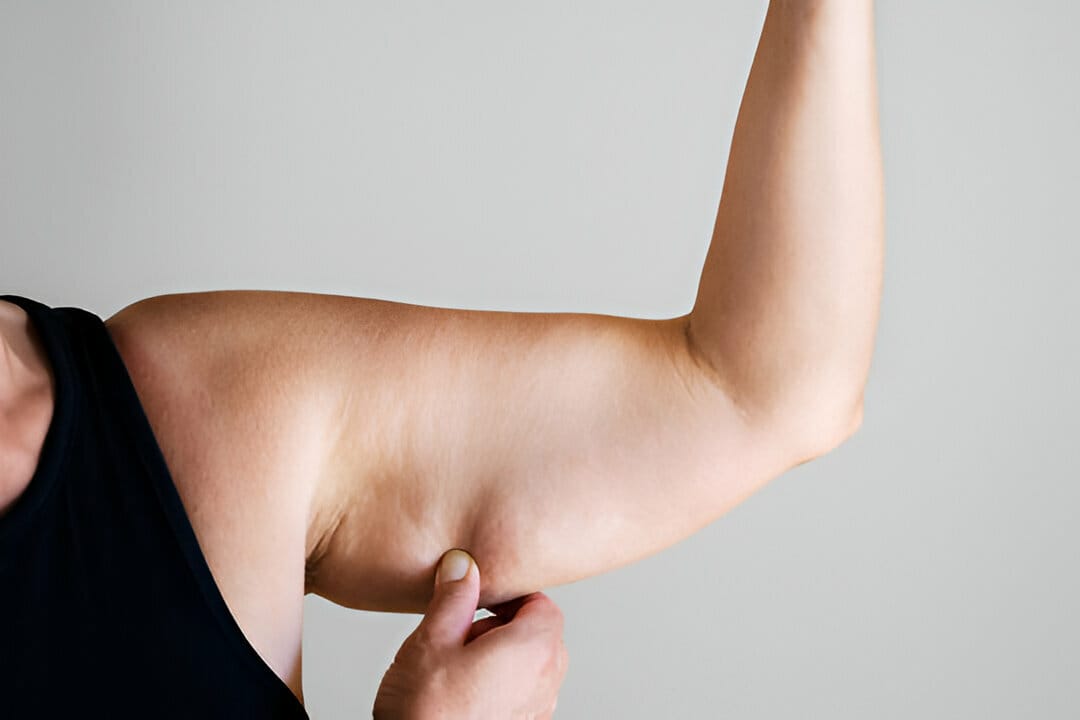
As we age, our arms can become prone to sagging due to loss of muscle tone and skin elasticity. However, there are several exercises that we can do at home to help prevent or reduce sagging arms. By incorporating these exercises into our daily routine, we can strengthen and tone the muscles in our arms, leading to a more toned and youthful appearance. In this article, we will explore top 5 effective exercises that we can do at home to avoid sagging arms.

Benefits of Exercise for Sagging Arms.

1. Increased muscle tone.

Regular exercise can help build and tone the muscles in your arms, reducing the appearance of sagging skin.

2. Improved circulation.

Exercise can help improve blood flow to the arms, which can promote skin elasticity and firmness.

3. Weight loss.

Exercising regularly can help you lose excess weight, which can contribute to sagging arms. By reducing overall body fat, you may also notice a reduction in sagging skin.

4. Increased strength.

Stronger muscles in your arms can help support and lift the skin, reducing the appearance of sagging.

5. Boosted collagen production.

Exercise can stimulate collagen production in the skin, which can improve its elasticity and firmness.

6. Enhanced overall health.

Regular physical activity can improve your overall health and well-being, which can have a positive impact on the appearance of your skin.

7. Improved confidence.

Feeling stronger and healthier from regular exercise can boost your self-confidence and help you feel more comfortable in your own skin.

Book Appointment

Five Exercises That We Can Do At Home To Avoid Sagging Arms.

1. Push-ups, in all their variations.

Push-ups are a classic that we cannot stop doing to work especially the triceps . You can perform the traditional push-up on the floor or, for example, perform inclined or declined push-ups for lower or greater intensity, push-ups with claps to work on power.
desktop

2. Dips or dips with chairs or benches.

To work triceps by mobilizing our own body weight, you can use dips or dips using chairs or benches as a support point .

You can place our feet on the floor and palms of our hands on the chair or use two benches for greater intensity.

3. Isometric of biceps, with a towel or rope.

Although the triceps are the most involved, biceps work can also help reduce flaccidity in our arms .

For this reason, its a suggestion performing an isometric biceps curl using a towel or rope that you can hold between our feet or under a table for example and pull until the material is tense and our biceps contract. You hold it for a few seconds and descend, being able to repeat it again.

4. Isometric triceps extensions, with a towel or sheet.

Above the head, we can perform isometric triceps extensions with both arms using a long towel or sheet that we will hold with our feet and pass behind the body.

In flexion, both arms will hold the towel or sheet and you will pull trying to extend the arms , you hold the contraction, you relax and you can repeat it for a few seconds.

5. Arm flutter or flapping of the arms, lateral or frontal.

To work the arms with repetitive movements that require muscle tension, we can perform arm flaps in different directions and lateral or frontal .

We will move our arms slightly extended and elevated perpendicular to the trunk , up and down or, in small circles, back and forth and with palms facing up or down.

These are five exercises that you can do at home to avoid sagging arms and gain tone in them, without specific equipment.

Precautions.

  • Start with light weights and gradually increase the intensity to avoid straining your muscles.
  • Focus on proper form and technique to target the correct muscles and prevent injury.
  • Incorporate a variety of exercises that target the triceps, biceps, and shoulders to tone and strengthen the arms.
  • Include both strength training and cardio exercises in your routine to burn fat and build muscle.
  • Stay consistent with your workout routine and avoid overtraining to give your muscles time to rest and recover.
  • Stay hydrated and eat a balanced diet to support your fitness goals and overall health.
Bottom Line.

There are several simple and effective exercises that can be done at home to prevent sagging arms. By incorporating these exercises into a regular fitness routine, individuals can strengthen and tone their arm muscles, improving overall arm strength and appearance. Consistency and dedication to these exercises can help individuals achieve their desired results and avoid sagging arms in the future. Remember to consult with a fitness professional before beginning any new exercise routine to ensure safety and effectiveness.


Last reviewed on April 11, 2026

How we reviewed this article:

ⓘ Sources

FreakToFit follows strict sourcing guidelines and relies on peer-reviewed studies, academic research institutions, and reputable medical organizations. We only use high-quality, credible sources to ensure the accuracy and integrity of our content.

🕖 History

Our experts continually monitor the health and wellness space, and we update our articles when new information becomes available

Current Version

Written by Andrew Siepka (Fitness Expert), NSCA

Reviewed by Kapil Yadav

Updated: Apr 11, 2026

Mar 1, 2024

Written by Andrew Siepka (Fitness Expert), NSCA

Reviewed by Kapil Yadav

This workout advice is for general fitness guidance. Always check with your doctor or certified trainer before beginning any exercise program, especially if you have pre-existing conditions or injuries. Know More

Andrew Siepka, a dedicated author and NSCA Certified Strength and Conditioning Specialist (CSCS), channels his expertise towards enhancing athletic performance. Know More. Learn about our editorial process.
NSCA Certified Strength and Conditioning Specialist
20 article(s) publishedFitness
Kapil Yadav

Fitness Instructor
Kapil Yadav, based in Indore, Madhya Pradesh, India, is a Certified Fitness Trainer and Transformation Expert. Grounded in his educational journey at Devi Ahilya Vishwavidyalaya,...
Certified Fitness Trainer and Transformation Expert
Was this article helpful?

How helpful was it?

Change

Thank you!

Your feedback has been sent successfully.

How helpful was it? How can we improve it? This article changed my life! Please tell us how it changed your life 👍 This article was informative. Please tell us how it was informative ! This article contains incorrect information. Please tell us what was incorrect 👎 This article doesn't have the information I'm looking for. Please tell us what was missing Submission Error: Unknown error Submission processing failed:

Leave a Comment

×
SUBSCRIBE TO GET LATEST FITNESS & NUTRITION UPDATES
Enter your email below and join us for fitness journey
opt-in image
Advertisement
Advertisement
Advertisement
Advertisement
Advertisement
Advertisement
Advertisement