Alex is a distinguished certified personal trainer, boasting an impressive 11-year track record in the fitness industry. Widely recognized, he has cultivated a substantial social…
Hannah Shine, uma experiente personal trainer com 6 anos de experiência, possui um diploma em nutrição e certificação pela Australian Fitness Academy. saiba mais.
Aprenda sobre nossos Processo editorial.
Our editorial process ensures that the information we provide is well-researched and reliable.
Learn about our commitment to quality in
our editorial policy.
Ouça este artigo
The Fast Facts
Se você é um entusiasta experiente de Pilates ou um iniciante que deseja experimentar algo novo, os exercícios de pilates aquáticos oferecem uma maneira única e agradável de melhorar sua forma geral e bem-estar.
Water Pilates exercises are a popular form of aquatic exercise that combines the principles of Pilates with the resistance and buoyancy of water.
. Water Pilates oferece uma combinação única de exercícios físicos e terapia com água, proporcionando uma experiência calmante e rejuvenescedora que ajuda a aliviar o estresse e a ansiedade.
Os exercícios de pilates de água são uma forma popular de exercícios aquáticos que combina os princípios do pilates com a resistência e flutuabilidade da água. Este treino de baixo impacto oferece inúmeros benefícios para indivíduos de todos os níveis de condicionamento físico, incluindo aumento de força, flexibilidade e resistência cardiovascular.
Pilates de água exercícios Não são apenas eficazes, mas também divertidos e refrescantes, tornando-os uma ótima opção para quem procura apimentar sua rotina de exercícios. Neste artigo, exploraremos os benefícios dos exercícios de Pilates aquáticos e forneceremos um guia passo a passo sobre como fazê-los corretamente para maximizar sua eficácia.
Se você é um entusiasta experiente de Pilates ou um iniciante que deseja experimentar algo novo, os exercícios de pilates aquáticos oferecem uma maneira única e agradável de melhorar sua forma geral e bem-estar.
A água pilates, também conhecido como Aqua Pilates, oferece inúmeras vantagens e benefícios para os indivíduos que buscam melhorar seus níveis de condicionamento físico e bem-estar geral. Aqui estão oito Benefícios da água Pilatos:
1 Treino de baixo impacto.
Water Pilates fornece uma opção de exercício de baixo impacto que é suave nas articulações. A flutuabilidade da água sustenta o corpo, reduzindo o estresse nos ossos, músculos e tendões. Isso o torna um treino ideal para pessoas que se recuperam de lesões ou sofrem de condições como artrite.(1)
2 Aumento da força muscular.
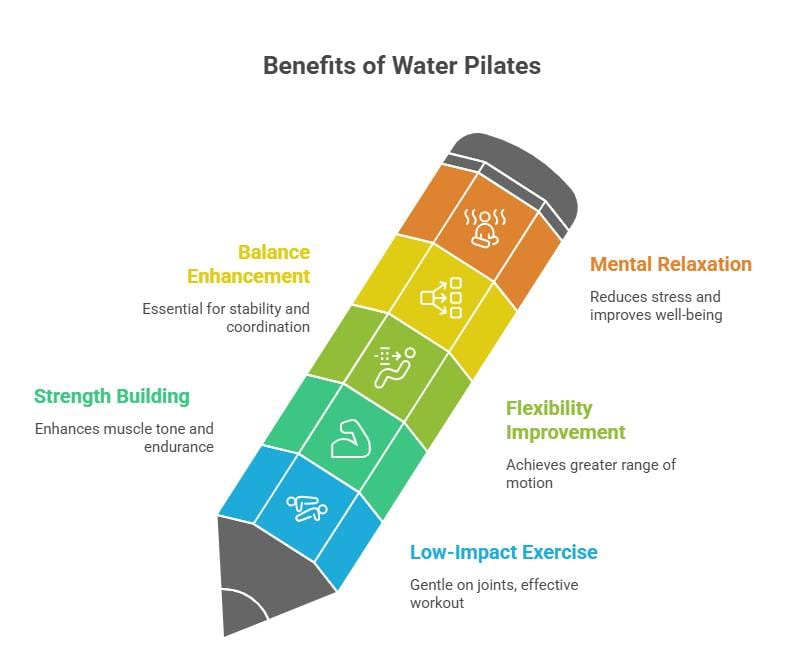
Benefícios do Pilates aquático
A realização de exercícios de pilates em água requer mais esforço devido à resistência da água. Essa resistência ajuda a fortalecer e tonificar os músculos, principalmente os músculos do núcleo, resultando em uma melhor postura, estabilidade e força geral.
3 Flexibilidade aprimorada.
O Pilates de Água permite uma maior amplitude de movimento devido ao suporte da água. A flutuabilidade permite o aumento do alongamento e o alongamento dos músculos, promovendo flexibilidade e reduzindo o aperto muscular.
4 Aptidão cardiovascular aprimora.
Os exercícios à base de água aumentam naturalmente a frequência cardíaca, promovendo a aptidão cardiovascular. A água pilates combina o condicionamento cardiovascular com os benefícios de pilates, resultando em um treino abrangente que melhora a saúde e a resistência do coração.
5 Melhor equilíbrio e coordenação.
A resistência da água desafia o equilíbrio e a coordenação do corpo, exigindo um envolvimento constante dos músculos estabilizadores. Praticar pilates ajuda a melhorar o equilíbrio e a propriocepção, reduzindo o risco de quedas e melhorando a coordenação geral.(2)
6 Reabilitação e prevenção de lesões.
A flutuabilidade e a resistência da água o tornam um excelente ambiente para fins de reabilitação. Pilates de água pode ajudar no Recuperação de várias lesões, como entorses ou tensões, fornecendo um treino de baixo impacto que ajuda a reconstruir a força e a flexibilidade sem exacerbar a lesão.(3)
7 Relaxamento mental e alívio do estresse.
Estar na água tem um efeito calmante na mente, promovendo o relaxamento mental e Reduzindo os níveis de estresse. Water Pilates oferece uma combinação única de exercícios físicos e terapia com água, proporcionando uma experiência calmante e rejuvenescedora que ajuda a aliviar o estresse e a ansiedade.(4)
8 Treino divertido e divertido.
A água Pilates adiciona um elemento de diversão ao Pilates tradicional exercícios. A flutuabilidade da água permite uma sensação de leveza e liberdade de movimento, tornando o treino agradável e envolvente. Isso pode levar a um aumento da motivação e da adesão a uma rotina regular de exercícios.(5)
Efeitos do exercício aquático no desempenho físico
💡 Dicas FreaktoFit.com Water Pilates offers a multitude of benefits, including low-impact exercise, increased muscle strength, improved flexibility, enhanced cardiovascular fitness, better balance and coordination, rehabilitation and injury prevention, mental relaxation, and an enjoyable workout experience. Incorporating Water Pilates into your A rotina de exercícios pode levar a melhorias significativas no bem-estar físico e mental geral.
ponto-chave
Por que é importante
exercícios de baixo impacto
Suave nas articulações e ideal para recuperação de lesões.
Construção de força
A resistência à água tonifica o núcleo e os músculos estabilizadores.
Melhora a flexibilidade
A flutuabilidade permite um alongamento mais profundo e seguro.
aumenta o equilíbrio
A resistência constante aumenta a coordenação e a estabilidade.
relaxamento mental
A água reduz o estresse e cria uma experiência de treino calmante.
Encontre uma piscina ou um corpo de água adequado para exercícios de Pilates de água.
Comece aquecendo seu corpo com alguns alongamentos leves e movimentos na água.
Comece com exercícios básicos de pilates com água, como caminhadas na água ou corridas no local.
Progressivamente progrida para exercícios mais desafiadores, como levantamentos de pernas, círculos de braços e rotações de núcleo.
Concentre-se em manter a forma adequada e envolver os músculos do núcleo durante cada exercício.
Use a resistência à água a seu favor, movendo-se lentamente e com controle.
Incorpore adereços, como macarrão de água ou halteres, para maior resistência ou suporte.
Refresque-se com alguns alongamentos suaves e exercícios de relaxamento na água.
Lembre-se de se manter hidratado e ouvir as limitações do seu corpo durante o treino.
Se você é novo no Water Pilates, considere fazer uma aula ou trabalhar com um instrutor certificado para garantir a técnica e segurança adequadas.
O Pilates de água é eficaz para iniciantes?
Water Pilates para iniciantes é uma maneira revigorante e revigorante de se apresentar ao mundo de Pilates. Combinando os princípios do Pilates com a resistência e flutuabilidade da água, este baixo impacto O treino oferece inúmeros benefícios.
A água fornece um ambiente de suporte e suave, reduzindo a tensão nas articulações, enquanto ainda envolve o Músculos para um treino de corpo inteiro. Se você é novo no exercício ou na recuperação de uma lesão, o Water Pilates oferece uma maneira segura e eficaz de aumentar a força, melhorar a flexibilidade e melhorar o bem-estar geral.
Além disso, a natureza calmante da água cria uma atmosfera serena, permitindo que você relaxe e se concentre em seus movimentos, tornando-a a escolha ideal para quem busca o rejuvenescimento físico e mental.
Consulte um instrutor certificado de água de Pilates antes de iniciar qualquer rotina de Pilates em água.
Escolha uma piscina ou corpo de água adequado para Pilates de água, garantindo que seja profundo e suficientemente espaçoso para se mover livremente.
Use roupas de banho adequadas que permitam a facilidade de movimento e conforto na água.
Aqueça-se antes de iniciar sua rotina de pilates aquático para preparar seus músculos e articulações para o exercício.
Comece com exercícios básicos e progrida gradualmente, ouvindo seu corpo e evitando qualquer movimento que cause dor ou desconforto.
Concentre-se em manter a forma e o alinhamento adequados em cada exercício, envolvendo os músculos do núcleo para apoiar seus movimentos.
Use a resistência da água a seu favor, movendo-se devagar e propositalmente, permitindo que seus músculos trabalhem contra a resistência da água.
Mantenha-se hidratado bebendo água antes, durante e depois da sessão de Pilates com água.
Faça pausas e descanso quando necessário, especialmente se você é novo no Pilates aquático ou se sente cansado.
prática Técnicas de respiração adequada, inspirando profundamente pelo nariz e expirando totalmente pela boca durante cada exercício.
Incorpore modificações ou variações para atender ao seu nível de condicionamento físico e necessidades individuais.
Arrefece e alongue após a sessão de Pilates com água para promover a flexibilidade e prevenir a dor muscular.
experiência pessoal.
Eu sou Amelia R., gerente corporativa de Bangalore, na Índia, quando experimentei pela primeira vez Pilates aquático, honestamente não esperava muito. Eu já havia feito Pilates no tapete e achei que a versão da piscina seria muito fácil. Mas, no momento em que entrei em águas até o peito, percebi o quão diferente era toda a experiência.
Cada movimento que parecia simples em terra de repente se tornava lento, controlado e surpreendentemente intenso. Até mesmo levantar o joelho ou estender a perna parecia empurrar algo invisível – a água continuou resistindo a mim.
A flutuabilidade foi o maior divisor de águas. Em terra, sempre me preocupei com a parte inferior das costas e joelhos, especialmente ao manter o equilíbrio. Na água, esse medo desapareceu.
Eu não me sentia pesado e não sentia que poderia “cair” de uma pose. Em vez disso, eu poderia explorar o movimento – ajustando minha coluna, respirando mais fundo e deixando meus quadris afundarem naturalmente. Pela primeira vez, senti que estava aprendendo Pilates sem lutar contra meu corpo.
No dia seguinte à minha primeira sessão, senti dor em lugares que os treinos normais de ginástica nunca alcançaram – especialmente ao redor do meu núcleo, parte interna das coxas e pequenos músculos estabilizadores. Não foi doloroso; foi o tipo de dor que lembra que seu corpo realmente funcionou.
Meu momento favorito foi a prancha de macarrão. No tapete, segurar uma prancha é uma batalha mental. Na água, eu estava flutuando, inclinando-me para frente, o macarrão sob meus braços como um apoio suave.
Meu corpo estava trabalhando duro, mas não me sentia trancado ou tenso. Eu poderia segurar por mais tempo, respirar melhor e realmente gostar.
O que mais me surpreendeu foi o quão pacífico parecia. O som da água ao meu redor, o movimento lento, o foco na respiração – não parecia exercício no sentido tradicional. Era mais como uma terapia. Eu estava movendo meu corpo, mas também acalmando minha mente. Cada sessão me deixava mais leve e relaxado, como a tensão em meus ombros se dissolveu na piscina.
Não notei mudanças drásticas na primeira semana, mas depois de três a quatro sessões, minha postura melhorou. Meus quadris pareciam mais abertos. Minhas costas estavam fortes sem rigidez. Eu não estava perseguindo a intensidade – estava gostando do treino – e isso me fez aparecer de forma consistente.
Após um mês, as mudanças eram impossíveis de ignorar. As roupas começaram a se encaixar de forma diferente, e eu me movi com mais confiança. Não uma grande perda de peso, mas uma versão melhor de como meu corpo parecia e se sentia.
O Pilates de Água me ensinou algo que não aprendi com os treinos de academia ou Pilates tradicionais: quando seu corpo se sente apoiado, você realmente tem um desempenho melhor. E isso faz você querer continuar. É por isso que ainda volto à piscina sempre que meu corpo precisa de um reset.
“Cada movimento simples de Pilates se tornou mais difícil na água, mas de alguma forma parecia mais suave em meu corpo, e foi aí que percebi o quão poderoso o Pilates de água realmente é.”
— Amelia R., Gerente Corporativa
opinião de um especialista.
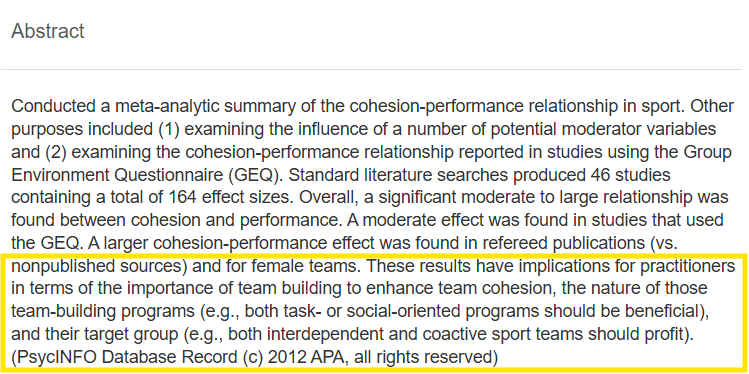
De acordo com a Dra. Elena Maddox, DPT, especialista em reabilitação aquática, o Pilates de água aproveita a flutuabilidade e a pressão hidrostática da água para reduzir o carregamento articular, ao mesmo tempo em que aumenta o engajamento muscular, tornando-o um dos métodos mais seguros e eficientes para melhorar a força do núcleo, a mobilidade e o controle neuromuscular.
Perguntas frequentes.
1 O Pilates de água é bom para iniciantes?
Sim. Water Pilates é amigável para iniciantes porque a água suporta seu corpo, reduz o estresse articular e facilita o equilíbrio. Você pode começar com movimentos simples, como caminhadas aquáticas, levantamentos de pernas e tábuas assistidas por macarrão.
2 2. O Pilates de água pode ajudar com a dor nas articulações ou artrite?
Com certeza. A flutuabilidade da água reduz a pressão nas juntas e permite um movimento mais suave. Muitas pessoas com artrite, dores no joelho ou lesões anteriores consideram o Pilates de água mais confortável do que os exercícios no chão.
3 3. Quantas vezes por semana devo fazer pilates de água?
Para resultados perceptíveis, 2 a 3 sessões por semana são ideais. Cada sessão pode ser de 30 a 45 minutos, incluindo aquecimento e tempo de espera.
4 Preciso de equipamentos para pilates aquáticos?
Nenhum equipamento é necessário, mas o macarrão de piscina, os cintos aqua ou halteres de água podem aumentar o suporte ou a resistência quando você se sentir confortável com os exercícios básicos.
5 O Pilates de água pode ajudar na perda de peso?
Sim, especialmente quando combinado com movimentos regulares e nutrição saudável. A resistência à água aumenta a massa muscular e aumenta o envolvimento do núcleo, o que ajuda a queimar mais calorias e a melhorar a composição corporal ao longo do tempo.
Tire.
Water Pilates é uma fantástica opção de exercício que combina os benefícios do Pilates tradicional com a resistência e o suporte da água. Ele fornece um treino de baixo impacto que é suave nas articulações, enquanto desafia os músculos e promove força geral, flexibilidade e equilíbrio.
Water Pilates também oferece uma experiência revigorante e revigorante, tornando-se a escolha ideal para indivíduos de todos os níveis de condicionamento físico e idades. Se você está procurando Melhore a força do seu núcleo, reabilitar uma lesão ou simplesmente desfrutar de um treino divertido e eficaz, o Water Pilates definitivamente vale a pena tentar. Portanto, pegue seu maiô e mergulhe no mundo de Pilates aquático para uma experiência de condicionamento físico refrescante e rejuvenescedor.
+5 fontes
aberração A FreaktoFit tem diretrizes rígidas de sourcing e conta com estudos revisados por pares, institutos de pesquisa educacional e organizações médicas. Evitamos o uso de referências terciárias. Você pode aprender mais sobre como garantimos que nosso conteúdo seja preciso e atualizado, lendo nosso política editorial.
Efeitos do exercício aquático na flexibilidade, força e aptidão aeróbica em adultos com osteoartrite do quadril ou joelho; https://pubmed.ncbi.nlm.nih.gov/17214750/
Efeitos dos exercícios aquáticos na aptidão física e na qualidade de vida em mulheres na pós-menopausa: uma revisão sistemática e meta-análise atualizadas; https://pubmed.ncbi.nlm.nih.gov/37361170/
Nossa equipe de especialistas está sempre monitorando o campo de saúde e bem-estar, garantindo que nossos artigos sejam atualizados imediatamente à medida que novas informações surgirem.
Veja nosso processo editorial
Versão atual 19 de março de 2026
Written By: Hannah Shine, PT
Reviewed By: Alex Crockford
Dez 3, 2025
Written By: Hannah Shine, PT
Reviewed By: Alex Crockford
Este conselho de treino é para orientação geral de condicionamento físico. Sempre verifique com seu médico ou treinador certificado antes de iniciar qualquer programa de exercícios, especialmente se você tiver condições ou lesões pré-existentes.
saiba mais
Hannah Shine, uma experiente personal trainer com 6 anos de experiência, possui um diploma em nutrição e certificação pela Australian Fitness Academy. saiba mais.
Aprenda sobre nossos Processo editorial.
Alex is a distinguished certified personal trainer, boasting an impressive 11-year track record in the fitness industry. Widely recognized, he has cultivated a substantial social…







































 treino

 meditação


 podcast
 e-book

 14 benefícios incríveis para a saúde da caminhada regular
 7 exercícios perene para barriga lisa e 6 pack abs
 opinião de um especialista.