















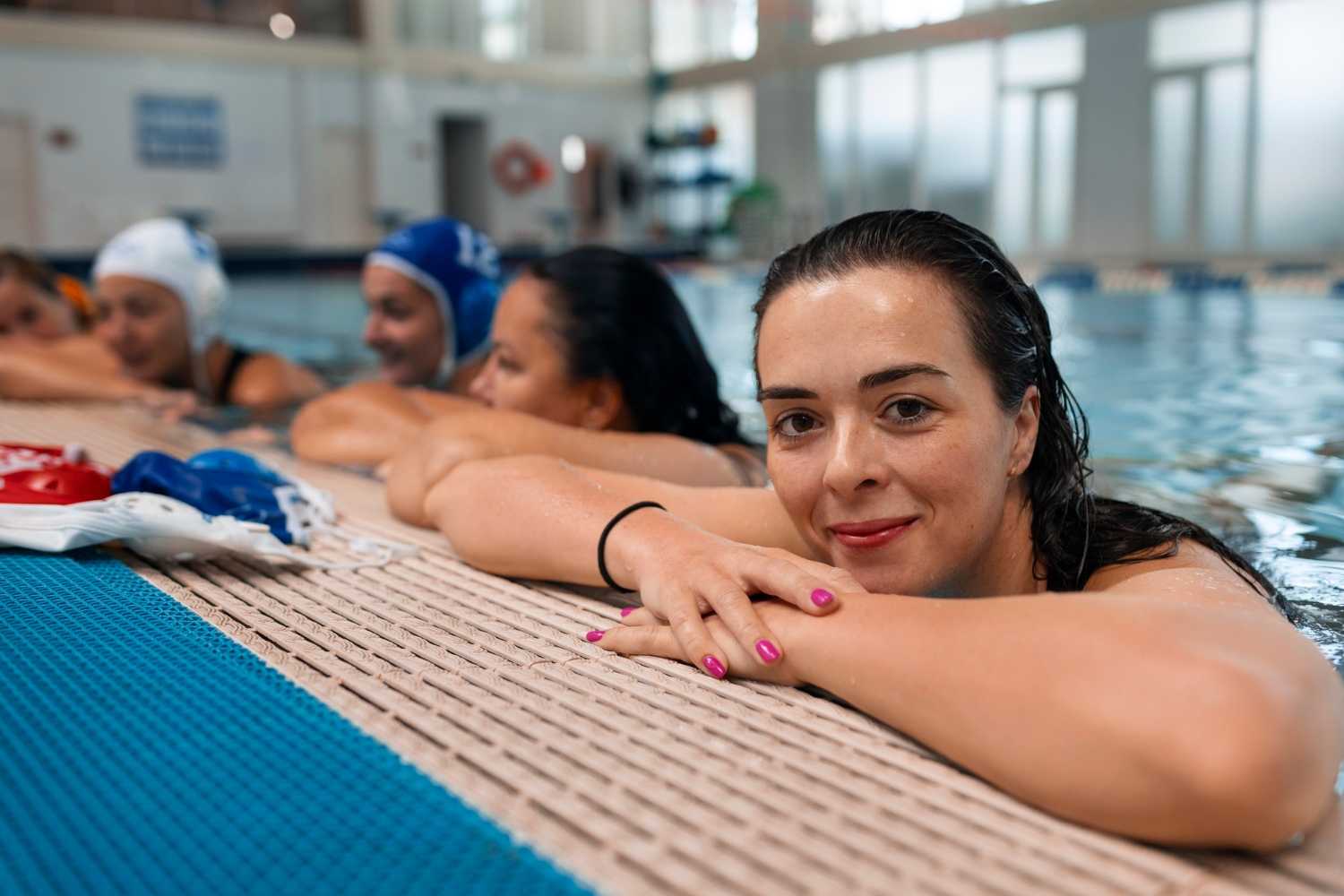
Water Pilates exercises are a popular form of aquatic exercise that combines the principles of Pilates with the resistance and buoyancy of water. This low-impact workout offers numerous benefits for individuals of all fitness levels, including increased strength, flexibility, and cardiovascular endurance.
Water Pilates exercises are not only effective but also fun and refreshing, making them a great option for those looking to spice up their fitness routine. In this article, we will explore the benefits of water pilates exercises and provide a step-by-step guide on how to do them correctly to maximize their effectiveness.
Whether you are a seasoned Pilates enthusiast or a beginner looking to try something new, water pilates exercises offer a unique and enjoyable way to improve your overall fitness and well-being.
8 benefits of Water Pilates.
Water Pilates, also known as aqua Pilates offers numerous advantages and benefits for individuals seeking to improve their fitness levels and overall well-being. Here are eight benefits of Water Pilates:
Related Stories
 Who Can Experience The Runner’s High?
 What Are Lifting Grips? Can They Help You In A Workout?
1. Low-impact workout.
Water Pilates provides a low-impact exercise option that is gentle on the joints. The water’s buoyancy supports the body, reducing stress on the bones, muscles, and tendons. This makes it an ideal workout for individuals recovering from injuries or suffering from conditions like arthritis.(1)
2. Increased muscle strength.
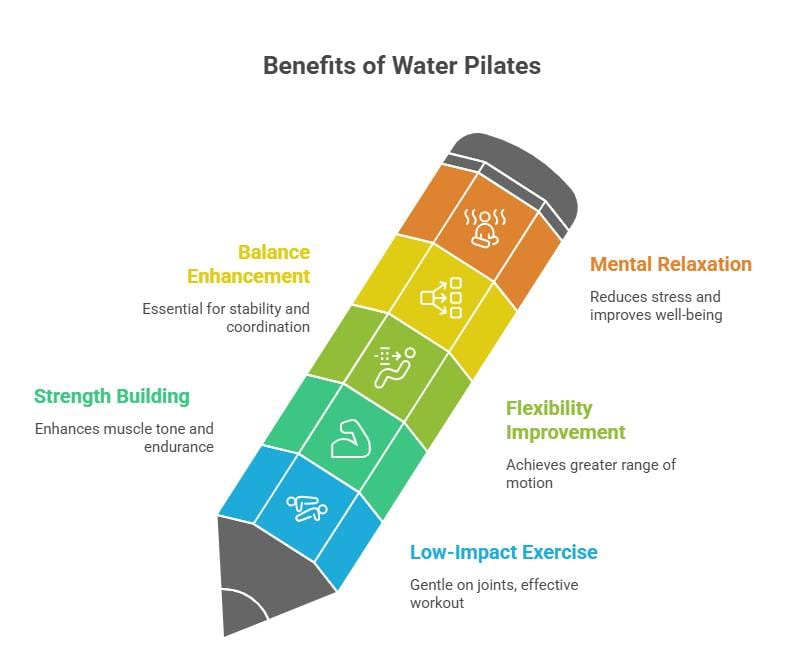
Performing Pilates exercises in water requires more effort due to the water’s resistance. This resistance helps to strengthen and tone muscles, particularly the core muscles, resulting in improved posture, stability, and overall strength.
3. Improved flexibility.
Water Pilates enables a greater range of motion due to the water’s support. The buoyancy allows for increased stretching and elongation of muscles, promoting flexibility and reducing muscle tightness.
4. Enhanced cardiovascular fitness.
Water-based exercises naturally increase the heart rate, promoting cardiovascular fitness. Water Pilates combines cardiovascular conditioning with the benefits of Pilates, resulting in a comprehensive workout that improves heart health and endurance.

5. Better balance and coordination.
The water’s resistance challenges the body’s balance and coordination, requiring constant engagement of stabilizing muscles. Practicing Water Pilates helps to improve balance and proprioception, reducing the risk of falls and enhancing overall coordination.(2)
6. Rehabilitation and injury prevention.
The buoyancy and resistance of water make it an excellent environment for rehabilitation purposes. Water Pilates can aid in the recovery from various injuries, such as sprains or strains, by providing a low-impact workout that helps rebuild strength and flexibility without exacerbating the injury.(3)

7. Mental relaxation and stress relief.
Being in water has a calming effect on the mind, promoting mental relaxation and reducing stress levels. Water Pilates offers a unique combination of physical exercise and water therapy, providing a soothing and rejuvenating experience that helps alleviate stress and anxiety.(4)
8. Fun and enjoyable workout.
Water Pilates adds an element of fun to traditional Pilates exercises. The water’s buoyancy allows for a sense of weightlessness and freedom of movement, making the workout enjoyable and engaging. This can lead to increased motivation and adherence to a regular exercise routine.(5)
| 💡 Tips FreakToFit.com Water Pilates offers a multitude of benefits, including low-impact exercise, increased muscle strength, improved flexibility, enhanced cardiovascular fitness, better balance and coordination, rehabilitation and injury prevention, mental relaxation, and an enjoyable workout experience. Incorporating Water Pilates into your fitness routine can lead to significant improvements in overall physical and mental well-being. |
| Key Point | Why it Matters |
|---|---|
| Low-impact exercise | Gentle on joints and ideal for injury recovery. |
| Strength building | Water resistance tones core and stabilizing muscles. |
| Improves flexibility | Buoyancy allows deeper, safer stretching. |
| Boosts balance | Constant resistance enhances coordination and stability. |
| Mental relaxation | Water reduces stress and creates a calming workout experience. |
How to do Water Pilates exercises?
- Find a pool or body of water that is suitable for water pilates exercises.
- Start by warming up your body with some light stretches and movements in the water.
- Begin with basic water pilates exercises such as water walking or jogging in place.
- Gradually progress to more challenging exercises like leg lifts, arm circles, and core rotations.
- Focus on maintaining proper form and engaging your core muscles throughout each exercise.
- Use water resistance to your advantage by moving slowly and with control.
- Incorporate props such as water noodles or dumbbells for added resistance or support.
- Cool down with some gentle stretches and relaxation exercises in the water.
- Remember to stay hydrated and listen to your body’s limitations during the workout.
- If you are new to water pilates, consider taking a class or working with a certified instructor to ensure proper technique and safety.
Is water Pilates effective for beginners?
Water pilates for beginners is a refreshing and invigorating way to introduce yourself to the world of pilates. Combining the principles of pilates with the resistance and buoyancy of water, this low-impact workout offers numerous benefits.
The water provides a supportive and gentle environment, reducing strain on joints while still engaging the muscles for a full-body workout. Whether you are new to exercise or recovering from an injury, water pilates offers a safe and effective way to build strength, improve flexibility, and enhance overall well-being.
Additionally, the calming nature of water creates a serene atmosphere, allowing you to relax and focus on your movements, making it an ideal choice for those seeking both physical and mental rejuvenation.
Points Keep in mind While Doing water Pilates.
- Consult with a certified water Pilates instructor before starting any water Pilates routine.
- Choose a pool or body of water that is suitable for water Pilates, ensuring it is deep enough and has enough space to move freely.
- Wear appropriate swimwear that allows for ease of movement and comfort in the water.
- Warm up before starting your water Pilates routine to prepare your muscles and joints for exercise.
- Start with basic exercises and progress gradually, listening to your body and avoiding any movements that cause pain or discomfort.
- Focus on maintaining proper form and alignment throughout each exercise, engaging your core muscles to support your movements.
- Use the water’s resistance to your advantage by moving slowly and purposefully, allowing your muscles to work against the water’s resistance.
- Stay hydrated by drinking water before, during, and after your water Pilates session.
- Take breaks and rest when needed, especially if you are new to water Pilates or feel fatigued.
- Practice proper breathing techniques, inhaling deeply through your nose and exhaling fully through your mouth during each exercise.
- Incorporate modifications or variations to suit your fitness level and individual needs.
- Cool down and stretch after your water Pilates session to promote flexibility and prevent muscle soreness.
Personal Experience.
I am Amelia R., Corporate Manager from Bangalore, India, When I first tried Water Pilates, I honestly didn’t expect much. I had already done Pilates on the mat, and I thought the pool version would feel too easy. But the moment I stepped into chest-deep water, I realized how different the whole experience was.
Every move that felt simple on land suddenly became slow, controlled, and surprisingly intense. Even lifting my knee or extending my leg felt like pushing against something invisible — the water kept resisting me.
The buoyancy was the biggest game-changer. On land, I always worried about my lower back and knees, especially when holding balance. In the water, that fear disappeared.
I didn’t feel heavy, and I didn’t feel like I could “fall out” of a pose. Instead, I could explore the movement — adjusting my spine, breathing deeper, and letting my hips sink naturally into alignment. For the first time, I felt like I was learning Pilates without fighting my body.
The day after my first session, I felt soreness in places that normal gym workouts never reached — especially around my core, inner thighs, and small stabilizing muscles. It wasn’t painful; it was the kind of soreness that reminds you your body actually worked.
My favorite moment was the noodle plank. On the mat, holding a plank is a mental battle. In the water, I was floating, leaning forward, the noodle under my arms like a gentle support.
My body was working hard, but I didn’t feel locked or strained. I could hold for longer, breathe better, and actually enjoy it.
What surprised me most was how peaceful it felt. The sound of water around me, the slow movement, the focus on breath — it didn’t feel like exercise in the traditional sense. It was more like therapy. I was moving my body, but also calming my mind. Every session left me feeling lighter and more relaxed, like the tension in my shoulders dissolved in the pool.
I didn’t notice drastic changes in the first week, but after three to four sessions, my posture improved. My hips felt more open. My back felt strong without stiffness. I wasn’t chasing intensity — I was enjoying the workout — and that made me show up consistently.
After a month, the changes were impossible to ignore. Clothes started fitting differently, and I moved with more confidence. Not huge weight loss, but a better version of how my body looked and felt.
Water Pilates taught me something I didn’t learn from gym workouts or traditional Pilates: when your body feels supported, you actually perform better. And that makes you want to keep going. That’s why I still return to the pool whenever my body needs a reset.
“Every simple Pilates move became harder in the water, yet somehow felt gentler on my body, and that’s when I realized how powerful Water Pilates actually is.”
 Expert Opinion.
As per Dr. Elena Maddox, DPT, Aquatic Rehabilitation Specialist, Water Pilates leverages the buoyancy and hydrostatic pressure of water to reduce joint loading while simultaneously increasing muscular engagement, making it one of the safest and most efficient methods for improving core strength, mobility, and neuromuscular control.
Frequently Asked Questions.
1. Is Water Pilates good for beginners?
Yes. Water Pilates is beginner-friendly because the water supports your body, reduces joint stress, and makes balancing easier. You can start with simple movements like water walking, leg lifts, and noodle-assisted planks.
2. Can Water Pilates help with joint pain or arthritis?
Absolutely. The buoyancy of water reduces pressure on joints and allows smoother movement. Many people with arthritis, knee pain, or past injuries find Water Pilates more comfortable than floor workouts.
3. How many times per week should I do Water Pilates?
For noticeable results, 2–3 sessions per week is ideal. Each session can be 30–45 minutes, including warm-up and cooldown.
4. Do I need equipment for Water Pilates?
No equipment is required, but pool noodles, aqua belts, or water dumbbells can increase support or resistance once you’re comfortable with basic exercises.
5. Can Water Pilates help with weight loss?
Yes, especially when combined with regular movement and healthy nutrition. Water resistance builds muscle and increases core engagement, which helps burn more calories and improve body composition over time.
Take Away.
Water Pilates is a fantastic exercise option that combines the benefits of traditional Pilates with the added resistance and support of water. It provides a low-impact workout that is gentle on the joints while still challenging the muscles and promoting overall strength, flexibility, and balance.
Water Pilates also offers a refreshing and invigorating experience, making it an ideal choice for individuals of all fitness levels and ages. Whether you are looking to improve your core strength, rehabilitate an injury, or simply enjoy a fun and effective workout, water Pilates is definitely worth a try.
So, grab your swimsuit and dive into the world of water Pilates for a refreshing and rejuvenating fitness experience.
+5 Sources
FreakToFit has strict sourcing guidelines and relies on peer-reviewed studies, educational research institutes, and medical organizations. We avoid using tertiary references. You can learn more about how we ensure our content is accurate and up-to-date by reading our editorial policy.
- Effects of aquatic exercise on flexibility, strength and aerobic fitness in adults with osteoarthritis of the hip or knee; https://pubmed.ncbi.nlm.nih.gov/17214750/
- Effects of aquatic therapy on balance in older adults: a systematic review and meta-analysis; https://pubmed.ncbi.nlm.nih.gov/34817841/
- Effects of aquatic exercises on physical fitness and quality of life in postmenopausal women: an updated systematic review and meta-analysis; https://pubmed.ncbi.nlm.nih.gov/37361170/
- Aquatic exercise and mental health: A scoping review; https://www.sciencedirect.com/science/article/pii/S096522992200022X
- Effects of Aquatic Exercise on Physical Performance in Older Adults: A Systematic Review and Meta-Analysis; https://pubmed.ncbi.nlm.nih.gov/38710486/