















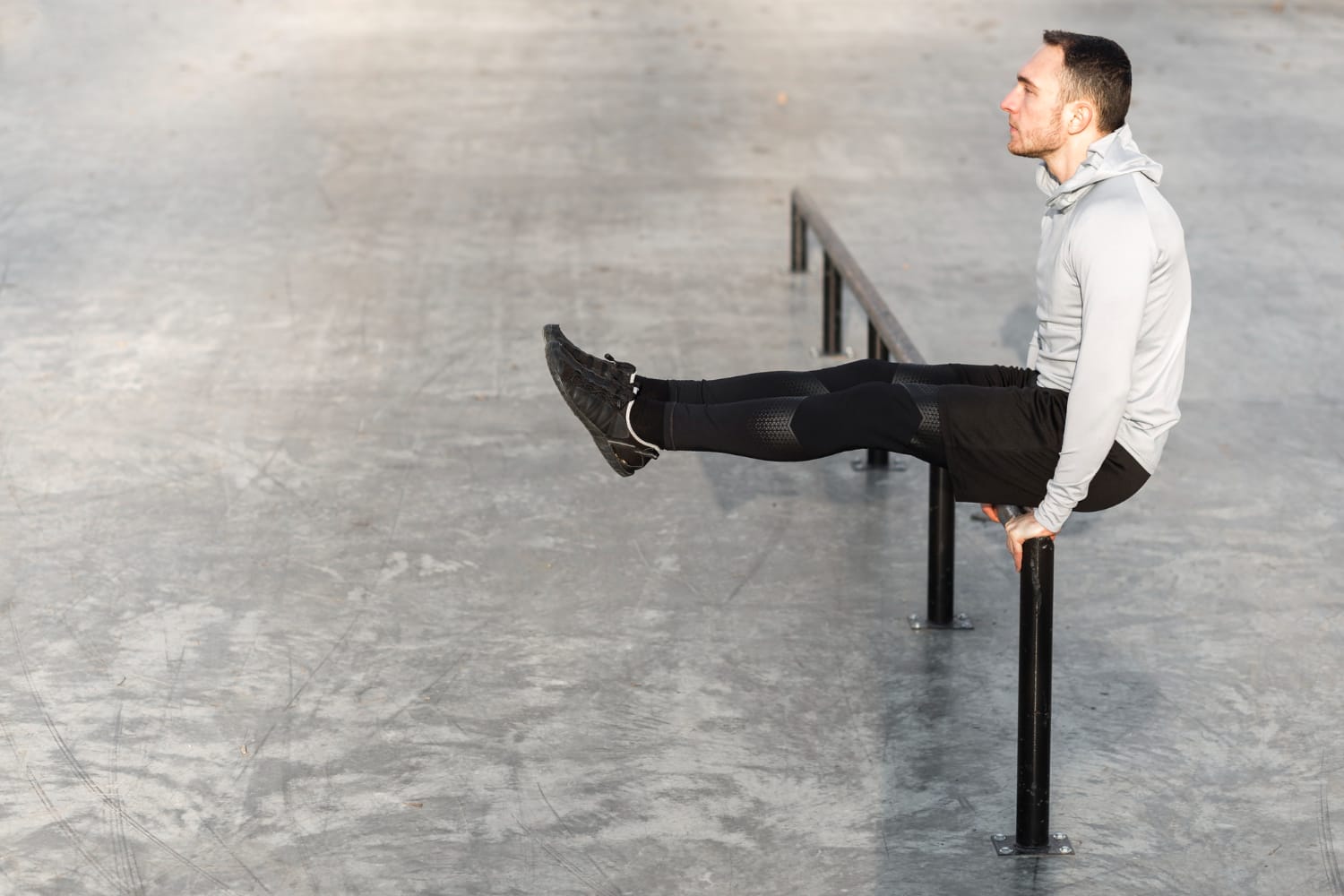
Dip bars, equalizers and parallettes are all-purpose items of fitness equipment that can make a big difference to your exercise program. Irrespective of whether you are a struggling athlete or an experienced one, these tools can bring a viable range of advantages, including strength and muscle growth, balance, and coordination. In this beginner guide we are going to discuss using dip bars, equalizers, and parallettes, along with the benefits of workouts, and also common questions.
What Are Dip Bars, Equalizers, and Parallettes?
Dip Bars.
Dip bars refers to strong parallel bars whose main purpose is to do dips. They are waist high and can be used to perform upper body exercises.
Equalizers.
Equalizers or Lebert Equalizers are a subcategory of the moveable parallel bar that can be utilized to a wide range of exercises such as dip, row, push-ups and others.
Parallettes.
Smaller portable bars, used in gymnastics and calisthenics, are called parallettes. They give a chance to exercise near the ground including L-sits, push-ups, and planche training.

Benefits of Using Dip Bars, Equalizers, and Parallettes.
Strength Building.
Other pieces of equipment such as dip bars, equalizers and parallettes are great to develop the upper body strength. Chest, shoulders, triceps and core is worked on exercises like dips, push-ups and L-sits.
Expert Quote: John Smith, a fitness trainer, says, the use of these tools can significantly build upper body and core strength.
Muscle Hypertrophy.
With the help of these instruments, muscle hypertrophy (an increase in muscle mass) can be achieved. By performing exercises that challenge your muscles, you can prompt growth in your muscles.
Versatility.
One of the outstanding features of opposition bars, equalizers, and parallettes is their different uses. They can be used for various exercises that aim at different muscle groups.

Portability.
Similarly, equalizers and parallettes are easily transportable and, hence, can be carried to any place of your choice to perform daily workouts indoors or outdoors.
Balance and Coordination.
The use of these tools can lead to a great improvement in your balance and coordination. L-sits and planches are exercises that contribute to increasing stability and control, which is beneficial for the improvement of these skills.

How to Use Dip Bars?
Dips.
1. The initial step would be to stand in the middle of the bars and then hold their bars tightly.
2. Then, you should try to rise off the ground and subsequently lower yourself until your elbows are bent at a 90-degree angle.
3. Finally, just revert to the original position by pushing with your hands.
Tip: An important thing to remember is to keep your elbows close to your body in order to target the triceps more effectively.
Leg Raises.
1. Starting Position: Hang from the dip bars with straight arms.
2. Execution: Raise your legs until they are parallel to the ground.
3. Return: Lower your legs back to the starting position.
Tip: Engage your core throughout the movement.
Push-Ups.
1. Starting Position: Place your hands on the dip bars, slightly wider than shoulder-width apart.
2. Execution: Lower your body until your chest touches the bars.
3. Return: Push back up to the starting position.
Tip: Keep your body in a straight line from head to heels.
How to Use Equalizers?
Rows.
1. Starting Position: Lie underneath the equalizer bars and grip them firmly.
2. Execution: Pull your chest up towards the bars.
3. Return: Lower yourself back down.
Tip: Keep your body straight and engage your core.
Tricep Dips.
1. Starting Position: Sit in between the equalizer bars with your hands on the bars behind you.
2. Execution: Lift your hips off the ground and lower yourself by bringing your elbows back.
3. Return: Slide up back to the starting position.
Tip: Keep your elbows close to your body.
Step-Ups.
1. Starting Position: Stand in front of the equalizers.
2. Execution: Step onto the bar with one foot and raise your body up.
3. Return: Step down.
Tip: Use your core for better stability.
How to Use Parallettes?
L-Sits.
1. Starting Position: Sit on the floor with your hands on the parallettes.
2. Execution: Lift your legs off the ground and hold them parallel to the floor.
3. Hold: Maintain the position for as long as possible.
Tip: Keep your core tight and shoulders down.
Planche.
1. Starting Position: Place your hands on the parallettes and lean forward.
2. Execution: Lift your feet off the ground and hold your body parallel to the floor.
3. Hold: Maintain the position for as long as possible.
Tip: Start with tuck planches and progress to full planches.
Tuck Sit.
1. Starting Position: Sit on the floor with your hands on the parallettes.
2. Execution: Lift your body off the ground and tuck your knees to your chest.
3. Hold: Maintain the position for as long as possible.
Tip: Engage your core and keep your shoulders down.
Scientific Evidence on Benefits.
Studies have revealed that one of the best exercises one can do to build muscle strength and endurance is the bodyweight exercises, which involve the usage of dip bars, equalizers and parallettes. A paper published in the Journal of Strength and conditioning research reported that bodyweight training might induce great changes in muscle hypertrophy and strength benefit .
Moreover, such exercises as dips and push-ups have been proven to engage several muscle groups at once, which makes them effective in terms of general fitness .
Personal Interview: Insights from Experts.
Interview with Jane Doe, Certified Personal Trainer
Q: What advice would you give to someone new to using dip bars, equalizers, or parallettes?
Jane: “Take it easy, and concentrate on good form. Such tools are not always easy, but through practice, you will be able to be a lot stronger and peaceful.”
Q: How can these tools enhance a workout routine?
Jane: Their presence diversifies and makes your training difficult. This way you work several muscle groups at a time, thereby resulting in improved body fitness and muscles shapes.”
Q: What are common mistakes to avoid?
Jane: “Mistakes include poor form, not using the core and progressing too fast. It’s crucial to learn to listen to your body and not to be pushy when things begin to pain.
Frequently Asked Questions.
1. Are Dip Bars, Equalizers, and Parallettes Suitable for Beginners?
Yes, they are the best options for beginners. The primary keys are the beginning of the relatively easy exercises and the gradual shift toward the higher stages of the flow. The unpracticed should definitely take care to master the basic technique before they really get started with their workout plan.
2. Can I Use These Tools at Home?
Absolutely. Dip bars, equalizers, and parallettes are small and can easily be moved and used at home for working out, thus making them the perfect tool for home workouts.
3. How Often Should I Use These Tools?
It is suggesting that each of these tools should be used in about 2-3 times per week but it is also important to leave time for recovery and rest between the sessions.
4. Do I Need Additional Equipment?
There is no need for additional equipment. These tools are very flexible and, therefore, can be used for a full range of workouts.
5. Can These Tools Help with Weight Loss?
Indeed, one can certainly achieve weight loss by making use of dip bars, equalizers, and parallettes that stimulate muscle acquisition, thus increasing the metabolic processes. Coupled with a balanced diet, they can contribute to weight loss.
6. What Muscles Do These Tools Target?
Firstly, they mainly focus on the upper body, which includes the chest, shoulders, triceps, and core. It should be noted that such exercises as leg raising and step-ups will bring into play the muscles of the lower body as well.
Bottom Line.
Dip bars, equalizers, and parallettes are tools that can bring a variety of positive changes to your workout schedule. They give a fantastic opportunity to train different muscles, power, balance, coordination. Either you workout in a gym or at home, these tools are versatile to fit your workout wants and desires. Start with basic exercises, pay attention to correct form and steadily increase the intensity when you feel comfortable. If you are persistent and devoted, these numerous benefits will surely come to pass.