


















Stretching is very important after workout. It relaxes your muscles and removes muscle soreness. Stretching increases blood flow in the muscles and leads to flexibility. It also reduce the chances of injury or soreness. Apart from stretching, there is a way that can give a lot of comfort to your muscles. Which is “Foam Rolling”.
Gym has many tools that people often completely ignore. Foam Roller is also one of them. According to research published in the Journal of Athletic Training, foam rolling after workouts reduces the soreness within 72 hours. (1)
Though it is being used long ago, it can speak that a lot of people are still not aware of its benefits in gyms. So, today we will give you all the information about it which can help you a lot.
What is Foam Roller and Foam Rolling?
A foam roller is a tube-like roll, about 1.5-2 feet, and is a self-myofascial release technique or mass tissue massage. For deeper work, many athletes combine foam rolling with professional sessions on massage recovery equipment to target stubborn knots.
Related Stories
 Functional Training Exercises: Benefits, Types and Precautions
 How To Get Rid Of Thigh Gap Fat : 13 Best Exercises And Diet
Myofascial release is a bodywork technique. This technique makes the mussels tissues soft and long and it also effective for the tissues between the skin, muscles and bones. Adhesions are also broken down. These are basically used by Physiotherapists and Athletes to enhance muscle recovery.
Why Foam Rolling Is Necessary?
After exercise, the muscles are shrink. After which foam rolling is necessary to bring them back to their initial position.
Without this, your muscle will become shrink. This causes the joints to stretch and start hurting due to shrinking of the muscles. Thereafter the muscles are start dragging the joints on their side. Now it is natural to have pain. Foam rolling is very important so the body alignment can worsen due to high stretch.
According to a study on 8 people, rolling foam after exercise helped the soreness to a great extent. They had been rolling for just 20 minutes within 24-48 hours of workouts.

When It Should Be Done?
It is recommended to perform this exercise before and after workout. Doing this before the workout leads to a warm-up and reduces the likelihood of injury during the training session.
After workouts, it reduces muscle soreness and makes the muscles tissues flexible, which gives a lot of comfort and can help to reduce the risk of creating new collagen between the muscles.

What Should The Foam Roller Be?
There are many kinds of rollers in the market but you have to select a good roller according to your needs. You can also take the advice of your trainer.
The roller can be divided into the main 4 parts, as;
Smooth Roller: Its surface is smooth and it usually used by beginners. It also cheaper.
Textured Roller: It has a gallows-like pattern on its surface. It deeply healing the muscles and reduces the soreness.
Foam Covered Massage Stick: It is used to rolling on the leg or upper back.
Foam Massage Ball: This targets small muscles. Such as shoulders and biceps etc.
How To Do Foam Rolling?
It is absolutely fine if you already do this, but if you’ve never did this exercise then you first need to learn the exact way or if you are rolling in the gym, you can also get information about it from your trainer.
It should always start by creating light pressure. If you are doing it for the first time and your muscles are hard, you may definitely feel some pain. Put less pressure on the roller to avoid this.
Do it initially for 20 seconds and then increase the time limit later of 40-60 seconds.
Advantages of Foam Rolling.
- Rolling foam can help to relax muscles and swelling to a great extent.
- Foam rolling increases blood flow in the muscles and increases the amount of oxygen in the blood.
- It significantly increase the speed limit (range of motion) of the body and you will know very well that flexibility and performance require range of motion.
- If someone has a back pain during workouts or for any other reason, it can reduce the pain to a great extent. Therefore, trainers often recommend rolling foam after other heavy exercise like dead-lift and Squat.
- Fibromyalgia Symptoms can be reduced to a great extent. Fibromyalgia is a condition in which pain and fatigue are felt throughout the body.
- According to a study by the School of Human Kinetics and Recreation, Memorial University of Newfoundland, St. Johns, Canada (Memorial University of Newfoundland, St. John’s, Canada), ‘foam rolling effectively reduces DOMS and associated erosion’.
- A review of 14 studies published at the National Centre for Biotechnology Information says, “Foam rolling is beneficial to increase flexibility and reduce soreness before and after the exercise. So, you can say that foam rolling is science based. (2)
Cautions for Foam Rolling.
- While foaming, keep in mind that don’t put whole body weight on the roller at the beginning. Otherwise, you may have more pain.
- Keep your body balance with hands while rolling, otherwise you can fall.
- Learn the right way of rolling foam by taking advice from an expert.
- Avoid rolling on such organs that are hurt or sprained etc.
- There are many kinds of foam rollers in the market. But you should choose soft or hard rollers according to the advice of your trainer and your body type.
- Maintain speed while rolling before workouts but rolling slowly after workouts is the right way.
- Rolling at least 5-8 minutes before workouts and 10-20 minutes after workouts.
| Read Now: How Many Days to Workout to Stay Fit |
Frequently Asked Questions.
Absolutely, foam rolling workout is an excellent workout. However, although it is not a lavish workout but it have several health benefits, such as it breaks up adhesions, reduces rigidity, decreases distress, increases blood flow and reduces tension among the tissue which boost performance and muscle recovery.
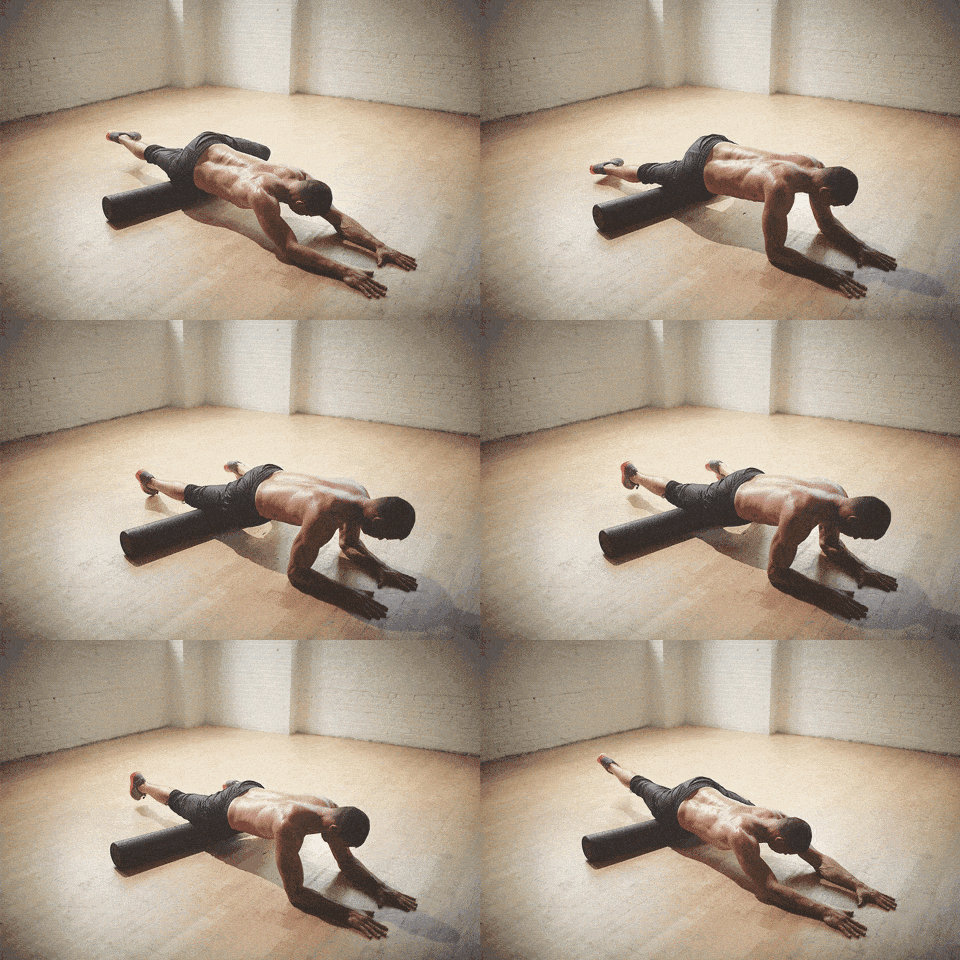
While foam rolling helps to relax stiffness in the body and release the tension in the muscles, you can also practice this exercise for hamstrings as foam rolling increases blood circulation and tone the hamstrings by relaxing the muscle groups around them. Practice it with the following way;
Step 1.
At first Place a foam roller beneath your leg and gently drive your body backward and forward, from glute to knee.
Step 2.
Thereafter, do it for 30 seconds to 1 minute, then change the legs.
You may hurts through this workout, if your muscles are stiff. You must decrease the amount of body weight to reduce the pressure on the muscle. Such as, if you are targeting your calf, then you must use your arms to support your body and take some body weight off from the foam roller.
Yes, foam rolling exercise may causes injury, if you have a grave muscle injury such as muscle tear or muscle break. In such a case you must consult with your doctor or physical therapist. Also you must avoid rolling over minor joints which may causes hyper extend or damage in elbows, knees and ankles.
Yes, according to the study foam rolling exercise can diminish the presence of cellulite, it make positive effect on the fascia, which is the connective tissue that covers the whole body. However, if the fascia is weak, fat swells through it which causes the lumpy presence of cellulite.
Yes, this workout is deliberated safe workout which release tension from the muscles, reduce muscle soreness and also increase range of motion and develop flexibility. However, you must avoid foam rolling if you have a serious muscle injury such as a muscle break or joint injury. In this case you must consult your doctor or trainer.
Bottom Line.
Foam Rolling overall a great exercise for your muscle groups and you must do this exercise before and after every workout session. But keep in mind that do not rolling on delicate organs while doing it. Otherwise, it may hurt. Consult an expert or your trainer for more information.
+2 Sources
Freaktofit has strict sourcing guidelines and relies on peer-reviewed studies, educational research institutes, and medical organizations. We avoid using tertiary references. You can learn more about how we ensure our content is accurate and up-to-date by reading our editorial policy.
- Foam Rolling for Delayed-Onset Muscle Soreness and Recovery of Dynamic Performance Measures; https://www.ncbi.nlm.nih.gov/pmc/articles/PMC4299735/
- THE EFFECTS OF SELF-MYOFASCIAL RELEASE USING A FOAM ROLL OR ROLLER MASSAGER ON JOINT RANGE OF MOTION, MUSCLE RECOVERY, AND PERFORMANCE: A SYSTEMATIC REVIEW; https://pubmed.ncbi.nlm.nih.gov/26618062/