











































 Workout

 Meditation


 Podcast
 E-book


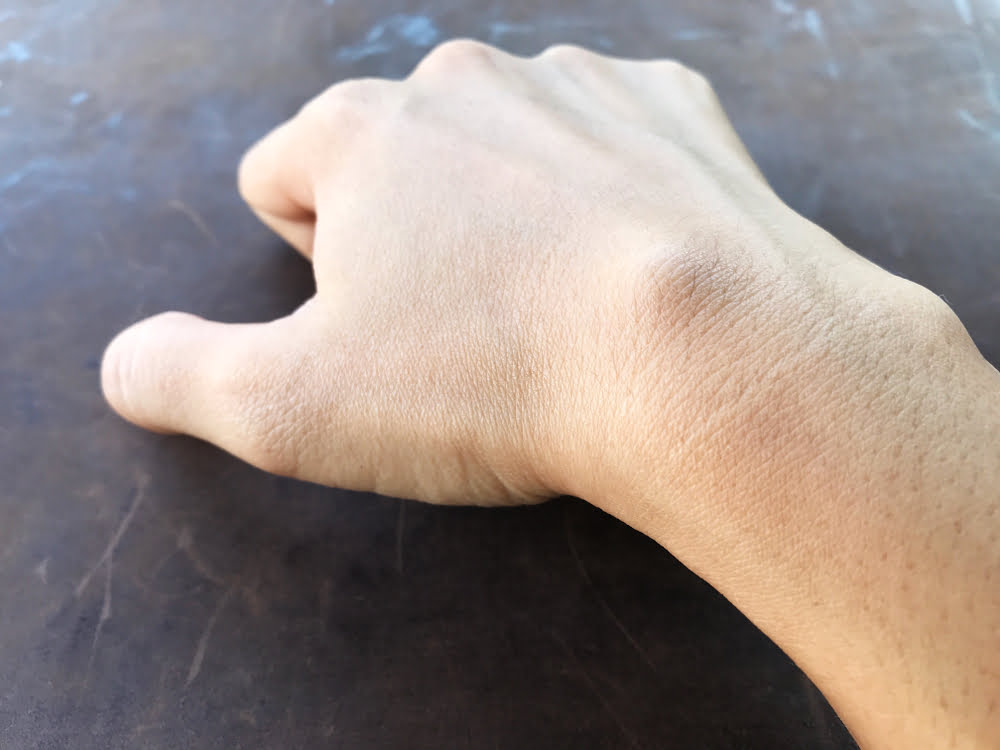
The sharp pain of an inflamed ganglion cyst on your wrist can leave you in agony, but that doesn’t have to be the case. There are plenty of simple wrist exercises you can do at home to help relieve and heal your ganglion cyst, provided that they’re done correctly in order to get maximum results. Here’s what you need to know about the best ganglion cyst wrist exercises so that you can start eliminating your pain right away!
What is a Ganglion Cyst?
A ganglion cyst is a fluid-filled sac that forms around a joint and is caused by chronic irritation or trauma. There are two types of ganglion cyst formation: at the front of the wrist and secondly, at the base of the finger of the hand. You can find them anywhere on the body, but they usually form on the wrist or foot. One in ten people will experience at least one ganglion cyst in their lifetime!
Causes of ganglion cyst.
The cause for these is not definitively known, but it may be caused by an injury or repetitive motion. It’s also possible for people to have a genetic predisposition to develop one. Ganglion cysts can form in other areas of the body as well, including the elbow and knee. Since they’re filled with liquid, they tend to increase in size when they’re irritated.
Symptoms of Ganglion Cyst.
Ganglion cysts are small, fluid-filled sacs that form at the joint between a tendon and bone. They can grow on any finger or toe but are most common on the wrist. The most common symptom is painless swelling, which can make it difficult to move your fingers or toes.
Related Stories
 Best Exercises and Yoga with Diet for Bertolotti Syndrome
 Push Ups vs Pull Ups : Which Exercise is Better for You?
Some people also experience numbness or a tingling sensation in the affected area. If you have any of these symptoms, consult with your doctor immediately to figure out what’s going on and how to treat it.
Why Are They So Painful?
Ganglion cysts can be caused by a trauma to the wrist, but they don’t appear to cause pain themselves. Some people experience pain from ganglions because they put too much pressure on their wrists and aggravate other things like carpal tunnel syndrome or arthritis.
Most of the time, treatment for ganglions is not necessary because they go away on their own within three months. However, ganglia can be painful and may need medical attention if symptoms persist for more than three months or worsen over time.
Ganglion Cyst Wrist Exercises.
The workout routines we are going to research can additionally be accompanied safely for restoration from ganglion cyst wrist surgical operation barring for the self-massage technique.
1. Active Range of Motion Exercises.
Active range of motion movements are more common for people with wrist ganglions. Doing these exercises independently keeps them active. An example of these exercises are the wrist radial/ulnar deviation.
Examples.
Rest your palm flat on a table, then rotate your forearm until your pinky side of your hand rests on the table, thumb on top. Rotate it again towards the thumb side of your hand and back again to start over.
2 Strengthening Exercises Without Weight.
Wrist strengthening workouts, such as isometric flexion/extensions or squeezing, strengthen the wrists without using weights. The isometric flexion or extension exercises put less stress on the joint than weighted movements. These are done either with a physical therapist or by yourself using your opposite arm for resistance.
Examples.
Begin with sitting down and resting your injured arm on your thigh with the palm facing up. Place one hand on top of the other at injury level before pressing up on it to do an isometric extension.
Resistant pressure should come from your uninjured side; there should be no movement in the joints being exercised (one knuckle will still move).
Turn over your palms making fists and extend both hands upwards while resisting pressure applied by the other arm.
3. Passive Range Of Motion Exercises.
Passive range of motion exercises are used in rehabilitation for wrist ganglion cyst surgery. They aim to move the fingers and wrists through their complete natural range of motion.
Passive refers to someone else moving your wrist as you lie there passively and relaxes. These exercises happen during rehab when patients are unable to move their joints through a complete range of movement themselves.
Examples.
One example would be the wrist rotation done laying on your back with your hands resting beside you. Your physical therapist will lift up one hand then begin rotating it forward, backward, side-to-side, and around so they can massage out a swollen area near that joint.
4. Weighted Wrist Strengthening Exercises.
Using weights strengthens your wrists. The weight should be no more than 5 lbs to reduce the risk of injury.
Example.
Free Weight Wrist Flexion and Extension are examples of weighted exercises. Start by sitting down and placing your injured wrist on a flat surface while resting a dumbbell over the edge of this surface.
At first, keep your hand facing up, then bend it towards yourself until you feel tension in your wrist (flex). Then turn it so that it is facing down towards the floor and extend it forward so that there is no tension left in your arm (extend).
5. Wrist Flexion-Extension.
This is a very easy but positive exercising for wrist ganglion cysts. This workout can be carried out both in a sitting or standing position.
Example.
Take a seat or stand straight and maintain your arm straight in the front of you at shoulder degree retaining the palm dealing with downwards. In this movement bend your wrist upward and downward easily and slowly.
Repeat this wrist flexion and extension movement for a minimal of 15 to 20 instances in a session.
6 Self-massage.
The next exercise amongst the listing of ganglion cyst wrist workouts is truly a self-massage technique. In the majority of cases, this self-massage method is adequate for the decision of the nodule.
Example.
For this, you want to use your thumb, so, take your thumb and hold it over the lump and press it lightly and then rotate your thumb in a round action.
You have to cross the thumb in a round movement whilst nonetheless urgent the lump. Perform this in morning or while you get time, like when you are free, sitting in the office or at home. Along with this, you additionally have to maintain exercising your wrist.
7 Wrist Radial Ulnar Deviation.
Wrist radial ulnar deviation is our subsequent ganglion cyst wrist exercises. When you cross your wrist sideways this action as radial and ulnar deviation of the wrist. Radial deviation is when we bend the wrist closer to the thumb, and if you bend it closer to the little finger it is known as ulnar deviation.
The beginning function for this workout would be the identical as the preceding with the solely distinction is you want to hold your palm dealing with inwards.
Example.
In this function in reality pass your wrist into radial and ulnar deviation. The movement need to be gradual, easy and strive to bend it to the cease range. Repeat this a minimal of 15 to 20 instances in a session.
How Often Should I Do The Exercises?
It is important to do these exercises every day, so that your wrist and arm are able to heal and move normally. In order to exercise the muscles in your wrist, it is essential that you stretch them out and flex them on a regular basis.
How To Prevent Ganglion Cyst?
If you want to prevent ganglion cysts, one thing you can do is to try and reduce the inflammation in your wrist. Try doing these exercises for 5 minutes each day:
1 Stretch your wrist back and forth.
2 Bend your wrist backward as far as it will go without hurting it.
3 Bend your wrist forward as far as it will go without hurting it.
4 Make a fist with both hands and then stretch them open wide again.
5 Make a fist with only one hand and then stretch them open wide again while keeping the other hand still on top of the first fist so that they are pressed together tightly during the movement of the exercise (if possible).
Home Remedies To Get Rid of Ganglion Cyst.
Your doctor may have prescribed you medication to reduce the swelling, but there are some things you can do at home as well. To help relieve the pain and pressure, try these simple home remedies:
1 Hold your wrist in a neutral position and then bend it up toward your hand. Hold it there for three seconds and repeat 10 times.
2 Wrap a hot water bottle or heating pad around your wrist for 15 minutes at a time to encourage blood flow to the area.
3 Use an ice pack wrapped in cloth and place it on your wrist for 20 minutes two or three times a day for about two weeks, using mild compression to limit swelling. You will get relief within six weeks. If not, consult with your doctor again for other treatment options.
4 Apply topical creams like Tiger Balm (or apply coconut oil) to reduce inflammation from the ganglion cyst and improve circulation in that region of the body.
5 Reduce stress by meditating daily (10-20 minutes), breathing deeply, practicing yoga, doing massage therapy, or taking long baths with Epsom salts added to the bathwater—all will calm both your body and mind while reducing inflammation in your wrists.
Additional Tips To Get Rid of Cysts.
Your best bet for getting rid of a ganglion cyst is to schedule an appointment with your doctor. He or she will be able to tell you if the cyst is cancerous and if it needs to be removed. Other than that, there are a few ways to try and reduce the size of your cysts:
- Use heat therapy (hot water bottle, heating pad, etc.).
- Apply ice packs to the area.
- Practice self-massage.
- Maintain good posture by keeping your back straight, chin up, shoulders back
- Wear loose clothing around the affected wrist as tight clothing can cause irritation to the skin around the cyst.
- Avoid activities which may aggravate your condition such as heavy lifting or repetitive wrist motions.
Bottom Line.
A ganglion cyst can be a pain in the wrist, but you don’t need to live with this condition. There are some great exercises and home remedies for ganglion cysts that you can use to help get rid of your cysts or reduce the pain and swelling.
You should also consult with your doctor if the symptoms persist. There is no cure for a ganglion cyst, but there are treatments that can help you manage your symptoms and lead a normal life.
I hope these exercises have helped you get rid of your ganglion cysts or at least minimized their effects on your day-to-day life.