

















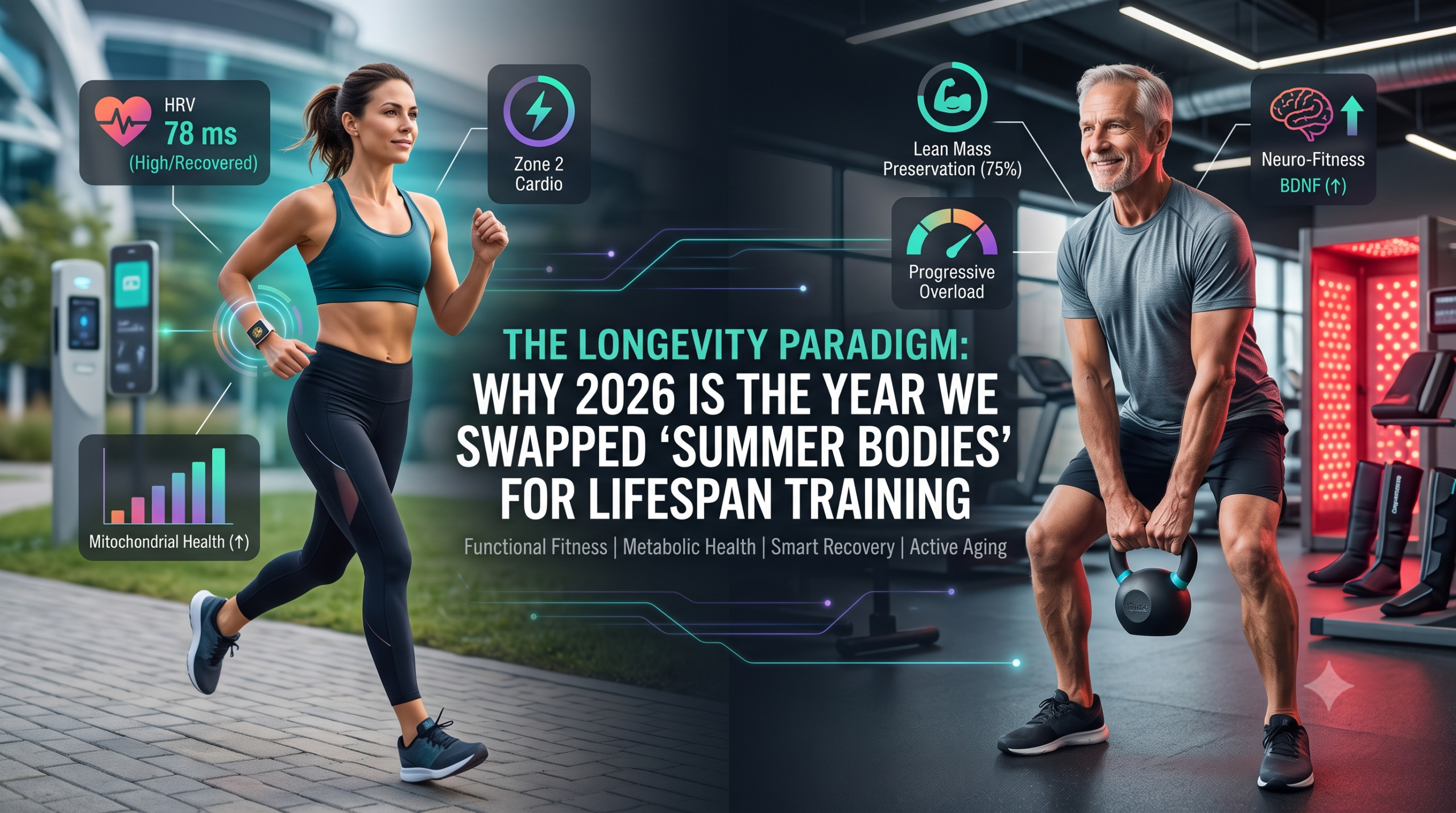
For decades, the fitness industry was built on a simple, seasonal cycle: burn off winter weight, build a “summer body,” rinse, and repeat. Success was measured by a scale or a tape measure. But as we move through 2026, a massive structural shift has completely redefined our relationship with exercise.
The era of aesthetic-driven, “all-gas-no-brakes” fitness is officially being replaced by Longevity Training. Driven by breakthroughs in biomargin tracking, the rise of metabolic health awareness in the GLP-1 medication era, and a collective exhaustion with chronic burnout, people are asking a much better question: How well will my body function 30, 40, or 50 years from now?
According to the American College of Sports Medicine (ACSM), the top fitness priorities are no longer isolated to fat loss or maximum muscle size. Instead, wearable technology tracking, exercise for weight management and lean mass preservation, and functional fitness for active aging dominate the ranks. We are no longer training just to look good next month; we are training to stay functional, independent, and cognitively sharp for a lifetime.(1)
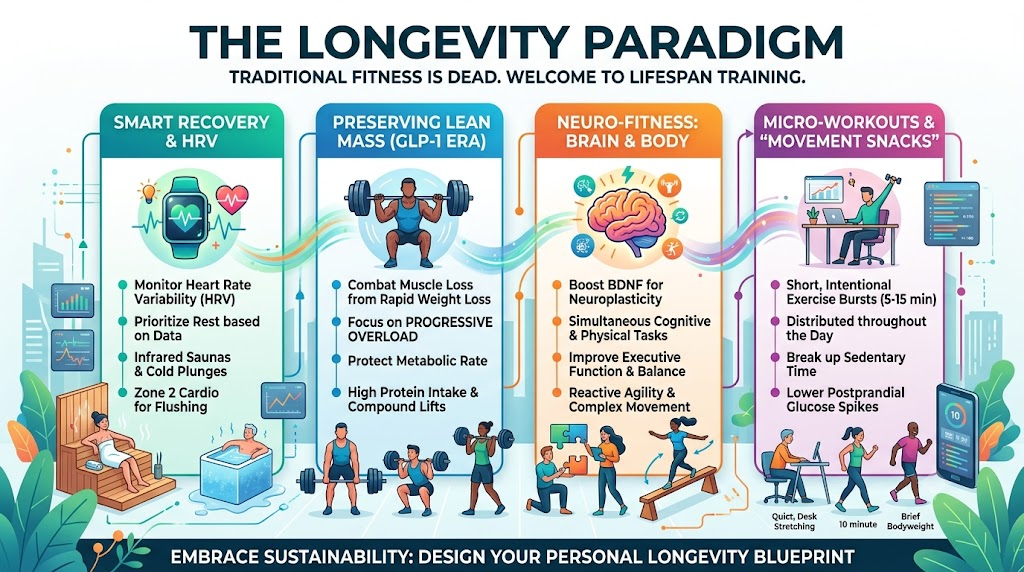
1. The Death of “No Pain, No Gain”: Enter Smart Recovery and HRV.
If there is a single metric that has revolutionized fitness, it is Heart Rate Variability (HRV). Measured continuously by modern smart rings and fifth-generation fitness trackers, HRV tracks the variation in time between consecutive heartbeats. It serves as a direct window into your autonomic nervous system.
Related Stories
 Amazing Single Leg Hip Thrust
 Training With Heavy Weights in the Gym is Not Always Worth It: Science Explains Why
High HRV = Parasympathetic Dominance (Rest & Digest / Ready to Train)
Low HRV = Sympathetic Dominance (Fight or Flight / Needs Recovery)
In the past, waking up with sore muscles was seen as a badge of honor—a sign to push through another brutal session. Today, fitness enthusiasts check their recovery score before deciding their daily training volume. If your wearable signals a depleted HRV and poor deep-sleep architecture, the optimal choice is no longer an intense high-intensity interval training (HIIT) session; it is a dedicated mobility or low-intensity steady-state (LISS) recovery block.
The New Staples of the Recovery Zone.
Gym floors are rapidly changing to accommodate this shift. Traditional cardio decks are being converted into dedicated recovery sanctuaries. Progress is no longer achieved solely by breaking down muscle tissue, but by optimizing how efficiently it repairs.
- Infrared Saunas: Unlike traditional saunas, infrared heat penetrates deep into muscle tissue, promoting circulation, reducing joint stiffness, and accelerating cellular repair.
- Contrast Therapy: Alternating between hot environments and cold plunges helps modulate systemic inflammation, flushes metabolic waste, and improves vascular elasticity.
- Zone 2 Cardio and Active Recovery: Spending time at 60-70% of your maximum heart rate acts as a flushing mechanism for your cardiovascular system, stimulating mitochondrial health without adding structural stress to your joints.
2. Preserving Lean Mass: The GLP-1 Era and the Shift in Weight Management.
The widespread utilization of GLP-1 receptor agonists (such as semaglutide and tirzepatide) has fundamentally changed the clinical landscape of weight loss. However, it has also highlighted a critical physiological challenge that the fitness industry is uniquely positioned to solve: the rapid loss of skeletal muscle mass.(2)
When individuals lose weight rapidly via severe caloric deficits or medical interventions, a significant percentage of that weight loss can come from lean muscle tissue rather than adipose (fat) tissue. This drop in muscle mass can cause a decline in resting metabolic rate, making long-term weight maintenance significantly more difficult.(3)
Rapid Weight Loss Without Resistance Training:
[ Fat Loss: ~60-70% ] + [ Muscle Loss: ~30-40% ] ──> Lower Metabolic Rate
Weight Loss With Progressive Overload & High Protein:
[ Fat Loss: ~85-90% ] + [ Muscle Preserved: ~10-15% ] ──> Protected Metabolic Rate

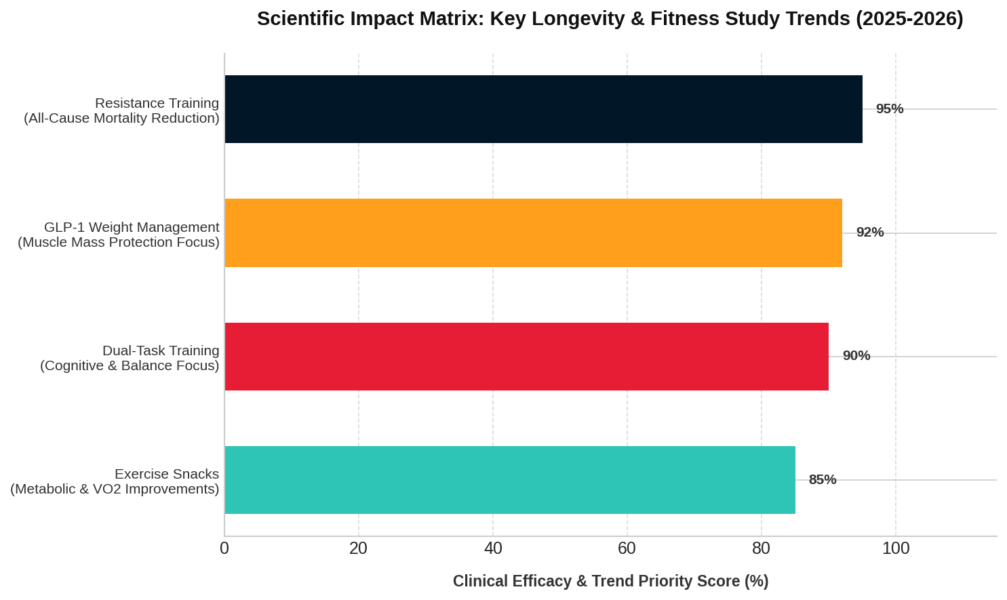
Because of this physiological reality, the ACSM officially updated its trend classification from “Exercise for Weight Loss” to “Exercise for Weight Management.” The goal is no longer simply to shrink the body by burning as many calories as possible. Instead, the strategy centers on body recomposition: stripping away body fat while aggressively protecting and building skeletal muscle.
The Architectural Anchor: Traditional Strength Training.
To preserve lean mass during weight management, your programming must give your body a definitive biological reason to keep its muscle. This requires heavy, compound, multi-joint movements that stress the musculoskeletal system in a safe, progressive manner.
| Primary Exercise | Primary Mechanics | Target Biomarker |
| Barbell / Trap Bar Deadlift | Hip Hinge (Posterior Chain) | Bone Mineral Density & Spinal Integrity |
| Goblet / Barbell Squat | Knee Flexion (Quads/Glutes) | Lower-Body Power & Joint Stability |
| Overhead Press / Push-Up | Vertical/Horizontal Push | Shoulder Girdle Resilience |
| Farmer’s Carries | Isometric Unilateral Loading | Grip Strength & Core Anti-Rotation |
3. Neuro-Fitness: Training the Brain and Body Simultaneously.
One of the most fascinating developments is the clinical intersection of cognitive science and physical conditioning, a field known as neuro-fitness. We have long known that exercise stimulates the release of Brain-Derived Neurotrophic Factor (BDNF)—a protein that acts like fertilizer for brain cells, supporting neuroplasticity, memory, and learning. However, modern training methodologies are now deliberately pairing cognitive challenges with physical movement.(4)
Instead of staring blankly at a television screen while logging miles on a treadmill, modern neuro-fitness integrates physical output with mental processing tasks.
Traditional Training: [ Physical Stimulus ] ──> Simple Motor Output
Neuro-Fitness: [ Physical Stimulus + Cognitive Task ] ──> Synaptic & Muscular Adaptation
How Neuro-Fitness is Practiced?
- Dual-Task Training: Performing agility ladder drills or balance board work while simultaneously solving audible memory recall tasks or tracking visual light cues.
- Unilateral and Contralateral Drills: Movements that force the left and right hemispheres of the brain to coordinate rapidly, such as cross-body medicine ball tosses or complex single-leg kettlebell complexes.
- Reactive Agility: Utilizing randomized visual tracking systems (like programmable LED targets) to force rapid decision-making under physical fatigue.
This holistic framework is particularly vital for active aging populations. Research indicates that combining cognitive challenges with motor-control tasks is significantly more effective at preventing cognitive decline and improving real-world balance than physical exercise alone.
4. Micro-Workouts and “Movement Snacks”: Solving the Time Crunch.
The modern schedule remains highly demanding, but our understanding of exercise physiology has adapted beautifully. The belief that a workout must last a continuous 60 minutes to provide health benefits has been thoroughly debunked by sports science.
In its place is the concept of micro-workouts or “movement snacks”—short, highly intentional blocks of physical activity lasting anywhere from 5 to 15 minutes, strategically distributed across the day.(5)
Traditional Approach: 8 Hours Sitting + 60 Min Gym Session = Sedentary Lifestyle + ExerciseMicro-Workout Model: 2 Min Stretch + 10 Min Walk + 5 Min Bodyweight Circuit (Repeated) = Active Metabolic Profile
The Accumulation Effect.
Data shows that breaking up prolonged sedentary behavior with short, intense bursts of movement can yield metabolic and cardiovascular benefits that closely mirror a single, continuous workout. These brief windows of movement act as a reset button for your insulin sensitivity and muscular vascularization.
- The 10-Minute Metabolic Flush: A quick sequence of bodyweight squats, kettlebell swings, and a plank held for time, performed right in an office or living room.
- The Zone 2 Intermission: A brisk, 10-minute walk immediately following a meal. This simple habit drastically blunts postprandial glucose spikes, channeling nutrients directly into skeletal muscle rather than fat storage.
- The Mobility Break: Five minutes of active thoracic spine extensions and hip openers to counteract the structural degradation caused by hours of sitting at a desk.
5. The Hybrid Coaching Revolution: Flexible, Community-Driven Fitness.
The way we access expert fitness guidance has shifted away from rigid, single-modality frameworks. The old model of choosing strictly between an expensive in-person personal trainer or a completely isolated, unguided home workout app has dissolved into hybrid coaching.
Hybrid coaching blends the technical precision and accountability of in-person instruction with the cost-effectiveness and flexibility of digital tracking tools. A client might see their coach in person once every two weeks for a rigorous movement assessment, form critique, and biometric check, while executing the rest of their tailored program independently via an integrated mobile platform.
[ In-Person Assessment & Form Correction ]
│
▼
[ Digital Program Delivery & Wearable Syncing ]
│
▼
[ Daily Autoregulated Adjustments (via AI/Data) ]
The Rise of “Social Fitness” and Micro-Communities.
Concurrently, fitness has become a major source of community and social connection. Competitive events like HYROX (a standardized fitness racing format combining running and functional stations) and local run or functional fitness clubs are seeing unprecedented participation numbers.
People are looking for spaces that offer more than just a place to sweat; they want shared goals, mutual accountability, and genuine social interaction. Fitness is no longer a solitary chore to check off a list—it has become a core social outlet that enhances psychological health alongside physical capability.
Final Takeaway: Designing Your Personalized Longevity Blueprint.
The overarching theme of fitness is clear: sustainability is the ultimate metric of success. The individual who builds a thoughtful, balanced routine that respects recovery, prioritizes strength, and integrates regular movement across the day will always outpace the individual who cycles through extreme bursts of overtraining and inevitable injury.
To implement this modern paradigm in your own life, focus on these four foundational pillars:
- Anchor with Strength: Perform dedicated resistance training at least 2 to 3 times a week. Prioritize compound movements that protect your bones, joints, and lean muscle tissue.
- Audit Your Recovery: Pay closer attention to your sleep quality, daily steps, and HRV trends than your absolute caloric burn during a single workout.
- Collect “Movement Snacks”: Never let your body sit uninterrupted for hours. Break up sedentary time with short walks, mobility drills, or brief bodyweight sequences.
- Train Your Intention: Approach your fitness with a long-term vision. Ask yourself if the physical choices you are making today are actively building a more resilient, capable, and independent version of yourself for the future.
The ultimate goal of fitness isn’t just to add years to your life—it’s to add vibrant, functional life to your years.
+5 Sources
FreakToFit has strict sourcing guidelines and relies on peer-reviewed studies, educational research institutes, and medical organizations. We avoid using tertiary references. You can learn more about how we ensure our content is accurate and up-to-date by reading our editorial policy.
- American College of Sports Medicine Position Stand. Resistance Training Prescription for Muscle Function, Hypertrophy, and Physical Performance in Healthy Adults: An Overview of Reviews; https://pmc.ncbi.nlm.nih.gov/articles/PMC12965823/
- GLP-1 agonists and exercise: the future of lifestyle prioritization; https://www.frontiersin.org/journals/clinical-diabetes-and-healthcare/articles/10.3389/fcdhc.2025.1720794/full
- LEAN mass Preservation with Resistance Exercise and Protein during semaglutide and tirzepatide therapy (LEAN-PREP study): a protocol for a randomised controlled trial; https://bmjopen.bmj.com/content/16/4/e116911
- Effects of exercise-cognitive dual-task training on cognitive frailty in older adults: a randomized controlled trial; https://www.frontiersin.org/journals/aging-neuroscience/articles/10.3389/fnagi.2025.1639245/full
- Exercise Snacks as a Strategy to Interrupt Sedentary Behavior: A Systematic Review of Health Outcomes and Feasibility; https://www.preprints.org/manuscript/202510.2184