


















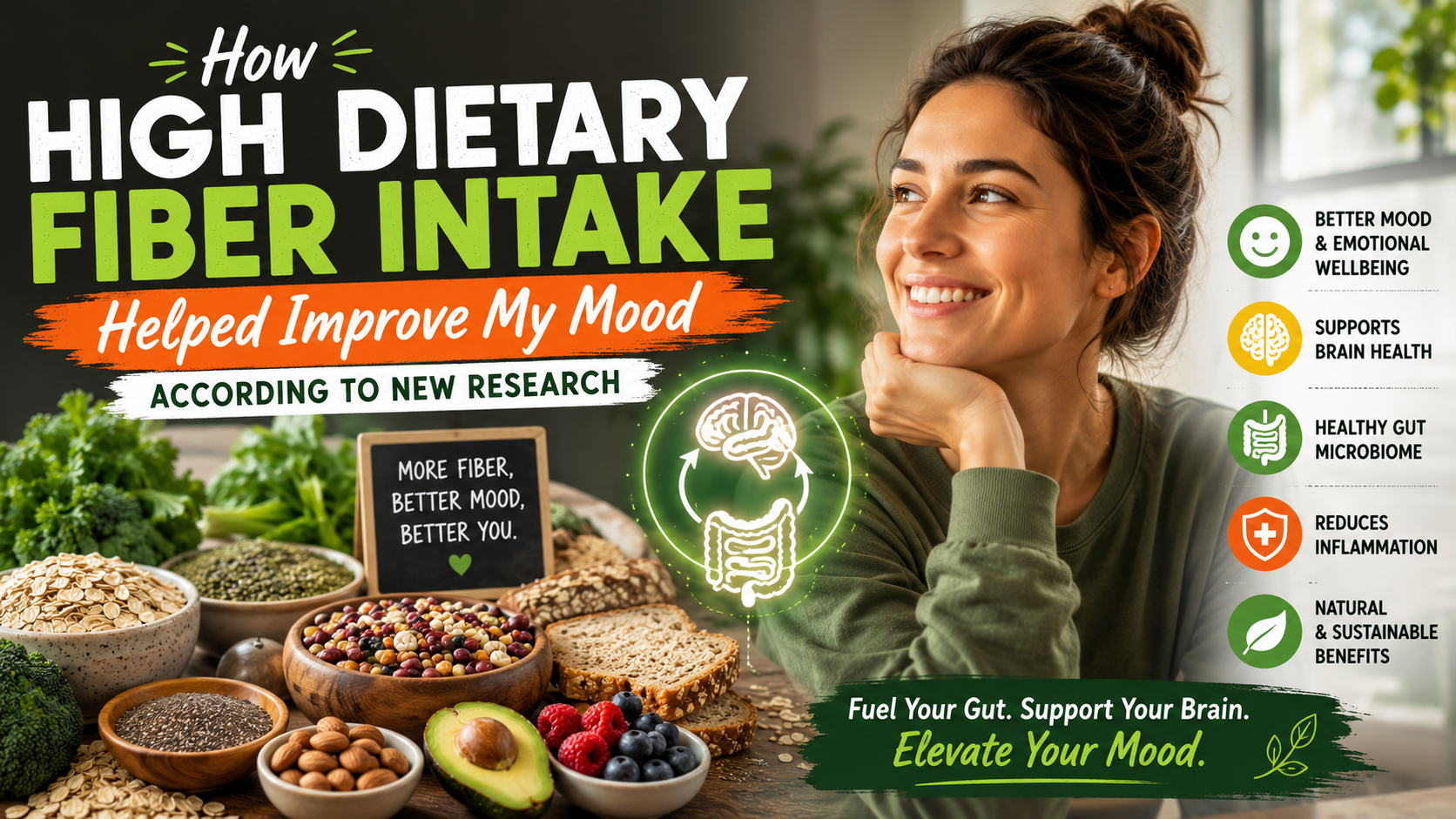
According to the new study, people who ate the most fiber had the happiest moods.People who consumed the most fibre had the happiest moods, according to the new study.
For years, I never really understood much of the importance of fiber except for its digestive and digestive health benefits. I knew that the fruits, vegetables, oats, legumes and whole grain foods I eat help me to digest, to keep my heart healthy, to stay at a healthy weight. I didn’t know, however, how much the gut and brain were linked until I began to read more about the connection between the gut and the brain.
My Realization About the Gut-Brain Connection.
Depression is a multi-factorial disorder with many factors being involved, such as stress, hormones, lifestyle, sleep, genetics, physical activity, nutrition and emotional health. However, one aspect that scientists are now keenly focused on is gut microbiota health.
I personally found it so interesting to know how the gut-brain connection affects our nutrition choices.
Related Stories
 Amazing Pink Sauce: TikTok’s Most Viral Recipe
 Steamed Rice Vs Fried Rice : Which is Healthier?
I realized that it is a connection between the gut and the brain.I realized that it’s gut to brain.
At one time I didn’t think about how I feel, think and my energy level etc was affected by the way I am eating. However, after some time, I started to notice that I was feeling the following way when eating processed foods, sweets, fried foods and junk foods:
- More sluggish.
- More anxious.
- Mentally drained.
- Low in motivation.
- Emotionally unbalanced.
Conversely, improvements in my diet, as I increased my whole food intake that is high in dietary fiber, resulted in the following:
- Energy levels.
- Digestion.
- Mental clarity.
- Mood stability.
- Overall wellbeing.
It’s at that time that I was interested in learning more about how fiber relates to mental health.

What the New Research Found?
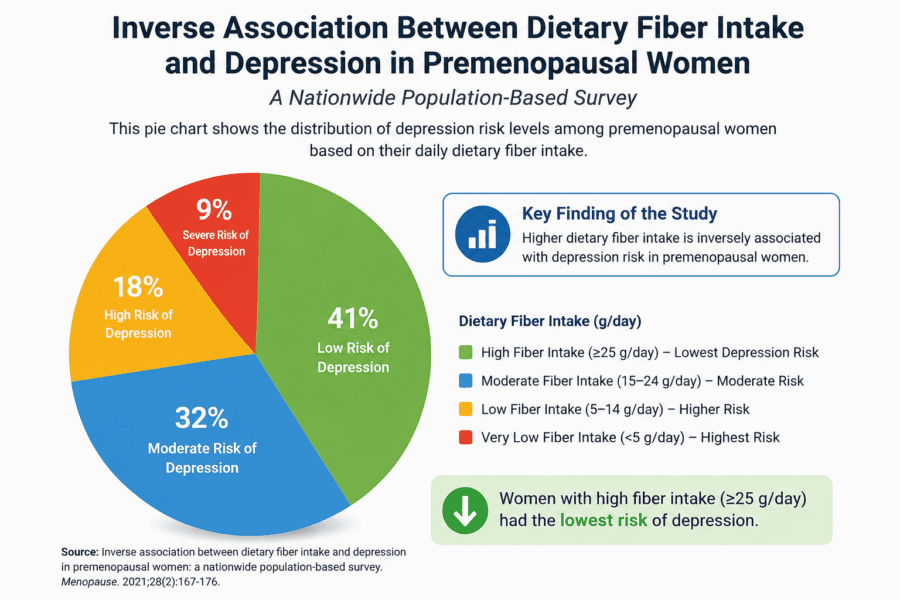
At the end of December an interesting study on the association between dietary fibre consumption and the risk of depression was published. The researchers studied almost 6,000 women of varying ages to assess the link between high intakes of fibre and depression, particularly in women who are going through menopause.
Depression was measured using the Patient Health Questionnaire-9 (PHQ-9) which is a questionnaire widely used to look at depression symptoms.

Results indicated a negative correlation between fiber consumption and depression. Overall, the more fiber women ate, the lower the depression symptom scores.(1)
Interestingly, the association seemed to be the strongest in premenopausal women.
It’s not necessarily that fibre can cure or prevent depression, but the findings are a compelling argument for the potential role of dietary fibre in emotional and mental health.
Fiber may have a beneficial impact on mental health.Fiber may be beneficial for mental health.
One of the most interesting hypotheses from this study is related to the gut-brain axis.
I was fascinated with this idea because it was a way of demonstrating to myself that there is constant communication between the digestive system and the brain.
Fiber promotes the growth of healthy gut flora, promoting a healthy gut microbiome. A healthier microbiome can then impact on:
- Neurotransmitter production.
- Inflammation levels.
- Immune function.
- Hormonal balance.
- Brain signaling pathways.
The gut-brain connection may help account for the association between increased fiber consumption and a reduced risk of depression, the researchers say.
I also found out that there are many bacteria in the gut which produce compounds that are useful for mental health – and in particular, compounds related to serotonin activity. Because a lot of serotonin activity is linked to the digestive system, it’s possible that gut health can have an impact on emotional health that’s not often thought about.
My Personal Dietary Changes.
When I learned more about the connection between fibre and mental health, I was more conscious of eating foods which are high in fibre everyday.
However, some of the foods that I began consuming more often were:
- Oats.
- Brown rice.
- Fruits.
- Vegetables.
- Beans.
- Lentils.
- Chia seeds.
- Flaxseeds.
- Nuts.
- Whole grains.
Also, I cut out some foods that were highly processed and sugary items as I found that these were having a negative impact on my energy and mood.
While nothing was going to change my life by itself, I felt that the changes in my diet assisted with my emotional well being and balance.
How Junk Food Personally Affected Me?
An observation that I had was that junk food would give me a sense of satisfaction that would pass after a while and leave me feeling worse mentally.
Highly processed foods are typically:
- Low in fiber.
- High in sugar.
- High amount of unhealthy fats.
- Low in nutrients.
These eating patterns, over time, can have a negative impact on the diversity of gut bacteria and gut health.
For myself I noticed an increase in my food processing, and I had the following symptoms:
- Energy crashes
- Poor digestion
- Mood swings
- Brain fog
- Reduced motivation
I thought, “How much better nutrition can affect a person’s body, as well as their mind and emotions.
Additional Lifestyle Habits That Helped Me.
I’ve found that by making fiber a priority, I improved my health, but my mental health is a product of so many lifestyle choices that I also realized I need to work on all of them.
Some other practices that helped me to feel better:
Better Sleep.
When I did not get the sleep that I needed on a regular basis, my mood took a turn for the worse. Good sleep had a positive impact on the emotional state and mental clarity.
Regular Exercise.
Now exercise had become one of the most potent ways I could get my good ju-ju’s.
Activities such as:
- Walking.
- Strength training.
- Yoga.
- Stretching.
- Cardio workouts.
Calmed me down and made me feel better mentally.
Stress Management.
I also began my practice:
- Meditation.
- Deep breathing.
- Mindfulness.
- Spending time outdoors.
These practices helped to alleviate mental fatigue and emotional burnout.
Important Limitations of the Research.
The first thing I think it’s crucial to comprehend is that this study was observational.
This indicates that higher fibre consumption was associated with reduced depression risk, but not necessarily a cause and effect relationship.
The study is limited to women only and women who are going through menopause, which means that more studies are needed in larger groups.
However, I think the results are important because it is more and more evidence that this gut/mental health relationship may be a stronger one than we originally thought.
My Biggest Realization About Mental Health and Nutrition.
I am Naomi Carter, Holistic Nutrition Advocate, this is one of the greatest things I’ve learned when it comes to mental wellbeing and it’s not just what you think or how you feel. They all go hand in hand, from physical health to gut health, sleep, stress, exercise and nutrition.
No longer did I see food as just calories; now I saw it as something that could support:
- Brain function.
- Energy.
- Mood.
- Hormonal balance.
- The standard of living for families and children.
That attitude shifted my attitude towards food.
“Once I started treating food as fuel for my brain and mood—not just my body—my entire approach to mental wellness changed.”

Foods I Personally Try to Include for Fiber.
My natural fibre goals have been met by regularly incorporating the following:
- Apples.
- Berries.
- Bananas.
- Broccoli.
- Spinach.
- Oats.
- Quinoa.
- Lentils.
- Chickpeas.
- Sweet potatoes.
- Whole grain bread.
- Chia seeds.
These foods not only assisted digestion and helped balance me out, but they also gave me a lot more energy.
Bottom Line.
Dietary fiber may have a more profound effect than just digestion and physical health – based on personal experience and emerging scientific research. I discovered the link between gut health and mental wellbeing, and how a high fibre diet can help to promote good energy, digestion, emotional balance and overall wellbeing.
While there’s still a lot more work to be done to determine the exact connection between dietary fiber and depression, the results are compelling, suggesting that gut health can have a positive impact on mental health.
I think one of the biggest things I realised was that if you make tiny little tweaks in your diet over time, it can make a difference to your physical and mental health.
+1 Source
FreakToFit has strict sourcing guidelines and relies on peer-reviewed studies, educational research institutes, and medical organizations. We avoid using tertiary references. You can learn more about how we ensure our content is accurate and up-to-date by reading our editorial policy.
- Inverse association between dietary fiber intake and depression in premenopausal women: a nationwide population-based survey; https://journals.lww.com/menopausejournal/abstract/2021/02000/inverse_association_between_dietary_fiber_intake.8.aspx