

















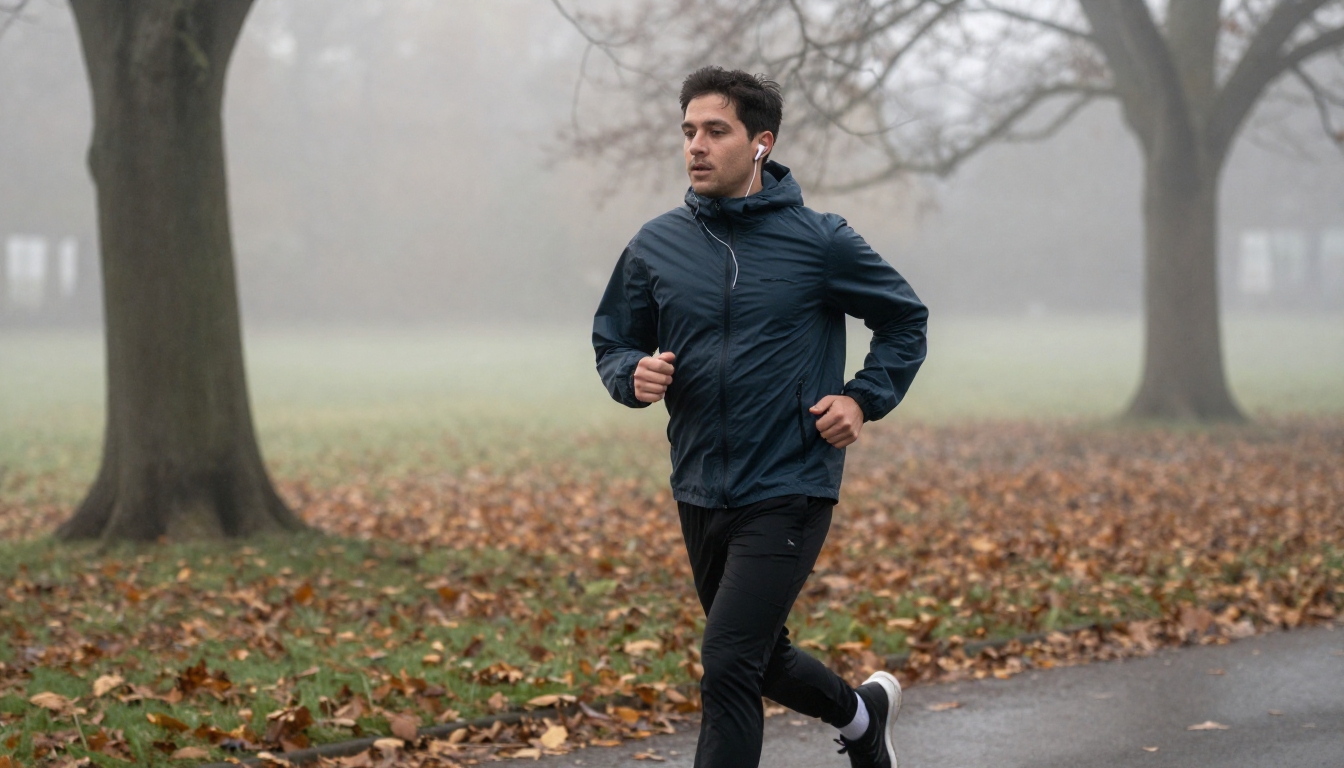
We all know that warming up is a fundamental aspect of any athlete’s training routine . It allows you to prepare your muscles, your heart, your breathing and other responses to reach your maximum potential. Because no one goes from zero to one hundred all at once. It wouldn’t be healthy. Warming up is part of adaptation and injury prevention.
Each sporting discipline has its specific way of warming up depending on the demand and type of sporting activity. But do you also mentally prepare for your training session? Most athletes, both professional and popular, do not do this.
If you only warm up physically before starting your activity, you are not mentally prepared to train. That moment requires a mental routine so that, when you shoot your first ball, run your first series or hit your first drive, you are one hundred percent.
Do You Warm Up Your Mind?
Heating emotions and thoughts also has its advantages. Which are as follows:
Related Stories
 Evergreen 6 Leg Exercises For Strong and Toned Legs
 How to Get in Shape With Mini Workouts Throughout The Day
Boosts Concentration.
Have you not noticed that when you start reading, studying or working, the moment you start your concentration is less than after about twenty minutes?
- It is because the concentration requires a heating phase. That is why it is not advisable to start studying with the most difficult subject. The same happens in sports.
- If you want to be 100% focused on your first rondo or your first set, you need to do exercises that get you into the training before you start it.
- You can practice for this with meditation techniques. It’s about spending a few minutes focusing your attention on the here and now, stopping paying attention to what remains.(1),(2)

Improve Technique and Learning.
- Guided imagination or visualization techniques allow your brain to visualize and anticipate what you want to achieve in the training session.(3)
- You can visualize the entire session, with the changes in rhythm, with what you are going to say, or you can visualize very specific moments, such as the stride technique that you want to perfect or the volley.
- Visualizing allows you to have mental images that prepare the brain for the occasion.
- The brain does not distinguish between what you visualize and what you execute, for it it is the same experience and in both, it connects the brain circuits that lead you to execute that exercise.
- So every time you successfully visualize, you go deeper into automating that activity.
- Visualization motivates and promotes learning.

Increase Motivation.
- Going out to train requires having a clear training plan in your head.
- Know the difficulty, the times, the breaks, the level of success you want to obtain.
- Before training, get into the routine of writing down what you want to achieve today in your training session, but not in terms of the result, but in terms of performance.
- What do you have to do, in how much time, in what way?
- And when you finish your training session, assess whether you have achieved what you set out to do. If not, you could write down what the improvement solutions will be for the next session.
Don’t think about beating yourself up if you don’t get it! Being focused on what you want to do motivates.
You Gain Confidence and Security.
- Having a mental routine allows you to carry out all the guidelines we have talked about: writing objectives, visualizing, motivating yourself and this prepares us to train.
- The moment you start your psychological warm-up routine, your brain knows that the next step is to train.
- It gives us security to have a mental plan of what we are going to execute.

You Manage Your Emotions and Your Rhythms.
- There are times when we face long, hard or boring workouts.
- When faced with this type of training, we tend to develop negative thoughts, “ Ugh, what a bummer,” “It’s going to take forever. ”
- But if before training you work on self-talk, that is, your inner game, what you say to yourself, and choose motivating expressions and words, the harshness of the training will not disappear, but you will modify your mood. .
- Since you have to do it, it will always be better from ambition, positivity and enjoyment.
Do You Warm Up Your Mind – Personal Experience.
My name is Carlos Mendoza, Semi-Professional Footballer, Sports Science Student, Valencia, Spain, in my early years in the profession, I used to spend all my energy on physical warm-ups, and never gave any attention to the mental preparation. As soon as I introduced short visualization and breathing routines prior to training, my attention became clearer, the number of mistakes decreased, and I became confident even at the first drill.
“Warming up my mind helped me enter training focused, confident, and fully present from the first minute.”


Expert Opinion.
As per Dr. Natalie Fischer, PhD – Sports Psychologist/ Performance Coach, mental warming up is as important as physical one since attention, motivation and emotional control are directly related to movement quality and learning. Goal-setting, mindful breathing, and visualization are known to trigger neural networks that are part of performance and enable athletes to move between their everyday life and the training environment. Mentally prepared athletes are more likely to demonstrate an increase in focus, consistency and resilience to pressure.
Frequently Asked Questions.
1. Should mental warm-up be there before training?
Yes. Mental warm-ups enhance concentration, control of emotions, preparedness, and can assist athletes at the start of a session to achieve higher results.
2. What is the duration of a mental warming up?
A visualization or breathing or mindfulness even 5 or 10 minutes can be sufficient to put the mind into a proper state.
3. What are the most effective mental warm ups of athletes?
Some of the most effective techniques include visualization, controlled breathing, positive self-talk, and performance based setting of performance goals.
Bottom Line.
Don’t underestimate the energy of warming up your mind. Just like warming up your frame before physical hobby, getting ready your thoughts sets the degree for top performance. So, take a moment to interact in sports like meditation, mindfulness sports, or even puzzles to get your mental gears turning. By giving your thoughts the nice and cozy-up it desires, you’ll be geared up to address some thing challenges come your manner with readability and focus.
+3 Sources
FreakToFit has strict sourcing guidelines and relies on peer-reviewed studies, educational research institutes, and medical organizations. We avoid using tertiary references. You can learn more about how we ensure our content is accurate and up-to-date by reading our editorial policy.
- A meta-analysis of the intervention effect of mindfulness training on athletes’ performance; https://www.frontiersin.org/journals/psychology/articles/10.3389/fpsyg.2024.1375608/full
- Mindfulness and Meditation as Performance Enhancers in Sports; https://www.multidisciplinaryfrontiers.com/uploads/archives/20250218173426_49.pdf
- The Effects of Imagery Practice on Athletes’ Performance: A Multilevel Meta-Analysis with Systematic Review; https://www.mdpi.com/2076-328X/15/5/685