

















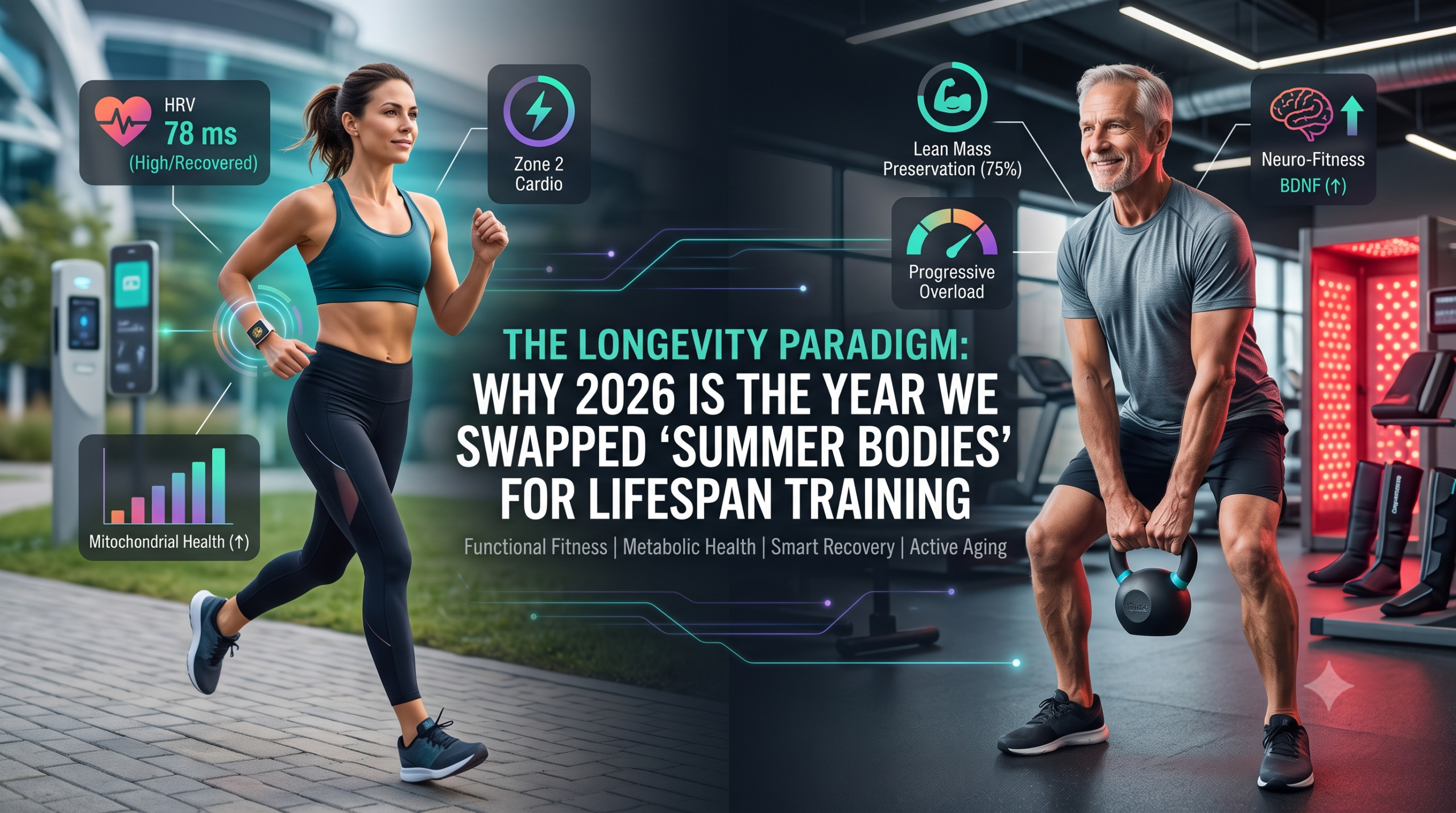
Selama beberapa dekade, industri kebugaran dibangun di atas siklus musiman yang sederhana: membakar berat musim dingin, membangun “tubuh musim panas”, bilas, dan ulangi. Keberhasilan diukur dengan skala atau pita pengukur. Tetapi saat kita melewati tahun 2026, perubahan struktural besar-besaran telah sepenuhnya mendefinisikan ulang hubungan kita dengan olahraga.
Era kebugaran, “semua gas-tanpa rem” yang digerakkan oleh estetika secara resmi digantikan oleh pelatihan umur panjang. Didorong oleh terobosan dalam pelacakan biomargin, munculnya kesadaran kesehatan metabolik di era pengobatan GLP-1, dan kelelahan kolektif dengan kelelahan kronis, orang mengajukan pertanyaan yang jauh lebih baik: Seberapa baik fungsi tubuh saya 30, 40, atau 50 tahun dari sekarang?
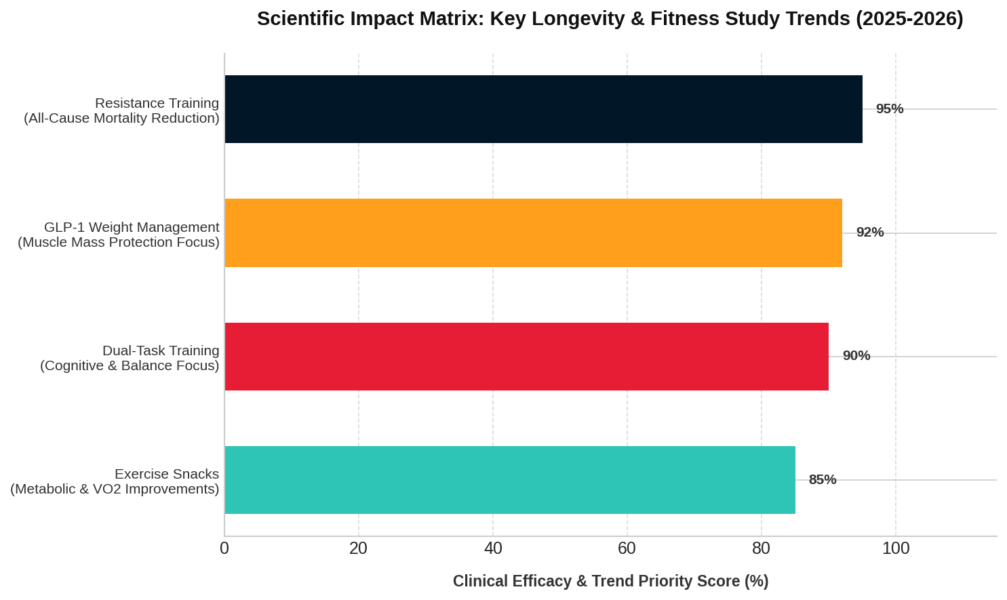
Menurut American College of Sports Medicine (ACSM), prioritas kebugaran utama tidak lagi diisolasi untuk kehilangan lemak atau ukuran otot maksimum. Sebaliknya, Pelacakan teknologi yang dapat dipakai, Latihan untuk manajemen berat badan dan pelestarian massa tanpa lemak, dan kebugaran fungsional untuk penuaan aktif mendominasi peringkat. Kami tidak lagi berlatih hanya untuk terlihat baik bulan depan; kami Pelatihan agar tetap berfungsi, mandiri, dan tajam secara kognitif seumur hidup.(1)
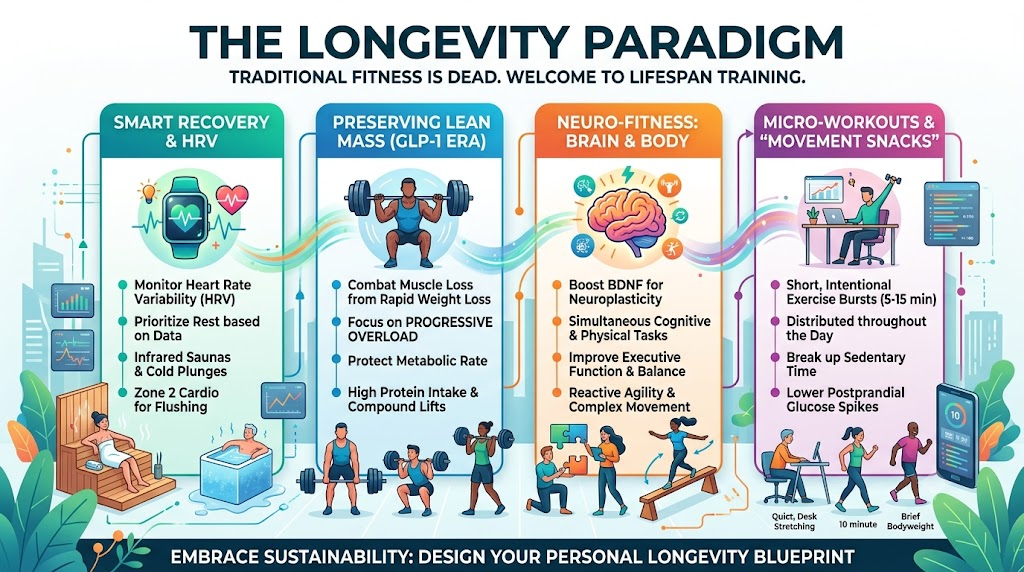
1. Kematian “Tidak Ada Rasa Sakit, Tidak Ada Keuntungan”: Masuk ke Pemulihan Cerdas dan HRV.
Jika ada satu metrik yang telah merevolusi kebugaran, itu adalah Variabilitas denyut jantung (HRV). Diukur terus menerus dengan cincin pintar modern dan pelacak kebugaran generasi kelima, HRV melacak variasi waktu antara detak jantung berturut-turut. Ini berfungsi sebagai jendela langsung ke sistem saraf otonom Anda.
Cerita terkait
 Cara menghilangkan bra benjolan : Latihan
 Bagaimana cara kembali berolahraga setelah istirahat panjang?
HRV tinggi = dominasi parasimpatis (Istirahat & digest / siap untuk dilatih)
HRV rendah = dominasi simpatik (berlawanan atau lari / perlu pemulihan)
Di masa lalu, bangun dengan otot yang sakit dipandang sebagai lencana kehormatan—pertanda untuk melewati sesi brutal lainnya. Hari ini, penggemar kebugaran memeriksa skor pemulihan mereka sebelum memutuskan volume latihan harian mereka. Jika perangkat Anda yang dapat dikenakan sinyal HRV yang habis dan arsitektur tidur nyenyak yang buruk, pilihan optimal tidak lagi menjadi sesi pelatihan interval intensitas tinggi (HIIT) yang intens; ini adalah blok pemulihan mobilitas kondisi mapan (LISS) yang berdedikasi atau mobilitas rendah.
Staples baru dari zona pemulihan.
Lantai gym berubah dengan cepat untuk mengakomodasi pergeseran ini. Dek kardio tradisional sedang diubah menjadi cagar alam pemulihan khusus. Kemajuan tidak lagi dicapai hanya dengan memecah jaringan otot, tetapi dengan mengoptimalkan seberapa efisien perbaikannya.
- Sauna inframerah: Tidak seperti sauna tradisional, panas inframerah menembus jauh ke dalam jaringan otot, meningkatkan sirkulasi, mengurangi kekakuan sendi, dan mempercepat perbaikan seluler.
- Terapi kontras: Bergantian antara lingkungan panas dan plunges dingin membantu memodulasi peradangan sistemik, membuang limbah metabolisme, dan meningkatkan elastisitas vaskular.
- Zona 2 Kardio dan Pemulihan Aktif: Menghabiskan waktu pada 60-70% dari detak jantung maksimum Anda bertindak sebagai mekanisme pembilasan untuk sistem kardiovaskular Anda, merangsang mitokondria kesehatan tanpa menambahkan struktur stres pada persendian Anda.
2. Melestarikan massa tanpa lemak: ERA GLP-1 dan pergeseran manajemen berat badan.
Pemanfaatan agonis reseptor GLP-1 secara luas (seperti semaglutide dan tirzepatide) secara mendasar telah mengubah lanskap klinis penurunan berat badan. Namun, ia juga menyoroti tantangan fisiologis kritis yang diposisikan secara unik oleh industri kebugaran: Kehilangan otot rangka massa.(2)

Ketika individu menurunkan berat badan dengan cepat melalui defisit kalori parah atau intervensi medis, persentase yang signifikan dari itu Penurunan berat badan bisa berasal dari otot tanpa lemak jaringan daripada jaringan adiposa (lemak). Penurunan massa otot ini dapat menyebabkan penurunan tingkat metabolisme istirahat, membuat pemeliharaan berat badan jangka panjang secara signifikan lebih sulit.(3)
Penurunan berat badan yang cepat tanpa latihan resistensi:
[ Kehilangan lemak: ~ 60-70% ] + [ Kehilangan otot: ~ 30-40% ] ──> Tingkat metabolisme yang lebih rendah
Penurunan berat badan dengan kelebihan progresif & protein tinggi:
[ Kehilangan lemak: ~ 85-90% ] + [ Otot diawetkan: ~ 10-15% ] ──> Tingkat metabolisme yang dilindungi

Karena realitas fisiologis ini, ACSM secara resmi memperbarui klasifikasi trennya dari “Olahraga untuk Menurunkan Berat Badan” menjadi “Latihan untuk manajemen berat badan.” Tujuannya bukan lagi sekadar mengecilkan tubuh dengan membakar kalori sebanyak mungkin. Sebaliknya, strategi berpusat pada Rekomposisi tubuh: Melucuti lemak tubuh sambil secara agresif melindungi dan Membangun otot rangka.
Jangkar arsitektur: Latihan kekuatan tradisional.
Untuk menjaga massa tanpa lemak selama manajemen berat badan, program Anda harus memberi tubuh Anda alasan biologis yang pasti untuk menjaga ototnya. Ini membutuhkan gerakan berat, majemuk, multi-sendi yang Tekankan sistem muskuloskeletal dengan cara yang aman dan progresif.
| Latihan utama | Mekanika utama | sasaran biomarker |
| Barbel / jebakan deadlift | engsel pinggul (rantai posterior) | Kepadatan Mineral Tulang & Integritas Tulang Belakang |
| Goblet / Barbell Squat | Fleksi lutut (quads/glutes) | Daya tubuh & stabilitas sendi bawah |
| Tekanan overhead / push-up | Dorongan vertikal/horizontal | Ketahanan tali bahu |
| Petani yang membawa | Pemuatan Isometrik Unilateral | pegangan Kekuatan & Inti anti -rotasi |
3. Neuro-fitness: melatih otak dan tubuh secara bersamaan.
Salah satu perkembangan yang paling menarik adalah persimpangan klinis ilmu kognitif dan pengkondisian fisik, bidang yang dikenal sebagai neuro-fitness. Kami telah lama mengetahui bahwa olahraga merangsang pelepasan faktor neurotropik yang diturunkan dari otak (BDNF)—protein yang bertindak seperti pupuk untuk sel-sel otak, mendukung neuroplastisitas, memori, dan pembelajaran. Namun, metodologi pelatihan modern sekarang sengaja memasangkan tantangan kognitif dengan gerakan fisik.(4)
Alih-alih menatap kosong ke layar televisi sambil menempuh jarak di atas treadmill, neuro-fitness modern mengintegrasikan output fisik dengan tugas pemrosesan mental.
Pelatihan tradisional: [Stimulus fisik] ──> Output motor sederhana
Neuro-fitness: [stimulus fisik + tugas kognitif] ──> Adaptasi sinaptik & otot
Bagaimana Neuro-Fitness dipraktikkan?
- Pelatihan tugas ganda: Melakukan latihan tangga kelincahan atau pekerjaan papan keseimbangan sambil secara bersamaan menyelesaikan tugas mengingat memori yang dapat didengar atau melacak isyarat cahaya visual.
- Latihan unilateral dan kontralateral: Gerakan yang memaksa belahan otak kiri dan kanan untuk berkoordinasi dengan cepat, seperti melempar bola melintang atau melintang dengan kompleks kettlebell kaki tunggal yang kompleks.
- Kelincahan reaktif: Memanfaatkan sistem pelacakan visual acak (seperti target LED yang dapat diprogram) untuk memaksa pengambilan keputusan yang cepat di bawah kelelahan fisik.
Kerangka holistik ini sangat penting untuk populasi penuaan aktif. Penelitian menunjukkan bahwa menggabungkan tantangan kognitif dengan tugas kontrol motorik secara signifikan lebih efektif dalam mencegah penurunan kognitif dan yg membaik keseimbangan dunia nyata daripada latihan fisik saja.
4. Latihan mikro dan “makanan ringan gerak”: memecahkan krisis waktu.
Jadwal modern tetap sangat menuntut, tetapi kami pemahaman tentang fisiologi olahraga telah beradaptasi dengan indah. Keyakinan bahwa suatu latihan Harus berlangsung selama 60 menit terus menerus untuk memberikan manfaat kesehatan telah dibantah secara menyeluruh oleh ilmu olahraga.
Sebagai gantinya adalah konsep latihan mikro atau “makanan ringan gerakan”—blok aktivitas fisik singkat yang sangat disengaja yang berlangsung dari 5 hingga 15 menit, didistribusikan secara strategis sepanjang hari.(5)
Pendekatan tradisional: 8 jam duduk + 60 menit sesi olahraga = tidak banyak bergerak Gaya Hidup + Latihan Model Mikro-Latihan: 2 menit peregangan + 10 menit berjalan kaki + 5 menit sirkuit berat badan (berulang) = profil metabolisme aktif
efek akumulasi.
Data menunjukkan bahwa memecah perilaku menetap yang berkepanjangan dengan semburan gerakan yang singkat dan intens dapat menghasilkan manfaat metabolik dan kardiovaskular yang sangat mencerminkan satu latihan terus menerus. Jendela gerakan singkat ini bertindak sebagai tombol reset untuk sensitivitas insulin dan vaskularisasi otot Anda.
- Siram metabolik 10 menit: Urutan cepat squat berat badan, ayunan kettlebell, dan papan yang dipegang untuk waktu, dilakukan di kantor atau ruang tamu.
- Istirahat Zona 2: Jalan cepat, 10 menit berjalan kaki setelah makan. Kebiasaan sederhana ini secara drastis menumpulkan lonjakan glukosa postprandial, menyalurkan nutrisi langsung ke kerangka otot bukan lemak penyimpanan.
- Istirahat mobilitas: Lima menit ekstensi tulang belakang toraks aktif dan pembuka pinggul untuk melawan degradasi struktural yang disebabkan oleh jam duduk di meja.
5. Revolusi pembinaan hibrida: Kebugaran yang fleksibel dan digerakkan oleh komunitas.
Cara kami mengakses panduan kebugaran ahli telah bergeser dari kerangka kerja modalitas tunggal yang kaku. Model lama memilih secara ketat antara pelatih pribadi yang mahal atau aplikasi latihan rumah yang benar-benar terisolasi dan tidak terarah telah dilarutkan menjadi pelatihan hibrida.
Pembinaan hibrida memadukan presisi teknis dan akuntabilitas instruksi langsung dengan efektivitas biaya dan fleksibilitas alat pelacakan digital. Seorang klien mungkin melihat pelatih mereka secara langsung sekali Setiap dua minggu Untuk penilaian gerakan yang ketat, bentuk kritik, dan pemeriksaan biometrik, sambil menjalankan sisa program mereka yang disesuaikan secara independen melalui platform seluler terintegrasi.
[ Penilaian langsung & koreksi formulir ]
│
▼
[Pengiriman Program Digital & Sinkronisasi yang Dapat Dipakai]
│
▼
[ Penyesuaian otomatis harian (melalui AI/data) ]
Munculnya “kebugaran sosial” dan komunitas mikro.
Secara bersamaan, kebugaran telah menjadi sumber utama hubungan masyarakat dan sosial. Acara kompetitif seperti Hyrox (format balap kebugaran standar yang menggabungkan stasiun lari dan fungsional) dan lari lokal atau klub kebugaran fungsional melihat nomor partisipasi yang belum pernah terjadi sebelumnya.
Orang mencari ruang yang menawarkan lebih dari sekadar tempat untuk berkeringat; mereka menginginkan tujuan bersama, akuntabilitas bersama, dan interaksi sosial yang tulus. Kebugaran bukan lagi tugas tunggal untuk memeriksa daftar—ini telah menjadi saluran sosial inti yang meningkatkan kesehatan psikologis di samping kemampuan fisik.
Takeaway Akhir: Merancang Cetak Biru Umur Panjang Pribadi Anda.
Tema kebugaran yang menyeluruh jelas: Keberlanjutan adalah metrik utama kesuksesan. Individu yang membangun rutinitas yang bijaksana dan seimbang yang menghormati pemulihan, memprioritaskan kekuatan, dan mengintegrasikan gerakan teratur sepanjang hari akan selalu melampaui individu yang bersepeda melalui ledakan ekstrim dari overtraining dan cedera yang tak terhindarkan.
Untuk menerapkan paradigma modern ini dalam hidup Anda sendiri, fokuslah pada empat pilar dasar ini:
- Jangkar dengan kekuatan: Lakukan perlawanan khusus Latihan minimal 2 sampai 3 kali seminggu. Prioritaskan gerakan majemuk yang melindungi tulang, sendi, dan jaringan otot tanpa lemak.
- Audit pemulihan Anda: Perhatikan kualitas tidur Anda, langkah harian, dan tren HRV Anda daripada pembakaran kalori mutlak Anda selama satu latihan.
- Kumpulkan “Snacks Gerakan”: Jangan biarkan tubuh Anda duduk tanpa gangguan selama berjam-jam. Pisahkan waktu menetap dengan jalan-jalan pendek, latihan mobilitas, atau urutan berat badan yang singkat.
- Latih niat Anda: Dekati kebugaran Anda dengan visi jangka panjang. Tanyakan pada diri sendiri apakah jasmani Pilihan yang Anda buat hari ini secara aktif membangun versi diri Anda yang lebih tangguh, mampu, dan mandiri untuk masa depan.
Tujuan utama kebugaran bukan hanya untuk menambah tahun-tahun dalam hidup Anda—tetapi untuk menambahkan kehidupan yang dinamis dan fungsional ke tahun-tahun Anda.
+5 sumber
FreaktoFit memiliki pedoman pengadaan yang ketat dan bergantung pada studi peer-review, lembaga penelitian pendidikan, dan organisasi medis. Kami menghindari penggunaan referensi tersier. Anda dapat mempelajari lebih lanjut tentang bagaimana kami memastikan konten kami akurat dan terkini dengan membaca Kebijakan Editorial.
- Posisi berdiri American College of Sports Medicine. Pelatihan resistensi Resep untuk fungsi otot, hipertrofi, dan kinerja fisik pada orang dewasa yang sehat: gambaran umum ulasan; https://pmc.ncbi.nlm.nih.gov/articles/PMC12965823/
- GLP-1 Agonis dan Latihan: Masa Depan Prioritas Gaya Hidup; https://www.frontiersin.org/journals/clinical-diabetes-and-healthcare/articles/10.3389/fcdhc.2025.1720794/full
- Pelestarian massa tanpa lemak dengan latihan resistensi dan protein selama terapi semaglutide dan tirzepatide (studi lean-PREP): protokol untuk uji coba terkontrol secara acak; https://bmjopen.bmj.com/content/16/4/e116911
- Efek pelatihan tugas ganda-kognitif pada kelemahan kognitif pada orang dewasa yang lebih tua: uji coba terkontrol secara acak; https://www.frontiersin.org/journals/aging-neuroscience/articles/10.3389/fnagi.2025.1639245/full
- Olahraga ringan sebagai strategi untuk mengganggu perilaku menetap: tinjauan sistematis hasil dan kelayakan kesehatan; https://www.preprints.org/manuscript/202510.2184