















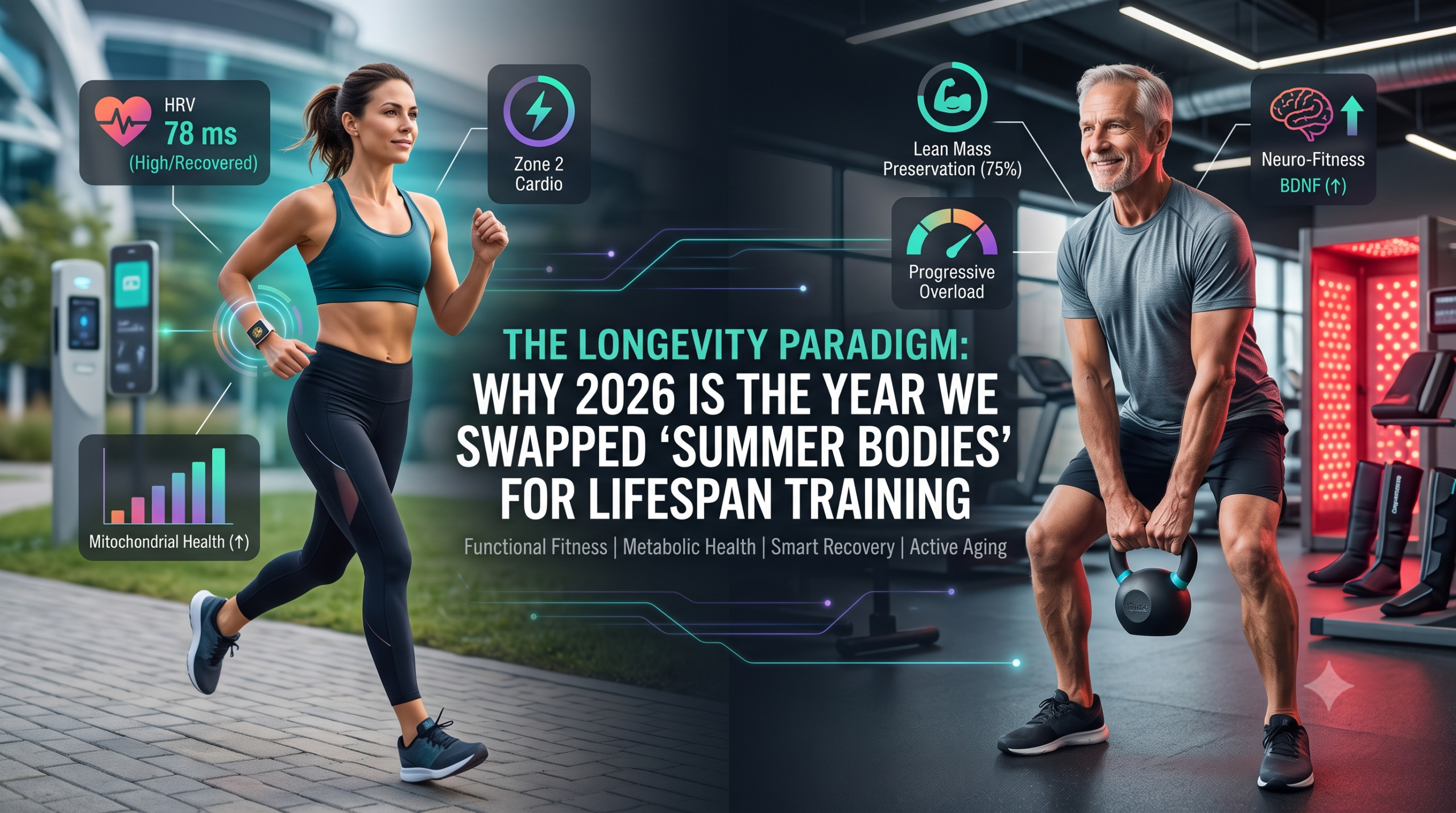
Durante décadas, a indústria de fitness foi construída em um ciclo sazonal simples: queimar o peso do inverno, construir um “corpo de verão”, enxaguar e repita. O sucesso foi medido por uma escala ou fita métrica. Mas, à medida que avançamos em 2026, uma grande mudança estrutural redefiniu completamente nossa relação com o exercício.
A era do fitness “All-Gas-No-Freixe” orientado pela estética está sendo oficialmente substituído pelo treinamento de longevidade. Impulsionado por avanços no rastreamento de biomargem, na ascensão da consciência metabólica da saúde na era do medicamento GLP-1 e uma exaustão coletiva com o esgotamento crônico, as pessoas estão fazendo uma pergunta muito melhor: quão bem meu corpo funcionará daqui a 30, 40 ou 50 anos?
De acordo com o American College of Sports Medicine (ACSM), as prioridades de condicionamento físico não são mais isoladas para a perda de gordura ou o tamanho máximo do músculo. Em vez disso, Rastreamento de tecnologia vestível, exercícios para controle de peso e preservação de massa magra e aptidão funcional para o envelhecimento ativo dominam as fileiras. Não estamos mais treinando apenas para ficarmos bem no próximo mês; estamos Treinamento para permanecer funcional, independente e cognitivamente nítido por toda a vida.(1)
1. A morte de “Sem dor, não ganho”: insira a recuperação inteligente e a VFC.
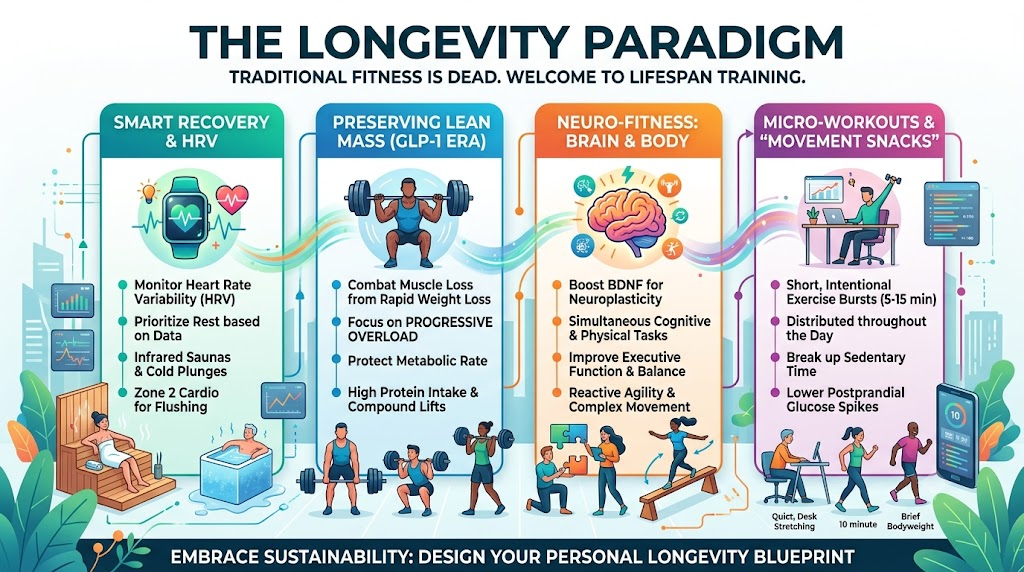
Se houver uma única métrica que revolucionou a aptidão, é Variabilidade da frequência cardíaca (VFC). Medido continuamente por anéis inteligentes modernos e rastreadores de fitness de quinta geração, o HRV rastreia a variação de tempo entre os batimentos cardíacos consecutivos. Serve como uma janela direta para o seu sistema nervoso autônomo.
Histórias relacionadas
 Exercício para as pernas para corredores: aprimore a flexibilidade com a corrida
 7 benefícios surpreendentes para a saúde do ciclismo regular
Alta VFC = Dominância parassimpática (Rest & Digest / Pronto para treinar)
Baixa VFC = Dominância Simpática (luta ou fuga/recuperação de necessidades)
No passado, acordar com os músculos doloridos era visto como um distintivo de honra – um sinal para avançar em outra sessão brutal. Hoje, os entusiastas do fitness verificam sua pontuação de recuperação antes de decidirem o volume diário de treinamento. Se o seu wearable sinaliza uma VFC esgotada e uma arquitetura de sono profundo e pobre, a escolha ideal não é mais uma intensa sessão de treinamento intervalado de alta intensidade (HIIT); é um bloco de recuperação dedicado à mobilidade ou baixa intensidade (LISS).
Os novos grampos da zona de recuperação.
Os pisos de ginástica estão mudando rapidamente para acomodar essa mudança. Os decks tradicionais estão sendo convertidos em santuários de recuperação dedicados. O progresso não é mais alcançado apenas pela quebra do tecido muscular, mas pela otimização da eficiência com que ele repara.
- Saunas infravermelhas: Ao contrário das saunas tradicionais, o calor infravermelho penetra profundamente no tecido muscular, promovendo a circulação, reduzindo a rigidez das articulações e acelerando o reparo celular.
- Terapia de contraste: A alternância entre ambientes quentes e mergulhos frios ajuda a modular a inflamação sistêmica, a liberar os resíduos metabólicos e a melhorar a elasticidade vascular.
- Cardio cardio e recuperação ativa da zona 2: Passar um tempo a 60-70% da sua frequência cardíaca máxima atua como um mecanismo de descarga para o seu sistema cardiovascular, estimulando a mitocondrial saúde sem adicionar estrutura estresse nas articulações.
2. Preservando a massa magra: a era GLP-1 e a mudança no controle de peso.
A ampla utilização de agonistas do receptor GLP-1 (como semaglutida e tirzepatídeo) mudou fundamentalmente o cenário clínico da perda de peso. No entanto, também destacou um desafio fisiológico crítico de que a indústria de fitness está posicionada de forma única para resolver: o rápido Perda do músculo esquelético massa.(2)

Quando os indivíduos perdem peso rapidamente por meio de déficits calóricos graves ou de intervenções médicas, uma porcentagem significativa desse A perda de peso pode vir do músculo magro tecido em vez de tecido adiposo (gordura). Essa queda na massa muscular pode causar um declínio na taxa metabólica de repouso, tornando a manutenção do peso a longo prazo significativamente mais difícil.(3)
Perda de peso rápida sem treinamento de resistência:
[Perda de gordura: ~60-70%] + [Perda de músculo: ~30-40%] ──> Menor taxa metabólica
Perda de peso com sobrecarga progressiva e alta proteína:
[Perda de gordura: ~85-90%] + [Músculo preservado: ~10-15%] ──> Taxa metabólica protegida

Devido a essa realidade fisiológica, o ACSM atualizou oficialmente sua classificação de tendências de “Exercício para perda de peso” para “Exercício para controle de peso.” O objetivo não é mais simplesmente encolher o corpo, queimando o máximo de calorias possível. Em vez disso, a estratégia centra-se em recomposição do corpo: Retirando a gordura corporal enquanto protege agressivamente e Construindo músculos esqueléticos.
A âncora arquitetônica: treinamento de força tradicional.
Para preservar a massa magra durante o controle de peso, sua programação deve dar ao seu corpo uma razão biológica definitiva para manter seus músculos. Isso requer movimentos pesados, compostos e multi-articulação que Estresse o sistema músculo-esquelético de forma segura e progressiva.
| exercício principal | Mecânica Primária | Biomarcador de destino |
| Barbell / Trap Bar Deadlift | Dobradiça do quadril (cadeia posterior) | Densidade mineral óssea e integridade da coluna |
| Taça / agachamento com barra | Flexão do joelho (quadros/glutos) | Potência do corpo inferior e estabilidade articular |
| Pressione o overhead Press / Push-up | Empurrão vertical/horizontal | Resiliência do cinto de ombro |
| Carrega do fazendeiro | Carga unilateral isométrica | aperto Força e núcleo anti -rotação |
3. Neuro-aptidão: treinando o cérebro e o corpo simultaneamente.
Um dos desenvolvimentos mais fascinantes é a interseção clínica da ciência cognitiva e do condicionamento físico, um campo conhecido como neuro-ajuste. Sabemos há muito tempo que o exercício estimula a liberação do fator neurotrófico derivado do cérebro (BDNF) – uma proteína que atua como fertilizante para as células cerebrais, que suporta neuroplasticidade, memória e aprendizado. No entanto, as metodologias de treinamento modernas agora estão deliberadamente combinando desafios cognitivos com o movimento físico.(4)
Em vez de olhar fixamente para uma tela de televisão enquanto registrava milhas em uma esteira, o neurofitness moderno integra a produção física com tarefas de processamento mental.
Treinamento tradicional: [Estímulo físico] ──> Saída do motor simples
Neurofitness: [estímulo físico + tarefa cognitiva] ──> Adaptação sináptica e muscular
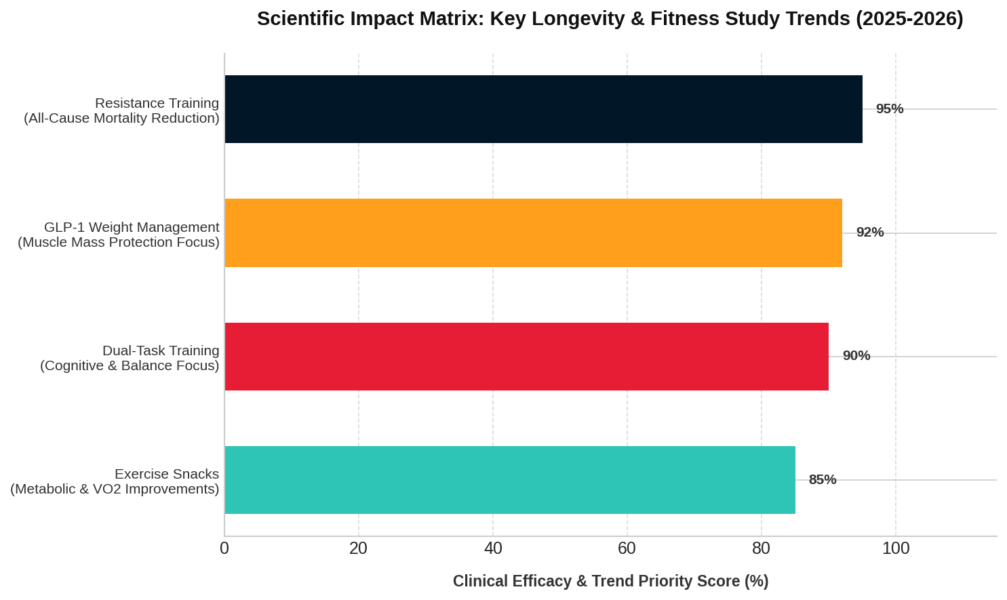
Como o neuro-aptidão é praticado?
- Treinamento de dupla tarefa: Executando exercícios de escada de agilidade ou trabalho de placa de equilíbrio, ao mesmo tempo em que resolve tarefas de memória de memória audível ou rastreiando pistas de luz visuais.
- Exercícios unilaterais e contralaterais: Movimentos que forçam os hemisférios esquerdo e direito do cérebro a se coordenarem rapidamente, como bolas de remédios cruzados ou complexos complexos de kettlebell de uma perna.
- Agilidade reativa: Utilizando sistemas de rastreamento visual aleatório (como alvos programáveis de LED) para forçar a tomada de decisões rápidas sob fadiga física.
Essa estrutura holística é particularmente vital para as populações ativas. Pesquisas indicam que a combinação de desafios cognitivos com tarefas de controle motor é significativamente mais eficaz na prevenção do declínio cognitivo e melhorando equilíbrio do mundo real do que o exercício físico sozinho.
4. Micro-treinos e “Snacks de movimento”: Resolvendo o tempo de execução.
O cronograma moderno continua muito exigente, mas nossa A compreensão da fisiologia do exercício se adaptou muito bem. A crença de que um treino Deve durar 60 minutos contínuos para fornecer benefícios à saúde foi completamente desmascarado pela ciência do esporte.
Em seu lugar está o conceito de micro-treinos ou “snacks de movimento” – blocos curtos e intencionais de atividade física que duram de 5 a 15 minutos, distribuídos estrategicamente ao longo do dia.(5)
Abordagem tradicional: 8 horas sentado + 60 minutos de sessão de ginástica = sedentarismo Estilo de vida + modelo de exercícios de micro-treino: 2 minutos de alongamento + 10 minutos de caminhada + 5 minutos de circuito de peso corporal (repetido) = perfil metabólico ativo
O efeito de acumulação.
Os dados mostram que a separação de um comportamento sedentário prolongado com rajadas de movimento curtas e intensas pode gerar benefícios metabólicos e cardiovasculares que refletem de perto um único treino contínuo. Essas breves janelas de movimento atuam como um botão de reset para sua sensibilidade à insulina e vascularização muscular.
- O fluxo metabólico de 10 minutos: Uma rápida sequência de agachamentos com peso corporal, balanços de kettlebell e uma prancha por tempo, realizadas em um escritório ou sala de estar.
- O intervalo da zona 2: Uma caminhada rápida de 10 minutos imediatamente após uma refeição. Este hábito simples emite drasticamente os picos de glicose pós-prandial, canalizando os nutrientes diretamente para o esqueleto Músculo em vez de gordura Armazenamento.
- A pausa de mobilidade: Cinco minutos de extensões ativas da coluna torácica e abridores de quadril para neutralizar a degradação estrutural causada por horas de sentar em uma mesa.
5. A revolução do coaching híbrido: condicionamento físico flexível e orientado para a comunidade.
A maneira como acessamos a orientação de condicionamento físico especializado mudou de estruturas rígidas de modalidade única. O antigo modelo de escolher estritamente entre um personal trainer pessoal caro ou um aplicativo de treino em casa completamente isolado e não guiado se dissolveu no treinamento híbrido.
O treinamento híbrido combina a precisão técnica e a responsabilidade das instruções presenciais com o custo-benefício e a flexibilidade das ferramentas de rastreamento digital. Um cliente pode ver seu treinador pessoalmente uma vez A cada duas semanas Para uma avaliação rigorosa de movimento, crítica de forma e verificação biométrica, executando o restante de seu programa sob medida de forma independente por meio de uma plataforma móvel integrada.
[ Avaliação presencial e correção de formulários]
│
▼
[Entrega digital e sincronização de programas]
│
▼
[Ajustes diários regulados automaticamente (via AI/DATA)]
A ascensão da “aptidão social” e das microcomunidades.
Simultaneamente, o condicionamento físico tornou-se uma fonte importante de conexão social e social. Eventos competitivos como Hyrox (um formato de corrida de fitness padronizado que combinam estações funcionais e funcionais) e clubes de corrida local ou funcionais estão vendo números de participação sem precedentes.
As pessoas estão procurando espaços que ofereçam mais do que apenas um lugar para suar; elas querem objetivos compartilhados, responsabilidade mútua e interação social genuína. O condicionamento físico não é mais uma tarefa solitária para marcar uma lista – tornou-se uma saída social central que melhora a saúde psicológica ao lado da capacidade física.
Final Takeaway: projetando seu projeto de longevidade personalizado.
O tema abrangente do condicionamento físico é claro: a sustentabilidade é a métrica final do sucesso. O indivíduo que constrói uma rotina pensativa e equilibrada que respeita a recuperação, prioriza a força e integra o movimento regular ao longo do dia sempre ultrapassará o indivíduo que percorre as explosões extremas de excesso de treinamento e lesões inevitáveis.
Para implementar esse paradigma moderno em sua própria vida, concentre-se nesses quatro pilares fundamentais:
- âncora com força: Execute uma resistência dedicada Treinamento pelo menos 2 a 3 vezes uma semana. Priorize os movimentos compostos que protegem os ossos, as articulações e o tecido muscular magro.
- Audite sua recuperação: Preste mais atenção à qualidade do sono, aos passos diários e às tendências de VFC do que à queima calórica absoluta durante um único treino.
- Colecione “Snacks de movimento”: Nunca deixe seu corpo sentar ininterrupto por horas. Sedentarismos, com caminhadas curtas, exercícios de mobilidade ou breves sequências de peso corporal.
- Treine sua intenção: Aproxime-se do seu condicionamento físico com uma visão de longo prazo. Pergunte a si mesmo se o material As escolhas que você está fazendo hoje estão construindo ativamente uma versão mais resiliente, capaz e independente de si mesmo para o futuro.
O objetivo final do condicionamento físico não é apenas adicionar anos à sua vida, mas sim adicionar uma vida funcional e vibrante aos seus anos.
+5 fontes
A FreaktoFit tem diretrizes rígidas de sourcing e conta com estudos revisados por pares, institutos de pesquisa educacional e organizações médicas. Evitamos o uso de referências terciárias. Você pode aprender mais sobre como garantimos que nosso conteúdo seja preciso e atualizado, lendo nosso política editorial.
- Stand de posição do American College of Sports Medicine. Prescrição de treinamento de resistência para função muscular, hipertrofia e desempenho físico em adultos saudáveis: uma visão geral das revisões; https://pmc.ncbi.nlm.nih.gov/articles/PMC12965823/
- Agonistas do GLP-1 e exercícios: o futuro da priorização do estilo de vida; https://www.frontiersin.org/journals/clinical-diabetes-and-healthcare/articles/10.3389/fcdhc.2025.1720794/full
- Preservação de massa magra com exercícios de resistência e proteínas durante a terapia semaglutida e tirzepatídeo (estudo de preparação enxuta): um protocolo para um estudo controlado randomizado; https://bmjopen.bmj.com/content/16/4/e116911
- Efeitos do treinamento de dupla tarefa cognitiva sobre o exercício na fragilidade cognitiva em idosos: um estudo controlado randomizado; https://www.frontiersin.org/journals/aging-neuroscience/articles/10.3389/fnagi.2025.1639245/full
- Exercícios de lanches como estratégia para interromper o sedentarismo: uma revisão sistemática dos resultados e viabilidade da saúde; https://www.preprints.org/manuscript/202510.2184