







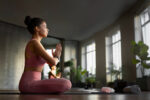






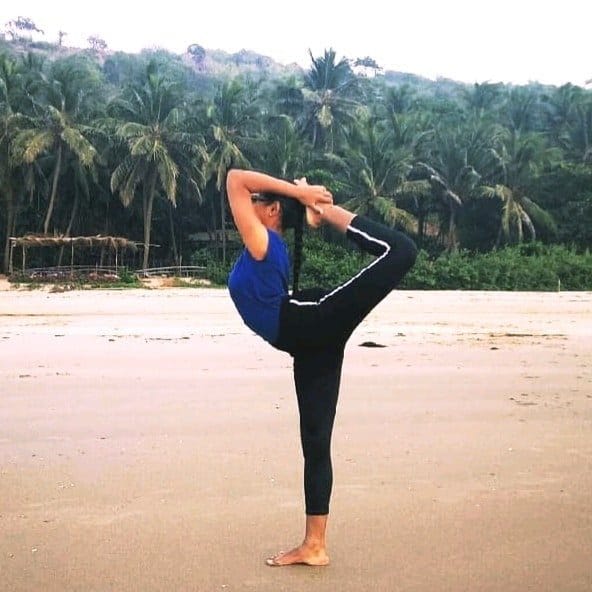

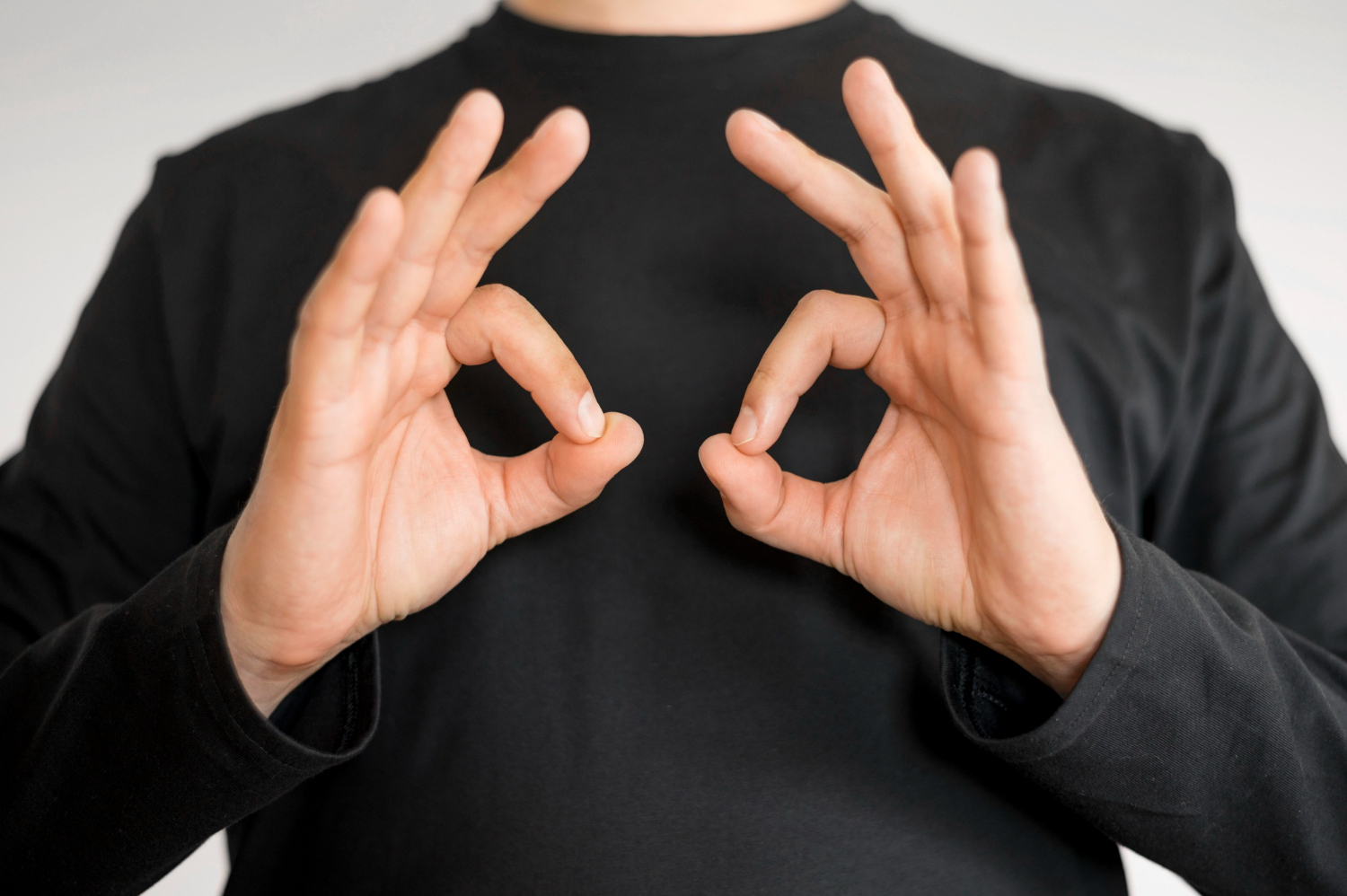
Dharmachakra mudra é um gesto simbólico tradicional de mão associado, particularmente aos ensinamentos budistas e representações do Buda. O termo sânscrito dharmachakra é comumente traduzido como a “roda do dharma” ou “Roda de ensino.” O gesto simboliza o cenário do Dharma em movimento e está fortemente associado ao ensino, sabedoria, compreensão espiritual e transmissão dos ensinamentos budistas.
Ao contrário de alguns mudras de ioga que são ensinados principalmente como práticas de meditação ou respiração, Dharmachakra Mudra também tem um significado iconográfico e filosófico importante. É frequentemente visto na arte e nas estátuas budistas, particularmente representações associadas ao primeiro ensinamento do Buda.
Nas configurações modernas de ioga e meditação, os praticantes podem usar Dharmachakra mudra como uma posição de mão contemplativa enquanto refletem sobre conhecimento, verdade, aprendizado, compaixão e crescimento pessoal.
É importante, no entanto, distinguir entre o simbolismo espiritual tradicional de um Mudra e efeitos fisiológicos cientificamente estabelecidos. Segurar as mãos em uma posição específica não deve ser apresentado como um tratamento para uma doença ou condição médica. qualquer Benefícios experimentados durante a medi São mais apropriadamente compreendidos no contexto mais amplo de relaxamento, atenção plena, atenção e prática contemplativa.
Histórias relacionadas
 Pose de pombo em pé: benefícios, passos, músculos trabalhados e precauções
 As 11 melhores poses de ioga que uso como ciclista para melhorar a flexibilidade e a recuperação
Significado de Dharmachakra mudra.
O significado de Dharmachakra mudra está intimamente ligado ao conceito budista do Dharma.
A Palavra chacra significa roda, enquanto Dharma Pode ter vários significados, dependendo do contexto, incluindo ensino, verdade, princípio ou caminho da prática.
Juntos, Dharmachakra representa a roda do Dharma.
O gesto está tradicionalmente ligado ao ensino e à comunicação do conhecimento espiritual. Pode, portanto, representar:

- sabedoria
- ensino
- verdade
- Aprendizagem espiritual
- compreensão
- compaixão
- A continuação dos ensinamentos budistas
- O movimento da ignorância para a compreensão
- O compartilhamento de conhecimento com outras pessoas
Para os praticantes que usam o mudra durante a meditação, essas ideias podem fornecer um foco significativo para a contemplação.
significado histórico e espiritual.
Dharmachakra mudra é particularmente importante na iconografia budista.

Imagens do Buda exibindo este gesto de mão são comumente interpretadas como representando o giro da roda do Dharma, especialmente o primeiro ensinamento do Buda.
Essa conexão simbólica torna o Dharmachakra mudra diferente de um simples exercício manual.
Seu significado vem da tradição filosófica e religiosa que o cerca.
O gesto pode ser visto como uma representação visual do ensino: o conhecimento não é simplesmente adquirido, mas também comunicado e compartilhado.
Por esse motivo, Dharmachakra mudra pode ser especialmente significativo durante a meditação focada em:
- erudito
- sabedoria
- autorreflexão
- compaixão
- verdade
- Vida ética
- Compreender os pensamentos de alguém
- Desenvolvimento espiritual
Pessoas de diferentes tradições podem interpretar o gesto de forma diferente, por isso é útil abordar seu simbolismo com respeito, em vez de atribuir a ele reivindicações exageradas ou universais.
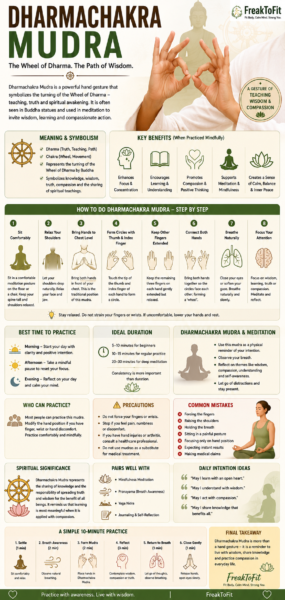
Como executar o mudra Dharmachakra?
O posicionamento exato das mãos pode variar um pouco entre as tradições artísticas e de ensino, mas uma forma comumente representada pode ser praticada da seguinte forma.
Passo 1: Sente-se confortavelmente.
Escolha uma posição confortável para sentar.
Você pode sentar:
- Em uma almofada de meditação
- Em um tapete de ioga
- em uma cadeira
- Em uma posição confortável de pernas cruzadas
Não há necessidade de se forçar a uma postura sentada em particular.
A coluna pode ficar confortavelmente ereta enquanto os ombros permanecem relaxados.
Passo 2: Relaxe os ombros.
Deixe seus ombros caírem naturalmente.
Evite levantá-los ou endurecer-los.
Relaxe sua mandíbula e facial músculos também.
Passo 3: Leve as mãos em direção ao peito.
Posicione as mãos aproximadamente na frente do peito.
Este local é significativo nas representações tradicionais porque o gesto está associado ao ensino e à virada do Dharma.
Etapa 4: forme a conexão do dedo.
Em uma versão comumente representada, o polegar e o dedo indicador de cada mão formam círculos.
Os dedos restantes se estendem naturalmente.
As mãos são posicionadas juntas para que o gesto forme um arranjo equilibrado, semelhante a uma roda.
Passo 5: Mantenha as mãos confortáveis.
Não force os dedos em uma posição rígida.
O gesto deve ser relaxado.
Se seus dedos ou pulsos ficarem desconfortáveis, solte a posição e descanse as mãos.
Passo 6: Feche ou suavize o olhar.
Você pode fechar os olhos ou manter um olhar suave para baixo.
Escolha o que lhe permite permanecer confortável e atencioso.
Passo 7: Respire naturalmente.
Faça respirações lentas e confortáveis.
Não há necessidade de forçar a respiração profunda.
Simplesmente observe o ritmo natural de inalação e expiração.
Passo 8: Concentre sua atenção.
Use o gesto como um lembrete de um tema escolhido.
Por exemplo:
“Posso continuar aprendendo com sabedoria e compaixão.”
Você pode refletir silenciosamente sobre o conhecimento, a compreensão, a verdade ou a compaixão.
Benefícios de Dharmachakra Mudra.
Muitas fontes tradicionais de ioga e meditação associam Mudras a benefícios físicos, energéticos e espirituais. No entanto, as afirmações sobre efeitos fisiológicos específicos devem ser interpretadas com cuidado porque as evidências de mudras individuais são limitadas em comparação com a pesquisa mais ampla sobre meditação e atenção plena.
Os potenciais benefícios práticos de praticar o Dharmachakra Mudra como parte da meditação incluem:
1. Incentiva a atenção plena.
Usar uma posição específica da mão fornece o cuidar de um físico ponto de referência.
Em vez de permitir que as mãos se movam inconscientemente, o praticante mantém a consciência de sua posição.
Isso pode complementar a prática da atenção plena.
2. Apoia a meditação.
Dharmachakra mudra pode ser incorporado à meditação sentada.(1)
O significado simbólico do gesto pode ajudar os praticantes a estabelecer uma intenção antes do início da meditação.
3. Incentiva a reflexão.
Como o mudra está associado ao ensino e à sabedoria, os praticantes podem usá-lo enquanto Refletindo sobre o pessoal experiências e lições.
4. Fornece uma sensação de ritual.
Repetir o mesmo gesto com as mãos antes da meditação pode criar uma rotina consistente.(2)
Um ritual familiar pode ajudar algumas pessoas a fazerem a transição da atividade cotidiana para uma prática mais silenciosa.
5. Promove a consciência mente-corpo.
Segurar os dedos em um arranjo particular incentiva a consciência das sensações nas mãos, pulsos e braços.
Isso pode se tornar parte de uma prática mais ampla de consciência do corpo.(3)
6. Pode complementar as práticas de relaxamento.
Quando combinado com uma respiração confortável e meditação, o mudra pode se tornar parte de uma rotina relaxante.
O relaxamento não deve ser atribuído exclusivamente à posição das mãos; a prática mais ampla de meditação, o ambiente e o padrão respiratório podem contribuir.
7 . Encoraja a contemplação da sabedoria.
O significado simbólico de Dharmachakra mudra pode encorajar os praticantes a refletir sobre o aprendizado, a compreensão e a ação compassiva.
8. Pode apoiar um hábito de meditação consistente.
Como o gesto é fácil de reproduzir, ele pode se tornar uma sugestão reconhecível para meditação.
A consistência é muitas vezes mais importante do que realizando um mudra por um determinado número de minutos.
Dharmachakra mudra para meditação.
Dharmachakra mudra pode ser incorporado em uma prática de meditação simples.
Comece sentando-se confortavelmente.
Coloque as mãos no mudra e chame sua atenção para a respiração.
Observe cada inspiração e expiração sem tentar controlá-la excessivamente.
Após várias respirações, escolha um tema simples, como:
Sabedoria.
Observe o que a palavra significa para você.
Você pode refletir sobre a diferença entre conhecimento e compreensão.
Alternativamente, escolha:
compaixão.
Considere como a compaixão pode influenciar suas interações consigo mesmo e com outras pessoas.
Se sua mente vaguear, volte gentilmente sua atenção para a respiração e a sensação das mãos.
Uma sessão de meditação não precisa ser longa para ser significativa.
Os iniciantes podem começar com aproximadamente 5 a 10 minutos e aumentar gradualmente a duração, se confortável.
Dharmachakra mudra e respiração.
Respirar não é algo que precisa ser forçado ao praticar o mudra de Dharmachakra.
um simples aproximar-se É respirar pelo nariz naturalmente se confortável.
Permita que o abdômen e a caixa torácica se movam naturalmente.
Tente não exagerar deliberadamente cada respiração.
Você pode usar o seguinte padrão:
Inspire → Observe a respiração → expire → Relaxe → Repita.
Se uma técnica específica de respiração causar tonturas, desconforto ou ansiedade, volte à respiração normal.
O objetivo do A prática é a consciência em vez de forçar uma resposta fisiológica particular.
Dharmachakra mudra para iniciantes.
Os iniciantes geralmente se preocupam se estão formando os dedos perfeitamente.
Isso pode distrair o propósito da meditação.
Em vez disso, concentre-se em três coisas:
- conforto
- consciência
- intenção
Os dedos devem ser posicionados confortavelmente em vez de com força.
Se as mãos ficarem cansadas, coloque-as no colo e continue a meditação.
Você também pode praticar o gesto por alguns minutos antes de estender gradualmente a duração.
Por quanto tempo você deve praticar o Dharmachakra Mudra?
Não existe uma duração universalmente estabelecida especificamente exigida para Dharmachakra mudra.
Uma rotina prática para iniciantes pode ser:
5 minutos: iniciantes
10–15 minutos: praticantes regulares
20–30 minutos: Praticantes de meditação experientes
Estas são sugestões de prática em vez de requisitos estabelecidos medicamente.
Você também pode usar o mudra por períodos mais curtos durante a reflexão ou oração.
A qualidade da atenção importa mais do que simplesmente acumular minutos.
Melhor época para praticar Dharmachakra Mudra.
Dharmachakra mudra pode ser praticado em vários momentos.
manhã.
A meditação matinal pode fornecer um começo tranquilo para o dia.
tarde.
Uma sessão curta pode fornecer uma pausa consciente entre as atividades.
noite.
A prática pode ser usada como parte de uma rotina noturna reflexiva.
Não existe um “melhor” tempo estabelecido cientificamente para o mudra.
O tempo mais útil é aquele que você pode praticar de forma consistente.
Dharmachakra mudra durante a ioga.
Embora Dharmachakra mudra tenha fortes associações iconográficas budistas, ele também pode ser incorporado em sessões de ioga contemplativas.
Por exemplo, você pode praticar depois de movimentos suaves.
Uma sequência simples pode incluir:
Aquecimento suave → Movimento sentado → Respiração → Dharmachakra Mudra → Meditação
Isso permite que o corpo se assente antes da parte contemplativa da prática.
Não há necessidade de combinar o Mudra com poses de ioga exigentes fisicamente.
Dharmachakra mudra e prática espiritual.
Para pessoas que abordam espiritualmente a ioga ou a meditação, Dharmachakra Mudra pode representar a relação entre conhecimento e prática.
Aprender algo intelectualmente é diferente de aplicá-lo na vida cotidiana.
O simbolismo da Roda do Dharma pode, portanto, servir como um lembrete para transformar o aprendizado em ação.
Por exemplo, alguém pode meditar em:
- Falando pensativamente
- praticando compaixão
- Desenvolvendo a paciência
- Aprendendo com os erros
- Agindo com eticamente
- Deixando de lado os hábitos prejudiciais
- Desenvolvendo uma maior autoconsciência
Isso torna a prática mais do que simplesmente segurar os dedos em uma posição específica.
Dharmachakra mudra vs outros mudras.
Dharmachakra Mudra é um dos muitos gestos tradicionais das mãos encontrados nas tradições indiana e budista.
Por exemplo:
Gyan Mudra É comumente representado com o polegar e o dedo indicador tocando e é frequentemente usado durante a meditação.
Anjali Mudra Envolve reunir as palmas das mãos e é amplamente utilizado como um gesto de respeito ou saudação.
Dhyana Mudra É comumente associado à meditação e envolve colocar as mãos juntas no colo.
Prana Mudra É outro gesto tradicional com as mãos que envolve conexões específicas com os dedos.
Cada mudra tem seu próprio contexto cultural, simbólico e tradicional.
É, portanto, melhor compreender Mudras individualmente, em vez de assumir que todos os mudras produzem efeitos idênticos.
Erros comuns ao praticar o mudra de Dharmachakra.
Forçando os dedos.
Os dedos não devem ser empurrados para uma posição desconfortável.
levantando os ombros.
Mantenha os ombros relaxados.
prendendo a respiração.
A respiração natural é suficiente para os iniciantes.
Sentado com dor.
Você não precisa sentar-se de pernas cruzadas se essa posição causar desconforto.
Use uma cadeira ou almofada, se necessário.
Focando apenas na posição da mão.
O mudra é uma ferramenta para a consciência, não um teste de flexibilidade dos dedos.
Esperando resultados instantâneos.
A meditação e as práticas contemplativas geralmente exigem consistência.
Evite esperar mudanças dramáticas após uma sessão.
Fazendo reivindicações médicas.
Dharmachakra mudra não deve ser apresentado como um tratamento para doenças médicas.
Seu significado espiritual tradicional e seu papel potencial dentro de uma rotina de relaxamento ou meditação devem ser diferenciados do tratamento médico.
Quem pode praticar o Dharmachakra Mudra?
A maioria das pessoas pode realizar o gesto com as mãos confortavelmente porque não requer atividade física extenuante.
No entanto, pessoas com significativa:
- dor de dedo
- dor no pulso
- artrite da mão
- Cirurgia recente da mão
- sintomas nervosos
- rigidez articular grave
Pode ser necessário modificar a posição.
Você pode colocar as mãos confortavelmente no colo se a formação do tradicional dedo causa desconforto.
Não há razão para forçar o gesto.
Precauções.
Dharmachakra mudra é geralmente suave, mas várias precauções práticas são apropriadas.
Não force seus dedos ou pulsos.
Pare se você desenvolver dor, dormência ou desconforto significativo.
Se você tiver uma lesão recente na mão ou no pulso, pergunte ao seu profissional de saúde se a posição é apropriada.
Pessoas com condições médicas ou de saúde mental não devem usar mudras como substitutos para o tratamento prescrito.
A meditação também deve ser abordada gradualmente por indivíduos que consideram a atenção interna prolongada desconfortável ou angustiante.
Como tornar o Dharmachakra Mudra mais significativo?
Em vez de simplesmente segurar o gesto mecanicamente, estabeleça uma intenção.
Antes de começar, pergunte-se:
O que estou tentando entender?
pode ser:
- Um hábito pessoal
- uma experiência difícil
- um relacionamento
- uma decisão
- uma reação emocional
- Uma lição do passado
Passe vários minutos observando seus pensamentos sem imediatamente julgá-los.
O objetivo não é necessariamente encontrar uma resposta durante cada sessão de meditação.
Às vezes, o valor vem da criação de espaço para reflexão.
Uma prática de mudra de Dharmachakra de 10 minutos.
Experimente esta rotina simples.
Minuto 1: Resolver.
Sente-se confortavelmente.
Relaxe os ombros e a mandíbula.
Minutos 2–3: Observe a respiração.
Observe sua respiração natural.
Minutos 4–6: Forme o mudra.
Traga as mãos para o mudra Dharmachakra.
Observe o contato entre os dedos.
Minutos 7–8: Reflita.
Escolha um tema, como sabedoria, compaixão ou compreensão.
Permita que os pensamentos surjam naturalmente.
Minuto 9: Retorne à respiração.
Deixe de lado a reflexão deliberada e simplesmente observe a respiração.
Minuto 10: Termine lentamente.
Solte as mãos.
Abra os olhos se eles estivessem fechados.
Reserve um momento antes de retornar às suas atividades normais.
Perguntas frequentes.
1. O que significa dharmachakra mudra?
Dharmachakra mudra representa a roda do Dharma e está fortemente associado ao ensino, à sabedoria e à transmissão dos ensinamentos budistas.
2. Quais são os benefícios do mudra Dharmachakra?
Tradicionalmente, o gesto tem um significado espiritual e simbólico. Quando usado durante a meditação, pode servir como foco físico para atenção plena, reflexão e contemplação. Benefícios médicos específicos não devem ser atribuídos ao MUDRA sem evidências apropriadas.
3. Como você executa o Dharmachakra Mudra?
Sente-se confortavelmente, leve as mãos em direção ao peito, forme o arranjo tradicional dos dedos com os polegares e os dedos indicadores e mantenha a posição sem forçar as mãos. As representações exatas podem variar entre as tradições.
4. Os iniciantes podem praticar Dharmachakra Mudra?
Sim. Os iniciantes podem praticar por alguns minutos, concentrando-se na respiração e consciência confortáveis.
5. Por quanto tempo devo segurar Dharmachakra Mudra?
Não existe uma duração universalmente estabelecida. Começar com 5 a 10 minutos durante a meditação é uma opção prática.
6. Dharmachakra mudra pode ser praticado em pé?
Pode ser adaptado, embora seja comumente associado à prática contemplativa sentada. Conforto e estabilidade devem ser priorizados.
7 Posso praticar o Dharmachakra Mudra todos os dias?
Se a posição for confortável, ela pode ser incorporada em uma rotina regular de meditação.
8. Dharmachakra mudra é um yoga mudra?
Mudras são usados em várias tradições contemplativas da Índia e do Sul da Ásia. Dharmachakra mudra é particularmente proeminente na iconografia budista e deve ser entendido dentro de seu contexto cultural e histórico.
9. Dharmachakra mudra reduz o estresse?
O gesto com as mãos não foi estabelecido como um tratamento independente para o estresse. No entanto, usá-lo como parte de uma rotina de meditação calmante pode ajudar a relaxar algumas pessoas.
10. Dharmachakra mudra pode curar doenças?
não . Não deve ser promovido como cura ou substituto para o tratamento médico baseado em evidências.
11. Posso praticar o dharmachakra mudra com artrite das mãos?
Você pode precisar modificar o gesto se seus dedos ou pulsos estiverem doloridos ou rígidos. Nunca force uma posição dolorosa e procure orientação profissional quando necessário.
Final descolagem.
Dharmachakra mudra é um gesto tradicional significativo da mão associado à Roda do Dharma, ensinando, Sabedoria e espiritual Entendimento. Seu significado vai além do arranjo físico dos dedos, particularmente na filosofia e na iconografia budistas.
Para os praticantes modernos, o gesto pode ser incorporado à meditação, atenção plena e reflexão pessoal. Pode servir como um simples lembrete físico para se concentrar no aprendizado, na compaixão, na consciência e na ação sábia.
A prática não precisa ser complicada. Sente-se confortavelmente, forme o gesto sem forçar os dedos, respire naturalmente e escolha uma intenção significativa.
Mais importante ainda, aborde Dharmachakra Mudra com respeito às suas origens culturais e espirituais. Evite afirmações exageradas sobre a cura ou efeitos médicos e lembre-se de que uma prática tradicional contemplativa deve complementar – não substituir – apropriada cuidados de saúde quando médico É necessário um tratamento.
+3 de fontes
A FreaktoFit tem diretrizes rígidas de sourcing e conta com estudos revisados por pares, institutos de pesquisa educacional e organizações médicas. Evitamos o uso de referências terciárias. Você pode aprender mais sobre como garantimos que nosso conteúdo seja preciso e atualizado, lendo nosso política editorial.
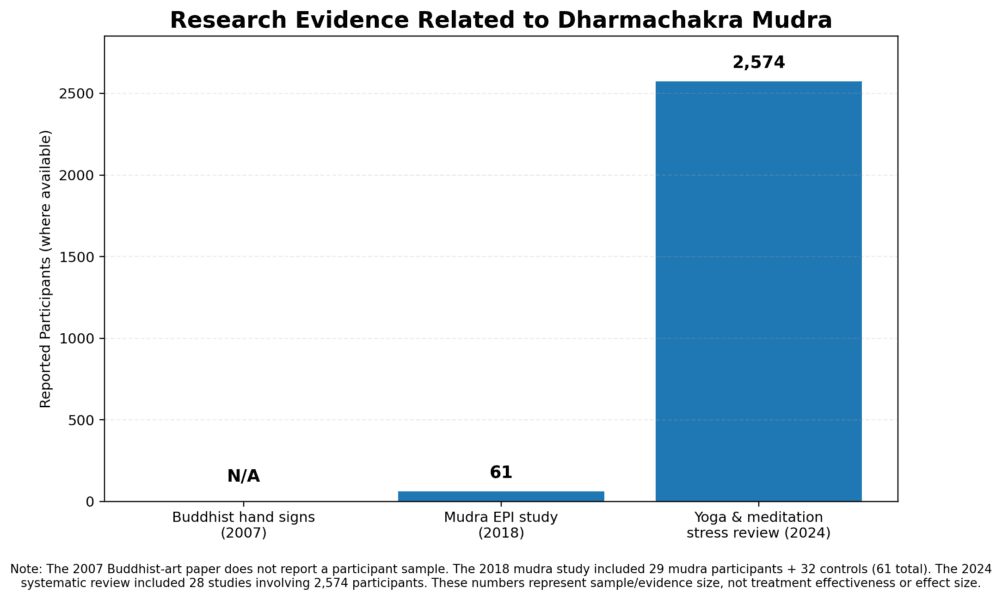
- Efeito de uma única sessão de ioga e meditação na reatividade ao estresse: uma revisão sistemática; https://pubmed.ncbi.nlm.nih.gov/37822096/
- Interpretação de sinais de mão na arte budista; https://pubmed.ncbi.nlm.nih.gov/17606078/
- Classificação de imagens eletrofotônicas da prática yogue de mudra por meio de redes neurais; https://pmc.ncbi.nlm.nih.gov/articles/PMC5934951/