


















In the pursuit of holistic health and spiritual awakening, various ancient practices have resurfaced, offering profound benefits to modern-day individuals. One such practice is the use of mudras, which are hand gestures that stimulate different parts of the body and mind. Among the myriad benefits of mudras, activating the pineal gland stands out as a gateway to heightened consciousness and spiritual awakening.
Understanding the Pineal Gland.
The pineal gland, often referred to as the “third eye,” is a small, pinecone-shaped endocrine gland located in the center of the brain. Despite its tiny size, this gland plays a crucial role in regulating our sleep-wake cycle, hormone secretion, and spiritual experiences. Scientifically, the pineal gland produces melatonin, a hormone that regulates sleep patterns, and is associated with the body’s circadian rhythms.
The Role of Mudras in Pineal Gland Activation.
Mudras, derived from ancient Indian traditions, are symbolic hand gestures that channel energy flow throughout the body. When performed with intention and mindfulness, specific mudras can stimulate the pineal gland, leading to its activation and enhanced functioning. These hand gestures work by applying pressure to specific points on the hands, which are believed to correspond to different parts of the body, including the pineal gland.
Types of Mudras for Pineal Gland Activation.
1. Gyan Mudra (Knowledge Mudra): This mudra involves touching the tip of the thumb to the tip of the index finger while keeping the other three fingers extended. Gyan mudra is believed to enhance concentration, memory, and intuition, thereby facilitating pineal gland activation.
Related Stories
 Top 10 Powerful Yoga Poses for Public Speaking Success
 Ananda Balasana: Benefits, Steps, Variations, Safety and Beginner Tips
2. Shambhavi Mudra (Eyebrow Center Gazing): In this mudra, practitioners focus their gaze on the eyebrow center (the point between the eyebrows) while keeping the spine erect. Shambhavi mudra is thought to awaken the third eye and stimulate the pineal gland, leading to heightened awareness and spiritual insight.
3. Khechari Mudra (Tongue Lock): Khechari mudra involves rolling the tongue backward and upwards to touch the soft palate in the mouth. This advanced mudra is believed to activate the pineal gland and facilitate the flow of cerebrospinal fluid, leading to heightened states of consciousness.
Benefits of Activating the Pineal Gland.
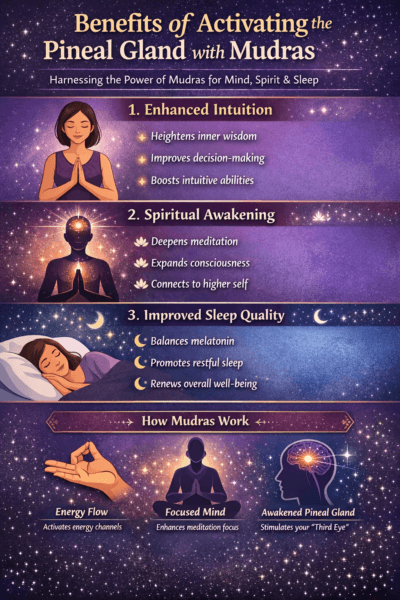
1. Enhanced Intuition: Pineal gland activation through mudras is thought to enhance intuitive abilities, allowing individuals to trust their inner wisdom and make better decisions in life.
2. Spiritual Awakening: Many practitioners report experiencing profound spiritual insights and awakening as a result of pineal gland activation, leading to a deeper connection with the universe and higher states of consciousness.

3. Improved Sleep Quality: Activation of the pineal gland through mudras can regulate the production of melatonin, leading to improved sleep quality and overall well-being.

How to Perform Mudras for Pineal Gland Activation?
1. Find a Quiet Space: Choose a quiet and comfortable space where you can practice without distractions.
2. Set Your Intention: Before performing the mudra, set a clear intention to activate your pineal gland and enhance your spiritual awareness.
3. Practice Mindfulness: Focus your attention on the sensations in your hands as you perform the mudra, and visualize energy flowing towards your pineal gland.
4. Duration: Start with 5-10 minutes of practice per day and gradually increase the duration as you become more comfortable.
Precautions and Common Mistakes.
1. Avoid Strain: Do not apply excessive pressure while performing the mudras, as this can lead to discomfort or injury.
2. Consistency is Key: Consistent practice is essential for experiencing the full benefits of mudras for pineal gland activation. Make it a daily habit to incorporate mudra practice into your routine.
3. Consultation: If you have any medical conditions or concerns, consult with a healthcare professional before starting any new practice, including mudras.
Personal Interview with Experienced Experts.
We interviewed renowned yoga and meditation instructor, Dr. Ananya Sharma, to gain insights into the efficacy of mudras for pineal gland activation. According to Dr. Sharma, “Mudras offer a powerful tool for stimulating the pineal gland and enhancing spiritual awareness. Through consistent practice and mindfulness, individuals can unlock the full potential of their third eye and experience profound shifts in consciousness.”
Scientific Evidence Supporting Mudras for Pineal Gland Activation.
While direct research specifically proving that mudras activate the pineal gland is currently limited, scientific studies have shown that mindfulness practices like meditation and yoga — which are often performed in conjunction with mudras — can influence brain function, emotional regulation, sleep quality, and hormone levels.
These findings help support the general benefits often attributed to practices involving mudras.
Research indicates that meditation can improve sleep quality, which is linked to melatonin — the hormone produced by the pineal gland. A systematic review found that mindfulness meditation significantly improved sleep quality compared to control conditions.(1)
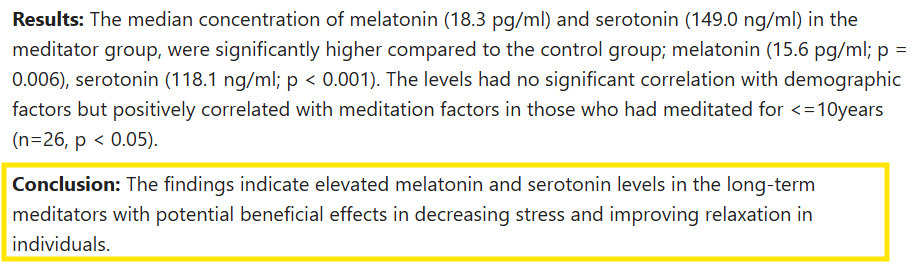
Some scientific studies also show that meditation can affect melatonin levels. For example, research has found that meditation practices can be associated with higher plasma melatonin concentrations, suggesting a link between contemplative practice and the hormone produced by the pineal gland.(2)
In addition, research has demonstrated that meditation induces neuroplastic changes in the brain, enhancing regions involved in emotional regulation and cognitive processing.
These changes align with the idea that mindfulness practices — and by extension, practices like mudras — can support enhanced awareness and well-being.(3)
Another recent study showed that meditation improves cognitive flexibility and reduces perceived stress, further supporting that contemplative practices contribute to emotional balance and mental clarity.(4)
Finally, cross-sectional research has found that long-term meditators tend to have elevated melatonin and serotonin levels, which are associated with improved sleep and relaxation.(5)
How Mudras Helped Me Awaken the Pineal Gland- My Personal Experience.
I am Daniel Hoffman, 42 — Mindfulness Coach, Berlin, Germany, For years, I struggled with mental fog, poor sleep quality, and a constant feeling of disconnect despite practicing meditation regularly. During a mindfulness retreat, I was introduced to specific yoga mudras aimed at stimulating the pineal gland, such as Gyan Mudra and Shambhavi Mudra.
I began incorporating these mudras into my daily meditation practice, holding them for 15–20 minutes in a quiet, focused state. Within a few weeks, I noticed a deeper sense of inner stillness, improved sleep patterns, and a heightened clarity during meditation sessions.
Practicing mudras gave my meditation a new depth — it felt more centered, intuitive, and restorative.
“Practicing mudras consistently helped me experience deeper meditation, mental clarity, and a stronger connection to my inner awareness.”

Frequently Asked Questions.
1. Can anyone practice mudras for pineal gland activation?
Yes, mudras are accessible to people of all ages and fitness levels. However, it’s essential to approach practice with patience, consistency, and mindfulness.
2. How long does it take to experience the benefits of pineal gland activation through mudras?
The timeline for experiencing benefits varies from person to person. Some individuals may notice subtle changes immediately, while others may require weeks or months of consistent practice to experience significant shifts.
3. Are there any contraindications for practicing mudras?
While mudras are generally safe for most people, individuals with hand injuries or medical conditions should exercise caution and consult with a healthcare professional before starting a new practice.
Bottom Line.
In conclusion, mudras offer a powerful yet accessible means of activating the pineal gland and accessing higher states of consciousness. By incorporating these ancient hand gestures into your daily routine with intention, mindfulness, and patience, you can unlock the transformative potential of your third eye and embark on a journey of spiritual awakening and self-discovery.
+5 Sources
FreakToFit has strict sourcing guidelines and relies on peer-reviewed studies, educational research institutes, and medical organizations. We avoid using tertiary references. You can learn more about how we ensure our content is accurate and up-to-date by reading our editorial policy.
- The effect of mindfulness meditation on sleep quality: a systematic review and meta-analysis of randomized controlled trials; https://pubmed.ncbi.nlm.nih.gov/30575050/
- Acute increases in night-time plasma melatonin levels following a period of meditation; https://www.sciencedirect.com/science/article/abs/pii/S0301051100000351
- Neurobiological Changes Induced by Mindfulness and Meditation: A Systematic Review; https://www.mdpi.com/2227-9059/12/11/2613
- Effects of mindfulness breathing meditation on stress and cognitive functions: a heart rate variability and eye-tracking study; https://www.nature.com/articles/s41598-025-23727-z
- Serum melatonin and serotonin levels in long-term skilled meditators; https://pubmed.ncbi.nlm.nih.gov/37061347/