

















Chromotherapy, also called color therapy, is a complementary wellness practice that uses colors or colored light with the intention of influencing mood, relaxation, energy, or overall well-being.
The idea is simple: colors are a noticeable part of our environment, and different colors can influence how a space looks and feels. Modern research also shows that people consistently associate colors with particular emotions. However, the scientific evidence does not establish that exposing the body to a particular color can cure disease or “rebalance” a specific organ or chakra.
Chromotherapy has roots in traditional and complementary medicine, where colors have historically been assigned symbolic and therapeutic properties. A review of complementary medicine literature describes chromotherapy as a practice based on the belief that different colors can affect the body.(1)
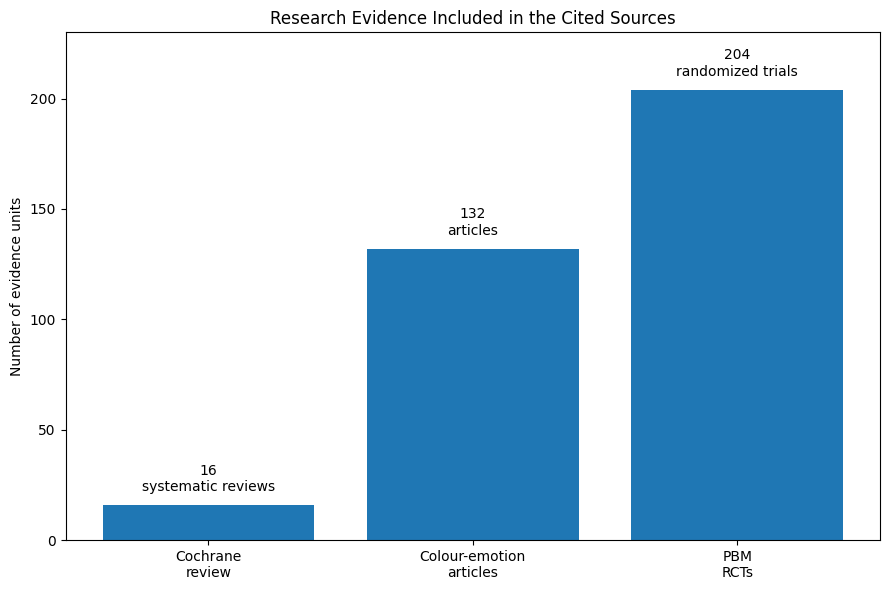
At the same time, a 2025 systematic review examining 128 years of psychological research found consistent relationships between colors and emotions across 132 peer-reviewed articles involving more than 42,000 participants. The researchers reported that color-emotion associations were influenced by factors including hue, saturation, and lightness.(2)
Related Stories
 Awakening Your Sacral Chakra: Beginner Yoga Poses, Mudras and Pranayamas
 NamasBey Yoga : Latest Trend of Beyoncé Themed Yoga
So, what does this mean in practical terms?
Chromotherapy can reasonably be discussed as a mind-body or complementary wellness practice, particularly in relation to environmental color, relaxation, mood, and personal symbolism. But claims that a particular color can medically treat cancer, diabetes, infections, hormonal disorders, or other diseases are not supported by sufficient clinical evidence.
What Is Chromotherapy?
Chromotherapy is a practice involving the use of colors or colored light for perceived therapeutic or psychological effects.
Depending on the practitioner or system, it may involve:

- Colored lights
- Colored environments
- Colored fabrics
- Colored objects
- Colored water
- Visualization of colors
- Colored meditation spaces
- Color-based relaxation practices
Some traditional approaches associate particular colors with particular organs, emotions, chakras, or energetic qualities.
For example, a practitioner might associate:

- Blue with calmness
- Green with balance
- Yellow with energy
- Orange with creativity
- Red with vitality
- Purple with spirituality
These associations are symbolic or traditional, rather than established medical facts.
How Does Chromotherapy Work?
There are several different ways people use the term “chromotherapy,” which makes the subject somewhat complicated.
1. Psychological Response to Color.
Colors can influence perception and emotional associations.
The 2025 systematic review of color-emotion research found systematic relationships between colors and emotional dimensions such as valence, arousal, and perceived power. However, the associations were complex and often depended on several characteristics of the color rather than being universal one-color-one-emotion rules.
This means that a blue environment may feel calming to one person, but personal experience, culture, context, brightness, and preference can influence the response.
2. Environmental Effects.
Color is an important part of interior environments.
A brightly colored room, softly lit blue room, or warm-toned space can create a very different atmosphere.
If a particular environment helps someone relax, the benefit may come from the overall sensory experience rather than from a specific therapeutic property of the wavelength.
3. Light-Based Biological Effects.
Chromotherapy should not automatically be confused with photobiomodulation or medical phototherapy.
Certain forms of light therapy use specific wavelengths and carefully controlled doses for particular medical purposes.
For example, photobiomodulation is being investigated for pain, inflammation, tissue repair, and other outcomes. A 2025 umbrella review included 204 randomized controlled trials involving more than 9,000 participants, but the authors emphasized that certainty varied considerably between outcomes and that further high-quality research and standardized protocols are needed.(3)
That evidence should not be used to claim that ordinary chromotherapy has the same effects.
Chromotherapy vs Light Therapy.
These terms are sometimes used interchangeably online, but they shouldn’t be.
Chromotherapy generally refers to complementary practices involving colors and their perceived psychological, energetic, or therapeutic effects.
Light therapy can refer to specific medical or behavioral interventions using controlled light exposure.
For example, bright-light therapy is used in certain clinical contexts, while phototherapy is used for some dermatological conditions.
The scientific evidence supporting a particular light-based treatment therefore cannot automatically be transferred to chromotherapy.
This distinction is essential for responsible health content.
Traditional Meaning of Colors in Chromotherapy.
Different chromotherapy systems assign different meanings to colors.
There is no single universally accepted medical color chart.
The following descriptions represent common traditional or wellness associations, not scientifically established treatments.
Red.
Red is commonly associated with:
- Energy
- Strength
- Vitality
- Passion
- Physical activity
- Warmth
It is an intense color and can create a visually stimulating environment.
Because red is highly noticeable, it may not be the best choice if your goal is to create a quiet, relaxing atmosphere.
Orange.
Orange is often associated with:
- Creativity
- Enthusiasm
- Sociability
- Warmth
- Motivation
It can be used in wellness spaces where an energetic but warm atmosphere is desired.
Yellow.
Yellow is traditionally connected with:
- Optimism
- Cheerfulness
- Mental stimulation
- Brightness
- Confidence
However, very bright or saturated yellow can feel visually intense for some people.
Green.
Green is commonly associated with:
- Nature
- Balance
- Freshness
- Calmness
- Renewal
Because green is strongly connected with natural environments, it is frequently used in spaces intended to feel restorative.
Blue.
Blue is often associated with:
- Calm
- Peace
- Stability
- Relaxation
- Trust
Color-emotion research supports the idea that blue is systematically associated with particular emotional qualities, but individual responses can vary.
Purple.
Purple is frequently associated with:
- Spirituality
- Reflection
- Imagination
- Mystery
- Creativity
This makes purple particularly popular in meditation and spiritual environments.
Indigo.
Indigo is commonly associated with:
- Intuition
- Reflection
- Inner awareness
- Contemplation
It is frequently incorporated into modern chakra-based practices.
White.
White is often associated with:
- Simplicity
- Cleanliness
- Peace
- Openness
- Freshness
White can make spaces appear larger and brighter, although excessive brightness may feel uncomfortable for some individuals.
Pink.
Pink is often associated with:
- Compassion
- Gentleness
- Love
- Warmth
- Emotional comfort
Its psychological effect can depend heavily on shade and context.
Black.
Black is traditionally associated with:
- Power
- Mystery
- Sophistication
- Protection
It is not inherently a “negative” color.
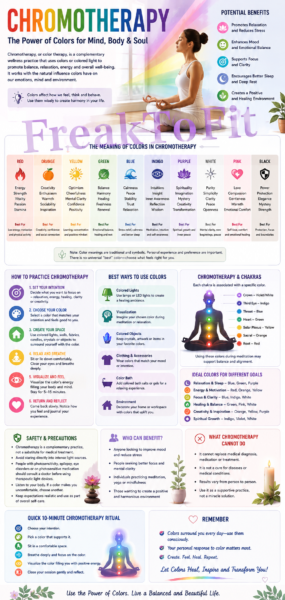
Potential Benefits of Chromotherapy.
When discussing the benefits of chromotherapy, it’s important to avoid presenting traditional claims as proven medical outcomes.
The strongest evidence concerns color perception, emotional associations, environmental experience, and certain forms of controlled light therapy, rather than chromotherapy as a treatment for disease.
1. May Support a Relaxing Environment.
Choosing softer colors for a meditation or relaxation space may help create an environment that feels calming.
For example, someone may prefer muted blues, greens, or neutral tones when practicing relaxation.
This doesn’t mean that blue light is a medical treatment for stress.
Instead, the color can become part of a broader relaxation ritual.
2. Can Encourage Mindfulness.
Color can be used as an attentional anchor.
During meditation, someone might focus on a particular color while breathing slowly.
The benefit may come from the act of concentrating attention and creating a quiet ritual rather than from an established physiological effect of the color itself.
3. May Influence Emotional Associations.
Research supports the existence of systematic color-emotion associations.
The large 2025 review found that people across many countries showed recurring relationships between colors and emotional dimensions.
However, these associations aren’t perfectly universal.
Personal experience, culture, context, and the characteristics of the color can all matter.
4. Can Improve the Feel of a Space.
Color is an important part of interior design.
A wellness studio using natural greens may feel very different from one dominated by intense red.
The psychological experience of a space can influence whether someone finds it inviting, stimulating, or relaxing.
5. Can Become Part of a Self-Care Ritual.
A simple color-based ritual may encourage someone to slow down.
For example:
- Dim the room.
- Choose a comfortable color.
- Sit quietly.
- Breathe naturally.
- Focus on the color.
- Continue for several minutes.
The ritual itself may be valuable even without assuming that the color has a direct medical effect.
Chromotherapy and Mental Well-Being.
Color is sometimes promoted online as a treatment for anxiety, depression, or other mental-health conditions.
That claim needs caution.
There is evidence that colors can be associated with emotional states, but that is different from demonstrating that exposing someone to a particular color treats a psychiatric disorder.
If someone is experiencing persistent anxiety, depression, panic, or other mental-health symptoms, professional assessment and evidence-based treatment should take priority.
Chromotherapy can potentially be used as a relaxing personal practice alongside, rather than instead of, appropriate mental-health care.
Chromotherapy and Chakras.
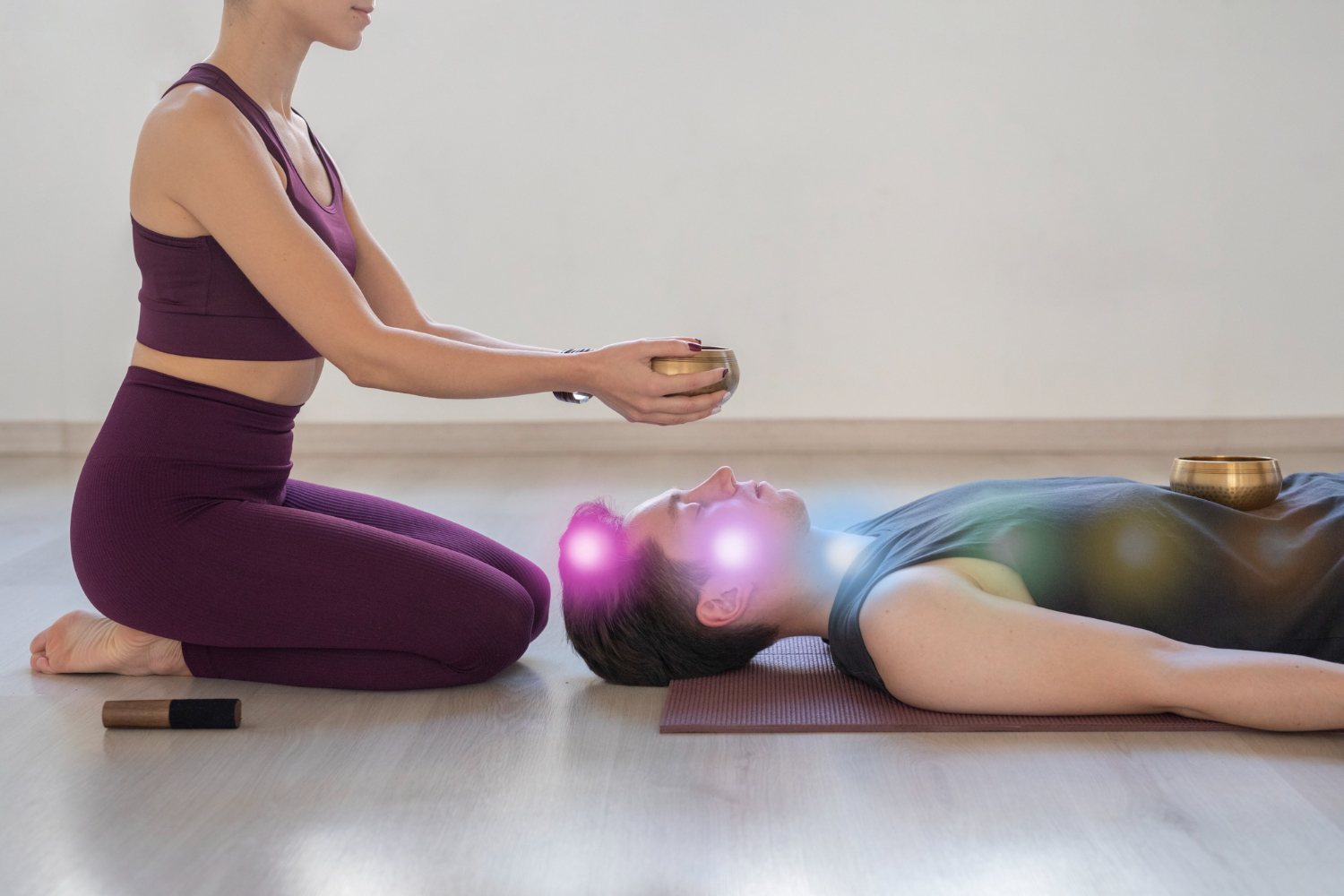
Modern wellness practices often combine chromotherapy with the chakra system.
A commonly used color association is:
| Chakra | Traditional Color Association |
|---|---|
| Root | Red |
| Sacral | Orange |
| Solar Plexus | Yellow |
| Heart | Green |
| Throat | Blue |
| Third Eye | Indigo |
| Crown | Violet/White |
These associations are part of modern spiritual and wellness frameworks.
They are not anatomical structures or scientifically established energy centers.
If you use chakra-based chromotherapy, it is best described as a spiritual or contemplative practice rather than a medical treatment.
How to Practice Chromotherapy at Home?
You don’t need expensive equipment.
A simple approach can involve your existing environment.
Step 1: Choose Your Intention.
Decide what you want from the session.
For example:
- Relaxation
- Meditation
- Reflection
- A calming environment
- A focused breathing practice
Step 2: Choose a Comfortable Color.
Select a color you personally find pleasant.
Don’t feel obligated to use a particular color because an online chart says it is “best.”
Your personal response matters.
Step 3: Create a Comfortable Environment.
Reduce unnecessary distractions.
You might:
- Dim the lights
- Play quiet music
- Sit comfortably
- Turn off notifications
Step 4: Practice Slow Breathing.
Take natural, comfortable breaths.
Avoid forcing your breathing.
Step 5: Focus on the Color.
Observe the color without trying to produce a particular sensation.
Notice:
- Its brightness
- Shade
- Texture
- Emotional associations
- How your attention responds
Step 6: Finish Gradually.
After several minutes, return to normal room lighting and continue with your day.
A 10-Minute Chromotherapy Routine.
Here’s a simple wellness routine.
Minutes 1–2: Sit comfortably and settle.
Minutes 3–4: Look gently at your chosen color.
Minutes 5–7: Close your eyes and visualize the color if comfortable.
Minutes 8–9: Focus on your breathing.
Minute 10: Reflect on how you feel.
You don’t need to experience anything dramatic.
The goal can simply be mindful relaxation.
Does Chromotherapy Cure Diseases?
There is insufficient high-quality evidence to support the idea that chromotherapy can cure diseases.
This is one of the most important points in responsible health content.
Chromotherapy should not replace:
- Medication
- Surgery
- Psychotherapy
- Medical diagnosis
- Physiotherapy
- Dermatological treatment
- Cancer treatment
- Cardiovascular treatment
- Other evidence-based healthcare
A review of complementary medicine literature noted that chromotherapy has been proposed for therapeutic purposes but also highlighted the limited nature of the scientific evidence.
Therefore, claims that a specific color can “remove toxins,” “repair organs,” or “kill cancer cells” should be treated with considerable skepticism unless supported by appropriate clinical evidence.
Chromotherapy and Scientific Research.
Scientific research on color itself is broader than research on chromotherapy.
The distinction is important.
Color and Emotions.
The 2025 systematic review of 132 studies and 42,266 participants provides substantial evidence that humans consistently associate colors with emotional qualities. However, the relationships were complex rather than universally deterministic.
This supports discussing color as a psychological and environmental factor.
It doesn’t prove that color therapy can treat medical disease.
Light-Based Treatments.
Research on specific forms of controlled light exposure is much more extensive.
Photobiomodulation, for example, uses particular wavelengths and carefully defined exposure conditions. A 2025 umbrella review found evidence of benefits for some outcomes but rated the certainty of evidence as low to moderate for many endpoints.
This is a very different intervention from simply sitting in a room illuminated with a particular color.
Chromotherapy vs Photobiomodulation.
The two should not be treated as identical.
| Chromotherapy | Photobiomodulation |
|---|---|
| Often wellness-oriented | Medical/research intervention |
| Uses color or colored light | Uses defined light wavelengths |
| May involve symbolic meanings | Uses controlled exposure parameters |
| Often used for relaxation | Investigated for specific clinical outcomes |
| Evidence is limited | Larger clinical evidence base for some applications |
| Protocols vary widely | Protocols can be carefully standardized |
This distinction helps prevent exaggerated claims.
Is Chromotherapy Safe?
Using ordinary colors in your environment is generally low risk.
However, the method matters.
Looking directly into bright lights can cause discomfort or eye strain.
People with light-sensitive conditions should be particularly cautious.
Avoid experimenting with intense light sources without understanding their specifications.
If a device produces therapeutic levels of light or ultraviolet radiation, don’t assume it is equivalent to a decorative colored lamp.
Medical phototherapy should be performed according to appropriate professional guidance.
Who Should Be Cautious?
Talk with a healthcare professional before using specialized light-based devices if you have:
- A photosensitive condition
- Certain eye disorders
- A history of light-triggered seizures
- A medication that increases photosensitivity
- A skin condition requiring medical treatment
The concern here is primarily about light exposure, not ordinary exposure to colored objects or room décor.
Common Chromotherapy Mistakes.
Mistake 1: Treating Traditional Color Charts as Medical Fact.
Color associations are not universal medical laws.
Mistake 2: Promising Disease Cures.
There is insufficient evidence for claims that chromotherapy cures disease.
Mistake 3: Confusing Chromotherapy With Medical Phototherapy.
Controlled medical light treatments shouldn’t be represented as proof that general color therapy works.
Mistake 4: Using Extremely Bright Lights.
More intense light isn’t automatically better.
Mistake 5: Ignoring Personal Preferences.
If a particular color makes you uncomfortable, you don’t need to use it because a chart recommends it.
Mistake 6: Replacing Medical Treatment.
Never delay appropriate medical care because of a color-based wellness practice.
How to Choose the Right Color?
There doesn’t need to be a single “correct” color.
Instead, consider your goal and personal response.
For relaxation.
You might prefer softer blues, greens, or neutral tones.
For an energizing environment.
Some people may prefer warmer colors such as orange or yellow.
For meditation.
Purple, indigo, blue, or whichever color feels meaningful to you can become a visual focus.
For creativity.
You might experiment with colors that you personally associate with inspiration.
The key is to treat these as personal or traditional associations, not guaranteed biological effects.
Chromotherapy and Yoga.
Chromotherapy can be incorporated into a yoga environment.
For example, a yoga studio might use:
- Soft lighting
- Natural colors
- Warm tones
- Green elements
- Blue or purple accent lighting
You can also use a chosen color as a visualization during meditation.
For example:
Inhale: visualize a soft blue light.
Exhale: allow tension to soften.
This is a mindfulness visualization exercise rather than a scientifically established method of changing the body’s energy.
Chromotherapy and Meditation.
Meditation provides a particularly simple way to experiment with color.
Choose one color.
Observe it for a few moments.
Then close your eyes and imagine the color.
When your mind wanders, gently return your attention to the image.
This can function similarly to other meditation anchors, such as:
- Breath
- Sound
- Mantra
- Body sensations
- A visual object
The value comes from sustained attention and reflective practice rather than needing to believe that the color has a supernatural effect.
Frequently Asked Questions.
1. What is chromotherapy?
Chromotherapy, or color therapy, is a complementary wellness practice that uses colors or colored light with the intention of influencing mood, relaxation, energy, or well-being.
2. What are the benefits of chromotherapy?
Potential wellness benefits may include creating a calming environment, supporting mindfulness, and influencing emotional associations with color. However, evidence that chromotherapy itself treats medical conditions is limited.
3. Which color is best for relaxation?
There is no universally proven “best” color. Softer blue and green tones are commonly associated with calmness, but individual preferences and context matter.
4. Which color is associated with energy?
Red and orange are traditionally associated with energy, vitality, warmth, and stimulation. These are symbolic associations rather than guaranteed physiological effects.
5. Can chromotherapy reduce anxiety?
Color may influence emotional experience, but there isn’t sufficient evidence to say that chromotherapy treats anxiety disorders. It may be used as a relaxation practice alongside appropriate care.
6. Can chromotherapy cure disease?
No. There is insufficient evidence to support using chromotherapy as a cure for disease. It should not replace evidence-based medical treatment.
7. Is chromotherapy scientifically proven?
Some research supports relationships between colors and emotions, but that is different from proving chromotherapy as a medical treatment. A 2025 systematic review found consistent color-emotion associations across a large body of psychological research.
8. Is chromotherapy the same as light therapy?
No. Medical light therapies use specific wavelengths, doses, and protocols for particular purposes. Chromotherapy is generally a broader complementary practice involving colors or colored light.
9. Can I practice chromotherapy at home?
Yes, if you’re using ordinary, comfortable lighting or color visualization. Avoid staring directly into intense light sources.
10. Can chromotherapy balance chakras?
Chakra-color associations are part of traditional and modern spiritual practices. There is no scientific evidence establishing that colored light physically balances chakras.
11. How long should a chromotherapy session last?
There is no scientifically established ideal duration. A short 5–10-minute relaxation or visualization session can be a reasonable starting point.
12. What color is associated with the Third Eye Chakra?
Indigo is commonly associated with the Third Eye Chakra in modern chakra systems. This is a spiritual symbolism rather than an anatomical or medical fact.
13. What is chromotherapy good for?
Chromotherapy may be used as a complementary relaxation and wellness practice, such as creating a calming environment, supporting mindfulness, and influencing mood. It is not a proven treatment for diseases.
14. Does color therapy really work?
Evidence is limited. Research shows that colors can influence emotional responses and perceptions, but there isn’t strong evidence that traditional chromotherapy can treat medical conditions.
15. What is the chromotherapy method and how does it work?
It involves using colored light, colored surroundings, visualization, or colored objects during relaxation or wellness practices. The proposed effects are generally based on psychological responses to color rather than a scientifically established healing mechanism.
16. What is the difference between chromotherapy and red light therapy?
Chromotherapy generally uses colors for wellness, mood, or symbolic purposes. Red light therapy/photobiomodulation uses specific wavelengths of red or near-infrared light at controlled intensities and is being studied for specific biological and clinical effects. They should not be considered the same treatment.
Bottom Line.
Chromotherapy is best understood as a complementary wellness practice involving color, light, visualization, and personal symbolism.
Colors clearly influence human perception and are systematically associated with emotions. A large 2025 systematic review found recurring relationships between color and emotional experience across more than a century of research.
However, this does not establish that sitting under a particular colored light can cure disease, balance organs, remove toxins, or correct an energy imbalance.
There is also an important difference between chromotherapy and evidence-based light treatments such as photobiomodulation or medical phototherapy. Research on those interventions uses defined wavelengths and controlled protocols and should not automatically be generalized to ordinary color therapy.
If you enjoy working with colors, chromotherapy can be incorporated into meditation, yoga, relaxation, journaling, or interior wellness practices. The safest approach is to use it as a complementary self-care tool, keep expectations realistic, and continue to rely on qualified healthcare professionals for medical conditions.
+3 Sources
FreakToFit has strict sourcing guidelines and relies on peer-reviewed studies, educational research institutes, and medical organizations. We avoid using tertiary references. You can learn more about how we ensure our content is accurate and up-to-date by reading our editorial policy.
- What do Cochrane systematic reviews say about new practices on integrative medicine?; https://pmc.ncbi.nlm.nih.gov/articles/PMC9907739/
- Do we feel colours? A systematic review of 128 years of psychological research linking colours and emotions; https://pubmed.ncbi.nlm.nih.gov/39806242/
- Effects of photobiomodulation on multiple health outcomes: an umbrella review of randomized clinical trials; https://pubmed.ncbi.nlm.nih.gov/40770824/