

















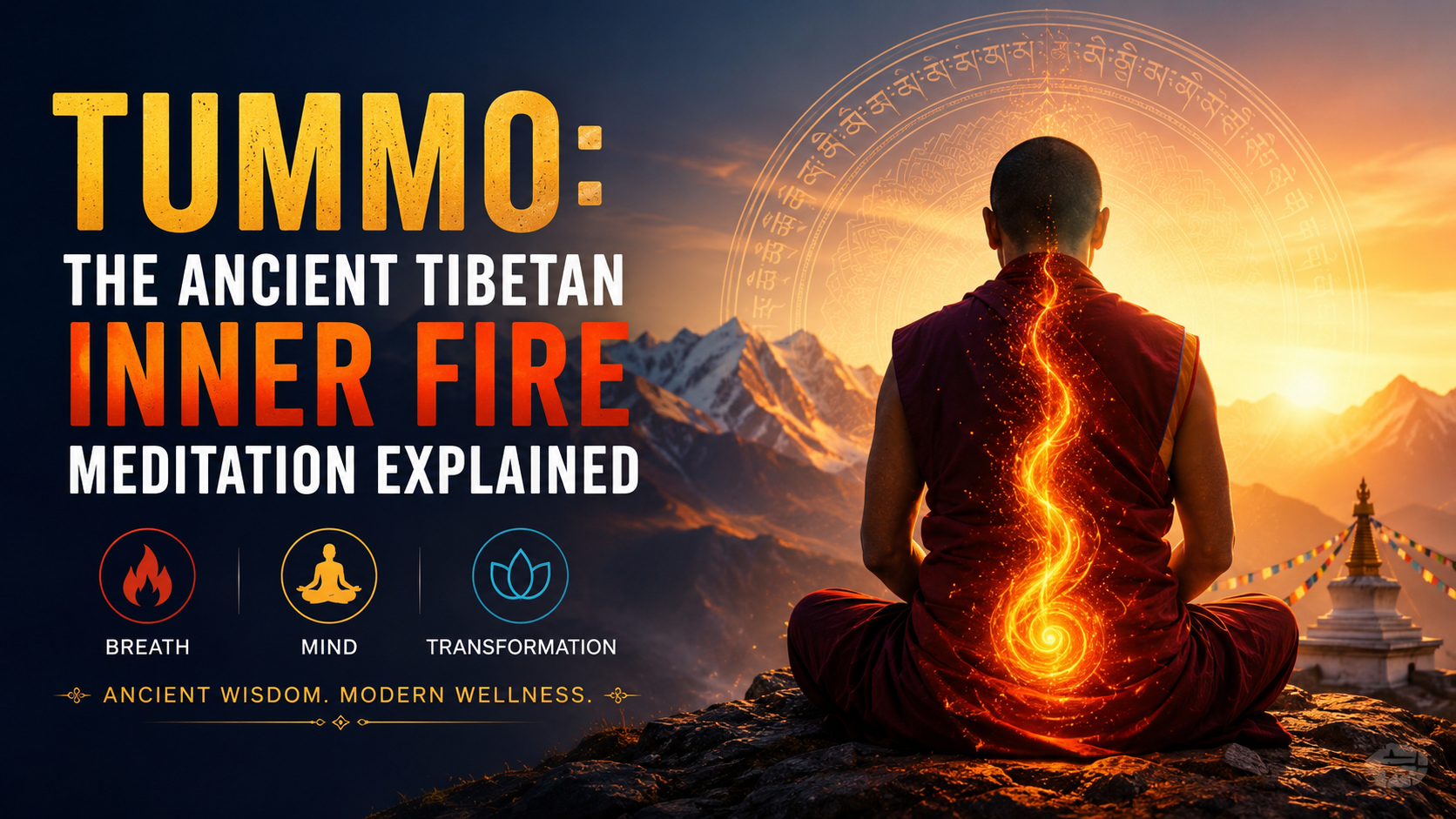
Tummo is one of the most fascinating meditation practices in Tibetan Buddhism. Often referred to as the “inner fire” meditation, it combines controlled breathing, visualization, and deep concentration to cultivate inner warmth, mental clarity, and spiritual awareness. While modern wellness communities have embraced Tummo for its potential health benefits, its origins lie in centuries-old Buddhist traditions focused on enlightenment rather than physical performance.
In recent years, scientists have also become interested in Tummo because experienced practitioners appear capable of influencing body temperature, stress responses, and emotional regulation. Whether you’re curious about meditation, mindful breathing, or ancient spiritual practices, this guide explains everything you need to know about Tummo.
What Is Tummo? Understanding the Ancient Practice.
The word Tummo (also written as g-tummo) comes from Tibetan and translates to “inner heat” or “fierce woman.” It is one of the Six Yogas of Naropa, an advanced system of Tibetan Buddhist meditation designed to awaken wisdom and transform consciousness.
Unlike many modern breathing exercises that primarily focus on relaxation, Tummo was developed as a profound spiritual discipline. Practitioners believe it activates subtle energy pathways within the body while strengthening concentration and awareness.
Related Stories
 Dharmachakra Mudra: Meaning, Benefits, Steps & How to Practice
 6 Effective Yoga Asanas For Skin Disease or Skin Problems
For centuries, Tibetan monks practiced Tummo in remote mountain monasteries, often demonstrating remarkable resilience to freezing temperatures during meditation. Although these stories have contributed to its popularity, the ultimate goal of Tummo has always been spiritual growth rather than producing physical heat.
Today, Tummo continues to inspire meditation practitioners, neuroscientists, and wellness enthusiasts worldwide.
Understanding Tummo Breathing and How It Works?
One of the defining features of this meditation system is Tummo breathing, a controlled breathing method performed alongside visualization and focused attention.
Rather than simply taking deep breaths, practitioners synchronize inhalation, breath retention, muscular engagement, and mental imagery. Each element supports the others, making the practice far more comprehensive than ordinary breathing exercises.

A typical session may include:
- Slow diaphragmatic inhalation
- Gentle breath retention
- Controlled exhalation
- Visualization of an inner flame
- Focus on energy movement throughout the body
The breathing pattern varies depending on tradition and level of experience. Beginners generally learn simplified techniques before progressing to advanced practices under qualified guidance.

Scientific studies suggest that controlled breathing may temporarily influence the autonomic nervous system, helping regulate stress responses while improving focus and body awareness.
The Role of Tummo Meditation in Tibetan Buddhism.
Although many people focus on the breathing aspect, Tummo meditation is fundamentally a complete meditative system.(1)
Traditional practice combines:
- Mindfulness.
- Concentration.
- Breath control.
- Visualization.
- Compassion training.
- Spiritual contemplation.
During meditation, practitioners often visualize a radiant flame at the body’s energy center below the navel. Through sustained attention, they imagine this warmth expanding throughout the entire body.(2)
The purpose is not merely to create warmth but to cultivate unwavering concentration that supports deeper states of meditation.
Long-term practitioners frequently report:
- Greater emotional stability.
- Improved concentration.
- Increased mindfulness.
- Enhanced resilience.
- A stronger sense of inner peace.
Within Tibetan Buddhism, Tummo serves as preparation for even more advanced contemplative practices.

A Beginner’s Guide to the Tummo Breathing Technique.
Although authentic Tummo requires formal instruction, beginners can safely understand its basic framework.
1. Choose a Quiet Space.
Find a peaceful location where interruptions are unlikely.
2. Sit Comfortably.
Keep your spine upright while allowing your shoulders to relax naturally.
3. Focus on Slow Nasal Breathing.
Breathe deeply into your abdomen rather than your chest.
4. Pause Briefly.
Hold your breath gently for a comfortable moment without straining.
5. Exhale Slowly.
Release the breath smoothly while maintaining awareness.
6. Visualize Inner Warmth.
Imagine a small flame glowing in your lower abdomen, gradually spreading gentle warmth throughout your body.
7. Finish Calmly.
Return to normal breathing before standing up.
New practitioners should avoid excessive breath retention or forcing the breathing rhythm.
Top Tummo Breathing Benefits for Mind and Body.
Interest in Tummo breathing benefits has grown because both traditional teachings and scientific research suggest it may positively influence physical and mental well-being.(3)
Stress Reduction.
Controlled breathing helps calm the nervous system and encourages relaxation after stressful situations.
Improved Focus.
Regular meditation strengthens attention span and reduces mental distractions.
Better Emotional Regulation.
Mindful breathing encourages greater awareness of thoughts and emotions, making it easier to respond calmly.
Enhanced Mindfulness.
Practitioners often become more connected with their breathing, posture, and overall mental state.
Greater Body Awareness.
Meditation improves awareness of physical sensations, encouraging healthier breathing patterns.
Possible Temperature Regulation.
Studies involving experienced practitioners have observed measurable increases in peripheral body temperature during meditation.
Improved Resilience.
Many practitioners describe feeling mentally stronger and better equipped to manage life’s daily challenges.
Although these benefits appear promising, Tummo should complement—not replace—medical care or professional mental health treatment.
Is Tummo Breathing Dangerous? Safety, Risks, and Precautions
Many beginners ask, is Tummo breathing dangerous?
For healthy adults practicing simplified breathing exercises responsibly, the practice is generally well tolerated. However, authentic Tummo is considered an advanced meditation discipline and should not be approached casually.
Possible risks include:
- Hyperventilation.
- Dizziness.
- Lightheadedness.
- Temporary anxiety.
- Fatigue from excessive breath retention.
People with the following conditions should consult a healthcare professional before attempting advanced breathwork:
- Heart disease.
- High blood pressure.
- Chronic lung disease.
- Epilepsy.
- Serious psychiatric disorders.
Pregnant individuals should also avoid advanced breath-retention practices unless supervised by qualified professionals.
The safest approach is gradual learning under an experienced instructor.
What Is Tummo Breathing? Everything You Need to Know.
Many people wonder exactly what is Tummo breathing and how it differs from ordinary breathing exercises.
At its core, it combines:
- Conscious breathing.
- Breath retention.
- Meditation.
- Visualization.
- Concentration.
- Energy awareness.
The breathing itself is only one component of a much larger spiritual practice.
Unlike breathing exercises designed solely for relaxation, Tummo seeks to integrate body, breath, and mind into a single meditative experience.
Its purpose is to cultivate wisdom, compassion, and heightened awareness rather than simply increasing physical endurance or body temperature.
Tummo Breathing vs Wim Hof: What’s the Difference?
Comparisons between Tummo breathing vs Wim Hof are common because both involve controlled breathing and claims of improved resilience.
| Feature | Tummo | Wim Hof Method |
|---|---|---|
| Origin | Tibetan Buddhism | Modern breathing system |
| Primary Goal | Spiritual awakening | Physical resilience and wellness |
| Visualization | Extensive | Minimal |
| Meditation | Core practice | Included |
| Breath Retention | Yes | Yes |
| Cold Exposure | Optional | Essential |
| Historical Background | Centuries old | Contemporary |
Although the Wim Hof Method was inspired partly by ancient breathing traditions, it has evolved into its own wellness system emphasizing cold exposure and physical performance.
Tummo remains deeply rooted in Buddhist philosophy and meditation.
Where to Find a Reliable Tummo Breathing Video for Learning.
Watching a Tummo breathing video can help beginners understand posture, breathing rhythm, and meditation techniques before practicing.
When choosing educational content, consider these tips:
- Learn from experienced meditation teachers.
- Choose videos that explain safety precautions.
- Avoid sensational demonstrations that prioritize entertainment over education.
- Remember that videos cannot replace individualized instruction.
If you decide to pursue authentic Tummo, structured guidance from qualified instructors is always preferable to relying solely on online content.
How to Do Tummo Breathing Step by Step?
If you’re interested in exploring this practice safely, follow a gradual approach.
Prepare Your Environment.
Choose a quiet location with minimal distractions.
Maintain Good Posture.
Sit upright with relaxed shoulders and an aligned spine.
Practice Calm Breathing.
Inhale slowly through your nose while expanding your abdomen.
Focus Your Mind.
Direct your attention toward the natural rhythm of your breathing.
Add Gentle Visualization.
Imagine a warm light growing steadily in your lower abdomen.
Keep Sessions Short.
Practice for 5–10 minutes before gradually increasing your meditation time.
Avoid Overexertion.
Never force breath retention or continue if you feel dizzy.
Seek Proper Instruction.
Authentic Tummo is traditionally taught by qualified meditation teachers who provide personalized guidance and ensure safe progression.
Frequently Asked Questions.
1. Can beginners practice Tummo?
Yes, beginners can learn basic breathing awareness and meditation, but authentic Tummo should be learned under qualified guidance.
2. Does Tummo really increase body temperature?
Research involving experienced practitioners has demonstrated measurable increases in peripheral body temperature during meditation, although individual results vary.
3. Is Tummo a religious practice?
Tummo originates within Tibetan Buddhism, but many people explore its breathing and meditation techniques from a secular wellness perspective.
4. How often should beginners practice?
Starting with 5–10 minutes several times per week is a safe approach before increasing duration.
5. Can Tummo replace medical treatment?
No. Tummo is a complementary meditation practice and should never replace professional medical care.
Final Thoughts.
Tummo is far more than a breathing exercise—it is an ancient meditation tradition that combines breath, visualization, concentration, and mindfulness into a powerful system of inner transformation. While its reputation for generating “inner heat” has attracted worldwide attention, its deeper purpose is cultivating wisdom, emotional balance, and spiritual awareness.
Modern research continues to explore its fascinating effects on stress, focus, and physiological regulation, but the greatest value of Tummo may lie in its ability to strengthen the connection between mind and body. If you are interested in learning this practice, begin slowly, prioritize safety, and seek guidance from experienced teachers. With patience and consistent practice, Tummo can become a meaningful addition to a mindful and balanced lifestyle.
+3 Sources
FreakToFit has strict sourcing guidelines and relies on peer-reviewed studies, educational research institutes, and medical organizations. We avoid using tertiary references. You can learn more about how we ensure our content is accurate and up-to-date by reading our editorial policy.
- Neurocognitive and somatic components of temperature increases during g-tummo meditation: legend and reality; https://pubmed.ncbi.nlm.nih.gov/23555572/
- Effects of Tummo Meditation and Niguma Yoga on Brain Activity; https://pmc.ncbi.nlm.nih.gov/articles/PMC12679118/
- Beyond mindfulness: Arousal-driven modulation of attentional control during arousal-based practices; https://pmc.ncbi.nlm.nih.gov/articles/PMC9559070/