


















Addiction is a widespread problem affecting millions of people around the world. Whether it’s drugs, alcohol, food, or technology, breaking free from addictive habits can feel like an overwhelming challenge. While traditional methods such as therapy, rehabilitation, and medical intervention are essential, many people are seeking alternative healing practices to complement their recovery journey. One such practice is Kundalini Meditation, a powerful, ancient technique that has been gaining popularity for its ability to address the root causes of addiction.
In this comprehensive guide, we will explore how Kundalini Meditation works to combat addiction, supported by scientific evidence, expert opinions, and real-life stories. We will also answer some frequently asked questions to provide a holistic understanding of the topic.
What is Kundalini Meditation?
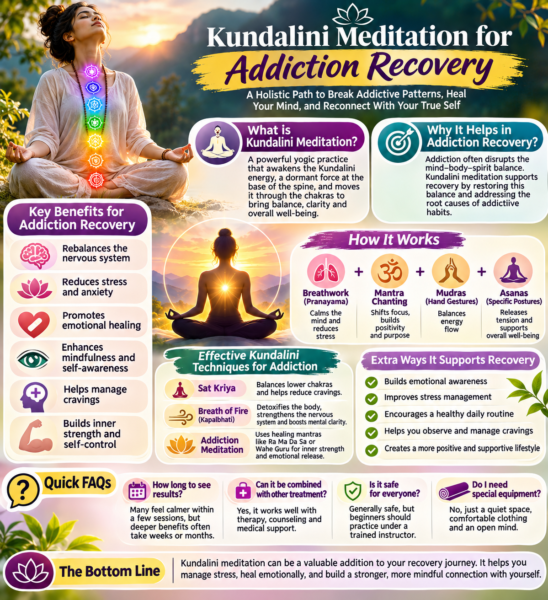
Kundalini meditation is a form of yogic practice designed to awaken the Kundalini energy, believed to be a coiled force located at the base of the spine. This energy, once activated, rises through the chakras, or energy centers, along the spine to the crown of the head, leading to spiritual enlightenment, improved mental clarity, emotional balance, and bem-estar físico.
Kundalini meditation involves a combination of breathing techniques (pranayama), mantra chanting, mudras (hand gestures), and specific postures (asanas) that aim to move and balance the energy within the body.
Histórias relacionadas
 Seal Pose Yoga: como fazer, benefícios e variações
 Pose de ioga de flamingo: benefícios, como fazer e variações
The Connection Between Kundalini Meditation and Addiction Recovery.
Addiction often stems from an imbalance in the mind-body-spirit connection. Kundalini meditation works on restoring this balance, addressing the root of the addiction rather than just treating the symptoms.
“Addiction is not just a physical dependency—it’s an emotional and spiritual issue that needs healing at its core,” says Dr. Aman Singh, a wellness expert specializing in holistic therapies.
By working on energy flow within the body, Kundalini meditation can help:
– Rebalance the Nervous System: Kundalini meditation helps to calm the nervous system, which can be in a constant state of overstimulation due to addiction.
– Reduce Stress and Anxiety: Stress and anxiety are significant triggers for addiction. Kundalini practices can lower cortisol levels and increase feelings of calmness and relaxation.
– Promote Emotional Healing: Many people turn to addictive substances as a way to numb emotional pain. Kundalini meditation encourages emotional release and healing through the mind-body connection.
– Enhance Mindfulness: isto practice cultivates awareness and mindfulness, enabling individuals to understand and break free from addictive patterns.
How Kundalini Meditation Helps With Addiction: The Science Behind It.
Scientific research is now catching up with ancient wisdom, showing promising results for the use of meditation, including Kundalini, in addiction recovery.
1. Regulating Brain Chemistry.
Studies have shown that meditation can positively impact brain chemistry, specifically by increasing dopamine and serotonin levels. These neurotransmitters are often disrupted in those struggling with addiction. Regular practice of Kundalini meditation can help regulate these chemicals, providing a natural “high” that replaces the need for external substances.
2. Improved Brain Plasticity.
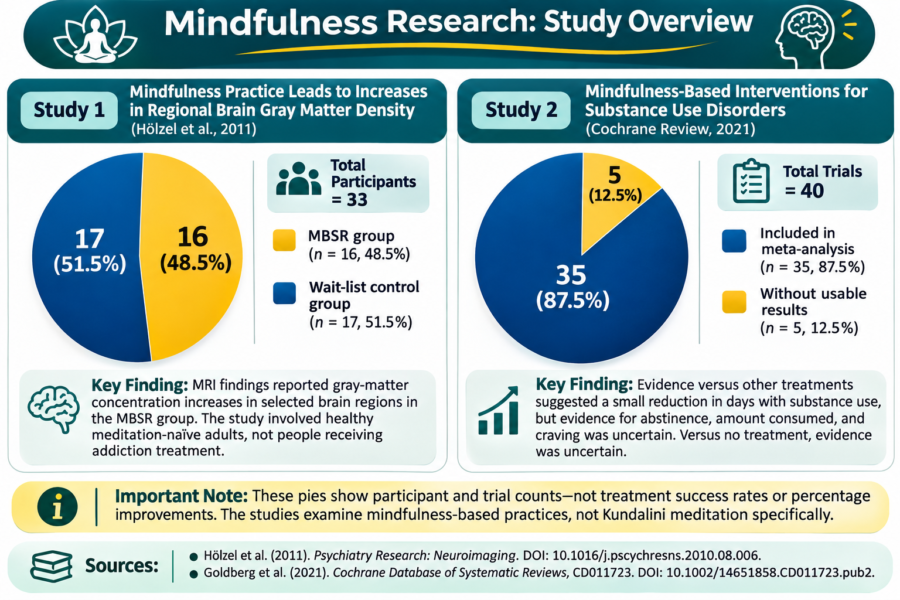
A study published in Frontiers in Human Neuroscience found that meditation increases grey matter density in areas of the brain associated with self-control and emotional regulation—two crucial factors in overcoming addiction.(1)
3. Reduces Cravings.
Meditation has been shown to reduce cravings in individuals recovering from addiction. A 2018 study from the Journal of Substance Abuse Treatment found that mindfulness and meditation practices decreased the severity of cravings in people recovering from drug addiction.(2)
Expert Opinions on Kundalini Meditation for Addiction.
Dr. Maya Sharma, a psychologist and meditation expert with over 20 years of experience, explica:
“Kundalini meditation is particularly beneficial for those struggling with addiction because it helps unlock deeper layers of consciousness. This process allows individuals to connect with their true selves, which is often lost in the haze of addiction. When you practice Kundalini meditation, you are retraining your brain to focus inward, building resilience against external temptations.”
She also emphasizes the role of the breath in addiction recovery:
“Breath control techniques (pranayama) in Kundalini meditation play a vital role in calming the mind and soothing the nervous system, which is often on high alert during withdrawal and recovery phases.”
A Personal Journey: Interview with a Kundalini Practitioner.
We spoke with Lisa Morgan, a 35-year-old yoga teacher and former addict, who credits Kundalini meditation for helping her overcome a ten-year struggle with alcoholism. Here’s what she had to say:
“I had tried everything—therapy, rehab, medication—but nothing seemed to stick. It wasn’t until I started practicing Kundalini meditation that I felt a real shift. The combination of movement, breath, and chanting allowed me to release emotions I didn’t even know I was holding onto. It felt like I was reconnecting with a part of myself that had been buried under years of addiction.”
Lisa described how the mantras were particularly effective in her journey:
“Chanting mantras like ‘Sat Nam’ (‘truth is my identity’) gave me a sense of purpose and helped me to find my center again. Every time I felt the urge to drink, I would sit down, close my eyes, and repeat the mantra. It was like a lifeline.”
Kundalini Meditation Techniques for Addiction.
Here are some specific Kundalini techniques that are particularly effective for addiction recovery:
1. sentou Kriya.
This is one of the core practices in Kundalini yoga, combining breathing and chanting. It helps to balance the lower chakras, where cravings and attachments often manifest.
– Sit in a comfortable position with your spine straight.
– Bring your hands together in a prayer pose and extend your arms overhead.
– Begin chanting “Sat” (truth) on the inhale and “Nam” (identity) on the exhale.
– Continue this for 3-5 minutes daily to build strength and resolve.
2. Breath of Fire (Kapalbhati Pranayama).
This rapid breathing technique detoxifies the body, strengthens the nervous system, and boosts mental clarity.
– Sit in a comfortable position with a straight spine.
– Take quick, rhythmic breaths in and out through the nose, pumping your navel as you breathe.
– Begin slowly, gradually increasing the pace as you get more comfortable.
3. Addiction Meditation.
Specific meditations designed for overcoming addictive behavior often incorporate mantras like Ra Ma Da Sa and Wahe Guru to invoke healing energy.
Additional Ways Kundalini Meditation Can Support Addiction Recovery.
1. Building Emotional Awareness.
Addiction can sometimes become a way of coping with difficult emotions such as loneliness, sadness, anger, boredom, or stress. Kundalini meditation encourages individuals to pause and observe their thoughts and feelings without immediately reacting to them.
Through regular meditation, practitioners may become more aware of emotional triggers and situations that lead to addictive behaviour. This awareness can help them recognise unhealthy patterns and make more thoughtful decisions. However, meditation should be viewed as a supportive practice rather than a guaranteed method of overcoming addiction.
2. Developing Better Stress Management Skills.
Stress is a common challenge during addiction recovery. Work pressure, relationship difficulties, financial concerns, and everyday responsibilities can sometimes increase the urge to return to unhealthy habits.
Gentle breathing exercises, mantra repetition, and meditation may help some individuals relax and manage everyday stress. Practising for a few minutes in a quiet environment can create an opportunity to slow down, focus on breathing, and respond more calmly to challenging situations.
3. Improving Daily Routine and Self-Discipline
Recovery often requires consistency, patience, and healthy daily habits. Establishing a simple meditation routine may help individuals develop a sense of structure and personal responsibility.
For example, someone may begin the day with five minutes of gentle breathing, followed by a short meditation session. Gradually, this routine can become part of a broader recovery plan that includes regular sleep, balanced meals, physical activity, counselling, and supportive relationships.
4. Managing Cravings Through Mindful Observation.
Cravings can feel powerful, but they do not always require immediate action. Mindfulness encourages individuals to notice a craving, identify the emotions accompanying it, and allow the feeling to pass without automatically responding.
A simple technique is to sit comfortably, breathe naturally, and observe the sensations associated with the craving. Individuals can silently repeat a calming mantra if it feels helpful. If the urge becomes overwhelming, contacting a trusted person, therapist, or recovery professional is an important step.
5. Creating a Supportive Environment.
Addiction recovery is not something everyone can manage alone. A supportive environment can make a meaningful difference in maintaining progress. Family members, friends, support groups, counsellors, and healthcare professionals can provide encouragement and practical assistance.
Kundalini meditation may be included in a recovery routine when it feels comfortable and is approved by the person’s treatment team. Practising with a qualified instructor can also help beginners understand the techniques and avoid unnecessarily intense exercises.
Important Safety Considerations.
Not every Kundalini meditation technique is suitable for every individual. Rapid breathing practices, prolonged breath retention, intense physical movements, and emotionally challenging meditation sessions may cause discomfort in some people.
Beginners should start with gentle breathing and short meditation sessions rather than attempting advanced techniques independently. Anyone experiencing dizziness, panic, unusual distress, or discomfort should stop the practice.
People recovering from alcohol or drug dependence should never use meditation as a replacement for medical treatment. Withdrawal from certain substances, particularly alcohol and sedative medications, can be dangerous and may require medical supervision. Professional addiction treatment, prescribed medication when appropriate, counselling, and recovery support remain essential.
Thoughts on Kundalini Meditation and Addiction Recovery.
Kundalini meditation may offer a calming and mindful addition to an individual’s recovery journey. Its breathing exercises, chanting, and meditation practices can encourage self-awareness and provide a structured opportunity for relaxation. However, there is not enough evidence to establish Kundalini meditation itself as a proven treatment for addiction. A balanced recovery approach should combine appropriate professional care with healthy habits and supportive relationships.
Perguntas frequentes.
1. How long does it take to see results with Kundalini meditation?
Results vary depending on the individual, but many people report feeling calmer and more balanced after just a few sessions. For addiction recovery, consistent practice over several weeks or months is often necessary to experience deeper benefits.
2. Can Kundalini meditation be combined with other forms of therapy?
Absolutely! In fact, many addiction specialists recommend combining meditation with traditional treatments such as cognitive behavioral therapy (CBT) and counseling for a more comprehensive approach to recovery.
3. Is Kundalini meditation safe for everyone?
While Kundalini meditation is generally considered safe, it can be intense for some individuals, especially beginners. It’s essential to practice under the guidance of a trained instructor, particularly if you’re dealing with addiction or emotional trauma.
4. Do I need any special equipment to practice Kundalini meditation?
No, all you need is a quiet space, comfortable clothing, and a willingness to learn. Some people find it helpful to use a cushion for sitting or a blanket for warmth during meditation.
linha de fundo.
Kundalini meditation offers a unique approach to addiction recovery by working on the deeper layers of the mind, body, and spirit. Through breathwork, mantra chanting, and mindful movement, individuals can break free from addictive patterns and reconnect with their true selves.
+2 de fontes
A FreaktoFit tem diretrizes rígidas de sourcing e conta com estudos revisados por pares, institutos de pesquisa educacional e organizações médicas. Evitamos o uso de referências terciárias. Você pode aprender mais sobre como garantimos que nosso conteúdo seja preciso e atualizado, lendo nosso política editorial.
- Mindfulness Practice Leads to Increases in Regional Brain Gray Matter Density; https://www.researchgate.net/publication/47755128_Mindfulness_Practice_Leads_to_Increases_in_Regional_Brain_Gray_Matter_Density
- Mindfulness‐based interventions for substance use disorders; https://pmc.ncbi.nlm.nih.gov/articles/PMC8527365/