













































 Workout

 Meditation


 Podcast
 E-book



The Fast Facts
- Cancer and its treatment may cause stress and this may aggravate side effects of the treatment and may help to alleviate stress, anxiety and depression and also a feeling of relaxation may be achieved following the final meditation.
- Yoga practice by cancer patients leads to improved quality of life and reduction of complications of emotional and physical health, and allows them to address the diagnosis and the treatments with more physical and mental strength.
- Yoga is an ancient discipline which was started in India over 3,000 years ago and it can enable us to bridge the mind and body by aid of breathing, movement and meditation.

Yoga is an ancient discipline which was started in India over 3,000 years ago and it can enable us to bridge the mind and body by aid of breathing, movement and meditation. Physical and mental health benefits are numerous, such as enhancing flexibility, strength and balance, decreasing stress and anxiety levels, even when exerted during treatment of cancer. Yoga practice by cancer patients leads to improved quality of life and reduction of complications of emotional and physical health, and allows them to address the diagnosis and the treatments with more physical and mental strength.
Yoga can be used to alleviate the psychological stress associated with the diagnosis alone, as well as, to cope with the physical manifestations and treatment side effects.
Benefits of practicing yoga during cancer treatment.
1 Stress reduction.

Cancer and its treatment may cause stress and this may aggravate side effects of the treatment and may help to alleviate stress, anxiety and depression and also a feeling of relaxation may be achieved following the final meditation.
2 Improved fitness.
Certain effects of cancer treatment include fatigue, weakness and reduced mobility and through practice you can enhance physical functioning and maximize flexibility, strength and balance.
Related Stories
 7 Wonderful Yoga Poses To Reduce Cholesterol
 Upward Bow Pose Yoga: Benefits, How to Do And Variations
3 Pain relief.
The treatment and cancer may be painful. It is proposed by some studies that it can be useful to reduce pain particularly in breast cancer patients.
4 Improved sleep.

Sleep patterns can be changed during cancer treatment, and dysfunctional sleep can aggravate other symptoms, relaxation and meditation can also be used to improve sleep quality and achieve better rest.
5 Strengthening the immune system.
The treatment of cancer may weaken the immune system, and people are more susceptible to infections. The process may assist in boosting the immune system, which allows maintaining the health and wellbeing in general.
6 Strengthens bones, muscles and the cardiovascular system.
By treating cancer, cellular tissues become more weak and osteoporosis and heart rhythm disorders may occur that can be avoided and fixed with practice.

7 Helps increase empowerment and well-being.
When using oncological methods, individuals are depressed, disoriented and lack self-worth, frequent attendance of classes in a group of fellow cancer patients prevents this.
8 Keeps the spine strong and improves posture.
Everything is spine work in yoga and patients can observe the improvement of their position and the decrease of pain on their backs.
9 Improves lymphatic circulation to strengthen the immune system, prevent and control lymphedema.
What is one of the complications of certain types of tumor like breast tumor, as a result of excising lymph nodes of the armpit. The poses or asanas assist in enhancing the flexibility of the arms and they also mobilize the lymphatic system in a non-aggressive, yet effective manner.
10 Relieves fatigue related to cancer treatment.
Chemotherapy and radiotherapy leave a person tired and exhausted which can be alleviated thru the practice of a slow and calm yin or restful class.
What science says about the benefits of yoga in cancer treatment?
In 2006, the University of Texas MD Anderson Cancer Center carried out a study on yoga that involved 61 women undergoing 6 weeks radiation therapy because of breast cancer. Sixty-five percent of the women did it twice a week and others did not at all.(1)
Practicing yoga, women experienced more energy, reduced sleep, improved physical functioning, and a generally improved quality of life. Yoga is also a good choice since it is cheap, non-invasive and can be adjusted to the requirements of the patient. It is also applicable as a stepping-stone to more vigorous exercises as you start exercising again after treatment.
8 Yoga poses for cancer.
Yoga has been found very useful to the cancer patients undergoing treatment or in remission. It may be used to relieve both physical and emotional pain, enhance flexibility and strength, decrease stress, and enhance overall health. The following are 8 yoga poses that are specifically suggested to help those with cancer:
1 Mountain Pose (Tadasana).
This yoga position enhances balance and stability, which assists people to restore their strength and confidence when seeking their way through cancer.
2 Warrior II (Virabhadrasana II).
This empowering posture helps to strengthen the legs, to open the chest and shoulders, to improve focus and determination.
3 Child’s Pose (Balasana).
This is a very relaxing position and is good to alleviate tension in the back and hips, to promote the feeling of surrender and calmness.
4 Cat-Cow Pose (Marjaryasana-Bitilasana).
This is a dynamic series of movements that aids in digestion and detoxification by gently stretching the spine, enhancing flexibility and massaging the inner organs.
5 Bridge Pose (Setu Bandhasana).
This posture helps in strengthening the back, hips and legs and also opens the heart and the chest. It also activates the thyroid gland and this may be interfered with when treating cancer.
6 Seated Forward Bend (Paschimottanasana).
This stretches the whole back of the body, the spine, hamstrings and the calves. It has the ability to soothe anxiety and induce relaxation.
7 Tree Pose (Vrikshasana).
This grounding pose enhances stability, concentration and balance. It also tightens the legs and core muscle and leads to a feeling of inner strength and resilience.
8 Corpse Pose (Savasana).
This last relaxation is the pose that helps the body to rest and revitalize completely. It encourages profound relaxation, decreases stress and anxiety and replenishes energy levels.
It is important to note that one should always seek advice of a trained yoga elect or a healthcare provider prior to beginning a new exercise program, particularly when undergoing cancer therapy. They are able to offer individual instructions and modifications so as to make the practice safe and effective.
Important.
Remarkably, cancer patients must get a medical team of specialists to discuss their yoga practice with and should deal with experienced yoga instructors who have worked with cancer victims. One must also be able to modify the practice in order to meet any physical constraints or side effects of the treatment.
Individuals in the cancer condition must understand whether they have physical constraints so that they know what practice will suit them. In the event that it is not practiced, it is always better to begin in a particular class in case a person undergoing cancer treatment is going through it and any kind of doubts can be posed and the postures can be adjusted based on the situation.
It can be practiced at the convenience of home once learnt. Meditation exercises and breathing are practicable at any place.
Personal Interview- Expert Insights.
Interviewer: Katie Smith, who is a certified yoga therapist (10+ years) in practice with cancer patients.
Q: Can yoga be practiced safely when one is being treated of cancer?
Dr. Kapoor: Yes, but that will need to be tailored to the various conditions of each person, depth of therapy and strength. The safest ones are usually the restorative, breathing based and gentle practices. Intense or extravagant poses are not to be employed in case a person is exhausted or has any concerns associated with treatments.
Q: What are the most helpful yoga?
Dr. Kapoor: “Hatha, restoring, and relaxing in vinyasa is working. Practices like pranayama (breathwork) and meditation, in particular, are effective in stress management, cognition side effects, treatment side effects.
Q: Are there any precautions?
Dr. Kapoor: “Get the oncologist before you begin consulting him. Straining poses must be avoided with bone metastasis or inversion where the platelets are low. A trained yoga therapist is able to safely modify yoga therapies.
Expert Opinion -Surprising Benefits.
Oncology researcher Dr. Raghav Iyer writes:
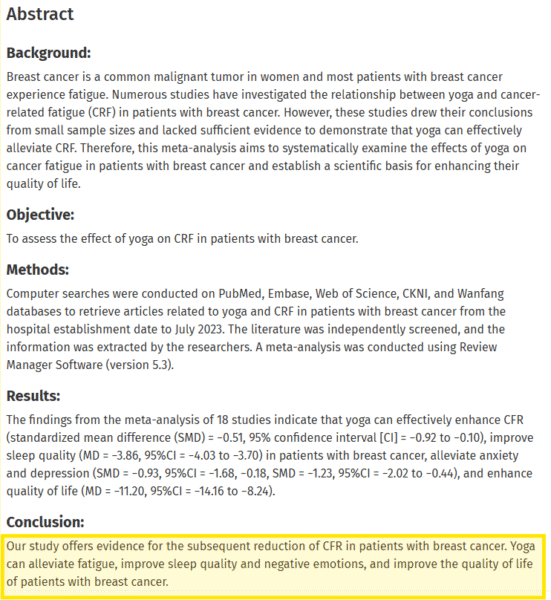
It has been established that yoga in cancer treatment can help to lower fatigue, anxiety, and depression, as well as improve the quality of sleep, flexibility and quality of life. Light exercise promotes the blood circulation and lymphatic drainage, which aids the body in the recovery process. Practices of breathing improve oxygenase and relaxation of the nervous system. Notably, yoga allows patients to feel some control over their bodies which is psychologically empowering in the course of treatment. Randomized controlled trials in the evidence provide evidence of improvements in mood, sleep, and treatment-related side effects in the conditions of yoga involved in care.(2)
Bottom Line.
An extensive list of health and mental advantages is given to yoga during treatment of cancer. It is used to relieve diverse physical symptoms of pain, fatigue, and stiffness and enhance the general strength, flexibility, and balance. Also, yoga is a form of therapy to emotional and psychological health and decreases stress and anxiety levels and depression. It promotes mindfulness, self compassion, and empowerment which improve the quality of life of cancer patients. Yoga, with its non-obtrusive but efficient method, turns out to be a worthy of inclusion in the list of complementary therapies that facilitates the healing process and leads to an improved overall prognosis in patients with cancer.
+2 Sources
FreakToFit has strict sourcing guidelines and relies on peer-reviewed studies, educational research institutes, and medical organizations. We avoid using tertiary references. You can learn more about how we ensure our content is accurate and up-to-date by reading our editorial policy.
- Review of Yoga Therapy During Cancer Treatment; https://www.ncbi.nlm.nih.gov/pmc/articles/PMC5777241/
- Effect of yoga on cancer-related fatigue in patients with breast cancer: A systematic review and meta-analysis; https://journals.lww.com/md-journal/fulltext/2024/01050/effect_of_yoga_on_cancer_related_fatigue_in.41.aspx