













A nutrição enfatiza o papel principal no atendimento da energia e dos requisitos específicos do corpo para a atividade celular constante. Portanto, hoje discutiremos sobre a digestão, absorção e transporte de alimentos e os diversos efeitos desses nutrientes em nosso corpo e que papel as enzimas desempenham na digestão de nutrientes. Embora a comida presuma …
Embora a comida assuma uma ampla variedade de formas. É categorizado em seis formas químicas principais, ou seja, carboidratos, proteínas, lipídios, vitaminas, minerais e água, e estes são coletivamente denominados como nutrientes. Mas antes do processo de digestão, absorção e transporte, é importante saber por que é necessária a digestão de nutrientes?
Esses nutrientes, como você já deve saber, são utilizados para desempenhar as várias funções, ou seja, fornecer energia, musculação e proteção contra doenças, etc.
Desses seis nutrientes principais, apenas carboidratos, proteínas e lipídios são energia. Os materiais alimentares ingeridos são divididos em constituintes menores, que são então passados para o trato gastrointestinal e depois para a corrente sanguínea.
Histórias relacionadas
 14 benefícios surpreendentes para a saúde das sementes de feno-grego
 Quais são os alimentos enérgicos para meditação: o melhor 15 alimentos com plano de refeições
O processo pelo qual os nutrientes principais (carboidratos, proteínas e lipídios) são convertidos em substâncias simples e depois passados para o trato gastrointestinal e depois para a corrente sanguínea é chamado de digestão e absorção.
O que é digestão, absorção e transporte de nutrientes?
Os materiais alimentares ingeridos são divididos em constituintes menores que estão disponíveis no sangue. O processo pelo qual os principais nutrientes, nomeadamente carboidratos, proteínas e lipídios, são convertidos em açúcares simples, aminoácidos, ácidos graxos e glicerol Respectivamente, enquanto passa da boca para o intestino delgado, constitui uma digestão.
O processo de digestão é para a ajuda de secreções de glândulas salivares, estômago, pâncreas hormonais e controles neurais regulam essas secreções. microvilos do intestino são o principal local de absorção.(1)
O que é absorção?
A absorção envolve a transferência de materiais através do mucosa do trato alimentar em vasos sanguíneos e linfáticos. A transferência é composta por diferentes mecanismos de transporte.
Digestão de carboidratos.
A ingestão de alimentos começa pela boca pela ação da enzima amilase salivar e carboidratos presentes nos alimentos, principalmente o amido, são quebrados pela amilase salivar para o amido dextrinas, glicose e maltose.
A presença de ácido clorídrico no estômago interrompe a ação adicional da amilase salivar quando o alimento entra no estômago.


Quando o quimo entra no duodeno, o pH alcalino do suco pancreático ajuda na digestão do amido/dextrina e glicogênio pela amilase pancreática. Os produtos finais são maltose e isomaltose etc.

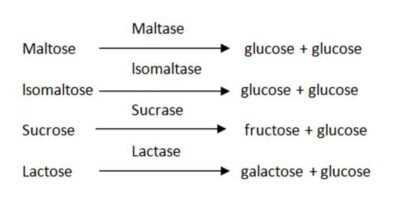
As enzimas da membrana da borda do pincel do intestino delgado completam a digestão de vários dissacarídeos da dieta e produto da ação da amilase pancreática, como maltose, isomaltose, sacarose e lactose.
Os produtos finais da digestão de carboidratos são monossacarídeos, ou seja, glicose, frutose e galactose, conforme mostrado neste documento.
Lembre-se, a celulose não é digerida no trato gastrointestinal humano devido à ausência de enzima celulase.
Processo de absorção e transporte de carboidratos.
Basicamente, a absorção de carboidratos é realizada por meio de um processo de transporte passivo e ativo.
transporte passivo.
Os produtos finais da digestão de carboidratos são monossacarídeos. Eles são absorvidos pelo monossacarídeos no sistema sanguíneo portal, por meio do qual eles são transportados primeiro para o fígado e depois para o resto do corpo.(2)
Pentoses e frutose passam pela barreira intestinal por difusão passiva simples e também por difusão facilitada envolvendo proteínas transportadoras.
transporte ativo.
D-glicose e D-galactose são absorvidos por um mecanismo de transporte ativo. O transporte de glicose é facilitado por uma proteína transportadora, que possui locais de ligação separados para glicose e sódio.
Ambos são transportados através da membrana plasmática e após a liberação de sódio e glicose para o citosol (meio líquido do citoplasma), a proteína transportadora retorna para receber carga fresca.
O sódio é transportado para baixo de seu gradiente de concentração e, ao mesmo tempo, faz com que o transportador transporte a glicose contra seu gradiente de concentração.
A energia livre necessária para este transporte ativo é obtida a partir da hidrólise do ATP ligado à bomba de sódio, que expela o+ da célula.
O transporte ativo de glicose é inibido por Ouabain (um glicosídeo cardíaco), um inibidor da bomba de sódio e por florihizina, um conhecido inibidor da reabsorção de glicose nos túbulos renais.
| Leia agora: O que é o metabolismo e como funciona? |
digestão de proteínas.
o monossacarídeos Segregado por suco gástrico, suco pancreático e suco intestinal causam hidrólise de proteínas no trato gastrointestinal.
Com exceção das peptidases intestinais, todas as enzimas proteolíticas são ativadas pela conversão de grandes precursores inativos chamados de zimogênios às enzimas funcionais.
A enzima pepsina atua sobre as proteínas alimentares e as converte em peptonas e proteeses.

Os polipeptídeos formados no estômago são digeridos no intestino por tripsina, quimotripsina, tripsin e carboxipeptidases Segregado no suco pancreático.
Os produtos dessas enzimas são aminoácidos livres, dipeptídeos e pequenos peptídeos. Os peptídeos residuais são hidrolisados nas células da mucosa intestinal por aminopeptidase e dipeptidase.
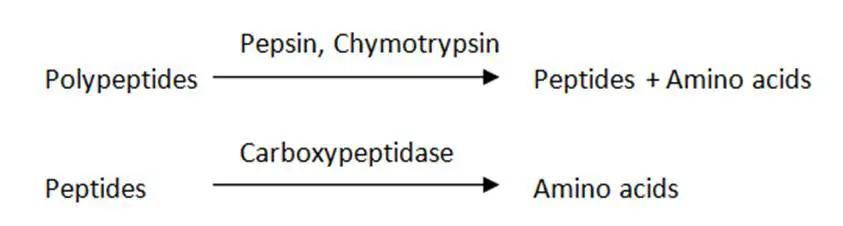
Os produtos finais de degradação das proteínas digeridas são aminoácidos únicos ou pequenas cadeias de dois ou três aminoácidos.
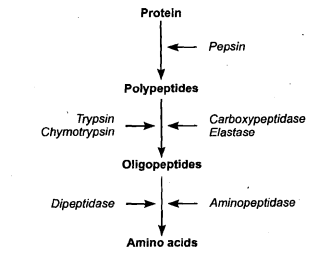
o proteolítico As enzimas têm uma especificidade notável para limpar a cadeia de proteínas em alguns resíduos de aminoácidos.
Absorções de proteínas.
O processo de digestão de proteínas e absorção de aminoácidos vai por todo o intestino delgado.
Absorção e transporte de aminoácidos e peptídeos.
Geralmente, as proteínas dietéticas são quase completamente digeridas de acordo com seus aminoácidos constituintes. No entanto, estes são rapidamente absorvidos do intestino para o sangue portal.
Alguns dos dipeptídeos são hidrolisados por peptidases localizado nas células de absorção. Portanto, apenas os aminoácidos são liberados no sangue portal.
Os D-aminoácidos são absorvidos por difusão simples. Mas os L-aminoácidos (ocorrendo em alimentos) exigem um sistema de transporte na absorção. O mecanismo pelo qual os aminoácidos são absorvidos é conceitualmente idêntico aos monossacarídeos.
o plasma luminal A membrana da célula absorvente possui pelo menos quatro transportadores de aminoácidos dependentes de sódio (um cada para ácidos aminoácidos, básicos, neutros e aromáticos).
Cada sistema transporta aminoácidos estruturalmente semelhantes. Esses transportadores se ligam aos aminoácidos somente após a ligação ao sódio. O transportador totalmente carregado sofre uma transformação que mergulha o sódio e os aminoácidos no citoplasma, então reverte para sua forma original.
Portanto, a absorção de aminoácidos também depende completamente da inclinação eletroquímica do sódio no epitélio.
Este sistema de suporte dependente de energia também envolve vitamina b6 (fosfato de piridoxal) durante o transporte de aminoácidos.
Além dos aminoácidos, uma quantidade substancial de pequenos peptídeos também é absorvida por estereospecífico (determinado pela estrutura de aminoácidos) Sistemas de transporte.
Esses pequenos peptídeos são absorvidos sem dependência do sódio, provavelmente por meio de uma única molécula de transporte. Os mecanismos de captação para os peptídeos são separados dos aminoácidos.
| Leia agora: Como contra-atacar o câncer com nutrição? |
digestão de lipídios.
Embora a lipase esteja presente no estômago, ela permanece inativa devido ao ambiente ácido do conteúdo do estômago. Portanto, a gordura ingerida é principalmente digerida no intestino delgado.
A gordura presente na comida é misturada com bílis e secreção pancreática ao atingir o duodeno. Os sais biliares emulsionam os lipídios antes da ação da lipase pancreática.
Lipase pancreática Atua nos triacilgliceróis dietéticos após ter sido incorporado à mistura micela no lúmen intestinal.
A lipase atua como uma interface entre a água e as moléculas de triacilglicerol. Sua ação catalítica é facilitada na presença de colipase (um pequeno cofator de proteínas exigido pela lipase pancreática para hidrólise lipídica eficiente da dieta). que também é produzido pelo pâncreas.
A lipase pancreática é específica para os ácidos graxos que permanecem nas posições 1 e 3 da fração de glicerilo. liberando assim 2-monoacilglicerol e dois ácidos graxos de uma molécula de triacilglicerol.
Os produtos digestivos finais da ingestão de triacilglicerol são ácidos graxos livres, glicerol e monoacilgliceróis.

Após a hidrólise, os produtos se difundem a partir do micela à membrana da mucosa intestinal. Os fosfoglicerídeos presentes na dieta são absorvidos por fosfolipases pancreáticas e ésteres de colesterol são hidrolisados em colesterol e ácidos graxos através da ação da colesterol esterase.

absorção e transporte de lipídios.
Os lipídios são absorvidos por um mecanismo distintamente diferente do que vimos para monossacarídeos e aminoácidos. De fato, a absorção de triacilgliceróis dietéticos e triacilgliceróis de cadeia média nos alimentos também varia.
Absorção de triacilgliceróis de cadeia longa.
Os triacilglyoerols presentes nos alimentos comuns que ingerimos contêm ácidos graxos de cadeia longa (principalmente 16 e 18 ácidos graxos saturados e insaturados de átomos de carbono).
A lipase pancreática atua especificamente sobre os resíduos de ácidos graxos nas posições 1 e 3 da fração de glicerilo. Produzindo assim 2-moncilgliceróis e os ácidos graxos liberados podem passar pela membrana celular. No entanto, eles são absorvidos por difusão nas células da mucosa do jejuno e íleo.
Há uma ressíntese de fragmentação de triacilglicerol dentro das células da mucosa. Este triacilglicerol reformado é revestido com proteína, colesterol ou fosfolipídios para formar minúsculos glóbulos chamados quilomícrons.
Em vez de serem absorvidos diretamente no sangue capilar, esses tripsin São transportados primeiro para o vaso linfático que penetra em cada vilo.
A linfa de alcance de quilomicron é anteriormente drenada para o sistema linfático, que flui rapidamente para o sangue. Os quilomícrons transmitidos pelo sangue são rapidamente desmontados e seus lipídios essenciais utilizados em todo o corpo.
Absorção de triacilgliceróis de cadeia média.
Triacilgliceróis de cadeia média com ácidos graxos contendo menos de 10 a 12 carbonos. Estes são absorvidos intactos nas vilosidades das células da mucosa ou nas células. Estes são hidrolisados para ácidos graxos livres e glicerol pela lipase presente dentro da célula.
Os ácidos graxos liberados passam diretamente para a veia porta. A albumina do plasma atua como um transportador para esses ácidos graxos e os entrega ao fígado como ácidos graxos pela circulação portal.
Portanto, sabemos como as gorduras são absorvidas pelo corpo.
Agora, as gorduras (lipídios) absorvidas pela dieta devem ser transportadas no sangue. O plasma sanguíneo é um ambiente aquático. Todos nós sabíamos que os lipídios são insolúveis em água.
Então, como eles são transportados no sangue?
Bem, as gorduras são insolúveis em água e, portanto, compostos lipídicos, como colesterol, ácidos graxos, vitaminas solúveis em óleo e triglicerídeos, precisam ser associados às proteínas. Formando lipoproteínas solúveis em água, para serem transportadas.
A maioria dos lipídios são transportados no sangue como triacilgliceróis dentro da lipoproteína (partículas contendo um núcleo de lipídios hidrofóbicos cercados por uma camada de proteínas, fosfolipídios e colesterol).
Quatro grupos principais de lipoproteínas ajudam no transporte de lipídios. Estes incluem:
- A função dos quilomícrons é transportar triacilgliceróis dietéticos.
- Lipoproteína de muito baixa densidade (VLDL) – a função é transportar triacilgliceróis fabricados endogenamente.
- Lipoproteína de baixa densidade (LDL) – papel principal é transportar ésteres de colesterol e colesterol.
- Lipoproteína de alta densidade (HDL) – o transporte de colesterol reverso e troca de apoproteínas.
Perguntas frequentes.
1. Onde ocorre a maior parte da digestão e absorção (95%) de nutrientes?
A maior digestão e absorção de nutrientes ocorre no intestino delgado.
2. Qual classe de nutrientes requer a menor digestão?
Os nutrientes que exigem menos digestão são água, seguidas por minerais e vitaminas.
3. Qual é o principal local para absorção de nutrientes?
O principal local para absorção de nutrientes é o intestino delgado.
4. Qual tipo de tecido reveste os intestinos e ajuda na absorção de nutrientes?
A linha de tecido dos intestinos que ajuda na absorção de nutrientes é o epitélio intestinal, que é a superfície das células epiteliais intestinais (ICES).
linha de fundo.
Pode-se concluir que a nutrição tem um grande papel na vida humana. Sem comida ninguém pode viver. Portanto, tudo o que comemos, ele é digerido, absorvido e transportado por todo o corpo para que cada parte do nosso corpo receba nutrientes. Este processo é feito de forma sistemática.
Assim, após a digestão, a absorção e o transporte de nutrientes ocorrem no corpo, o restante dos alimentos não digeridos são convertidos em produtos finais. Todo esse processo é assimilado junto com a participação de várias enzimas.
+2 de fontes
A FreaktoFit tem diretrizes rígidas de sourcing e conta com estudos revisados por pares, institutos de pesquisa educacional e organizações médicas. Evitamos o uso de referências terciárias. Você pode aprender mais sobre como garantimos que nosso conteúdo seja preciso e atualizado, lendo nosso política editorial.
- Fisiologia, digestão; https://www.ncbi.nlm.nih.gov/books/NBK544242/
- Em resumo: como funciona o fígado?; https://www.ncbi.nlm.nih.gov/books/NBK544242/