










































 Workout

 Meditation


 Podcast
 E-book


Anxiety is an inescapable part of life. Students deal with it during exam time. Athletes deal with it before a big game. Performers, executives, parents… there’s no segment of the human population that is entirely exempt from stress and anxiety.
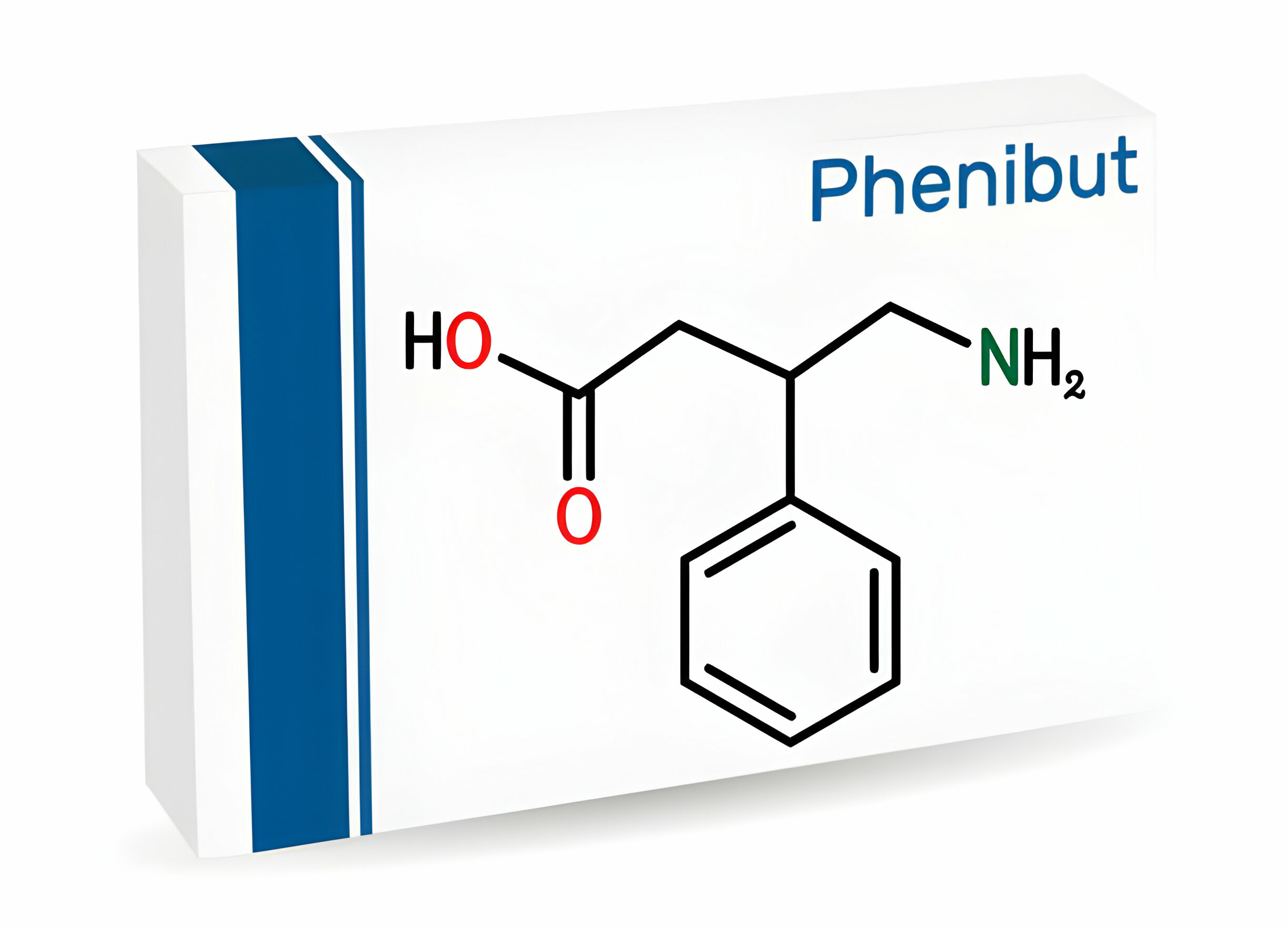
Needless to say, there are countless products on the market that can help you deal with that anxiety, some more effective than others. And more such treatments are being developed all the time. One recent example is Phenibut, which has recently found a lot of traction in the holistic health world.
What is Phenibut, exactly, and what kinds of effects does it have on your brain? More to the point, is Phenibut a safe, effective way for you to deal with your own anxiety? Let’s dive in and take a closer look at this unique supplement.
A Brief History of Phenibut.
Phenibut is nothing new. In fact, it was developed by Russian scientists more than 50 years ago. Its original intention was to help cosmonauts manage their stress and maintain mental focus. But once its positive effects became more broadly known, it started to find an audience far beyond the Russian aerospace industry. In recent years, Phenibut has become fairly well-known even in the US, where it’s not yet regulated but can still be purchased online.
Related Stories
 The Importance of Community and Mental Health in Recovery
 Angina: Causes, Treatment and Preventive Measures
Of course, before you start seeking Phenibut for sale, it’s crucial to get a few more facts about what it actually does to your body and brain.
The Effects of Phenibut.
When Russian scientists first developed Phenibut, they heralded it as a “new tranquilizer,” noting its effects for lifting depression, mitigating stress, and improving sleep quality.
On a biological level, Phenibut works by mimicking the effects of a brain chemical called gamma-aminobutyric acid, also called GABA. GABA is a neurotransmitter that basically reduces the “excitability” of your mind, hence the tranquilizing effects of Phenibut.
People have begun using Phenibut to address a wide range of mental health concerns, ranging from depression and anxiety to insomnia and even alcohol dependence. By triggering the same parts of your brain that are affected by GABA, Phenibut unquestionably has a profound neurological impact. Exactly what that effect is can depend on the dosage. A small amount of Phenibut may have a calming effect, while an overly high dose can cause less welcome effects, including blurred vision and muddied thinking. All that is just to say that, as with any supplement, Phenibut should be handled carefully, preferably under the guidance of a physician.
What Does the Science Say About Phenibut?
Given that Phenibut has a potent neurological effect, and given that it isn’t yet formally approved by the FDA, it’s understandable that you might ask what the actual science has to say.
It’s a mixed bag, with some clinicians heralding Phenibut’s anti-anxiety powers but others warning that it might cause a dependency.
Here’s a sampling of some of the clinical research that’s been done with regard to Phenibut.
- One of the most prominent studies notes that, when administered in careful and therapeutic doses, Phenibut can be a very safe and well-tolerated option for dealing with various mental health effects.(1)
- An observational study notes that Phenibut is readily available in the UK and many other countries and that it offers the same set of negative and positive effects you’d expect from any GABA imitator. (In other words, best to proceed with prudence.)(2)
- Another study warns of the possibility of overdosing on Phenibut, specifically noting that there has been a notable increase in Phenibut-related calls to local poison centers.(3)
- Other studies suggest that dependence and withdrawal are both real possibilities for those who use Phenibut to an excess.(4)
There is obviously some reason to be wary of Phenibut, but also some evidence to confirm that its much-touted anti-anxiety effects have some basis in fact. If you do choose to try Phenibut, make sure you talk to a doctor first, carefully follow dosing instructions, and most of all have a clear sense of the potential risks.
Understanding Phenibut Withdrawal.
Make no mistake that overuse of Phenibut can result in physical dependence. In order to be weaned off of a Phenibut habit, your doctor may need to use either benzos or antipsychotic drugs, which may have some unwelcome side effects of their own.(5)
As one study confirms, the most common treatment for Phenibut withdrawal is a drug called buprenorphine.(6)
Key to avoiding Phenibut dependence is acknowledging that this supplement is not meant to be used on a regular basis, and in fact, daily use is frowned upon. Proponents of Phenibut will tell you that it’s really meant to be administered on an “as needed” basis.
Bottom Line.
At this juncture, the best assessment of Phenibut may be anecdotal: The drug is widely used around the world, both recreationally and therapeutically. Many users find it to be helpful and safe. Others are affected by significant, adverse consequences, including physical dependence and withdrawal. One thing nobody would question is that Phenibut has a significant effect on the human brain, which makes it important to proceed with plenty of clinical caution.
+6 Source
Freaktofit has strict sourcing guidelines and relies on peer-reviewed studies, educational research institutes, and medical organizations. We avoid using tertiary references. You can learn more about how we ensure our content is accurate and up-to-date by reading our editorial policy.
- Kupats, E., Vrublevska, J., Zvejniece, B., Vavers, E., Stelfa, G., Zvejniece, L., & Dambrova, M. (2020). Safety and Tolerability of the Anxiolytic and Nootropic Drug Phenibut: A Systematic Review of Clinical Trials and Case Reports. Pharmacopsychiatry, 53, 201 – 208.; https://doi.org/10.1055/a-1151-5017
- Owen, D., Wood, D., Archer, J., & Dargan, P. (2016). Phenibut (4-amino-3-phenyl-butyric acid): Availability, the prevalence of use, desired effects, and acute toxicity. Drug and alcohol review, 35 5, 591-6.; https://doi.org/10.1111/dar.12356
- OMcCabe, D., Bangh, S., Arens, A., & Cole, J. (2019). Phenibut exposures and clinical effects were reported to a regional poison center. The American journal of emergency medicine.; https://doi.org/10.1016/j.ajem.2019.02.044
- Jouney, E. (2019). Phenibut (β-Phenyl-γ-Aminobutyric Acid): an Easily Obtainable “Dietary Supplement” With Propensities for Physical Dependence and Addiction. Current Psychiatry Reports, 21, 1-6; https://doi.org/10.1007/s11920-019-1009-0
- Weleff, J., Kovacevich, A., Burson, J., Nero, N., & Anand, A. (2023). Clinical Presentations and Treatment of Phenibut Toxicity and Withdrawal: A Systematic Literature Review. Journal of addiction medicine.; https://doi.org/10.1097/ADM.0000000000001141
- Brunner, E., & Levy, R. (2017). Case Report of Physiologic Phenibut Dependence Treated With a Phenobarbital Taper in a Patient Being Treated With Buprenorphine. Journal of Addiction Medicine.; https://doi.org/10.1097/ADM.0000000000000303