
















Yoga has always been a well-regarded exercise that is claimed to help both the body and the mind to stay healthy. Among the many poses available, some not only catch everyone’s eyes but also have many wonderful benefits. The Falling Star Pose is one such pose. This article gives a detailed walk-through of the benefits of Falling Star Pose, what it is, its health advantages, its safe way of execution, and many other details. We will also shed light on the scientific evidence that shares the same insights as the yoga instructors and also favors its practice.
What is the Falling Star Pose?
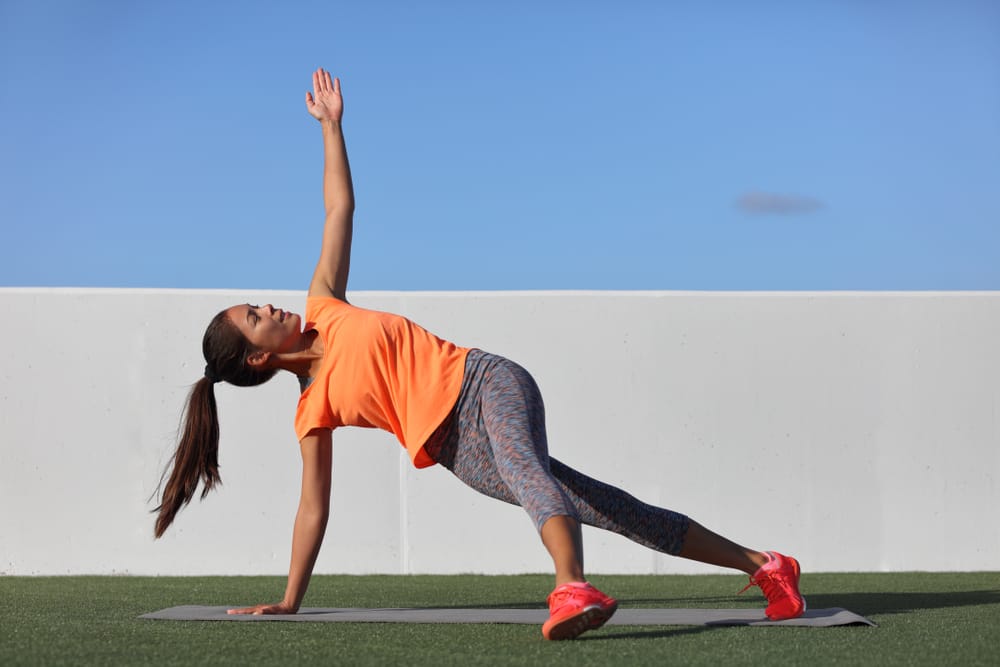
As the name suggests, the Falling Star Pose, Falling Triangle Pose, or Patita Tarasana (in Sanskrit) is a combination of several yoga poses such as the Side Plank (Vasisthasana) and Triangle Pose (Trikonasana). This posture that is graceful yet quite challenging relies hugely on the idea of stability, flexibility, and power while working on concentration and coordination at the same time.
It is true that for a beginner, the Falling Star Pose might look a bit tough. Nevertheless, it only takes some time of regular practice and some patience to perfect the pose, and then it can become one of the yoga workout routines.
The Benefits of Falling Star Pose.
1. Full-Body Strength.
Falling Star Pose constitutes a whole body exercise. It demands that the arms, the core, and the leg muscles are all equally strong. It also, when practiced often, helps to build those parts of the body capable of moving, particularly the shoulders, chest, obliques, and thighs.
Related Stories
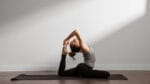 7 Yoga Poses for Cervical Spondylosis and Neck Pain
 6 Best Core Strengthening Yoga Poses To Improve Posture
2. Improves Balance and Coordination.
One of the primary advantages of this pose is that it helps develop and improve our sense of balance. As you take one foot off the floor and at the same time use your supporting hand to lift the lower side of the body over the floor, you work with the stabilizing muscles of the body more intensely, thus, affecting the whole body positively. It raises the level of your coordination and makes you experience proprioception.
3. Boosts Flexibility.
This pose wherein you open up your hips helps relax the muscle stiffness in that area and the lower back, thus, giving the joints greater elasticity. It is also the same move that will help take care of the hamstrings, obliques, and intercostal muscles, i.e. the muscles located between the ribs, which are often left untrained in other yoga poses.
4. Enhances Focus and Mindfulness.
Wholly you have to spend your tense arm and end one leg to organize your stable pose that’s what almost covers the very basic level of the focus topic. This centered mood is also effective away from the moments of practice as the meditation can be useful in a practical way throughout the day keeping you in your current state and being more mindful because you are more present.
5. Cardiovascular Health.
When doing the Falling Star Pose for quite a lengthy duration, your heart and lungs also get a chance to be active. The activity combines the effects of blood circulation and respiration to calm the mind and reduce stress, which in general, be of benefit to the heart.

Step-by-Step Guide: How to Perform the Falling Star Pose.
1. Begin in Downward-Facing Dog (Adho Mukha Svanasana):
- Start by positioning yourself in the Downward-Facing Dog pose, with your hands and feet on the mat and your hips lifted towards the ceiling.
- Keep your back straight, and push your heels gently toward the ground to stretch the hamstrings.
2. Transition to Plank Position:
- Shift your weight forward into a Plank Pose, making sure your body forms a straight line from head to heels.
- Your hands should be directly below your shoulders.
3. Move into Side Plank (Vasisthasana):
- From Plank, roll onto the outside edge of your right foot and stack your left foot on top.
- Extend your left hand up toward the ceiling, coming into a Side Plank.
- Engage your core to maintain balance.
4. Thread Your Left Leg Under Your Body:
- Lift your left foot that’s resting on the right leg, and still keep it straight as you glide it under your body to the right side.
- Your left foot should be floating or slightly touching the ground, depending on your flexibility and balance level.
5. Reach with the Left Arm:
- Meanwhile, reach your left arm across your body and towards the floor at the same time, in a way that your fingertips and toes create a diagonal line between them.
- Breathe regularly as you stabilize the pose and hold it for a while.
- Step-by-step, ease back into Side Plank and then follow through with Plank before carrying out the sequence on the opposite side.
- The time you spend holding this posture can be increased progressively – from 15 to 30 seconds as you gradually experience more comfort.
6. Release and Repeat:
- First, start with the slow transition from Side Plank to Plank hugging the mat and then perform the process from the beginning on the other side.
- You can maintain the posture for 15-30 seconds, then the time can be increased when you are more at ease with the exercise.
Common Mistakes to Avoid in Falling Star Pose.
1. Sagging Hips.
The hips drooping is one of the biggest errors that can be seen in this yoga pose. By allowing the hips to drop, not only are you making the pose weak but also forcing the lower back to endure an extra load. The idea to avoid this is to use your muscles and move your hips as high up as possible while still keeping your body in a straight line.

2. Overextension of the Neck.
It is critical not to extend the neck too much as to avoid neck strain. The natural position of the neck is the neutral one, so instead of looking up or down, keep your gaze directly ahead, even with the spine.
3. Locking the Elbows.
Make sure not to lock the elbow of the supporting hand, causing strain to the joint. The solution is to have a small bend until your weight is evenly distributed on your arms.
Interview with an Expert: Insights from a Yoga Instructor.
To reveal the hidden secrets of the Falling Star Pose, we had a conversation with Emma Green, known as a veteran yoga instructor, and a highly respected wellness coach also.
Q: Why do you recommend the Falling Star Pose to your students?
Emma:
It has everything—balance, flexibility, and strength! It is fun, and at the same time, it engages your body as a unit. Why my students repeatedly return to me is, they are not satisfied with their present condition and want to get their physical state as well as mental state in a very balanced condition, and this position helps to achieve both. It trains you on the ability to stay put, the ability to find balance in the midst of a crisis and to handle pain and discomfort.
Q: What tips would you give to beginners trying this pose for the first time?
Emma:
Take it slow. A lot of the start-ups plunge straight into the pose, thus causing them to get injured. I am always clear and tell them to master the basic Side Plank before doing this tricky pose. Focusing your attention on the breath is very important too. The breath is the most powerful tool and by focusing on it, the body will surely find its equilibrium.
Scientific Evidence.
Research has shed a lot of light on the beneficial features provided by balance based activities like the Falling Star Pose. It has been witnessed through a publication from the International Journal of Yoga that the performability of balance postures is the thing that mainly supplies one with the necessary information about the body health and the space that goes around it. These postures make proprioception stronger, keep muscles coordinated, and prevent injury, especially in old people. Furthermore, the connection between core muscles and balance postures has also been discovered, which turns back pain into a rare case unrelated to that good posture miss.(1)
In addition, a study at Harvard Health illustrates that balance activities can also have a positive effect on the vestibular system, that is, on balance and space-based orientation. This augmentation of the vestibular system is crucial as it has a direct influence on the overall coordination of the body thus helps prevent falls especially in older adults.(2)

Bottom Line.
The Falling Star Pose is reflective of the perfect way to test body’s dimensions, also your inner peace of mind. The combination of physical exercises and mental concentration induced by this pose will give you an opportunity to maintain your well-being both physically and mentally. If you practice yoga regularly, then this pose can help you get rid of sweating and feeling like you’re in the water from inside by not only burning energy through core strength, improving coordination, and keeping the muscle tone up but also from feeling centered while working on your breath-awareness. This practice is suitable not only for those who have just started their journey but also for those who consider themselves to be pioneers in this area.
Therefore, get the rug on, get the towel, and have other necessities ready to go to this level. Be motivated, do not give up, learn and implement useful tricks from experts, and very soon, you will be able to do the mighty Falling Star Pose with ease and adeptness.
+2 Sources
Freaktofit has strict sourcing guidelines and relies on peer-reviewed studies, educational research institutes, and medical organizations. We avoid using tertiary references. You can learn more about how we ensure our content is accurate and up-to-date by reading our editorial policy.
- The Effectiveness of Yoga Exercise on Muscle Strength in the Elderly; https://www.researchgate.net/publication/362963402_The_Effectiveness_of_Yoga_Exercise_on_Muscle_Strength_in_the_Elderly
- Balance; https://www.health.harvard.edu/topics/balance/