


















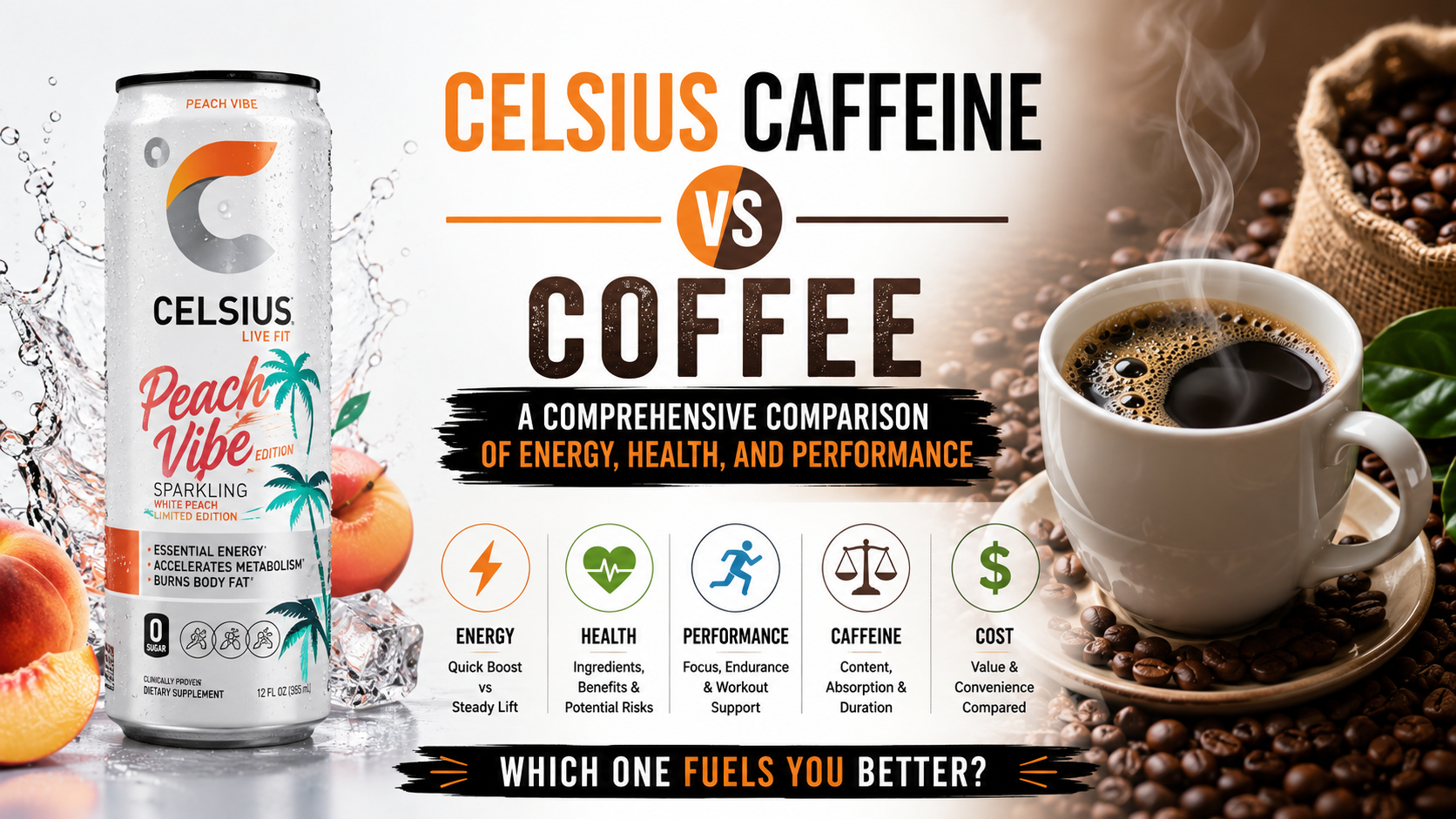
No mundo acelerado de hoje, a busca por um aumento rápido de energia alimentou o aumento de bebidas energéticas e bebidas tradicionais, como café. Celsius, uma bebida energética popular, fez ondas nos últimos anos como uma alternativa amigável ao café, com ingredientes como cafeína, extrato de chá verde e compostos que aumentam o metabolismo. Mas como a cafeína Celsius se compara à cafeína natural encontrada no café? Neste artigo, mergulharemos profundamente nos prós e contras de ambos, apoiados por evidências científicas, opiniões de especialistas e insights sobre como eles afetam seu corpo, energia e saúde geral.
O que é cafeína?
A cafeína é um dos estimulantes mais consumidos no mundo. Durante séculos, o café foi a bebida preferida para pessoas que desejam acordar e Fique energizado durante todo o dia. Mais recentemente, a energia Bebidas como Celsius Surgiram como uma alternativa moderna, prometendo não apenas um aumento de energia, mas também benefícios para a saúde, como aumento do metabolismo, queima de gordura e desempenho físico aprimorado.
Mas o que diferencia Celsius café? Como diferem o conteúdo de cafeína, os impactos na saúde e os efeitos sobre o desempenho? Este artigo busca explorar em detalhes essas questões, ajudando você a fazer uma escolha informada que Adapta-se ao seu estilo de vida e objetivos de saúde.
Entendendo a cafeína: Celsius x café.
Tanto o Celsius quanto o café contêm cafeína, mas a fonte, o conteúdo e os ingredientes que o acompanham diferem significativamente.
Histórias relacionadas
 Qual deve ser o plano de dieta de seus filhos durante o COVID-19?
 Cereais matinais: saudáveis ou não?
– Conteúdo da cafeína: Uma xícara de café típica contém cerca de 95 mg de cafeína, enquanto uma lata de bebida energética Celsius tem 200 mg de cafeína. Isso é mais que o dobro da quantidade de café, tornando o Celsius um estimulante muito mais forte em comparação. Esse teor de cafeína mais alto é uma das razões pelas quais muitos As pessoas recorrem ao Celsius antes dos treinos ou durante dias longos.
– Fonte da cafeína: O café é produzido a partir de grãos de café, que são uma fonte natural de cafeína. Por outro lado, Celsius contém cafeína sintética, combinada com Extratos de ervas como guaraná e chá verde, que também contribuem com pequenas quantidades de cafeína.
Energy Boost: O que a ciência diz?
O Celsius é comercializado como uma bebida que melhora o desempenho, particularmente popular entre os entusiastas do fitness, enquanto o café tem sido um item básico para quem precisa de um rápido estímulo.
– Celsius: Sua combinação única de cafeína, taurina e Extratos de ervas como chá verde E o gengibre pretende fornecer uma onda imediata de energia, aumentando a termogênese (o processo de produção de calor no corpo), levando a uma taxa metabólica mais alta.

Um estudo de 2010 publicado no Journal of Strength and Conditioning Research descobriu que consumir Celsius antes do exercício pode melhorar aeróbica e anaeróbica desempenho. O alto teor de cafeína aumenta o foco e a resistência durante a atividade física, enquanto os compostos adicionais trabalham juntos para melhorar a oxidação da gordura, ajudando a queimar calorias de forma mais eficiente.
– Café: A cafeína no café estimula o sistema nervoso central, ajudando você a se sentir mais acordado e alerta. Aumenta a liberação de adrenalina, fazendo você se sentir mais enérgico e pronto para realizar as tarefas. Pesquisas da Harvard Medical School sugerem que beber café antes do exercício também pode aumentar a resistência, embora possa não ter o mesmo efeito termogênico que Celsius.

Metabolismo e perda de peso.
Um dos Celsius chave Pontos de venda é o seu potencial para ajudar na perda de peso por meio de suas propriedades termogênicas. Mas como ele se compara ao café quando se trata de aumentar o metabolismo?
– Celsius: A combinação de cafeína, extrato de chá verde e guaraná em Celsius Trabalha em conjunto para estimular o metabolismo. O extrato de chá verde é rico em antioxidantes chamados catequinas, que demonstraram aumentar a queima de gordura, especialmente durante o exercício. Celsius afirma que sua fórmula pode ajudar os usuários queimar 100 calorias Mais por sessão em comparação com outras bebidas.
– Café: Embora o café também contenha cafeína, o que pode aumentar sua taxa metabólica em até 11%, ele não contém os compostos termogênicos adicionados encontrados em Celsius. Beber café preto (sem açúcar ou creme) tem sido associado à perda de gordura, mas os efeitos são menos pronunciados do que o Celsius oferece devido à sua fórmula especializada.
Provas Científicas:
Um estudo publicado no American Journal of Clinical Nutrition em 2006 descobriu que o extrato de chá verde, um ingrediente-chave em Celsius, aumentou significativamente a oxidação da gordura nos participantes durante o exercício de intensidade moderada. O café também suporta a queima de gordura, mas em menor grau, dependendo de como é consumido e de quais aditivos são usados.(1)
Impacto na saúde: curto e longo prazo.
Efeitos de curto prazo:
Tanto o Celsius quanto o café oferecem aumentos imediatos de energia, mas seus Efeitos na saúde variar. Maior teor de cafeína de Celsius significa que pode causar O nervosismo ou a ansiedade em algumas pessoas, especialmente aquelas sensíveis a estimulantes. Por outro lado, o café é mais suave A abordagem geralmente resulta em menos efeitos colaterais Para bebedores casuais.
Efeitos para a saúde a longo prazo:
– Celsius: Os efeitos de longo prazo de Celsius para a saúde ainda estão em pesquisa, mas seus altos níveis de cafeína podem levar a problemas como aumento da frequência cardíaca ou pressão alta em indivíduos sensíveis. Enquanto Celsius contém ingredientes benéficos como o verde chá e gengibre, a dependência excessiva de tais bebidas energéticas pode levar à dependência de estimulantes.
– Café: Estudos mostraram que o consumo moderado de café (cerca de 3 a 4 xícaras por dia) está associado a um risco reduzido de várias doenças crônicas, incluindo diabetes tipo 2, doença de Parkinson e certos cânceres. No entanto, adicionar açúcar, creme ou sabores artificiais pode anular esses benefícios.
Entrevista com a Dra. Lisa Roberts, cardiologista:
Embora o Celsius possa oferecer benefícios metabólicos de curto prazo, o café tem uma longa história de Pesquisa em saúde que apoia seu papel na prevenção Doenças. É importante considerar a frequência com que você consome produtos ricos em cafeína e se você Equilibre-os com outros saudáveis escolhas de estilo de vida.
Opiniões de especialistas: entrevistas com nutricionistas e atletas.
John Marks, nutricionista esportivo:
“Para atletas, o Celsius oferece uma poderosa opção de pré-treino por causa de sua mistura única de ingredientes que melhoram o metabolismo e o metabolismo. No entanto, é essencial monitorar a ingestão para evitar superestimulação.”
Emily Adams, nutricionista:
O café é mais versátil - ele pode ser apreciado em diversas formas e cabe em um equilíbrio Dieta com facilidade. Celsius pode ser mais apropriado para quem tem metas de desempenho específicas, mas o café Benefícios comprovados para Torná-lo uma escolha mais sustentável a longo prazo.
preferências pessoais e escolhas de estilo de vida.
Em última análise, a escolha entre Celsius e café se resume a preferências pessoais, estilo de vida e objetivos de saúde.
– Para os entusiastas do fitness: Celsius pode ser a melhor opção, proporcionando uma rápida explosão de energia e desempenho aprimorado.
– Para bebedores casuais: O café, com seu menor teor de cafeína e benefícios comprovados para a saúde a longo prazo, pode ser uma opção mais sustentável para o consumo diário.
Perguntas frequentes.
1. O Celsius contém mais cafeína do que o café?
Sim, Celsius tem mais que o dobro do teor de cafeína de uma xícara de café típica.
2 . Celsius é bom para perda de peso?
Celsius contém ingredientes que podem aumentar o metabolismo e ajudar na queima de gordura, especialmente quando combinado com exercícios.
3. Qual é mais saudável, Celsius ou café?
O café está associado a benefícios de longo prazo para a saúde, mas Celsius oferece vantagens metabólicas e de aumento de energia imediatos.
4. Posso beber Celsius e café no mesmo dia?
Embora seja possível, é importante monitorar a ingestão de cafeína. Demasiada cafeína pode levar à ansiedade, nervosismo ou problemas cardíacos.
linha de fundo.
Tanto o Celsius quanto o café têm suas vantagens únicas. Celsius é ótimo para quem busca um forte aumento de energia e aumento de desempenho durante os treinos. Por outro lado, o café é uma opção completa e de suporte à saúde para as necessidades de energia diária e bem-estar a longo prazo.
A decisão depende do seu estilo de vida, metas de condicionamento físico e como seu corpo responde à cafeína. Se você escolhe Celsius por sua fórmula cheia de energia ou café por seus benefícios comprovados para a saúde, moderação e consumo consciente são fundamentais.
+1 de origem
A FreaktoFit tem diretrizes rígidas de sourcing e conta com estudos revisados por pares, institutos de pesquisa educacional e organizações médicas. Evitamos o uso de referências terciárias. Você pode aprender mais sobre como garantimos que nosso conteúdo seja preciso e atualizado, lendo nosso política editorial.
- Jejum intermitente para a prevenção de doenças cardiovasculares; https://pmc.ncbi.nlm.nih.gov/articles/PMC8092432/