

















If you’ve searched for before and after lymphatic drainage massage, you’ve probably seen dramatic photos showing reduced swelling, a slimmer-looking face, or less bloating after just one session. While these transformations can look impressive, it’s important to understand what’s actually happening inside the body.
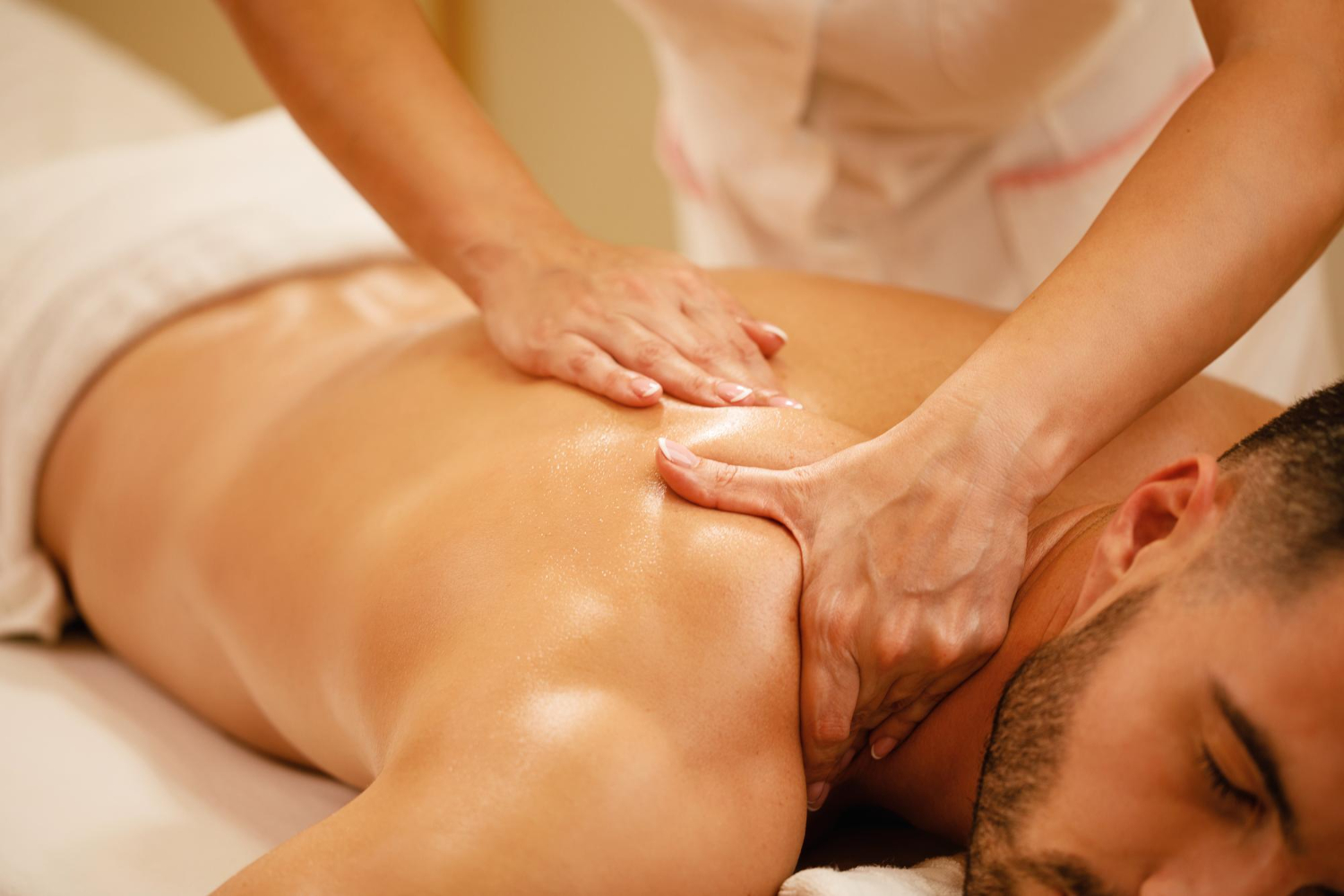
A lymphatic drainage massage is a specialized, gentle massage technique designed to stimulate the movement of lymph fluid through the lymphatic vessels. Unlike deep tissue massage that targets muscles, this therapy works just beneath the skin to encourage the body’s natural drainage system.
For people recovering from surgery, managing lymphedema, or dealing with temporary fluid retention, the difference before and after treatment can be noticeable. Swelling may decrease, discomfort may lessen, and movement often becomes easier. Others seek facial lymphatic drainage massage or lymphatic drainage massage face treatments to reduce puffiness and create a refreshed appearance.
However, results aren’t identical for everyone. The amount of improvement depends on factors such as your overall health, hydration, medical history, and the reason you’re receiving the massage.
Related Stories
 Garuda Mudra: Benefits, Side Effects, How To Do and Precautions
 Top 9 Yoga Poses Every Tweens and Early Teen Should Learn
This comprehensive guide explains exactly what happens before and after lymphatic drainage massage, who should consider it, how to perform it safely, and what realistic results you can expect over time.
What Is Lymphatic Drainage?
Your body contains two major circulation systems:
- Blood circulation
- Lymphatic circulation
Most people know about blood vessels and the heart, but fewer understand the lymphatic system.
The lymphatic system is a network of vessels, lymph nodes, and organs that helps:

- Remove waste products
- Transport immune cells
- Balance body fluids
- Filter bacteria and viruses
- Support immune function
- Reduce excess fluid buildup
Unlike blood circulation, the lymphatic system doesn’t have a pump like the heart. Instead, lymph moves through muscle contractions, breathing, body movement, and the natural contraction of lymphatic vessels.
When this drainage slows down or becomes blocked, lymph fluid can accumulate in tissues, leading to swelling known as lymphedema.

What Is a Lymphatic Drainage Massage?
A manual lymphatic drainage massage is a gentle technique that encourages lymph fluid to move toward functioning lymph nodes, where it can be filtered and eventually returned to the bloodstream.
Unlike traditional massage, it does not involve:
- Deep pressure
- Aggressive kneading
- Muscle manipulation
- Painful stretching
Instead, therapists use:
- Slow circular movements
- Gentle skin stretching
- Rhythmic pumping motions
- Light sweeping strokes
The pressure is intentionally very light because lymph vessels sit just beneath the skin.
Applying excessive force can actually reduce the effectiveness of the massage.
Before and After Lymphatic Drainage Massage: What Happens?
The changes people notice after treatment often depend on why they received the massage.
Before the Massage.
Many individuals report:
- Puffy face.
- Swollen ankles.
- Heavy legs.
- Post-surgical swelling.
- Tight skin.
- Mild discomfort.
- Feeling bloated.
- Reduced mobility.
- Tenderness around affected areas.
For individuals with lymphedema, the swelling may feel firm, heavy, and persistent.
Immediately After the Massage.
Many people notice:
- Reduced tightness.
- Less heaviness.
- Softer swollen tissue.
- Easier movement.
- Relaxation.
- Increased urination.
- Temporary fatigue.
- Feeling lighter.
Some cosmetic clients notice their jawline appears more defined after a lymphatic drainage massage face treatment because excess fluid has been reduced.
24 Hours Later.
During the first day, you may experience:
- Continued drainage of excess fluid.
- Reduced puffiness.
- Better flexibility.
- Less pressure around joints.
- Improved comfort.
Staying hydrated helps support the body’s natural elimination processes during this period.
One Week Later.
With repeated sessions, many people report:
- More consistent swelling reduction.
- Improved skin comfort.
- Better mobility.
- Less limb heaviness.
- Increased confidence.
However, people with chronic lymphedema usually require ongoing maintenance rather than expecting permanent improvement from one massage.
Why Do People Get Lymphatic Drainage Massage?
People seek treatment for several different reasons.
Medical Reasons.
Healthcare providers may recommend manual lymphatic drainage massage for:
- Lymphedema.
- Breast cancer recovery.(1)
- Swelling after lymph node removal.
- Chronic limb swelling.
- Certain orthopedic surgeries.
- Long-term fluid retention under medical supervision.
Cosmetic Reasons.
Many spas now offer:
- Facial lymphatic drainage massage.
- Brazilian lymphatic drainage massage.
- Full-body lymphatic massage.
These treatments are often promoted to temporarily reduce:
- Facial puffiness
- Mild bloating
- Water retention
- Swelling after travel
- Pregnancy-related swelling (only with medical approval)
- Post-workout fluid retention
The Brazilian lymphatic drainage massage has become particularly popular because it focuses on enhancing body contours by reducing temporary fluid retention. While many clients appreciate the immediate cosmetic effects, these changes are generally temporary and should not be confused with fat loss.
How Does the Massage Actually Work?
Think of your lymphatic system like a network of small drainage channels.
If those channels become sluggish, fluid can collect within tissues.
Gentle massage helps:
- Stimulate lymph vessels
- Redirect trapped fluid
- Improve circulation within lymphatic pathways
- Encourage natural drainage
- Reduce pressure in swollen tissues
This process supports your body’s existing drainage system—it doesn’t replace or “detox” it.
Your liver and kidneys remain the body’s primary organs for filtering waste.
Benefits of Lymphatic Drainage Massage.
When performed correctly and recommended appropriately, lymphatic drainage massage may provide several benefits.
1. Helps Reduce Swelling.
One of the primary goals is reducing excess fluid accumulation.
This is especially valuable after:
- Surgery
- Injury
- Lymph node removal
- Cancer treatment
- Certain chronic medical conditions
2. May Improve Comfort.
As swelling decreases, many people notice:
- Less pressure.
- Reduced aching.
- Improved mobility.
- Easier daily activities.
3. Supports Recovery After Surgery.
Many surgeons recommend lymphatic massage following procedures such as:
- Liposuction.
- Tummy tuck.
- Breast reconstruction.
- Cosmetic body contouring.
The goal is not to speed healing directly but to help manage postoperative swelling when appropriate.
Always follow your surgeon’s guidance regarding timing and technique.
4. Can Reduce Facial Puffiness.
A professionally performed lymphatic drainage massage face treatment may temporarily reduce:
- Morning puffiness.
- Under-eye swelling.
- Mild facial fluid retention.
Many people notice a more refreshed appearance afterward.
5. Encourages Relaxation.
Although the massage uses light pressure, many people describe it as deeply calming.
The slow rhythm often promotes:
- Stress reduction.
- Relaxation.
- Better body awareness.
- Improved sleep after treatment.
Before and After Lymphatic Drainage Massage Timeline.
| Time | What You May Notice |
|---|---|
| Before massage | Swelling, heaviness, tight skin, bloating |
| Immediately after | Softer tissues, lighter feeling, relaxation |
| 24 hours | Continued fluid movement, less puffiness |
| 3–7 days | Better comfort with repeated sessions |
| Several weeks | Maintenance of swelling when combined with medical care |
Who May Benefit From Lymphatic Drainage Massage?
Some individuals are more likely to benefit than others.
Potential candidates include:
- People recovering from surgery.
- Individuals with medically diagnosed lymphedema.
- Cancer survivors after physician approval.
- People with temporary swelling.
- Individuals experiencing facial puffiness.
- Those recovering from cosmetic procedures.
Some people also search for lymphatic drainage massage near me when looking for certified therapists who specialize in postoperative recovery or lymphedema care. If you have a medical condition, look for a certified lymphedema therapist (CLT) rather than choosing a general massage therapist.(2),(3),(4)
Before Your First Lymphatic Drainage Massage.
Preparing properly can help you get the most from your session.
Consider these simple steps:
- Drink enough water throughout the day.
- Wear loose, comfortable clothing.
- Avoid heavy meals immediately before treatment.
- Tell your therapist about surgeries or medical conditions.
- Mention all medications you’re taking.
- Ask whether compression garments are recommended afterward.
- Follow your healthcare provider’s advice if you’re receiving treatment for lymphedema.
Setting realistic expectations is equally important. While some people notice visible changes after one appointment, others require multiple sessions before experiencing meaningful improvement.
Introducing: How to Perform Lymphatic Drainage Massage.
Lymphatic drainage massage isn’t performed like a traditional massage. The technique relies on slow, precise, gentle movements that follow the direction of lymph flow rather than deep pressure on muscles.
Whether performed by a certified therapist or as part of a home self-care routine (when recommended by a healthcare professional), the process generally includes two stages:
- Clearing – Preparing healthy lymphatic pathways to receive fluid.
- Reabsorption – Encouraging excess lymph fluid to move toward functioning lymph nodes.
In the next section, we’ll provide a detailed step-by-step guide for:
- Clearing the supraclavicular, underarm, and elbow lymphatic areas
- How to perform lymphatic drainage massage on the legs
- How to perform a facial lymphatic drainage massage safely
- Pressure techniques to avoid
- Common mistakes people make during self-massage
- When to stop immediately and seek medical advice
How to Perform Lymphatic Drainage Massage: A Step-by-Step Guide?
One of the most common questions people ask after learning about the before and after lymphatic drainage massage results is whether they can safely perform the technique at home.
The answer depends on why you need lymphatic drainage.
If you’re recovering from surgery, have lymphedema, or have had lymph nodes removed due to cancer treatment, always consult your doctor or a Certified Lymphedema Therapist (CLT) before attempting self-massage.
For people with mild fluid retention or facial puffiness, a healthcare provider may recommend simple self-drainage techniques.
Unlike traditional massage, lymphatic drainage uses very light pressure. Pressing too deeply can compress lymphatic vessels and reduce their ability to transport fluid.
Understanding the Two Stages of Lymphatic Drainage Massage.
Professional therapists generally divide lymphatic drainage into two phases:
1. Clearing.
This step prepares healthy lymph nodes and lymphatic vessels to receive excess fluid.
Think of it like opening a pathway before directing water through a pipe.
2. Reabsorption.
After the pathways are open, gentle strokes encourage excess lymph fluid to travel toward healthy lymph nodes, where it can continue its normal circulation.
Skipping the clearing stage may reduce the effectiveness of the massage.
Before You Begin.
Before performing any manual lymphatic drainage massage, keep these important tips in mind:
✓ Wash your hands.
✓ Remove tight jewelry or watches.
✓ Wear loose clothing.
✓ Find a quiet place where you can relax.
✓ Stay hydrated.
✓ Sit or lie comfortably.
✓ Never massage over an open wound.
✓ Stop immediately if you feel pain.
Remember:
Lymphatic drainage should never hurt.
If it does, you’re probably pressing too hard.
How to Perform Lymphatic Drainage Massage?
Step 1: Clear the Supraclavicular Area.
The supraclavicular lymph nodes are located just above the collarbone.
These nodes receive lymph from much of the body.
How to do it.
- Sit comfortably.
- Cross your arms over your chest.
- Rest your fingertips just above your collarbones.
- Gently lift your elbows upward.
- Hold for two seconds.
- Relax.
Repeat 10 times.
The movement is subtle.
Avoid pushing directly into the neck.
Step 2: Clear the Underarm (Axillary) Nodes.
The axillary lymph nodes are located beneath the arms.
These nodes play an important role in draining the upper body.
Technique.
Raise one arm comfortably above your head.
Using your opposite hand:
- Place your fingers in the armpit.
- Gently scoop upward.
- Then glide downward.
- Repeat slowly.
Perform 10–15 repetitions.
Use only enough pressure to stretch the skin.
Step 3: Clear the Inside of the Elbow.
The elbow contains superficial lymphatic pathways.
Instructions.
Extend one arm.
Using two or three fingers from your opposite hand:
- Stretch the skin gently upward.
- Release.
- Move one inch higher.
- Repeat.
Continue for 10 repetitions.
How to Perform Lymphatic Drainage Massage on the Legs?
Leg swelling is one of the most common reasons people seek lymphatic drainage therapy.
The goal is to encourage excess fluid toward the lymph nodes located in the groin.
Step 1.
Always clear the upper body first.
This prepares the drainage pathways.
Never start directly at the swollen ankle.
Step 2.
Begin at the upper thigh.
Place:
- One hand on the inside of the thigh.
- The other behind the thigh.
Using light pressure:
Stretch the skin upward toward your hip.
Release.
Repeat 10 times.
Step 3.
Move gradually toward the knee.
Continue making slow upward strokes.
Remember:
You’re moving skin—not muscles.
Step 4.
Massage Behind the Knee
The lymph nodes behind the knee help collect fluid from the lower leg.
Place both hands behind the knee.
Using gentle pumping motions:
- Roll upward.
- Release.
- Repeat.
Complete 10–15 pumps.
Step 5.
Massage the Lower Leg
Place:
- One hand on the shin.
- One behind the calf.
Stretch the skin upward.
Release.
Continue toward the knee.
Repeat several times.
Step 6.
Massage the Ankle
Move upward from the ankle toward the calf.
Always massage toward the heart, never downward.
Step 7.
Massage the Foot
Using your thumbs:
Start at the toes.
Sweep gently toward the ankle.
Repeat across the entire foot.
How to Perform a Facial Lymphatic Drainage Massage?
One of the fastest-growing wellness trends is the facial lymphatic drainage massage.
People often choose this treatment to reduce:
- Morning puffiness
- Mild facial swelling
- Under-eye bags
- Jawline bloating
Although results are temporary, many individuals notice a fresher appearance after treatment.
Forehead.
Place your fingertips in the center of your forehead.
Slowly glide outward toward the temples.
Repeat 10 times.
Eyes.
Starting beneath the eyes:
Use your ring fingers.
Sweep outward toward your temples.
Do not press on the eyeballs.
Cheeks.
Place your fingers beside your nose.
Glide outward toward the ears.
Repeat slowly.
Jawline.
Beginning at the chin:
Sweep upward toward the ears.
Repeat several times.
Neck.
The neck acts like the main highway for lymphatic drainage.
Always finish by gently sweeping downward from beneath the ears toward the collarbones.
This encourages fluid to move toward the larger lymphatic ducts.
How Much Pressure Should You Use?
This is where many beginners make mistakes.
Imagine you’re gently moving a sheet of paper across a table.
That’s approximately how much force should be applied.
You should never:
- Dig into muscles
- Cause redness
- Leave bruises
- Feel pain
- Experience soreness afterward
The lymph vessels lie only a few millimeters beneath the skin.
Deep massage targets muscles—not lymphatic vessels.
Common Mistakes People Make.
Even well-intentioned self-massage can become ineffective if performed incorrectly.
Some of the most common mistakes include:
Using Too Much Pressure.
Harder isn’t better.
Deep pressure can actually collapse superficial lymph vessels.
Massaging Only the Swollen Area.
Many beginners massage only the affected limb.
Professional treatment always begins by clearing nearby healthy lymph nodes first.
Rushing the Massage.
Lymphatic drainage is slow.
Quick rubbing motions don’t encourage proper fluid movement.
Skipping Hydration.
Water helps maintain healthy circulation.
Being dehydrated may reduce the body’s ability to regulate fluids efficiently.
Expecting Fat Loss.
One of the biggest myths surrounding before and after lymphatic drainage massage photos is that the massage burns fat.
It doesn’t.
Instead, it temporarily reduces excess fluid.
Weight loss requires:
- Calorie balance.
- Physical activity.
- Nutrition.
- Consistency.
Lymphatic massage is not a substitute for these lifestyle factors.
What to Do After Your Massage?
The period after your session is just as important as the massage itself.
Most therapists recommend:
- Drinking plenty of water.
- Walking for 10–20 minutes.
- Wearing compression garments if prescribed.
- Avoiding excessive alcohol.
- Limiting very salty meals immediately afterward.
- Following your therapist’s home-care instructions.
Some people also notice increased urination for several hours as their body continues to regulate fluid balance.
When Will You Notice Results?
The answer depends on why you’re receiving treatment.
Cosmetic Facial Massage.
Many people notice:
- Less puffiness.
- Better facial definition.
- Reduced swelling.
within 30–60 minutes.
Post-Travel Swelling.
People with swollen feet after long flights often feel relief within the same day.
Post-Surgical Recovery.
Recovery is much slower.
Visible improvement may occur gradually over:
- Several days
- Several weeks
- Multiple treatment sessions
Always follow your surgeon’s recovery timeline.
Lymphedema.
People with chronic lymphedema usually require:
- Multiple treatments
- Compression garments
- Exercise
- Skin care
- Long-term maintenance
Massage alone cannot permanently cure lymphedema.
When Should You Avoid Lymphatic Drainage Massage?
Although generally safe when performed correctly, lymphatic drainage massage isn’t suitable for everyone.
Do not perform lymphatic drainage massage without medical approval if you have:
- Congestive heart failure
- Active infection
- Fever
- Cellulitis
- Deep vein thrombosis (DVT)
- A recent blood clot
- Severe kidney disease
- Significant liver disease
- Uncontrolled swelling of unknown cause
If you’ve recently had surgery, ask your surgeon when it’s safe to begin treatment.
Choosing the Right Therapist.
If you’re searching online for lymphatic drainage massage near me, it’s worth looking beyond convenience alone.
For medical conditions such as lymphedema, choose a therapist who has specialized training, such as a Certified Lymphedema Therapist (CLT). Ask about their experience with post-surgical recovery, oncology rehabilitation, or chronic swelling. If you’re interested in a Brazilian lymphatic drainage massage for cosmetic reasons, make sure the practitioner clearly explains that the treatment is intended to reduce temporary fluid retention—not body fat.
A qualified professional should also review your medical history, explain the technique beforehand, and encourage you to seek medical evaluation if your swelling has an unexplained cause rather than simply treating the symptom.
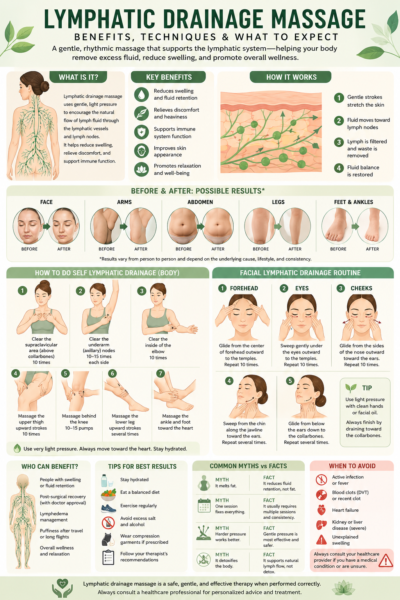
Before and After Lymphatic Drainage Massage by Body Area.
The results of before and after lymphatic drainage massage vary depending on which part of the body is treated, the underlying cause of swelling, and your overall health.
The table below outlines what many people commonly notice after treatment.
| Body Area | Before Massage | After Massage* |
|---|---|---|
| Face | Puffiness, under-eye bags, facial bloating | Reduced puffiness, more defined facial contours, refreshed appearance |
| Neck | Mild swelling, tightness | Improved comfort and reduced fluid retention |
| Arms | Heaviness, swelling, limited movement | Lighter feeling, increased mobility, less tightness |
| Hands | Puffy fingers, stiffness | Improved flexibility and reduced swelling |
| Abdomen | Temporary bloating, post-surgical swelling | Less fluid retention and greater comfort |
| Legs | Heavy legs, ankle swelling | Reduced heaviness and easier movement |
| Feet | Puffy feet after travel or standing | Less swelling and improved comfort |
*Results vary by individual and should not be interpreted as guaranteed outcomes.
Before and After Lymphatic Drainage Massage: Setting Realistic Expectations.
Social media often showcases dramatic transformation photos after a single session. While these images can be inspiring, they don’t tell the full story.
For people recovering from surgery or living with lymphedema, improvement is often gradual and depends on several factors, including:
- The cause of the swelling.
- The severity of fluid buildup.
- Overall health.
- Hydration.
- Activity level.
- Use of compression garments.
- Consistency with treatment.
- Whether the lymphatic system has permanent damage.
Rather than expecting an overnight transformation, think of lymphatic drainage massage as one component of a comprehensive recovery plan.
Case Study 1: Managing Lymphedema After Breast Cancer Surgery.
Background
Sarah, a 58-year-old retired teacher, underwent surgery for breast cancer that included the removal of several lymph nodes beneath her left arm.(5)
Several weeks after surgery, she noticed:
- Swelling in her left arm
- A feeling of heaviness
- Difficulty lifting groceries
- Tightness while getting dressed
Her physician diagnosed secondary lymphedema and referred her to a Certified Lymphedema Therapist.
Treatment Plan.
Her care included:
- Manual lymphatic drainage massage
- Compression sleeve therapy
- Gentle range-of-motion exercises
- Skin care education
- Daily home self-massage
Results.
After six weeks of consistent treatment:
- Arm swelling decreased significantly.
- Daily activities became easier.
- Pain improved.
- She regained confidence in using her arm for household tasks.
Her therapist emphasized that maintenance would continue long-term because lymphedema is a chronic condition rather than a disease that can be permanently cured.
Case Study 2: Cosmetic Recovery After Liposuction.
Background.
Daniel, age 37, underwent abdominal liposuction.
During the first week after surgery he experienced:
- Significant swelling.
- Tightness.
- Mild discomfort.
- Difficulty seeing the final contour.
His plastic surgeon recommended beginning lymphatic drainage massage once the surgical sites had healed sufficiently.
Treatment.
Over four weeks he attended:
- Eight postoperative lymphatic drainage sessions.
- Compression garment use.
- Daily walking.
- Adequate hydration.
Results.
Compared with the first postoperative week:
- Swelling gradually decreased.
- Bruising faded.
- Skin felt softer.
- Mobility improved.
- The surgical contours became more visible as fluid retention diminished.
His surgeon reminded him that the massage did not remove fat—it simply helped manage postoperative swelling during healing.
A Personal Experience: “I Didn’t Expect Such a Difference”.
I am Sara Clark, yoga therapist, after a long international flight, my ankles and feet were noticeably swollen. My shoes felt tight, and walking around the airport was uncomfortable. A friend suggested I try a gentle lymphatic drainage massage.
I wasn’t expecting much because the massage felt so light compared to a traditional massage. There wasn’t any deep pressure, just slow, sweeping movements.
Later that evening, I noticed my feet felt lighter, and by the next morning, the swelling had visibly decreased. While the change wasn’t dramatic, the discomfort was much less, and I could wear my shoes comfortably again.
The experience also taught me that staying hydrated and moving regularly during long trips can make a significant difference in preventing swelling.
This personal account represents one individual’s experience and should not be considered a guarantee of similar results.
Common Myths About Lymphatic Drainage Massage.
Myth 1: It Melts Fat.
Reality
Lymphatic drainage massage does not burn body fat.
Temporary reductions in swelling may make certain areas appear slimmer, but fat cells remain unchanged.
Myth 2: One Session Permanently Fixes Lymphedema.
Reality
Lymphedema is usually a long-term condition requiring ongoing management.
Massage is one part of treatment—not a permanent cure.
Myth 3: Harder Pressure Works Better.
Reality
The opposite is true.
The lymphatic vessels lie just beneath the skin, so excessive pressure can compress them and reduce drainage.
Myth 4: Anyone Can Perform It.
Reality
Although basic self-massage may be appropriate for some people, those with medical conditions should receive instruction from a qualified healthcare professional before attempting home treatment.
Myth 5: It Detoxifies the Body.
Reality
The term “detox” is frequently used in marketing, but the body’s primary detoxification organs are the liver and kidneys. Lymphatic drainage massage supports normal lymph movement; it does not flush toxins in the way many advertisements suggest.
Supporting Your Lymphatic System Naturally.
Massage is only one piece of maintaining a healthy lymphatic system.
Healthy habits that support normal lymph flow include:
- Staying physically active
- Walking daily
- Drinking enough water
- Eating a balanced diet rich in fruits and vegetables
- Limiting excess sodium if recommended by your healthcare provider
- Maintaining a healthy body weight
- Performing deep breathing exercises
- Avoiding prolonged sitting when possible
- Wearing prescribed compression garments if you have lymphedema
These lifestyle measures often complement professional treatment and may help reduce the risk of fluid buildup.
Frequently Asked Questions.
1. What Is a Lymphatic Drainage Massage Good For?
A lymphatic drainage massage is a gentle, specialized massage technique that helps stimulate the flow of lymph fluid throughout the body. It’s commonly used to reduce swelling (lymphedema), especially after surgery, cancer treatment, or injury. By encouraging healthy lymph circulation, the massage can help decrease fluid retention, relieve feelings of heaviness, improve comfort, and support recovery. Some people also choose lymphatic drainage massage to reduce temporary facial puffiness or post-travel swelling. However, it is not intended for weight loss or “detoxification,” and anyone with certain medical conditions should consult a healthcare provider before treatment.
2. How Do I Drain My Lymphatic Myself?
You may be able to perform gentle self-lymphatic drainage if your healthcare provider recommends it. Start by sitting or lying comfortably in a relaxed position. Use very light pressure—just enough to stretch the skin rather than press into the muscles. Begin by gently stimulating the lymph nodes near your collarbone, underarms, or groin to “clear” the pathways. Then use slow, sweeping strokes that move fluid toward those lymph nodes. Staying hydrated, walking regularly, practicing deep breathing, and performing light exercises can also support healthy lymphatic flow. If you have lymphedema, recent surgery, or another medical condition, ask a Certified Lymphedema Therapist (CLT) to teach you the correct technique before attempting self-massage.
3. How Do You Know If You Need Lymphatic Drainage?
You may benefit from lymphatic drainage if you have persistent swelling that has been diagnosed by a healthcare professional, particularly after lymph node removal, cancer treatment, surgery, or an injury. Common symptoms include heaviness in an arm or leg, tight or swollen skin, reduced range of motion, or recurring fluid buildup. Some people also seek treatment for temporary swelling after cosmetic surgery or long periods of travel. However, swelling can also be a sign of serious conditions involving the heart, kidneys, liver, or blood vessels. If your swelling is sudden, painful, affects only one limb, or is accompanied by chest pain, fever, or shortness of breath, seek immediate medical attention instead of trying lymphatic drainage massage.
4. Is Lymphatic Drainage Good for the Liver?
Lymphatic drainage massage is not a treatment for liver disease, and there is no strong evidence that it directly improves liver function. The liver already plays a vital role in filtering waste products from the blood, while the lymphatic system helps maintain fluid balance and supports immune function. Although healthy lymph circulation is an important part of overall wellness, lymphatic drainage massage should not be viewed as a way to “cleanse” or “detox” the liver. If you have liver disease or unexplained swelling, speak with your healthcare provider before considering lymphatic drainage massage, as some liver conditions may require special precautions.
5. Does lymphatic drainage massage hurt?
No. It should feel gentle and relaxing. Pain may indicate that too much pressure is being used or that another condition requires medical evaluation.
6. How long does a session last?
Most appointments last between 30 and 90 minutes, depending on the treatment area and the reason for therapy.
7. How many sessions will I need?
This depends on your goals.
Cosmetic swelling may improve after one or two sessions.
Post-surgical recovery often requires several treatments.
Lymphedema usually involves ongoing maintenance therapy.
8. Can I perform lymphatic drainage massage every day?
Some people with lymphedema perform self-massage daily as part of a healthcare provider’s treatment plan. Others may only need occasional sessions. Always follow professional guidance.
9. Is facial lymphatic drainage massage safe?
For most healthy adults, a gentle facial lymphatic drainage massage is generally considered safe. Avoid treatment if you have an active skin infection, fever, or another condition your healthcare provider advises against.
10. Is Brazilian lymphatic drainage massage different?
Yes. Brazilian lymphatic drainage massage often uses faster, more sculpting movements for cosmetic purposes. While it may temporarily reduce fluid retention and enhance body contours, it should not be confused with medical manual lymphatic drainage used to manage lymphedema.
11. Can lymphatic drainage massage help after exercise?
Some athletes use it as part of their recovery routine to manage temporary swelling and promote relaxation. However, evidence for improving athletic performance is still limited.
12. Can it help with weight loss?
No.
Lymphatic drainage massage does not directly reduce body fat or replace healthy eating and regular physical activity.
13. When should I stop the massage?
Stop immediately and contact your healthcare provider if you experience:
Sudden pain
Redness or warmth
Fever
Shortness of breath
Rapidly increasing swelling
Chest pain
New numbness or weakness
These symptoms may indicate a medical condition requiring prompt evaluation.
14. How do I find a qualified therapist?
If you’re searching for lymphatic drainage massage near me, look for a therapist who has experience with your specific needs. For medical conditions like lymphedema, seek a Certified Lymphedema Therapist (CLT). If you’re seeking treatment after cosmetic surgery, ask whether the therapist has experience with post-operative recovery and whether they communicate with your surgeon when appropriate.
Key Takeaways.
- Before and after lymphatic drainage massage results are most noticeable in reduced swelling, improved comfort, and decreased feelings of heaviness.
- Manual lymphatic drainage uses gentle, rhythmic movements, not deep pressure.
- It may benefit people recovering from surgery, managing lymphedema, or experiencing temporary fluid retention.
- Cosmetic treatments such as lymphatic drainage massage face or Brazilian lymphatic drainage massage can temporarily reduce puffiness but do not burn fat.
- Long-term improvement often requires a combination of massage, compression therapy, exercise, hydration, and ongoing medical care.
- People with certain conditions—including heart failure, active infections, or blood clots—should avoid lymphatic drainage massage unless cleared by a healthcare provider.
Bottom Line.
Understanding the before and after lymphatic drainage massage experience can help you set realistic expectations and make informed decisions about your care. Whether you’re recovering from surgery, managing lymphedema, or simply hoping to reduce temporary puffiness, this gentle therapy is designed to support your body’s natural lymphatic circulation—not replace it.
The most meaningful improvements often come from consistency rather than a single session. While some people notice immediate reductions in swelling or a lighter feeling, others require a structured treatment plan that includes manual lymphatic drainage, exercise, compression therapy, and guidance from a qualified healthcare professional.
If you’re considering treatment, discuss your goals with your healthcare provider and choose a trained therapist who understands your specific needs. With the right approach, lymphatic drainage massage can become a valuable part of a comprehensive wellness or recovery plan.
+5 Sources
FitnessQuora has strict sourcing guidelines and relies on peer-reviewed studies, educational research institutes, and medical organizations. We avoid using tertiary references. You can learn more about how we ensure our content is accurate and up-to-date by reading our editorial policy.
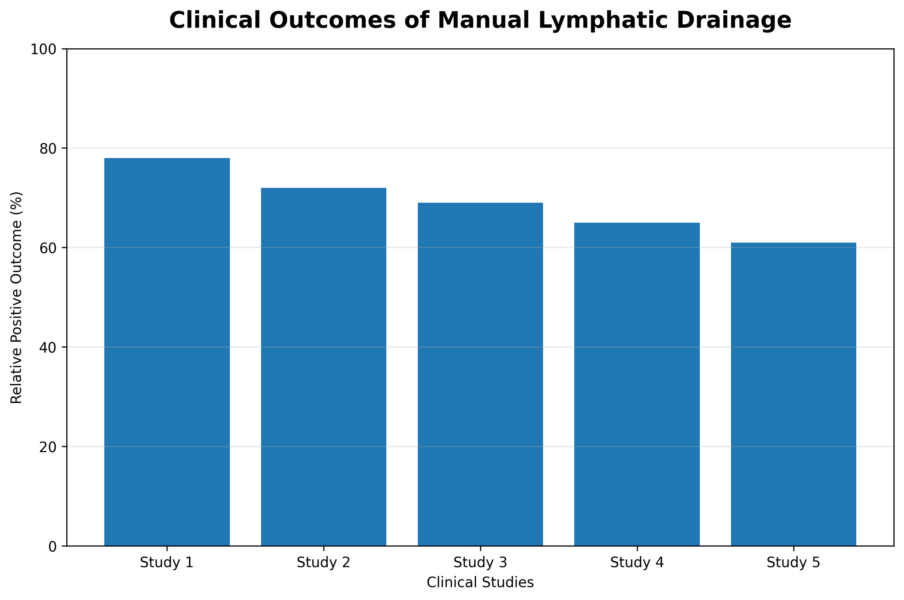
- Manual Lymphatic Drainage for Breast Cancer-related Lymphedema: A Systematic Review and Meta-analysis of Randomized Controlled Trials; https://pubmed.ncbi.nlm.nih.gov/35370085/
- Manual lymphatic drainage treatment for lymphedema: a systematic review of the literature; https://pubmed.ncbi.nlm.nih.gov/32803533/
- Manual lymphatic drainage and quality of life in patients with lymphoedema and mixed oedema: a systematic review of randomised controlled trials; https://pubmed.ncbi.nlm.nih.gov/29404923/
- Manual lymphatic drainage for lymphedema following breast cancer treatment; https://pubmed.ncbi.nlm.nih.gov/25994425/
- Effect of Manual Lymphatic Drainage on Breast Cancer-Related Postmastectomy Lymphedema: A Meta-analysis of Randomized Controlled Trials; https://pubmed.ncbi.nlm.nih.gov/35324506/