


















Although pregnancy is a wonderful experience, it can come with several physical changes that soon-to-be mothers may find worrisome. Such a change is called “coning,” which is a situation where the abdominal muscles separate due to pregnancy, forming a cone-like figure right in the middle of the belly. Eliminating coning is central to the health of the tummy, to prevent the diastasis recti (the separation of the bands of the tummy muscles), and to pave the way for an easier postnatal recovery.
In this post, we’re going to delve into the full details of what is coning during pregnancy– everything you need to know from: what it is, how to prevent it, scientific evidence behind prevention strategies, insights from experienced professionals, and answers to frequently asked questions.
What is Coning During Pregnancy?
Coning occurs when the core muscles, especially the rectus abdominis (the “six-pack” muscles), become visible and bulging, through the separation of the muscles. This condition is highly related to diastasis recti, a condition of the same kind, where the band between the abdominal muscles gets thinner and weaker due to the baby’s growth, thus resulting in rapture.
The process of coning becomes a frequent issue if the pressure put on the tummy surface is in excess, especially when your core is the most actively participated body part, like when you are getting up from the bed, exercising, or even coughing or sneezing.
Related Stories
 Looking To Make CBD Gummies At Home? Follow These 5 Steps Today
 Are Diaper Sizes Universal? How to Find the Perfect Fit Across Brands
The Importance of Preventing Coning.
One of the most crucial aspects of avoiding or lessening the severity of diastasis recti is through the prevention of coning, which can do long-term damage to the core strength, posture, and general physical health. Diastasis recti can cause the following:
- Back pain.
- Pelvic floor dysfunction.
- Weakened core strength.
- Postural imbalances.
By preventing coning, one can lower the risk of these complications and, in turn, recover from childbirth quicker. It is also helpful for women to have a deeper sense of comfort and confidence during pregnancy and after giving birth.iving birth.
Understanding the Science Behind Coning.
When you can understand what coning is and why it happens, you are better equipped to prevent its occurrence, and that’s why you need to familiarize with the scientifically proven methods of yoga to lose after pregnancy belly fat. The process of the uterus enlarging for the baby’s growth is a situation where the abdominal muscles need to stretch. This results in a thin and weakened tissue known as the linea alba, the connective tissue that connects the two portions of the rectus abdominis muscles.
According to a study in the Journal of Women’s Health Physical Therapy, about 60% of pregnant women suffer from diastasis recti, and other factors exacerbate the condition, such as poor movement patterns, high intra-abdominal pressure, and incorrect exercises. Some advise following this link to study the full text.(1)
“Coning, also known as intra-abdominal pressure, is when you’re experiencing a vertical bulge at the midline of your belly while doing exercises or everyday activities, or if someone’s hand is placed on your abdomen while standing,” defines Dr. Sarah Thompson, a certified prenatal physical therapist.
“Coning itself is not particularly dangerous, but it does indicate that the muscles of the abdomen are under intense strain. If coning persists during pregnancy, the consequences may worsen to the extent of more severe diastasis recti, which, in turn, can cause trouble postpartum.”
How to Prevent Coning During Pregnancy: Top Strategies.
Although it is unavoidable that some degree of abdominal separation will occur, there are ways to lower the extent and thus tackle the occurrence of coning during pregnancy.
1. Practice Proper Posture and Movement.
First and foremost, to avoid coning, a conscious effort to maintain the right stance and proper movements is necessary. Women tend to use their core in the wrong way even when they are moving, for example, when they sit, bend, or lift, and they are not aware of it.
Key Posture and Movement Tips:
- Avoid sit-ups or crunches: Performing these exercises directly stresses the abdominal muscles and increases the chances of coning.
- Use the “log roll” technique: To get up or stand up from a lying position, it is better to roll first on your side and then push your body up to a sitting position than to go straight ahead. In this way, the pressure on the abdominal muscles is lessened.
- Lift objects with your legs, not your back: While you pick something up, bend your knees and use your legs to reduce the pressure on your core.
- Stand tall with a neutral spine: Do not bend your back too much and do not slouch your body too much forward. Both of these actions increase the pressure on the abdomen.
2. Engage in Safe Core Strengthening Exercises.
Doing certain exercises, for example, sit-ups and crunches may be impossible in the pregnancy period but there are plenty of safe ways to make the core stable and prevent coning as well. The deep muscles of the abdomen, that is, the transverse abdominis, which in the main play a role in preventing separation through the linea alba, can be made stronger by exercising them adequately.
Recommended Core Exercises:
- Pelvic tilts: You have to be lying on your back with your knees being bent and your two feet are resting on the ground. Slightly push your pelvis towards the ceiling, tuck in your lower back to the floor, but at the same time, make your core muscles work.
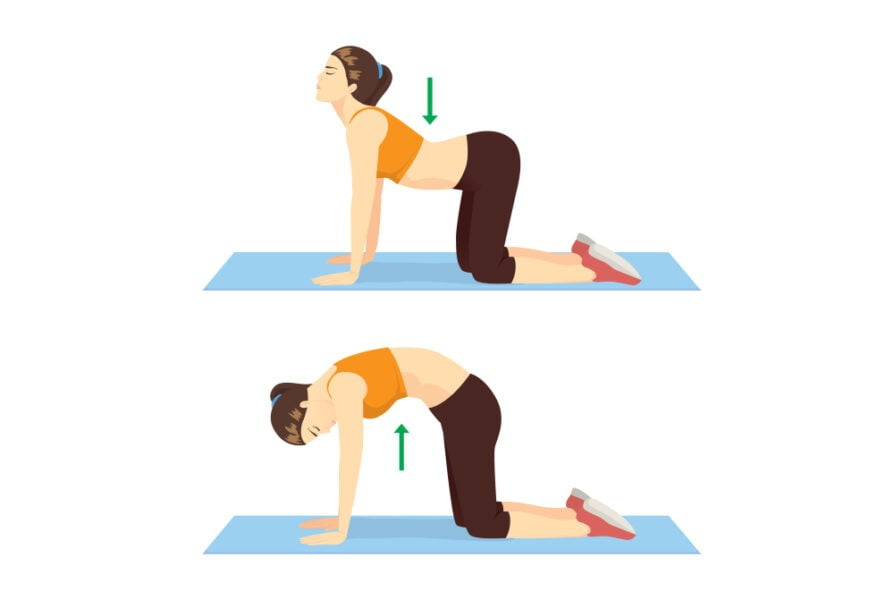
- Cat-cow stretch: The yoga pose used to tone up the abdominal muscles and at the same time, it regulates the flexible property of the spine. Act like an animal on all fours and within a short time, your back will be arching (cow) and then the spine curving (cat) and your core will be activated.
- Kegels: Kegels, as the name suggests, are for the pelvic region, but they are also excellent for your core muscles and are deemed to be the best for their strength and stability.
Dr. Emily O’Neil, a physical therapist specializing in prenatal exercise expressed her view:
“This time of pregnancy, maintaining the core is the most critical thing, but you could also go for functional movements that are natural to the body and at the same time do not harm you. Pelvic tilts and breathing exercises which specifically activate the transverse abdominis are the two most safe and reliable ways to improve your core and avoid coning.”
3. Wear a Pregnancy Support Belt.
Many women prefer using a pregnancy support belt for additional support to alleviate the discomfort that they may feel. These specially designed elastic bands can aid in taking the weight off the belly as well as in giving it the necessary support, thereby reducing pressure on the core through the linea alba. A study in the American Journal of Obstetrics and Gynecology published in 2016 confirmed that wearing maternity support garments can decrease neuromuscular dysfunction, thus alleviating backache, and indirectly reducing the coning in the final weeks of pregnancy by more evenly distributing the load (loads).(2)
4. Avoid High-Intensity Exercises.
Although physical activity is crucial during pregnancy, high-intensity exercises that require more effort and add more pressure to the core are a cause to coning. Lifting heavy objects, running, and other high-impact aerobic workouts might risk causing diastasis recti (DRA).
Rather than that, take into account moderate activities like strolling, swimming, or participating in prenatal yoga. These exercises are easy on the core muscles and thus help in staying equally fit without causing any extra burden to the abdomen.
5. Focus on Breathing Techniques.
Good breathing techniques can play a huge role in preventing coning. Many women tend to unconsciously retain the breath or use more superficial breath, which in return will lead to thicker intra-abdominal pressure.
Tips for Safe Breathing:
- Do deep breathing using your diaphragm plate: This technique is useful for inhaling deeply and strengthening your core so that your belly muscles remain untouched. Place one hand on your stomach and another on your chest, breathe slowly and in a controlled way, and feel your belly move in and out along with the rhythm of your breath.
- Avoid holding your breath during exercises or movement: Always make sure you exhale as you carry out your work, for example while lifting a load or getting up.
6. Consult a Prenatal Physical Therapist.
For women who are worried about coning, a conversation with a prenatal physical therapist can be a game-changing decision. A therapist will be able to suggest the right movements and exercises that should be done during pregnancy. They can also help you understand how to be more productive and less destructive in your household tasks.
Dr. Jenna Miller, a licensed physical therapist, shares:
“A skilled physical therapist can assess your mobility patterns and give you personal workout plans for your core that have no coning risk. Also, they can teach you the activities that can lead to unwanted abdominal strain.”
Frequently Asked Questions.
1. Is coning dangerous during pregnancy?
Coning, in itself, is not dangerous, but it is a symptom showing that the muscle/tissues of your abdomen have come under severe pressure. If it continues, it can lead to diastasis recti, a condition that may in turn cause some problems such as back pain, and the weakness of the core.
2. When does coning typically occur during pregnancy?
Coning usually happens the most during the second and third trimester as the abdomen grows more significant and with it, comes more pressure on the midsection.
3. Can I reverse coning once it starts?
Although you cannot completely reverse coning during pregnancy, you can do some things to minimize it and to avoid further separation. For example you can make sure you only move around safely, do some exercises for your core, and if you consult a therapist who is specialized in women in the prenatal stage of their pregnancy, he/she can also help you find the best way to deal with this.
4. Will coning go away after pregnancy?
In lots of cases, the cone will go away after the birth, but, if the muscles haven’t got the right treatment to heal, diastasis recti can remain. Doing postpartum physical therapy and core rehabilitation exercises can help recondition your core and close the abdominal separation.
5. Can wearing a belly band prevent coning?
While a belly band is not a complete coning preventer, it can still help you get some extra support and relieve the pressure on your abdominal muscles, especially during the advanced stages of your pregnancy.
Bottom Line.
Preventing coning during pregnancy is being attentive to your body as well as making modifications to your movements and exercise routine. By following the right posture, doing safe core exercises, and taking advice from professionals, you can keep your abdominal muscles healthy and less prone to diastasis recti. Remember, each pregnancy is unique so tune yourself into your body rhythm and give preference to your health and comfort.
+2 Sources
Freaktofit has strict sourcing guidelines and relies on peer-reviewed studies, educational research institutes, and medical organizations. We avoid using tertiary references. You can learn more about how we ensure our content is accurate and up-to-date by reading our editorial policy.
- Pelvic floor muscle training for preventing and treating urinary and faecal incontinence in antenatal and postnatal women; https://pmc.ncbi.nlm.nih.gov/articles/PMC7203602/
- Combined diet and exercise interventions for preventing gestational diabetes mellitus; https://pmc.ncbi.nlm.nih.gov/articles/PMC6485974/