









































 Workout

 Meditation


 Podcast
 E-book


The Fast Facts
- The heart has a certain electrical system, in which signals reach to the top-down chamber of the heart under the prescribed procedure.
- The additional passage can also transmit electrical impulses from ventricles to atria, disrupting the coordinated movement of electrical signals through the heart, causing changes in the rhythm of the heart.
- Then the signs reach to a group of cells called atrioventricular (AV) nodes – usually it is the only route for signals to travel from atria to the ventricle.

Wolff Parkinson White syndrome is a problem of the heart. In this case, an additional electrical pathway is formed in the electrical conduction system of the heart. This increases the heart rate of the person. So, today in this article we will tell you about Wolff Parkinson White Syndrome Treatment.
The heart has a certain electrical system, in which signals reach to the top-down chamber of the heart under the prescribed procedure. This process beats the heart.
Wolff Parkinson White Syndrome is a common cause where the heart rate of an infants and children are increased rapidly.
Related Stories
 7 Surprising Benefits of Okra Water to Ladies Sexually
 Homeopathic Remedy for Ganglion Cyst: A Natural Approach to Healing
Wolff Parkinson White Syndrome ICD 10.
The diagnosis code for Wolff Parkinson White Syndrome ICD 10 is I45.
Symptoms of Wolff Parkinson White Syndrome.
It may found in anyone, even in infants can have WPW syndrome, resulting changes in the rhythm of the heart. Common symptoms of WPW syndrome includes;
- Fast, pulsating and fast beats.
- Dizziness or lightness.
- Difficulty in breathing.
- Fatigue.
- Anxiety.
- Chest pain.
- Shortness of breath.
- Unconsciousness.
An episode of rapid heartbeat can start suddenly and last for a few seconds or several hours. Episodes can occur during exercise or at rest time. Caffeine or other stimulants and alcohol trigger symptoms in some people.
In Infants.
Symptoms in infants with WPW syndrome may includes;
- Grey or blue (ashen) skin color.
- Restlessness or irritability.
- Fast breathing.
| Footnote. Symptoms of this syndrome can be appear in any infants. The symptoms include rapid heart beat, chest pain and anxiety etc. |
| Read Now: How to Effectively Burn Fat in Summer |
When It Is Needed To Consult With The Doctor?
In many conditions there may be irregular heartbeat (arrhythmia). So, it is important to have early diagnosis. Consult with your doctor, if you or your child has symptoms of WPW syndrome. You may call local emergency number if you have the following symptoms for more than a few minutes;
- Irregular or rapid heartbeat.
- Shortness of breath.
- Chest pain.
Causes of Wolff Parkinson White Syndrome.
The extra electric pathway that causes rapid heartbeat during birth. A small percentage of people with WPW have the cause of an abnormal gene. The syndrome is also associated with certain forms of congenital heart disease, such as the Ebstein anomaly. Let’s see, why the extra route develops.
Normal Cardiovascular Electrical System.
Heart is composed with four chambers – two upper chambers (atria) and two lower chambers (ventricles). The rhythm of your heart is normally controlled by the mass of tissue in the right atrial fibrillation (sinus node). The sinus node produces electrical impulses or signals, which causes heartbeats.
These electrical signals move across the atria, leading to muscle contractions that pump the blood into the ventricle. Then the signs reach to a group of cells called atrioventricular (AV) nodes – usually it is the only route for signals to travel from atria to the ventricle.
The AV node decelerate the electrical signal before sending it to the ventricle.
This permit faintly hold up the ventricles to fill with blood. When electrical signals reach the ventricle, muscle shrinks and pump blood into the lungs and give the rest of the body.
Abnormal Electrical System in WPW.
In WPW syndrome, an additional electrical pathway connects atria and ventricles, allowing electrical impulses to bypass the AV node. It activates the vertigo ventricles very quickly.
The additional passage can also transmit electrical impulses from ventricles to atria, disrupting the coordinated movement of electrical signals through the heart, causing changes in the rhythm of the heart.
The arrhythmia that combined mostly is linked with WPW syndrome are known as paroxysmal supraventricular tachycardia. Many people with WPW syndrome have a type of irregular heartbeat also known as atrial fibrillation.
Complications of Wolff Parkinson White Syndrome.
However, WPW syndrome does not cause serious health complications. But it have some serious complications. You may face the following serious heart related events, if WPW syndrome is untreated for prolong time,
- Collapsing spells.
- Fast aching.
- Sudden cardiac arrest.
Diagnose of Wolff Parkinson White Syndrome.
Your doctor will recommend the following tests for the diagnosis of WPW syndrome, such as;
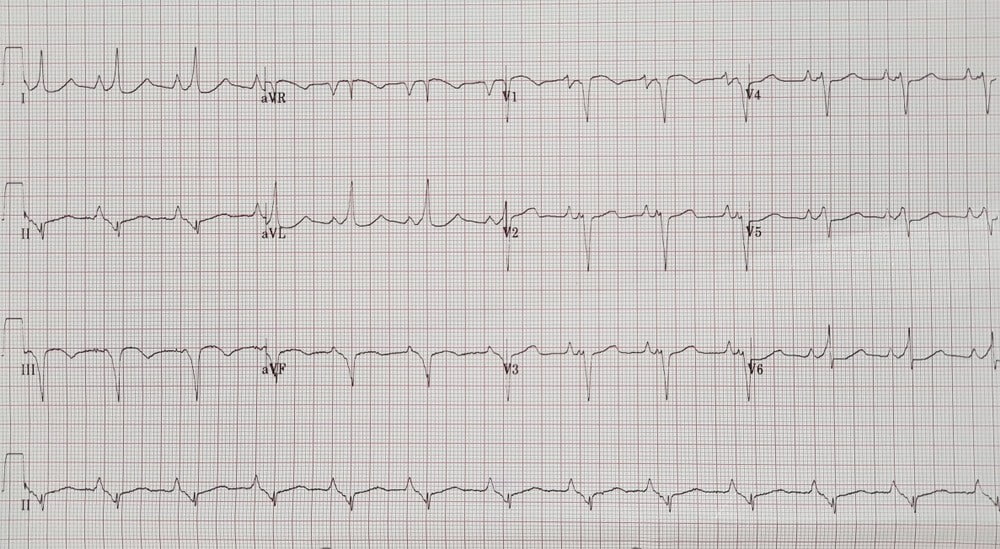
Electrocardiogram (ECG).
Small sensors committed to your arms and chest to record electrical signals as they travel through your heart. Doctor may look for arrays between these signs that indicate an extra electrical pathway in your heart.
Holter Monitor.
Holter Monitor is a convenient ECG device at home that you wear when you are away from the doctor. The device records your heart activities when perform everyday activities for a day or two. An event recorder monitor heart activities when your heart beats very fast. Some personal devices, such as smart watches provide ECG monitoring. Consult with your doctor if this is an option for you.
Electrophysiological Tests.
Thin, flexible ducts (catheters) attached to the electrode are delivered through your blood vessels to different places in your heart. Electrodes map the escalate of electrical impulses during every heartbeat and admit an additional electrical pathway.
| Footnote. WPW syndrome can be diagnosed by three ways, i.e., by ECG, holter monitor and electrophysiological tests. |
Treatment of Wolff Parkinson White Syndrome.
Following are the Wolff Parkinson White Syndrome treatment guidelines:
Cardiac Catheter Ablation.
Treatment depends upon different factors, including the severity and frequency of your symptoms and the type of arrhythmia you have.
If you have a WPW route, but do not have symptoms, you probably won’t need treatment. If you do, the goal of treatment should be slow down the rapid heart rate when it occurs and prevent future incidents.
Treatment Options Includes.
Vagal Maneuvers.
These simple physical movement includes coughing, bearing down as if you’re having a bowel movement and putting an ice pack on your face, which affect a nerve that helps to control your heartbeat (vagus nerve). Your doctor may suggest you vagal maneuvers to slow down the heartbeat when it happens.
Wolff Parkinson White Syndrome Drugs.
If vagal maneuvers can’t stop rapid heartbeat, you may need an injection of an anti-arrhythmia drug. Your doctor may also recommend a medication that can slow down the heart rate.
Heart-Augmentation.
Pedals or patches on your chest can electrically blow your heart and help to restore a normal rhythm. Cardioversion is commonly used when maneuvers and medications are not effective.
Radiofrequency Catheter Isolated.
Thin, flexible ducts (catheters) are fought through the blood vessels in your heart. The electrode on the catheter tips is destroyed (finished) due to your condition to the additional electrical pathway. Radiofrequency ablation permanently fixes heart-rhythm problems in most of the people with WPW syndrome.
| Footnote. Treatment of Wolff Parkinson White syndrome is treated through ablation procedure by destroying the extra electrical pathway which increases the heartbeats. Apart from that certain medications are also given in order to cure this syndrome. |
Wolff Parkinson White Syndrome and Exercise.
There is no as such restriction in exercise for the people who have Wolff Parkinson White Syndrome. But these people are restricted from competitive sports.
Wolff Parkinson White Syndrome Drugs to Avoid.
The drugs that should be avoid in Wolff Parkinson White Syndrome are:
- Diltiazem.
- Adenosine.
- Other calcium channel blockers.
Bottom Line.
Wolff-Parkinson-White (WPW) syndrome is an extra electrical pathway between the upper and lower chambers of your heart, which causes rapid heartbeat. This condition is quite rare at the time of birth.
Episodes of rapid heartbeat are usually not life-threatening, but can causes serious heart problems. Treatment can prevent episodes of a fast heartbeat. A catheter-based procedure (ablation) can permanently cure heart rhythm problems.
+4 Sources
Freaktofit has strict sourcing guidelines and relies on peer-reviewed studies, educational research institutes, and medical organizations. We avoid using tertiary references. You can learn more about how we ensure our content is accurate and up-to-date by reading our editorial policy.
- Arrhythmia; https://www.nhlbi.nih.gov/health-topics/arrhythmia
- Ebstein anomaly; https://medlineplus.gov/ency/article/007321.htm
- Paroxysmal supraventricular tachycardia (PSVT); https://medlineplus.gov/ency/article/000183.htm
- Vagal Maneuvers to Slow Heart Rate; https://www.webmd.com/heart-disease/atrial-fibrillation/vagal-maneuvers-and-heart-rate