













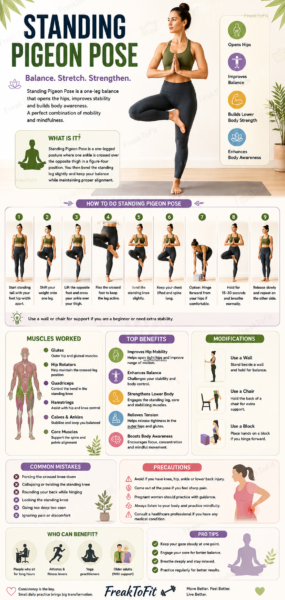
وضعية الحمام الواقفة هي توازن ذو رجل واحدة تعمل فيه إحدى الساقين كدعم بينما يتم تدوير الساق الأخرى خارجيًا وتقاطعها.
يبدو الإصدار النموذجي كما يلي:
- قف منتصبا.
- انقل وزنك إلى ساق واحدة.
- ارفع القدم المعاكسة.
- اعبر الكاحل المرفوع فوق الفخذ المعاكس.
- ثني القدم المرفوعة.
- ثني الركبة الواقفة قليلاً.
- حافظ على رفع الصدر أو المفصل للأمام ، حسب قدرتك.
- استخدم جدارًا أو أي دعم مستقر آخر إذا لزم الأمر.
يتم تدريس الموقف أحيانًا كمكانة تباين الشكل الرابع أو الوقوف الشكل الرابع. تشترك في بعض خصائص وضع الورك للحمامة الأرضية ، لكن الطلبات المتوازنة مختلفة.
تعتبر وضعية الحمام التقليدية ، أو Eka Pada Rajakapotasana ، بشكل عام وضعية وسيطة وتتضمن تنقلًا كبيرًا في الورك.
قصص ذات صلة
 أجني مودرا: الفوائد والآثار الجانبية وكيفية القيام به والاحتياطات
 مثلث مودرا: اكتشف الفوائد وتعلم كيفية أدائها
وضعية الحمام الواقفة مقابل وضعية الحمام.
على الرغم من أن الأسماء متشابهة ، إلا أن هذه الأوضاع ليست متطابقة.
حمامة واقفة.
- أداؤها واقفًا
- يتطلب توازن ساق واحدة
- يستخدم الساق المتقاطعة كأربعة موضع
- يمكن تعديلها بسهولة مع الجدار
- تحديات التوازن وحركة الورك والتحكم في الجزء السفلي من الجسم في المقام الأول
حمامة الأرضية.
- أداؤها على الأرض
- يضع ساق واحدة للأمام والآخر خلف
- يتطلب دوران خارجي كبير للورك
- يمكن أن تضع مطالب كبيرة على الركبة الأمامية
- غالبًا ما تستخدم كوضعية فتح الورك بشكل أعمق
لذلك يمكن أن يكون الوقوف الحمام بديلاً مفيدًا للأشخاص الذين لا يرغبون في وضع الركبة الأمامية في الموضع الذي تتطلبه الحمامة الأرضية.
ومع ذلك ، فإن الوقوف لا يجعل الوضع آمنًا للجميع تلقائيًا.
كيف تفعل وضعية الحمام الواقفة؟
أداء تقف ببطء بدلاً من المحاولة لتحقيق امتداد عميق على الفور.

الخطوة 1: ابدأ بالوقوف.
قف مع قدميك تقريبًا بعرض الورك.
وزع وزنك بالتساوي بين القدمين.

حافظ على عمودك الفقري طويلًا وكتفيك مسترخيتين.
الخطوة 2: حرك وزنك.
انقل وزنك تدريجيًا إلى قدمك اليسرى.
حافظ على يسارك ركبة ناعمة قليلاً بدلاً من قفلها بقوة ذلك.
الخطوة 3: ارفع ساقك اليمنى.
ارفع القدم اليمنى من الأرض.
اجلب كاحلك الأيمن عبر فخذك الأيسر ، فوق الركبة مباشرة.
يجب أن تتحرك ركبتك اليمنى للخارج بشكل طبيعي.
الخطوة 4: ثني القدم المتقاطعة.
ثني قدمك اليمنى.
يساعدك هذا في الحفاظ على التحكم النشط في الساق المتقاطعة بدلاً من السماح لها بأن تصبح سلبية تمامًا.
الخطوة 5: ثني الساق الواقفة.
ثني ركبتك اليسرى ببطء.
اذهب فقط إلى أبعد ما يمكنك الحفاظ على سيطرة جيدة.
يجب ألا تشعر بالحدة ألم في ركبتك أو الورك.
الخطوة 6: حافظ على الصدر في وضع مستقيم.
يمكن للمبتدئين البقاء في وضع مستقيم.
غالبًا ما يكون هذا هو الإصدار الأسهل لأنه يضع طلبًا أقل على التوازن.
الخطوة 7: أضف مفصلة أمامية.
إذا كان توازنك جيدًا ، فقم بتثبيت جذعك للأمام برفق من الوركين.
حافظ على عمودك الفقري طويلًا.
يمكنك وضع يديك على فخذيك أو كتلة أو الأرض حسب مرونتك.
الخطوة 8: امسك وتنفس.
خذ عدة أنفاس بطيئة.
تجنب حبس أنفاسك.
الخطوة 9: العودة ببطء.
تقويم الساق الواقفة تدريجيًا.
قم بفك الساق المرفوعة وأعد كلا القدمين إلى الأرض.
كرر على الجانب الآخر.
كم من الوقت يجب أن تمسك بوضعية حمامة واقفة؟
لا توجد مدة مثالية ثابتة علميًا لهذا الوضع المحدد.
للمبتدئين،, 15-30 ثانية لكل الجانب معقول نقطة البداية.
مع تحسن التوازن ، يمكنك زيادة المدة تدريجيًا.
الجودة أهم من عقد الوضع لفترة طويلة.
إذا بدأت ركبتك الواقفة في الاهتزاز بشكل مفرط أو تدهورت محاذاة ، اخرج من الوضع.
ما هي العضلات التي تعمل بها الحمامة الواقفة؟
الحمامة الواقفة تشمل عدة مجموعات عضلية.
عضلات الألوية.
المتقاطع الساق تضع الورك في الانثناء والدوران الخارجي ، مما يخلق إحساسًا بالتمدد والتحميل حول منطقة الألوية.
دوارات الورك.
تشارك الدوارات الخارجية للورك المتقاطع في الحفاظ على الموضع.
عضلات الورك.
يتطلب وضع الوقوف عضلات الورك والعضلات المحيطة للمساعدة في استقرار الحوض.
عضلات الفخذ.
تساعد عضلات الفخذ في الساق الواقفة على التحكم في ثني الركبة والحفاظ على الثبات.
أوتار الركبة.
تساهم أوتار الركبة في التحكم في الورك والركبة ، خاصةً عندما تفصل للأمام.
العجول والكاحلين.
نظرًا لأنك تقف على ساق واحدة ، فإن عضلات الكاحل والساق تقوم باستمرار بإجراء تعديلات صغيرة للحفاظ على توازنك.
العضلات الأساسية.
تساعد عضلات البطن والجذع على استقرار الجذع والحوض.
هذا هو أحد الأسباب التي تجعل الحمام الواقف يشعر بصعوبة أكبر من الامتداد المماثل للجلوس.
فوائد وضعية الحمام الوقوف.
1. قد يحسن حركة الورك.
الحمامة الواقفة تأخذ الورك المرفوع إلى وضع يتضمن الانثناء والدوران الخارجي.
لذلك يمكن أن توفر الموقف تحديًا مفيدًا للتنقل للورك.
تصف المصادر التقليدية والتعليمية الحمام بأنه وضع يفتح الورك يمتد الهياكل حول عضلات الورك والورك الخارجي.
ومع ذلك ، فإن النطاق الفعلي المتاح سيختلف بشكل كبير بين الأفراد.
2. تحديات التوازن.
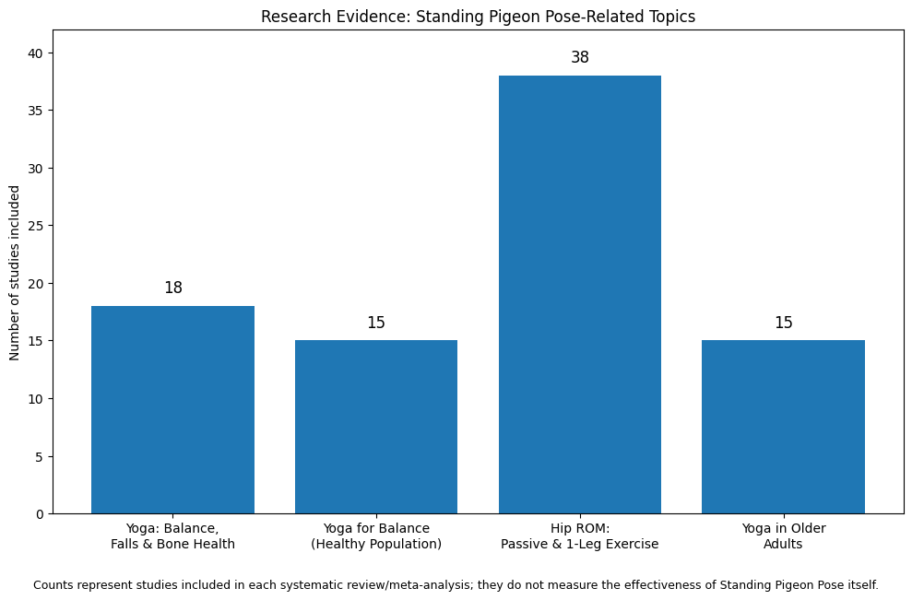
على عكس الحمام الأرضي،, الحمامة الدائمة تتطلب منك الاستقرار جسدك على ساق واحدة.(1),(2)
هذا يجعل التوازن مكونًا رئيسيًا في التمرين.
الخاص بك:
- سفح
- رسا القدم
- فتى غر
- ركبة
- وثب م
- قلب
كلها تساهم في الحفاظ على الاستقرار.
3. يشجع على التحكم في الجزء السفلي من الجسم.
الوقوف على ساق واحدة بينما يتم وضع الورك المعاكس بشكل غير متماثل يتطلب التنسيق.
يمكن أن يساعدك ذلك في جعلك أكثر وعيًا بكيفية وضع حوضك وركبتك وقدمك.
4. يمتد الورك الخارجي.
يمكن أن يخلق وضع الساق المتقاطعة امتدادًا ملحوظًا حول الورك الخارجي ومنطقة الألوية.
هذا هو أحد الأسباب التي تجعل الاختلافات في الشكل الرابع والحمامة مدرجة بشكل شائع في إجراءات التنقل.
5. يعمل على الساق الداعمة.
الساق الواقفة لا تمسكك في وضع مستقيم.
يعمل بنشاط على التحكم في الركبة والورك بينما يستجيب الكاحل للتغيرات الطفيفة في التوازن.
6. يمكن أن يكون مفيدًا بعد فترات طويلة من الجلوس.
قد يستمتع الأشخاص الذين يقضون أجزاء كبيرة من اليوم بالجلوس بتمارين التنقل التي تركز على الورك.
يمكن دمج الحمام الواقف في استراحة الحركة ، بشرط أن يكون الوضع مريحًا ومناسبًا للفرد.
لا ينبغي وصفه بأنه “تراجع” عن تأثيرات الجلوس ، ولكنه يمكن أن يوفر تغييرًا من وضع الجلوس لفترات طويلة.
7 يطور الوعي بالجسم.
لأن العديد من المفاصل يجب أن تنسق في وقت واحد، فإن الوضع يمكن أن يشجع على الوعي بما يلي:
- ضغط القدم
- وضع الركبة
- دوران الورك
- محاذاة الحوض
- تنفس
- وضعية الجذع
8. يمكن أن تكون جزءًا من تسلسل توازن اليوجا.
يمكن وضع الحمام الواقف بعد موازين ثابتة أبسط مثل:
- وضع الشجرة
- المحارب الثالث
- الوقوف من الركبة إلى الصدر
- وضع النسر
يمكن أن يتبعه أيضًا بلطف واقفًا أو جالسًا يمتد.
هل تحسن الحمامة الدائمة المرونة؟
قد يساهم في المرونة عند ممارسته باستمرار كجزء من روتين تنقل أوسع ، ولكن لا ينبغي توقع أن تؤدي وضعية واحدة إلى تغيير المرونة بشكل كبير من تلقاء نفسها.
نطاق حركة الورك يختلف اختلافًا كبيرًا بين الناس.
وجدت المراجعة المنهجية والتحليل التلوي لنطاق حركة الورك اختلافات ذات مغزى بين الأفراد وعبر ظروف الحركة المختلفة ، مما يعزز أن حركة الورك تتأثر بعوامل متعددة.(3)
قد تعتمد مرونتك على:
- تشريح المفصل
- خصائص العضلات والأوتار
- إصابات سابقة
- تاريخ التدريب
- هرم
- مستوى النشاط
- السيطرة العصبية
لذلك ، لا تقارن حمامتك الدائمة بنسخة شخص آخر.
حمامة واقفة للمبتدئين.
يمكن أن يكون الوقوف على الحمام أمرًا صعبًا إذا كنت جديدًا في تحقيق التوازن بين العمل.
لا تحتاج إلى إجراء أعمق إصدار.
تنوع المبتدئين.
قف بجانب الحائط.
ضع يد واحدة على الحائط.
انقل وزنك إلى الساق الأخرى.
اعبر الكاحل الآخر فوق فخذك.
ابق منتصبا.
امسك لعدة أنفاس.
هذا يزيل بعض تحدي التوازن ويتيح لك التركيز على وضع الورك.
حمامة مع كرسي.
يمكن أن يوفر الكرسي القوي تعديلًا مفيدًا آخر.
قف خلف الكرسي أو بجانبه.
استخدم مسند الظهر للدعم.
قم بوضع وضعية الساق المتقاطعة مع الحفاظ على جذعك في وضع مستقيم.
يمكن أن يكون هذا مفيدًا بشكل خاص إذا لم تكن متأكدًا من رصيدك.
تأكد من أن الكرسي مستقر ولا ينزلق.
حمامة واقفة مع كتلة اليوجا.
إذا كنت ترغب في المفصل للأمام ولكن لا يمكنك الوصول إلى الأرض بشكل مريح ، ضع كتلة يوجا تحت يديك.
هذا يمكن أن يساعدك في الحفاظ على فترة أطول ظهر الكتاب بدلا من تقريب ظهرك للوصول إلى الأرض.
الهدف ليس وضع يديك على الأرض.
الهدف هو الحفاظ على السيطرة أثناء العمل ضمن نطاق مريح.
حمامة واقفة دون ثني الركبة الواقفة.
النسخة التي يمكن الوصول إليها للغاية هي الحفاظ على الساق الواقفة مستقيمة نسبيًا.
اعبر الكاحل على الفخذ المعاكس وابق مستقيماً.
هذا يقلل من عمق الموقف.
إنه خيار جيد عندما تريد ممارسة وضع الورك دون إضافة قرفصاء عميق.
الأخطاء الشائعة في الوقوف.
الخطأ 1: إجبار الركبة المتقاطعة على النزول.
لا تحتاج ركبتك المتقاطعة إلى الوصول إلى ارتفاع معين.
دعها تتحرك بشكل طبيعي.
يمكن أن يؤدي إجباره إلى الأسفل إلى زيادة التوتر حول الورك أو الركبة.
الخطأ الثاني: انهيار الركبة الواقفة.
تجنب السماح للركبة الواقفة بالسقوط إلى الداخل.
حاول إبقائها متوافقة بشكل مريح مع اتجاه قدمك.
الخطأ 3: تقريب الظهر.
إذا كنت تتوقف للأمام ، ابدأ الحركة من الوركين.
لا تسقط صدرك ببساطة نحو الأرض.
الخطأ 4: قفل الركبة الواقفة.
يمكن أن تجعل الركبة المقفلة بالقوة التوازن أكثر صعوبة.
حافظ على الركبة متحكمًا ومتجاوبًا.
الخطأ الخامس: لف الحوض.
حاول الحفاظ على حوض مستقر نسبيًا بدلاً من تدوير كامل الجسم لتعويض محدودية حركة الورك.
الخطأ 6: التعمق أكثر من اللازم.
العمق ليس الهدف.
عادة ما يكون النطاق الأصغر الذي يتم إجراؤه باستخدام التحكم أكثر فائدة من وضع عميق ضعيف.
الخطأ السابع: تجاهل الألم.
يمكن أن يكون الإحساس بالتمدد حول الورك أمرًا طبيعيًا.
آلام حادة أو قرصية أو المفاصل هي سبب لإيقاف وإعادة تقييم الوضع.
هل الوقوف على الحمام آمن للركبتين؟
يمكن أن يكون مناسبًا لبعض الأشخاص الأصحاء ، لكن الوضع يضع الساق المتقاطعة في ثني الورك والركبة.
يجب أن يكون الأشخاص الذين يعانون من مشاكل الركبة الحالية حذرين بشكل خاص.
توصي إرشادات وضع الحمام العام بتجنب الموقف أو تعديله عند وجود مشاكل في الركبة أو الورك.
إذا كان لديك تاريخ من:
- إصابة الغضروف المفصلي
- إصابة في رباط الركبة
- التهاب المفاصل
- جراحة الركبة الحديثة
- إصابة في الورك
- إصابة كبيرة في الكاحل
استشر أخصائي رعاية صحية مناسبًا قبل إضافة هذا الموقف إلى روتينك.
آلام الحمام والركبة.
يجب ألا تفسر آلام الركبة أثناء الوقوف على أنها دليل على أن الوضع “يعمل”.”
إذا كانت ركبتك المتقاطعة تؤلمك ، فحاول:
- تحريك الكاحل بالقرب من الورك الواقف
- تخفيض العمق
- البقاء في وضع مستقيم
- باستخدام الحائط
- التحول إلى تمرين حركية ألطف على الورك
إذا استمر الألم، توقف عن التمرين.
آلام الحمام والورك.
قد يحدث امتداد خفيف حول الورك الخارجي.
ومع ذلك ، فإن الإحساس الحاد أو العميق في مقدمة الورك ليس شيئًا يجب دفعه.
قلل النطاق أو اختر تمرينًا بديلًا.
يجب تقييم ألم الورك المستمر بدلاً من التمدد بشكل متكرر.
هل يمكن للحمامة الواقفة أن تساعد عرق النسا؟
قد ترى الحمام يتم تسويقها كتمرين لعرق النسا.
ومع ذلك، يمكن أن يكون لعرق النسا أسباب مختلفة، ولا ينبغي أن تُعزى الأعراض التي تنتقل من أسفل الظهر إلى الأرداف والساق تلقائيًا إلى “الوركين الضيقين”.”
تصف مصادر اليوجا التقليدية أحيانًا الحمام بأنه مفيد لعرق النسا ، لكن هذا لا يثبت أن الوضع يعالج الأساسيات أسباب آلام العصب الوركي.
إذا كنت قد تشخيصت أو اشتبهت في عرق النسا ، خاصة إذا كنت تعاني من ضعف أو خدر أو تفاقم الأعراض ، احصل على إرشادات طبية أو علاج طبيعي مناسبة قبل استخدام تمددات الورك العميقة.
حمامة تقف لشد الظهر.
الحمامة الدائمة تستهدف في المقام الأول وضع الورك بدلاً من أسفل الظهر.
قد يشعر بعض الناس أن تحسين حركة الورك يغير من تحرك الجزء السفلي من الجسم والحوض ، لكن هذا لا يعني أن يعالج آلام أسفل الظهر مباشرة.
إذا كنت تعاني من آلام الظهر المستمرة، فلا تفترض ذلك الوركين الضيقة هي السبب بالضرورة.
حمامة وتوازن.
التوازن هو أحد أكثر السمات المميزة لهذا الموقف.
يقوم جسمك باستمرار بإجراء تعديلات صغيرة.
على سبيل المثال ، قد يقوم الكاحل بحركات خفية بينما يعوض الورك والجذع عن التغييرات في مركز كتلتك.
هذا يجعل الحمام الواقف أكثر من مجرد تمرين مرونة.
وهو أيضًا تمرين توازن ساق واحدة وتمرين للتحكم في المحرك.
حمامة واقفة للرياضيين.
يمكن للرياضيين استخدام الوضعية كجزء من روتين أوسع للتنقل أو اليوجا.
يمكن أن يكون مناسبًا بشكل خاص للأنشطة التي تتطلب:
- حركة الورك
- ثبات ساق واحدة
- الوعي بالجسم
- حركة مسيطر عليها
ومع ذلك ، يجب على الرياضيين عدم استخدام تمدد ثابت كبديل للقوة والتكييف الخاصة بالرياضة.
قد يكون لدى لاعب كرة القدم أو العداء أو الراقص أو فنان الدفاع عن النفس متطلبات مختلفة تمامًا للتنقل والاستقرار.
حمامة تقف قبل أو بعد التمرين؟
يعتمد ذلك على كيفية أدائك.
يكون التحضير اللطيف والديناميكي أكثر ملاءمة بشكل عام قبل المطالبة بالنشاط من الثبات الطويل والمكثف.
يمكن أن تكون الحمامة الدائمة أكثر ملاءمة كجزء من جلسة التهدئة أو المرونة ، خاصة عند حملها بشكل مريح دون إجبار النطاق.
قبل الرياضة، ضع في اعتبارك الحركات الديناميكية مثل:
- تقلبات الساق
- طعنات المشي
- دوائر الورك
- القرفصاء المسيطرة
- حركات الشكل الديناميكي
اختر الإحماء بناءً على النشاط التالي.
حمامة تقف كجزء من روتين اليوجا.
يمكن أن يبدو التسلسل البسيط مثل:
- بقرة القط
- كلب متجه للأسفل
- اندفاع منخفض
- الوقوف من الركبة إلى الصدر
- وضع الشجرة
- حمامة
- المحارب الثالث
- طية للأمام لطيف
- سافاسانا
يقدم هذا التسلسل تدريجيًا التنقل والتوازن قبل وضع ساق واحدة الأكثر تطلبًا.
تمارين تحضيرية للحمامة الوقوف.
إذا كان الوضع صعباً، جرب هذه أولاً.
الشكل الرابع على ظهرك.
استلق واعبر كاحلًا على الفخذ المقابل.
هذا يسمح لك باستكشاف وضع الورك دون موازنة.
الوقوف من الركبة إلى الصدر.
قف بالقرب من الحائط.
ارفع ركبة واحدة نحو الصدر مع الحفاظ على التوازن.
وضع الشجرة.
تدرب على الوقوف على إحدى ساقيك مع إبقاء القدم الأخرى على الكاحل أو أسفل الساق.
اندفاع منخفض.
يمكن أن يؤدي ذلك إلى مطالب تمديد الورك للساق الخلفية.
دوائر الورك.
أداء بطيء ، متحكم فيه دوائر لاستكشاف الورك المريح الحركة.
حمامة واقفة مقابل الشكل الرابع تمتد.
هذه مرتبطة ارتباطًا وثيقًا.
الشكل الواقف الرابع هو في الأساس نفس الترتيب الأساسي للساق المتقاطعة الشائع الاستخدام في الحمام الواقف.
غالبًا ما يرجع الاختلاف إلى أسلوب التدريس والتركيز.
يستخدم بعض المدربين “الوقوف على الشكل الرابع” للنسخة المستقيمة و “الحمامة الدائمة” للإصدار الذي يتضمن قرفصاء أعمق أو طية للأمام.
ليست هناك حاجة للقلق المفرط بشأن المصطلحات.
ركز على الحركة والمحاذاة.
حمامة واقفة مقابل نصف حمامة.
نصف حمامة على الأرض.
الساق الأمامية مثنية بينما تمتد الساق الأخرى إلى الخلف.
الحمامة الواقفة تبقيك منتصبة وتستخدم ساق واحدة كطرف داعم.
إذا كان هدفك هو العمل بشكل متوازن ، فإن Standing Pigeon لديها ميزة واضحة.
إذا كان هدفك هو امتداد الورك المدعوم بشكل أكبر ، فقد يكون الاختلاف القائم على الأرضية أسهل لبعض الأشخاص.
ولا “أفضل” عالميًا.”
هل يمكنك القيام بحمامة واقفة كل يوم؟
إذا كنت بصحة جيدة وكانت الحركة مريحة ، فيمكن دمج نسخة لطيفة بانتظام.
لكن الممارسة اليومية ليست إلزامية.
يجب أن تشمل برامج المرونة والتنقل التنوع.
قد تتناوب:
- حركة الورك
- تمارين القوة
- تمارين التوازن
- يوجا
- المشي
- عمل الانتعاش
إذا كان معين الوضعية تخلق الألم باستمرار أو التهيج ، من غير المرجح أن تحل ممارسته كل يوم المشكلة.
كيف تتنفس في الحمام الواقف؟
يجب أن يظل التنفس طبيعيًا.
جرب هذا النمط البسيط:
استنشاق: تطول من خلال العمود الفقري.
زفير: تنعيم في النطاق المريح.
تجنب استخدام التنفس لإجبار الجسم على عمق أكبر.
إذا كنت لا تستطيع التنفس بشكل مريح ، قلل من شدة.
حمامة وذهنية.
ميزان يمكن أن تشجع الوضعيات بشكل طبيعي التركيز.
عند الوقوف على ساق واحدة ، يصبح من الصعب التركيز على العديد من الأفكار غير ذات الصلة في وقت واحد.(4)
يمكنك استخدام الوضعية كفرصة لملاحظة:
- تنفس
- ضغط القدم
- توتر العضلات
- وضع الحوض
- شىء م
هذا يجعل الحمام الواقف مفيدًا ليس فقط كجسمي ممارسة ولكن أيضا كعقل بسيط تمرين.
كيف تتقدم حمامة واقفة؟
تقدم تدريجيا.
المستوى 1.
الوقوف الشكل الرابع مع دعم الجدار.
المستوى 2.
الوقوف الشكل الرابع بدون دعم.
المستوى 3.
ثني الركبة الواقفة قليلاً.
المستوى 4.
علق للأمام مع اليدين على الكتل.
المستوى 5.
تعميق المفصلة الأمامية مع الحفاظ على التوازن.
المستوى 6.
اكتشف الاختلافات الأكثر تقدمًا فقط عندما يكون الموضع الأساسي مستقرًا.
لا يوجد سبب للاندفاع نحو أعمق نسخة.
متى تتجنب الوقوف؟
تجنب أو تعديل الوضع إذا كان لديك:
- ألم حاد في الركبة
- إصابة حديثة في الركبة
- ألم كبير في الورك
- جراحة الورك الأخيرة
- إصابة كبيرة في الكاحل
- مشاكل التوازن الحاد
- إصابة حادة في أسفل الظهر
تحدد إرشادات وضع الحمام التقليدي أيضًا مشاكل الركبة والورك كأسباب للحذر.
قد يتطلب الحمل أيضًا تعديلات حسب المرحلة والظروف الفردية.
إذا كنت حاملاً أو تتعافى من الجراحة أو الإصابة ، احصل على إرشادات فردية.
هل الحمام الدائم مناسب لكبار السن؟
يمكن تعديله ، لكن التوازن يصبح مهمًا بشكل خاص.
يجب ألا يحاول الشخص الأكبر سنًا غير المستقر محاولة توازن غير مدعوم في ساق واحدة لمجرد أنه يتم تقديمه على أنه وضعية اليوغا للمبتدئين.
استخدام:
- جدار
- كونترتوب قوي
- كرسي مستقر
- مدرس مؤهل
يجب أن تأخذ السلامة الأولوية على الوضع العمق.
كيف تجعل الحمام الدائم أكثر سهولة؟
يمكنك جعل الوضع أسهل بكثير عن طريق:
- الحفاظ على الجذع مستقيما
- باستخدام الحائط
- باستخدام كرسي
- الحفاظ على ثني الركبة الواقفة
- تقريب الكاحل المتقاطع نحو الورك الواقف
- تقليل وقت الحجز
- ممارسة الشكل المتكئ أربعة أولاً
هذه التعديلات لا تجعل تشكل “أقل فعالية”.”
أنها تسمح لك بممارسة الحركة على مستوى مناسب.
كيف تجعل الحمامة الدائمة أكثر صعوبة؟
بالنسبة للممارسين ذوي الخبرة ، يمكن زيادة الصعوبة عن طريق:
- زيادة ثني الركبة الواقفة
- يعلق الجذع إلى الأمام
- تقليل دعم اليد
- عقد لفترة أطول
- التدرب على كلا الجانبين دون راحة
ومع ذلك ، لا تضيف أدوات عدم الاستقرار مثل الأسطح غير المستقرة لمجرد جعل الوضع أكثر صعوبة ما لم يكن لديك سبب تدريب واضح وإشراف مناسب.
الأسئلة المتداولة.
1. ما هو وضع الحمام الواقف؟
وضعية الحمام الواقفة هي توازن ساق واحدة يتقاطع فيه كاحل واحد فوق الفخذ المعاكس ، مما يخلق وضعية الشكل أربعة بينما تحافظ الساق الداعمة على التوازن.
2. ماذا تمتد الحمامة الواقفة؟
إنه يخلق في المقام الأول امتدادًا حول الورك الخارجي ومنطقة الألوية للساق المتقاطعة بينما يتحدى عضلات الورك والجسم السفلي للساق الواقفة.
3. هل الوقوف الحمام جيد للوركين الضيقين؟
يمكن تضمينه في روتين تنقل الورك ، خاصة لأن وضع الساق المتقاطعة يتضمن دورانًا خارجيًا للورك. ومع ذلك ، تختلف المرونة بين الأفراد ، ولا ينبغي إجبار الوضع.
4. هل الوقوف الحمام جيد للتوازن؟
نعم. لأنك تدعم جسمك على ساق واحدة ، فإن التوازن والتحكم في الجزء السفلي من الجسم هي مكونات مهمة في الموقف.
5. هل يستطيع المبتدئون القيام بحمامة واقفة؟
نعم ، ولكن يجب أن يبدأ المبتدئين بنسخة منتصبة واستخدام جدار أو كرسي للدعم إذا لزم الأمر.
6. هل الوقوف الحمام أفضل من الحمام الأرضي؟
لا شيء أفضل عالميًا. تؤكد الحمامة الدائمة على التوازن والتحكم في الساق الواحدة ، بينما توفر الحمامة الأرضية وضعًا أكثر دعمًا للورك.
7 هل يمكن للحمامة الوقوف أن تساعد عرق النسا؟
قد تشعر بالراحة لبعض الناس ، لكن لا توجد أدلة كافية للقول إنه يعالج عرق النسا. يجب على الأشخاص الذين يعانون من أعراض مرتبطة بالأعصاب الحصول على تقييم مناسب.
8. لماذا تؤلم ركبتي في حمامة؟
قد تكون أوضاع الورك والركبة غير مريحة إذا كانت حركتك محدودة أو إذا كنت تعاني من مشكلة أساسية في الركبة. قلل النطاق أو قم بتعديل الوضع أو توقف إذا استمر الألم.
9. هل يجب ثني قدمي المتقاطعة؟
عادة ما يتم تدريس الحفاظ على القدم المتقاطعة نشطة ومثنية كجزء من الوضع. يمكن أن يساعدك على الحفاظ على السيطرة على الكاحل والساق.
10. كم من الوقت يجب أن أحمل حمامة واقفة؟
ابدأ بحوالي 15-30 ثانية لكل جانب وزاد تدريجياً إذا كانت مريحة. لا يوجد وقت حجز ضروري طبيًا.
11. هل يمكنني القيام بحمامة كل يوم؟
إذا كان الوضع مريحًا ولم يكن لديك أي إصابة ذات صلة ، فيمكنك تضمين نسخة لطيفة بانتظام. ومع ذلك ، فإن الممارسة اليومية ليست مطلوبة.
12. هل يمكن للحمامة الدائمة تحسين مرونة الورك؟
قد يساهم في تنقل الورك عند دمجه مع تدريب ثابت ومتسق بجرعات مناسبة ، لكن وضعية اليوجا واحدة لا يمكن أن تضمن زيادة معينة في المرونة.
13. هل يمكنني استخدام الحائط أثناء الحمام الواقف؟
بالتأكيد. يعد الجدار أحد أبسط الطرق لتقليل التوازن عند الطلب أثناء تعلم الموقف.
14. من الذي يجب أن يتجنب الوقوف؟
يجب على الأشخاص الذين يعانون من مشاكل كبيرة في الركبة أو الورك أو الكاحل أو التوازن تجنب الإصدارات غير المدعومة حتى يتلقوا التوجيه المهني المناسب.
الخلاصة.
وضعية الحمام الواقفة هي وضعية يوجا مفيد للتوازن تجمع بين حركة الورك وتمدد الورك الخارجي واستقرار الساق الواحدة والوعي بالجسم. يمكن لوضعه-4 تحدي الورك المتقاطع بينما الساق الداعمة و العمل الأساسي للحفاظ على التوازن.
بالنسبة للمبتدئين ، فإن النهج الأكثر أمانًا هو البدء في وضع مستقيم ، واستخدام الحائط أو الكرسي عند الضرورة ، والحفاظ على الحركة متحكمًا ، وتجنب إجبار الركبة أو الورك في وضع أعمق. يمكن أن تجعل التعديلات مثل تقليل ثني الركبة أو وضع اليدين على دعامة أكثر سهولة في الموقف.
على الرغم من أن الحمام يتم الترويج لـ Pose تقليديًا لمرونة الورك وأحيانًا بالنسبة لحالات مثل عرق النسا ، يجب التعامل مع الادعاءات المتعلقة بعلاج المشكلات الطبية بحذر. الأدلة التي تفحص الحمام الواقفة بشكل مباشر محدودة ، ويجب ألا تحل وضعية اليوجا محل التقييم أو العلاج للألم أو الإصابة المستمرة.
الأهم من ذلك ، العمق ليس الهدف. الحمام المتحكم فيه والمريح الذي يتم إجراؤه بتوازن جيد أكثر فائدة من إجبار نفسك على وضع أعمق.
+4 مصادر
لدى Freaktofit إرشادات صارمة بشأن المصادر وتعتمد على الدراسات التي راجعها الأقران ومعاهد البحوث التعليمية والمنظمات الطبية. نتجنب استخدام المراجع من الدرجة الثالثة. يمكنك معرفة المزيد حول كيفية ضمان دقة المحتوى الخاص بنا وتحديثه من خلال قراءة سياسة التحرير.
- تأثير اليوجا على التوازن والسقوط وأيض العظام: مراجعة منهجية للتجارب المعشاة ذات الشواهد على الأفراد الأصحاء ؛; https://pubmed.ncbi.nlm.nih.gov/39607489/
- مراجعة منهجية لليوغا لتحقيق التوازن في السكان الأصحاء ؛; https://pubmed.ncbi.nlm.nih.gov/24517304/
- نطاق حركة الورك أثناء التمارين السلبية والساق الواحدة يكون أكبر عند النساء: تحليل تلوي ومراجعة منهجية ؛; https://pubmed.ncbi.nlm.nih.gov/37116553/
- آثار اليوجا على الصحة الجسدية والنفسية بين كبار السن الذين يعيشون في المجتمع: مراجعة منهجية وتحليل تلوي ؛; https://pubmed.ncbi.nlm.nih.gov/37577926/