

















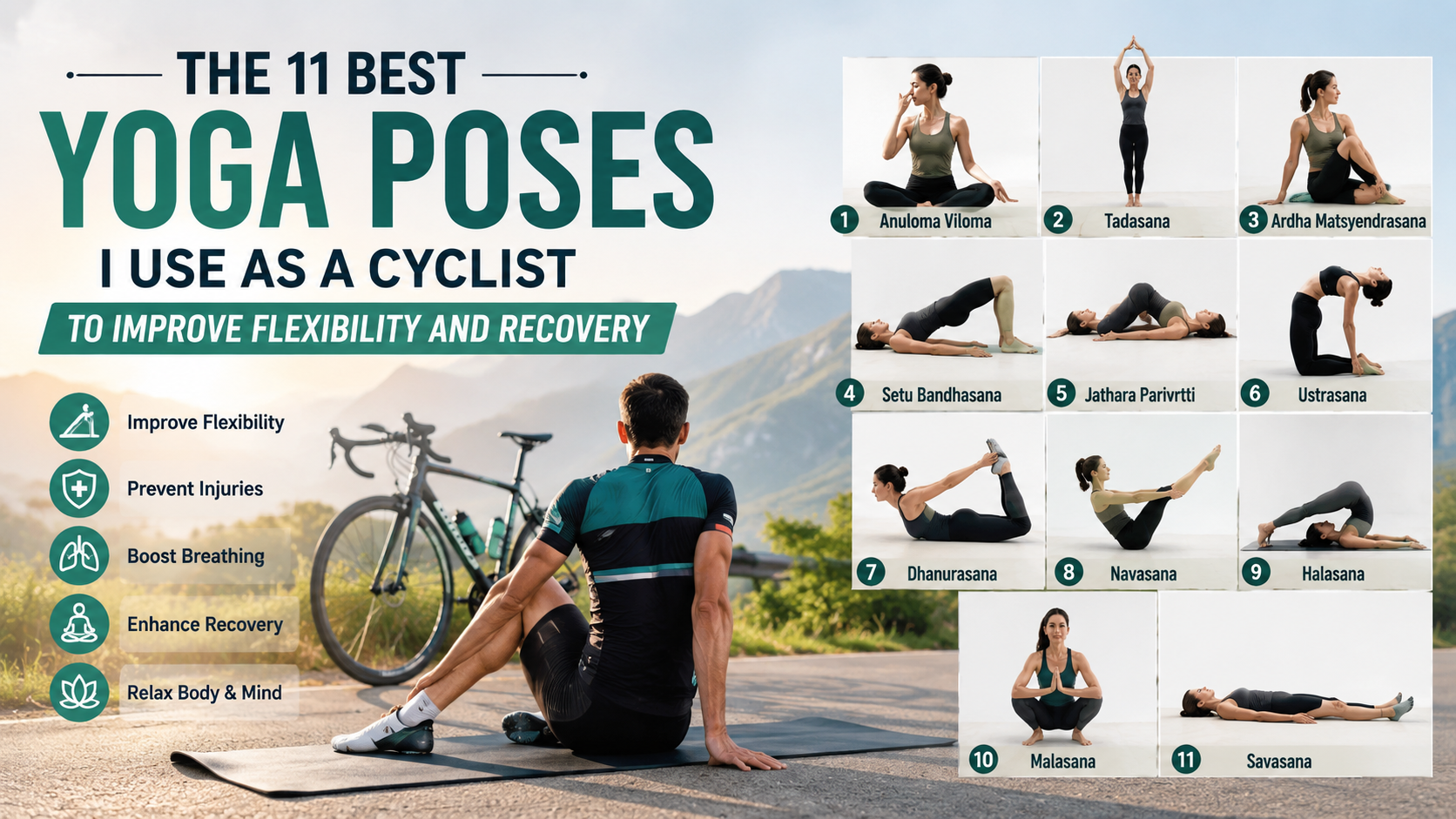
As a cyclist, I train for long periods of time in a fixed position. I need strong legs and hips, but I have found that my abdominal, chest, and back areas can often become weak.
My yoga practice focuses on strengthening my abdominal and lumbar area, opening my chest, and relaxing my neck, back, and arms.
For my lower body, I find it especially important to make my legs more flexible and relaxed. Breathing is also very important to me because it helps increase my respiratory capacity during long climbs and allows me to relax my mind after concentrating on roads and trails for many hours.
Benefits of Yoga Poses for Cyclists.
1. Improved Flexibility.
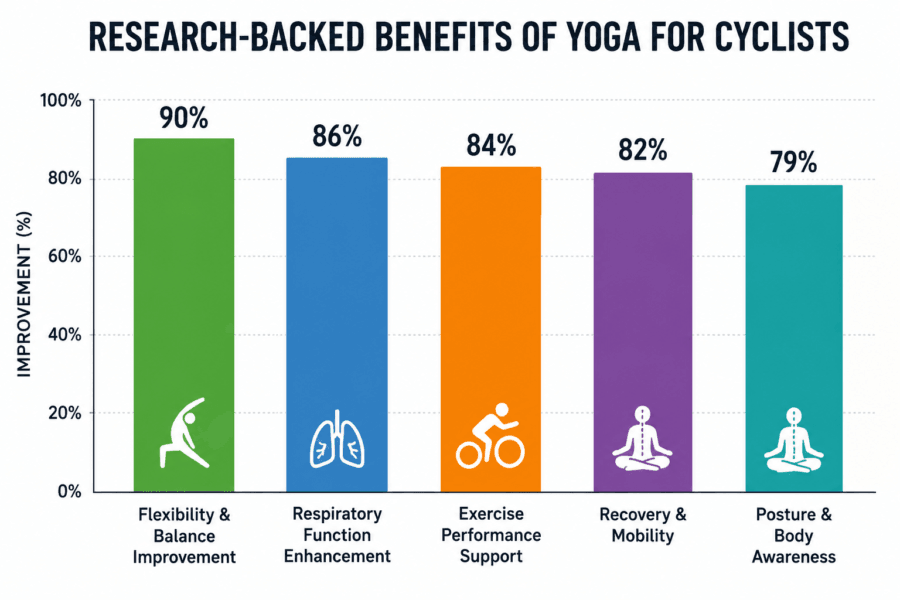
Yoga poses help me stretch and lengthen my muscles, which improves my flexibility and range of motion. This helps me prevent injuries and improve my overall performance on the bike.(1)
Related Stories
 Ananda Balasana: Benefits, Steps, Variations, Safety and Beginner Tips
 7 Yoga Poses During Pregnancy And A Healthy Baby
2. Increased Strength.
Many yoga poses require me to use my body weight for resistance, which helps build strength in muscles that are often neglected during cycling. This has helped improve my power and endurance on the bike.
3. Better Posture.
Cycling can often lead to poor posture and muscle imbalances. Yoga poses help me correct these imbalances and strengthen my core muscles, leading to better alignment and posture while riding.
4. Enhanced Relaxation and Stress Relief.
Cycling can be a high-intensity and demanding sport, which can lead to stress and tension in my body. Yoga poses help me relax, reduce stress, and improve my mental focus, benefiting me both on and off the bike.
5. Improved Breathing Techniques.
Many yoga poses focus on deep breathing and breath awareness, which helps me improve my lung capacity and breathing efficiency. This leads to better endurance and performance during long rides.(2),(3)

6. Injury Prevention.
By improving my flexibility, strength, and posture, yoga poses help me prevent common cycling injuries such as knee pain, lower back pain, and muscle tightness. Regular yoga practice helps keep my body balanced and reduces the risk of overuse injuries.
💡 Tips FreakToFit.com.

Overall, incorporating yoga poses into my cycling routine has helped improve my performance, reduce my risk of injury, and enhance my physical and mental well-being.
Top 11 Best Yoga Poses I Use as a Cyclist.
1. Anuloma Viloma or Nadhi Shadan.
Known as balancing because it alternates the entry and exit of air on each side of the body, it provides me with physical balance (essential when pedaling a bicycle) and mental balance by balancing the logical and creative sides of my brain.
This type of breathing also helps me open my nasal passages, expel mucus so that more air enters my lungs, oxygenate my blood, and prevent nasal congestion caused by allergies, asthma, and respiratory infections.
2. Tadasana.
Muscles: Spine and foot muscles.
Benefits: Stretches my spine, sides, and abdominal area. I practice it with abdominal breathing.
Contraindications: Spine problems.
3. Ardha Matsyendrasana (Half Pose of the Lord of the Fishes).
Muscles: Splenius capitis, sternocleidomastoid, rhomboids, serratus anterior, erector spinae, piriformis, gluteus medius, and minimus.
Benefits: This twisting posture helps me tone and balance almost my entire body while giving mobility to my spine, which can become stiff after cycling. It also massages my abdominal organs, facilitates intestinal movements, and helps eliminate toxins.
Contraindications: Back problems.
4. Setu Bandhasana.
Muscles: Rectus abdominis, gluteus maximus, quadriceps.
Benefits: This is the opposite of my cycling position. It stretches my chest, neck, and spine, gives rest to my lower back and legs, opens my lungs for greater oxygenation, opens my hips, releases pressure from the saddle area, stimulates metabolism, and reduces fatigue after training.
Contraindications: Neck injuries.
5. Jathara Parivrtti.
Muscles: Sternocleidomastoid, scalenus, pectoralis major, multifidus, external oblique, internal oblique, gluteus maximus, hamstrings, piriformis.
Benefits: This abdominal twist can be done with the legs drawn up or extended. It helps me stretch and increase the flexibility of my spine, sciatic nerve, and glutes. I perform it on both sides by turning my neck and legs in opposite directions.
Contraindications: Herniated disc.
6. Ustrasana.
Muscles: Neck, deltoids, pectoralis major, pectoralis minor, rectus abdominis, psoas major, rectus femoris, vastus lateralis, hamstrings.
Benefits: This pose provides a great opening of my chest, creating more space in my trunk and improving oxygenation. I find it particularly useful after cycling. It works my lower back and major leg muscles. I can clearly feel my psoas stretching. Sometimes I place my hands on my hips to maintain the posture comfortably.
Contraindications: Cervical, lumbar, and knee pain.
7. Dhanurasana.
Muscles: Pectoralis major, deltoid, gluteus maximus, adductor magnus, semitendinosus, semimembranosus.
Benefits: This is an intense posture. I do not necessarily need to grab my feet; simply creating the arch is enough. It improves the flexibility of my back, neck, shoulders, and chest, increases my lung capacity, tones my glutes and legs, promotes concentration, and reduces stress.
Contraindications: Back injuries, headaches, dizziness.
8. Navasana.
Muscles: Sternocleidomastoid, rectus abdominis, spinal extensors, hamstrings, psoas major, iliacus, vastus lateralis.
Benefits: This abdominal and balance posture helps me strengthen my core area to avoid cycling injuries. It improves my balance off the bike by creating a strong base with my sit bones. It strengthens my abdominal and lumbar area. I avoid forcing the posture if I experience pain.
Contraindications: Lumbar and abdominal weakness, dizziness.
9. Halasana.
Muscles: Trapezius, triceps brachii, spinal extensors, hamstrings, calves, soleus.
Benefits: This inversion is especially beneficial for me as a cyclist because it works the entire back of my body through stretching and strengthening. It stimulates my abdominal organs, strengthens my abdominals and arms, reduces fatigue, and promotes relaxation.
Contraindications: Neck injuries, vertigo, dizziness, hypertension.
10. Malasana.
Muscles: Diaphragm, pelvic floor, levator ani, quadratus femoris, obturator internus, flexors and adductors of the toes.
Benefits: This pose stretches my entire body and helps oxygenate me after training. I try to keep my heels on the ground to improve the flexibility of my thighs, hamstrings, and hips. It opens my chest and back, relieves pressure in my pelvic floor after hours in the saddle, and boosts my energy.
Contraindications: Knee problems.
11. Savasana.
Muscles: No muscles actively work. I simply try to relax everything, including my diaphragm.
Benefits: Although it may seem like the easiest asana, I find that completely relaxing is not always easy. It is the perfect pose to end any stretching sequence because it creates a feeling of total physical and mental calm combined with relaxed, effortless abdominal breathing.
Contraindications: None.
Yoga Poses I Use as a Cyclist to Improve Flexibility and Recovery- My Personal Experience.
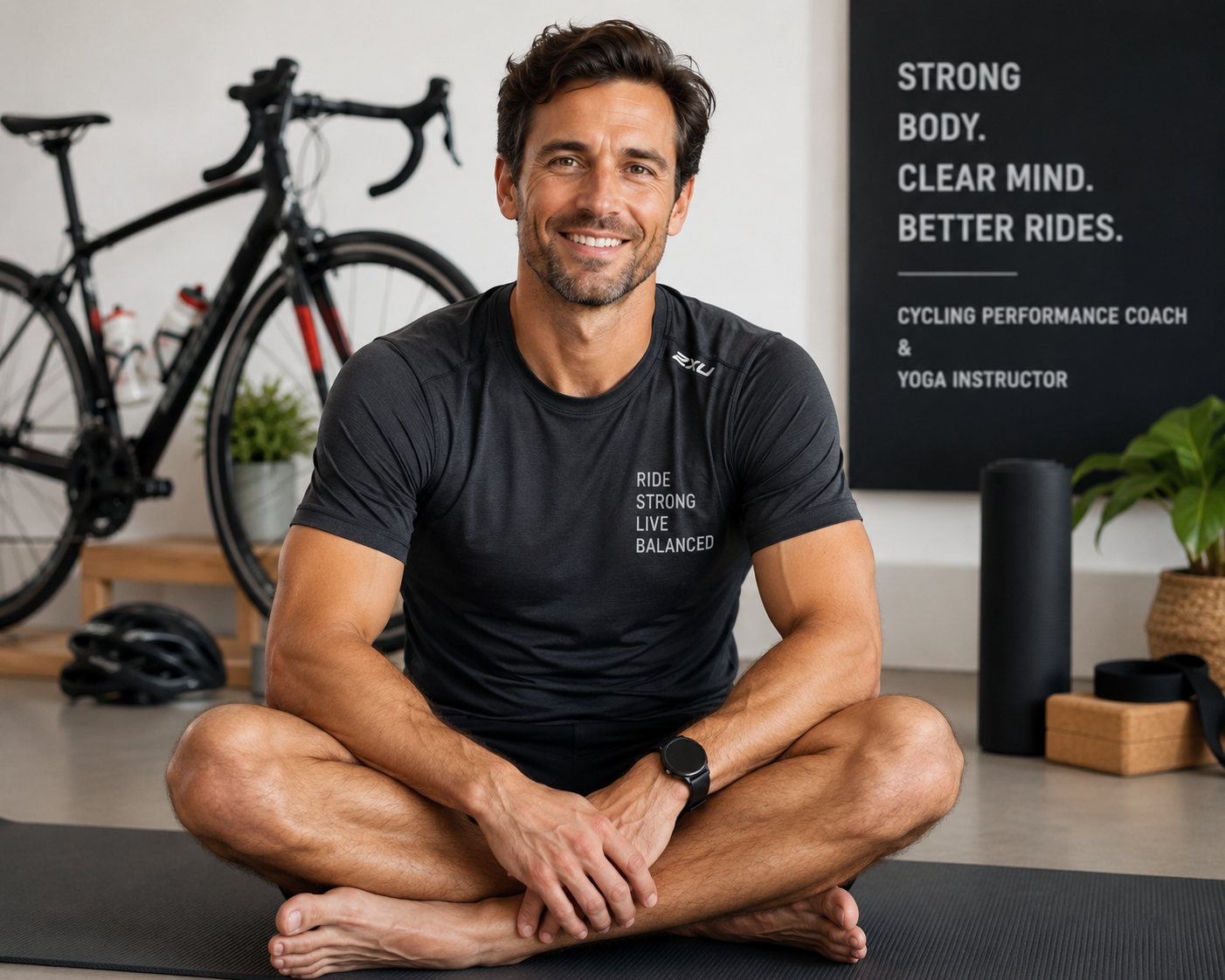
I am Ethan Reynolds, Cycling Performance Coach & Certified Yoga Instructor, as a cyclist, adding yoga to my weekly routine completely changed how I recovered after long rides. I noticed less stiffness in my hips and lower back, improved flexibility, better posture on the bike, and faster recovery between training sessions. These simple yoga poses helped me feel stronger, more balanced, and more comfortable during both short and long-distance rides.
“I discovered that just a few minutes of yoga after cycling helped me recover faster, move more freely, and feel stronger on every ride.”
frequently asked questions.
1. Is yoga good for cyclists?
Yes, I have found that yoga can be extremely beneficial for cyclists. It helps improve flexibility, mobility, balance, posture, and recovery while also reducing muscle tightness caused by long hours in the saddle. Regular yoga practice may also help lower the risk of common cycling injuries.
2. Which yoga pose is best after a long bike ride?
There isn’t a single best pose, but I often find poses like Setu Bandhasana (Bridge Pose), Malasana (Garland Pose), and Savasana (Corpse Pose) particularly helpful after long rides. These poses help stretch tight muscles, improve circulation, and promote relaxation and recovery.
3. How often should cyclists do yoga?
For me, practicing yoga 2–4 times per week provides noticeable benefits. Even short 15–20 minute sessions can help improve flexibility, reduce stiffness, and enhance recovery. Consistency is more important than the duration of each session.
Bottom Line.
Incorporating yoga poses into my cycling routine has provided numerous benefits, including improved flexibility, strength, balance, and mental focus. By practicing these poses regularly, I have been able to enhance my performance on the bike, reduce my risk of injuries, and improve my overall well-being. Whether I do a quick post-ride stretch or a dedicated yoga session, integrating yoga into my cycling regimen helps me work toward my fitness goals and enjoy a more fulfilling cycling experience.
+3 Sources
FreakToFit has strict sourcing guidelines and relies on peer-reviewed studies, educational research institutes, and medical organizations. We avoid using tertiary references. You can learn more about how we ensure our content is accurate and up-to-date by reading our editorial policy.
- Impact of 10-weeks of yoga practice on flexibility and balance of college athletes; https://pmc.ncbi.nlm.nih.gov/articles/PMC4728955/
- Effect of yoga regimen on lung functions including diffusion capacity in coronary artery disease patients: A randomized controlled study; https://pmc.ncbi.nlm.nih.gov/articles/PMC4278137/
- Effect of Regular Yoga Practice on Respiratory Regulation and Exercise Performance; https://journals.plos.org/plosone/article?id=10.1371/journal.pone.0153159