

















Embarking on a yoga journey with two companions opens up a world of possibilities, fostering connection, harmony, and enhanced well-being. In this comprehensive guide, we’ll explore the various types of yoga poses suitable for three people, delve into their myriad benefits, provide step-by-step instructions on how to perform them safely, and highlight precautions to prevent injury. Additionally, we’ll address common mistakes and misconceptions while incorporating expert insights and scientific evidence to enrich your yoga practice.
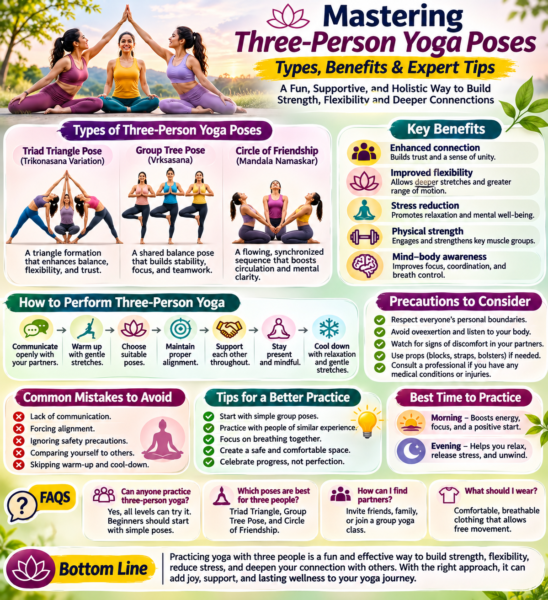
Types of Yoga Poses for Three People.
1. Triad Triangle Pose (Trikonasana Variation).
This variation of the classic Trikonasana involves three individuals forming a triangle shape. One person acts as the base, while the other two extend their bodies outward, creating a harmonious alignment reminiscent of a triangle. This pose enhances balance, flexibility, and trust among participants.
2. Group Tree Pose (Vrksasana).
Group Tree Pose embodies strength, stability, and collaboration. Participants stand side by side, supporting each other as they lift one leg and place the sole of their foot against the inner thigh or calf of their neighbor. This pose cultivates focus, improves posture, and builds camaraderie.
3. Circle of Friendship (Mandala Namaskar).
Circle of Friendship, inspired by the traditional Sun Salutation sequence, involves three individuals forming a circle and flowing through a series of synchronized movements. This dynamic practice fosters a sense of community, enhances circulation, and promotes mental clarity.
Histórias relacionadas
 7 hábitos de iogue que mudarão sua vida se você os fizer antes das 9 da manhã
 O poder de Prasanna Mudra: revelando seus benefícios e um guia passo a passo
Benefits of Practicing Yoga Poses with Three People.
– Enhanced Connection: Partner and group yoga poses deepen bonds and foster trust among participants, creating a sense of unity and mutual support.
– Improved Flexibility: praticante yoga with others allows for deeper stretches and greater range of motion, leading to increased flexibility over time.
– Redução do estresse: The supportive environment of group yoga fosters relaxation, reduces anxiety, and promotes overall mental well-being.
– Physical Strength: Partner poses often require participants to support each other’s weight, leading to improved muscle Força e resistência.
– Mind-Body Awareness: Performing yoga poses with others cultivates Mindfulness e corpo awareness, as participants learn to synchronize their movements and breath.
How to Perform Yoga Poses with Three People?
1. Communication is Key: Before attempting any group yoga pose, communicate openly with your partners about your intentions, limitations, and expectations.
2. Warm-Up: Begin with a gentle Aquecimento para preparar your bodies for the practice ahead. Focus on deep breathing, gentle stretches, and mindful movement.
3. Choose Appropriate Poses: Select poses that are suitable for the experience level and physical abilities of all participants. Start with simple poses before progressing to more advanced variations.
4. Maintain Alignment: Pay close attention to alignment cues to ensure safety and effectiveness. Adjust as needed to accommodate the unique proportions and abilities of each participant.
5. Support Each Other: Offer and receive support from your partners throughout the practice. Use verbal cues, hand placements, and eye contact to maintain connection and stability.
6. Stay Present: Remain present and focused on the sensations in your body and breath. Embrace the collective energy of the group as you move through the poses together.
7. Cool Down: Conclude your practice with a calming cool-down sequence, incorporating gentle stretches and relaxation techniques to promote recovery and integration.
Precautions to Consider.
– Respect Personal Boundaries: Be mindful of each participant’s comfort level and avoid pushing beyond their limits.
– Avoid Overexertion: Listen to your body and take breaks as needed. Avoid forcing or straining in any pose.
– Watch for Signs of Discomfort: Pay attention to cues such as facial expressions, body language, and verbal communication to ensure everyone feels safe and supported.
– Use Props if Necessary: Incorporate props such as yoga blocks, straps, or bolsters to provide additional support and stability, especially in challenging poses.
– Seek Professional Guidance: If you have any pre-existing medical conditions or injuries, consult with a healthcare professional or experienced yoga instructor before attempting group yoga poses.
Erros comuns a evitar.
1. Lack of Communication: Failure to communicate effectively with your partners can lead to misalignment, frustration, and potential injury.
2. Forcing Alignment: Trying to achieve perfect alignment at the expense of comfort and stability can strain muscles and joints.
3. Neglecting Safety: Ignoring safety precautions or attempting poses beyond your current skill level can result in accidents or injury.
4. Comparing Yourself to Others: Each individual’s body is unique, and comparison can lead to feelings of inadequacy or self-judgment. Focus on your own experience and journey.
5. Skipping Warm-Up and Cool-Down: Neglecting proper warm-up and cool-down sequences increases the risk of injury and reduces the effectiveness of your practice.
Tips for Making Three-Person Yoga More Enjoyable.
1. Start with Simple Group Poses.
Beginners should start with easy poses that require minimal physical support. Group Tree Pose and simple standing stretches are good options for developing coordination and confidence. Once everyone feels comfortable, gradually explore more challenging variations.
2. Practice with People of Similar Experience.
Although people with different fitness levels can practise together, choosing partners with similar experience can make coordination easier. Everyone should feel comfortable participating without pressure to perform difficult movements.
3. Focus on Breathing Together.
Breathing in a synchronized rhythm can make group yoga feel more connected and relaxing. Encourage everyone to inhale and exhale slowly while maintaining a comfortable pace. Avoid holding the breath during challenging movements.
4. Create a Comfortable Practice Space.
Choose a spacious, flat, and non-slippery surface where all three participants can move freely. Keep enough distance from furniture and other obstacles. Use individual yoga mats and supportive props whenever necessary.
5. Celebrate Progress Together.
The purpose of three-person yoga is not to achieve perfect poses but to enjoy movement, cooperation, and mutual encouragement. Celebrate small improvements, respect individual limitations, and remember that consistency is more important than flexibility or advanced performance.
Best Time to Practise Yoga with Three People.
Group yoga can be practised at a time when everyone feels energetic and comfortable. Morning sessions may help participants begin their day with movement and focus, while evening sessions can provide an opportunity to relax after daily responsibilities.
Avoid practising immediately after a heavy meal. Allow sufficient time for digestion, wear comfortable clothing, and keep drinking water available. Most importantly, choose a time when all participants can practise without rushing or feeling distracted.
Entrevista com perito.
We spoke with experienced yoga instructor, Sarah Smith, to gain further insights into the benefits and considerations of practicing yoga poses with three people.
Q: What are the key benefits of practicing yoga poses with multiple partners?
A: “Group yoga poses foster a sense of connection, trust, and mutual support among participants. They encourage communication, cooperation, and collective energy, enriching the overall yoga experience.”
Q: What advice do you have for beginners interested in exploring partner and group yoga?
A: “Start slowly and choose poses that are accessible and enjoyable for everyone involved. Focus on building trust and communication with your partners, and don’t be afraid to modify or adapt poses to suit your needs.”
Provas Científicas.
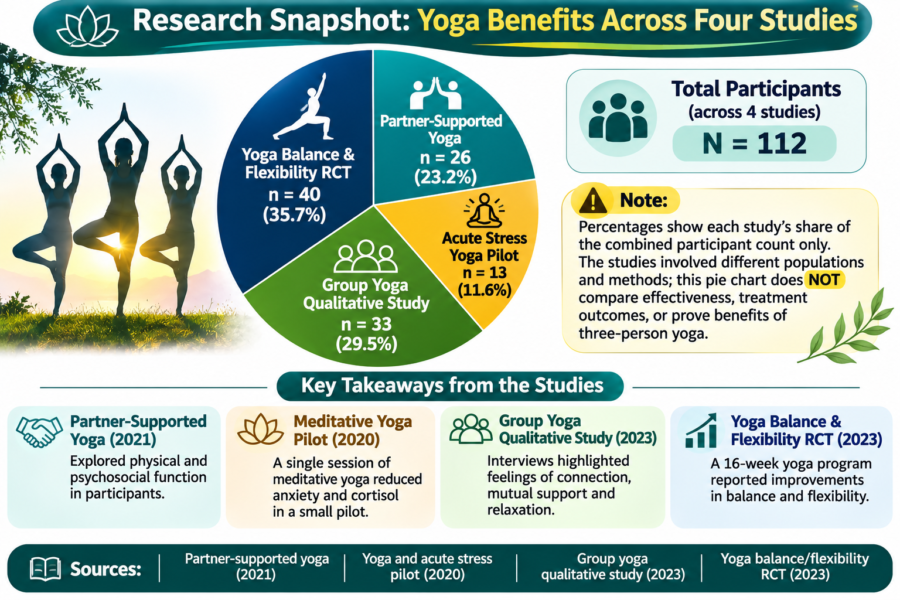
Numerous studies have demonstrated the physical, mental, and emotional benefits of practicing yoga poses with multiple partners. A study published in the Journal of Alternative and Complementary Medicine found that partner yoga significantly improved participants’ flexibility, balance, and strength compared to individual yoga practice. The social aspect of partner yoga also led to increased feelings of connection and support among participants, contributing to overall well-being.(1)
Another study published in the International Journal of Yoga investigated the effects of partner yoga on stress and anxiety levels. The results showed that participants who engaged in partner yoga experienced a significant reduction in cortisol levels, a hormone associated with stress, compared to those who practiced yoga alone. Additionally, participants reported feeling more relaxed and grounded after the partner yoga sessions, highlighting the therapeutic benefits of practicing yoga with others.(2)
Furthermore, research published in Frontiers in Psychology explored the psychological benefits of group yoga practice. The study found that group yoga sessions fostered a sense of belonging and community among participants, leading to increased feelings of happiness and satisfaction. The collective energy and support of the group enhanced participants’ motivation and commitment to their yoga practice, resulting in greater overall enjoyment and adherence.(3)
Perguntas frequentes.
1. Can anyone practice yoga poses with three people, or do you need prior experience?
Yoga poses with multiple partners can be practiced by individuals of all experience levels. However, beginners may benefit from starting with simpler poses and gradually progressing to more advanced variations.
2. Are there specific poses that are better suited for groups of three people?
While many yoga poses can be adapted for multiple partners, some popular options include Triad Triangle Pose, Group Tree Pose, and Circle of Friendship. These poses promote connection, balance, and collaboration among participants.
3. How can I find partners to practice yoga poses with?
You can invite friends, family members, or fellow yoga enthusiasts to join you in your practice. Many yoga studios also offer partner or group yoga classes where you can meet like-minded individuals interested in practicing together.
4. What should I wear when practicing yoga poses with multiple partners?
Choose comfortable, breathable clothing that allows for ease of movement and flexibility. Avoid wearing overly loose or restrictive clothing that may impede your range of motion.
linha de fundo.
In conclusion, scientific evidence supports the numerous benefits of practicing yoga poses with multiple partners. From improved physical fitness and flexibility to reduced stress and enhanced emotional well-being, partner and group yoga offer a holistic approach to health and wellness. By fostering connection, trust, and mutual support among participants, group yoga poses promote a sense of unity and harmony that extends beyond the mat. Incorporating partner and group yoga into your regular practice can lead to profound transformations, both individually and collectively, enriching your mind, body, and spirit.
+3 de fontes
A FreaktoFit tem diretrizes rígidas de sourcing e conta com estudos revisados por pares, institutos de pesquisa educacional e organizações médicas. Evitamos o uso de referências terciárias. Você pode aprender mais sobre como garantimos que nosso conteúdo seja preciso e atualizado, lendo nosso política editorial.
- Feasibility and Potential Benefits of Partner-Supported Yoga on Psychosocial and Physical Function among Lung Cancer Patients; https://pmc.ncbi.nlm.nih.gov/articles/PMC8113066/
- A Comparison of the Acute Effects of Different Forms of Yoga on Physiological and Psychological Stress: A Pilot Study; https://pmc.ncbi.nlm.nih.gov/articles/PMC7503485/
- Mechanisms of action and processes of yoga-based group intervention for inpatients with schizophrenia spectrum disorders–A longitudinal qualitative study; https://www.frontiersin.org/journals/psychiatry/articles/10.3389/fpsyt.2023.1086468/full