











Trending
What is Magical Quantum Exercise? Triangle Mudra: Discover the Benefits and Learn How to Perform It Plant Based Diet or Vegan Diet: Types, Benefits and Mistakes How To Fix Peloton Back Pain: 11 Effective Ways and Yoga Poses What Happened When I Followed Ari Kytsya’s Workout and Diet Routine Jacob Nicholas Caan: Who is this Mystery Man? 7 Wonderful Yoga Poses To Reduce Cholesterol Cosmic Mudra: Meaning, Benefits, How To Do and Precautions Amazing Cross Trainer Exercise For Weight Loss Chinmaya Mudra: Benefits, Side Effects, How To Do and Precautions 10 Types of Meditation Techniques Suitable for Beginners Understanding Hair Loss After IVF: Causes, Solutions, and Expert Insights What is Hindu Squat: Advantages, Steps and Precautions 16 Keto Diet Food For Rapid Weight Loss Does Prolonged Use of a Face Masks Cause Harm? Incredible Health Benefits of Brown Rice 10 Essential Yoga Poses Every Athletic Woman Should Practice for Strength and Recovery Top 5 Most Common Symptoms of Post-Concussion Syndrome Does White Tea Have Caffeine? You Might Be Surprised Aloe Vera for Dandruff and Itchy Scalp Treatment 8 Types of Warm Up Exercise With Advantages Toilet Infections in Male and Female: Types, Symptoms and Cure Top 12 Junk Foods Those Are Actually Healthy The Power of Maca: Exploring the Benefits of Maca Coffee for Men From Diagnosis to Reconstruction: How Oncoplastic Surgery Supports Physical and Emotional Recovery. Asian Massage : Types & Benefits Amazing 6 Mallet Finger Exercises For Quick Recovery 15 Incredible Health Benefits of Chlorophyll 6 Best Yoga Poses to Boost Immunity Power How Does IBM’S Watson Computer Use Artificial Intelligence (AI) in Healthcare? Incredible Health Benefits and Side Effects of Coconut Kali Mudra: Benefits, Side Effects, How To Do and Precautions Do Cranberry Pills Help Against Cystitis? Science Gives Us the Answer Why Am I Craving Cherries? Am I Having Any Deficiency? What is the 432 Hz Sound and Why is It Known as the Frequency of the Universe? 10 Best Substitutes For Cayenne Pepper That’ll Save Your Meal Exercise Routine and Diets for Men and Their Body Types 11 Best in Bed Exercises for Elderly With Steps And Diet Does Pakhala Boost Immunity Power? Best Fitness Apps To Get Rid of Trainers

Appointment
Ask Question
Talk2Expert
Q&A
Health Tracker
Workout
Nutritious
Meditation
Well-Being
Mood Music
Social Service
Podcast E-book
✓ Evidence Based
122
Reads
18

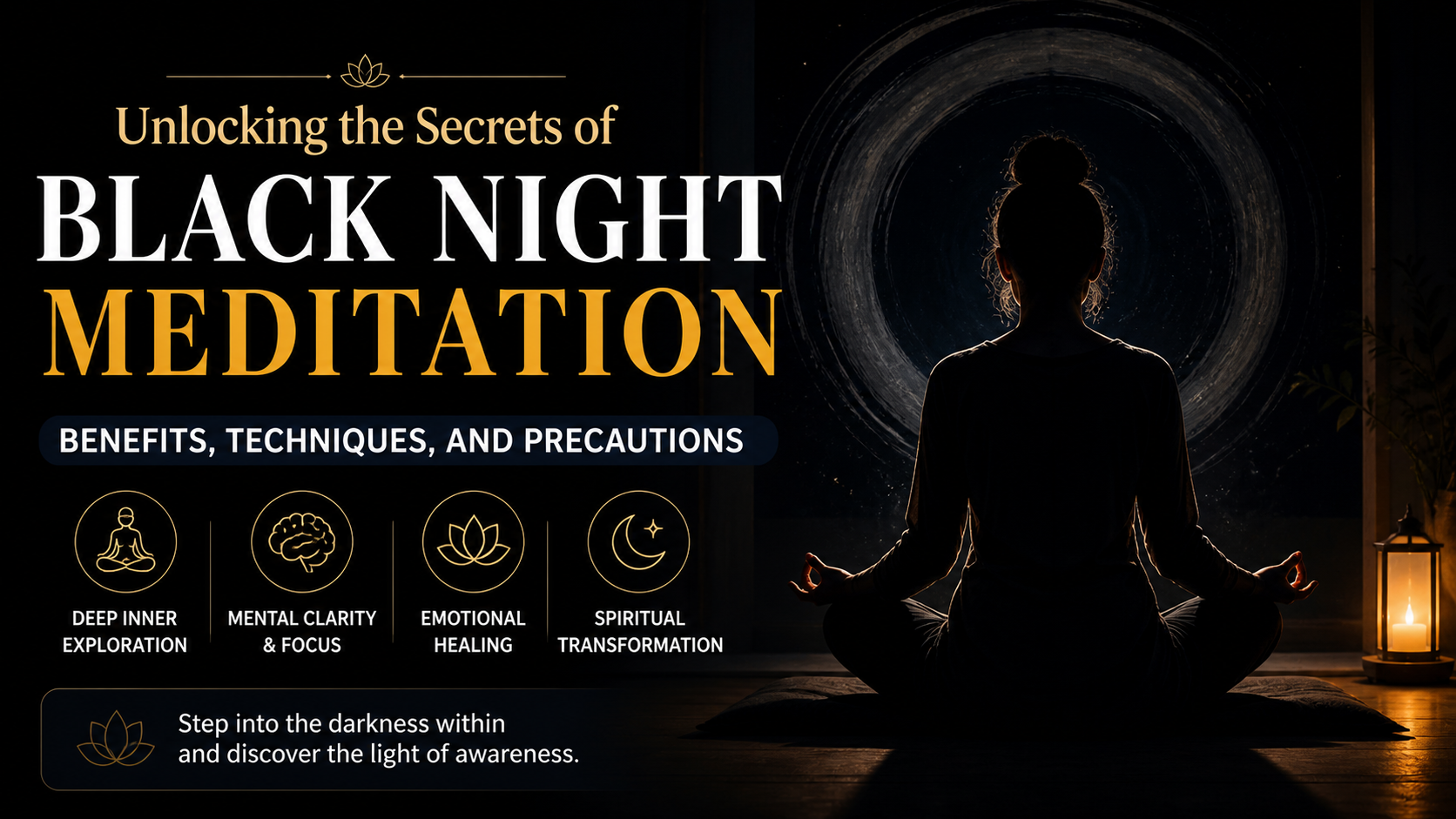
Unlocking the Secrets of Black Night Meditation: Benefits, Techniques, and Precautions

Medically reviewed
Our Review Process
Our content undergoes a rigorous editorial process, including fact-checking and clinical review by qualified medical experts.
READ MORE →

Our Editorial Team
Sarah Waskevich (Yoga Expert), YI
AUTHOR
Danielle M
MEDICAL ADVISOR
by   Danielle M
Danielle M ✔ Verified Expert
Danielle M. is a distinguished individual in the realm of fitness and organizational leadership. As a certified Yoga Teacher and Pilates Instructor in Training, she…
READ MORE →
—Written by   Sarah Waskevich (Yoga Expert), YI
Sarah Waskevich (Yoga Expert), YI
Sarah Waskevich, a dynamic professional and Premium member, wears dual hats as a Talent Acquisition Specialist at DraftKings Inc. and a Yoga Instructor in the vibrant Greater Boston area. Know More. Learn about our editorial process.
READ MORE →
Updated on May 4, 2026
Why This Was Updated
We continuously monitor the health landscape and update our articles to reflect the latest evidence.

Updated on May 4, 2026

VIEW ALL HISTORY →
—Published on May 4, 2026
Our editorial process ensures that the information we provide is well-researched and reliable. Learn about our commitment to quality in our editorial policy.
Listen to this article

The Fast Facts

  • The chart highlights the effects of meditation practices on key psychological and physiological health factors, showing the strongest benefits for mental health and sleep quality, with high improvements in stress reduction and insomnia management, and a moderate yet significant impact on brain structure and cognitive function, emphasizing meditation’s role in enhancing overall mental well-being and neurological health (Goyal et al.
  • For many practitioners, black night meditation serves as a gateway to spiritual exploration, fostering a deeper connection with the self and the universe.
  • At its core, black night meditation encourages practitioners to confront their innermost fears, anxieties, and desires, embracing the darkness as a pathway to enlightenment and self-discovery.
FreakToFit logo

In the realm of mindfulness practices, black night meditation stands out as a powerful yet often misunderstood technique. Rooted in ancient traditions, this form of meditation has garnered attention for its profound effects on mental, emotional, and spiritual well-being. In this comprehensive guide, we will delve into the intricacies of black night meditation, exploring its benefits, techniques, precautions, and common mistakes.

Understanding Black Night Meditation.

   – Origin and History: Black night meditation traces its roots to ancient Eastern philosophies, where practitioners would engage in deep introspection during the darkest hours of the night.

   – Philosophy: At its core, black night meditation encourages practitioners to confront their innermost fears, anxieties, and desires, embracing the darkness as a pathway to enlightenment and self-discovery.

   – Scientific Basis: Research suggests that practicing meditation in low-light or darkness can enhance the production of melatonin, the hormone responsible for regulating sleep patterns and promoting relaxation.

Benefits of Black Night Meditation.

   – Stress Reduction: By fostering a sense of inner peace and tranquility, black night meditation can help alleviate stress and anxiety, promoting overall mental well-being.

   – Enhanced Focus: Regular practice of black night meditation can sharpen concentration and improve cognitive function, allowing practitioners to stay present and focused in their daily lives.(1),(2)

   – Spiritual Growth: For many practitioners, black night meditation serves as a gateway to spiritual exploration, fostering a deeper connection with the self and the universe.

   – Improved Sleep: By regulating melatonin levels and promoting relaxation, black night meditation can aid in achieving restful sleep and combating insomnia.(3)

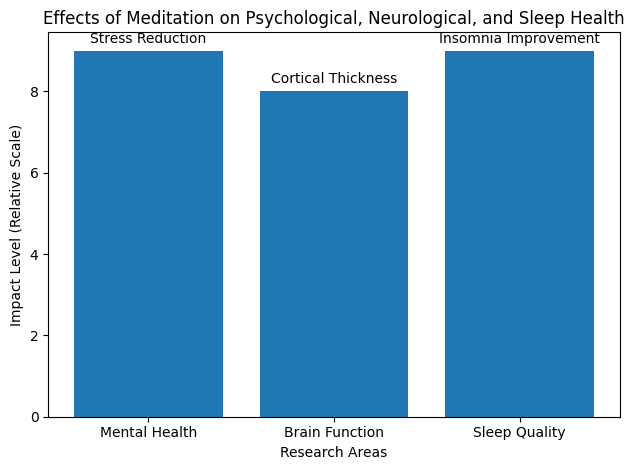
The chart highlights the effects of meditation practices on key psychological and physiological health factors, showing the strongest benefits for mental health and sleep quality, with high improvements in stress reduction and insomnia management, and a moderate yet significant impact on brain structure and cognitive function, emphasizing meditation’s role in enhancing overall mental well-being and neurological health (Goyal et al., 2014; Lazar et al., 2005; Black et al., 2015).

How to Practice Black Night Meditation?

   – Setting the Scene: Find a quiet, dimly lit space where you won’t be disturbed. Create a comfortable meditation area with cushions or a mat.

   – Breathing Techniques: Begin by taking slow, deep breaths, focusing on the sensation of the breath entering and leaving the body.

   – Embracing Darkness: Close your eyes and allow yourself to sink into the darkness, letting go of any preconceived notions or fears.

   – Inner Exploration: Use this time to explore your thoughts, emotions, and sensations without judgment. Allow whatever arises to simply be.

   – Duration: Start with short sessions of 10-15 minutes and gradually increase the duration as you become more comfortable with the practice.

Precautions.

   – Psychological Vulnerability: Individuals with a history of mental health disorders or trauma should exercise caution when practicing black night meditation, as it may exacerbate underlying issues.

   – Physical Safety: Ensure that the meditation space is free from hazards and that you are in a comfortable position to avoid discomfort or injury.

   – Professional Guidance: If you have any concerns or questions about practicing black night meditation, consider seeking guidance from a qualified meditation teacher or mental health professional.

Common Mistakes to Avoid.

   – Forcing Control: Trying to force thoughts or emotions to disappear during black night meditation can hinder the process. Instead, allow them to arise naturally and observe them without attachment.

   – Expecting Immediate Results: Like any form of meditation, black night meditation requires patience and persistence. Don’t expect instant enlightenment; allow the practice to unfold gradually over time.

   – Neglecting Self-Care: While black night meditation can be a powerful tool for self-exploration, it’s important to balance it with other self-care practices such as exercise, healthy eating, and social connection.

Frequently Asked Questions.

1 Can anyone practice black night meditation?

While black night meditation can be beneficial for many people, individuals with certain psychological or physical conditions should exercise caution and consult with a healthcare professional before beginning the practice.

2 Is it normal to experience fear or discomfort during black night meditation?

Yes, it is normal to encounter challenging emotions or sensations during black night meditation. The key is to observe them with compassion and non-judgment, allowing them to pass without attachment.

3 How often should I practice black night meditation?

The frequency of practice depends on individual preferences and schedules. Starting with a few sessions per week and gradually increasing frequency can be a good approach.

Bottom Line.

Black night meditation offers a unique opportunity for deep introspection and self-discovery, providing a pathway to enhanced well-being and spiritual growth. By understanding its principles, benefits, techniques, and precautions, practitioners can embark on a journey of inner exploration with confidence and mindfulness. Embrace the darkness, and let the light within guide your path to transformation.

+3 Sources

FreakToFit has strict sourcing guidelines and relies on peer-reviewed studies, educational research institutes, and medical organizations. We avoid using tertiary references. You can learn more about how we ensure our content is accurate and up-to-date by reading our editorial policy.

  1. Effects of Mindfulness on Psychological Health: A Review of Empirical Studies; https://pmc.ncbi.nlm.nih.gov/articles/PMC3679190/
  2. Meditation experience is associated with increased cortical thickness; https://pmc.ncbi.nlm.nih.gov/articles/PMC1361002/
  3. A Randomized Controlled Trial of Mindfulness Meditation for Chronic Insomnia; https://pmc.ncbi.nlm.nih.gov/articles/PMC4153063/


Last reviewed on

How we reviewed this article:

ⓘ SOURCES 🕖 HISTORY

FreakToFit follows strict sourcing guidelines and relies on peer-reviewed studies, academic research institutions, and reputable medical organizations. We only use high-quality, credible sources to ensure the accuracy and integrity of our content.

    Our experts continually monitor the health and wellness space, and we update our articles when new information becomes available.

    Current Version
    May 4, 2026

    Written By: Sarah Waskevich (Yoga Expert), YI

    Reviewed By: Danielle M.

    May 4, 2026

    Written By: Sarah Waskevich (Yoga Expert), YI

    Reviewed By: Danielle M.

    Yoga poses and breathing practices should be performed mindfully and within your limits. If you experience discomfort or pain, stop immediately and seek professional instruction or medical advice. Know More

    Sarah Waskevich (Yoga Expert), YI

    Author
    Sarah Waskevich, a dynamic professional and Premium member, wears dual hats as a Talent Acquisition Specialist at DraftKings Inc. and a Yoga Instructor in the vibrant Greater Boston area. Know More. Learn about our editorial process.

    Danielle M

    Yoga Expert
    Danielle M. is a distinguished individual in the realm of fitness and organizational leadership. As a certified Yoga Teacher and Pilates Instructor in Training, she…

    Leave a Comment