































 Workout

 Meditation


 Podcast
 E-book


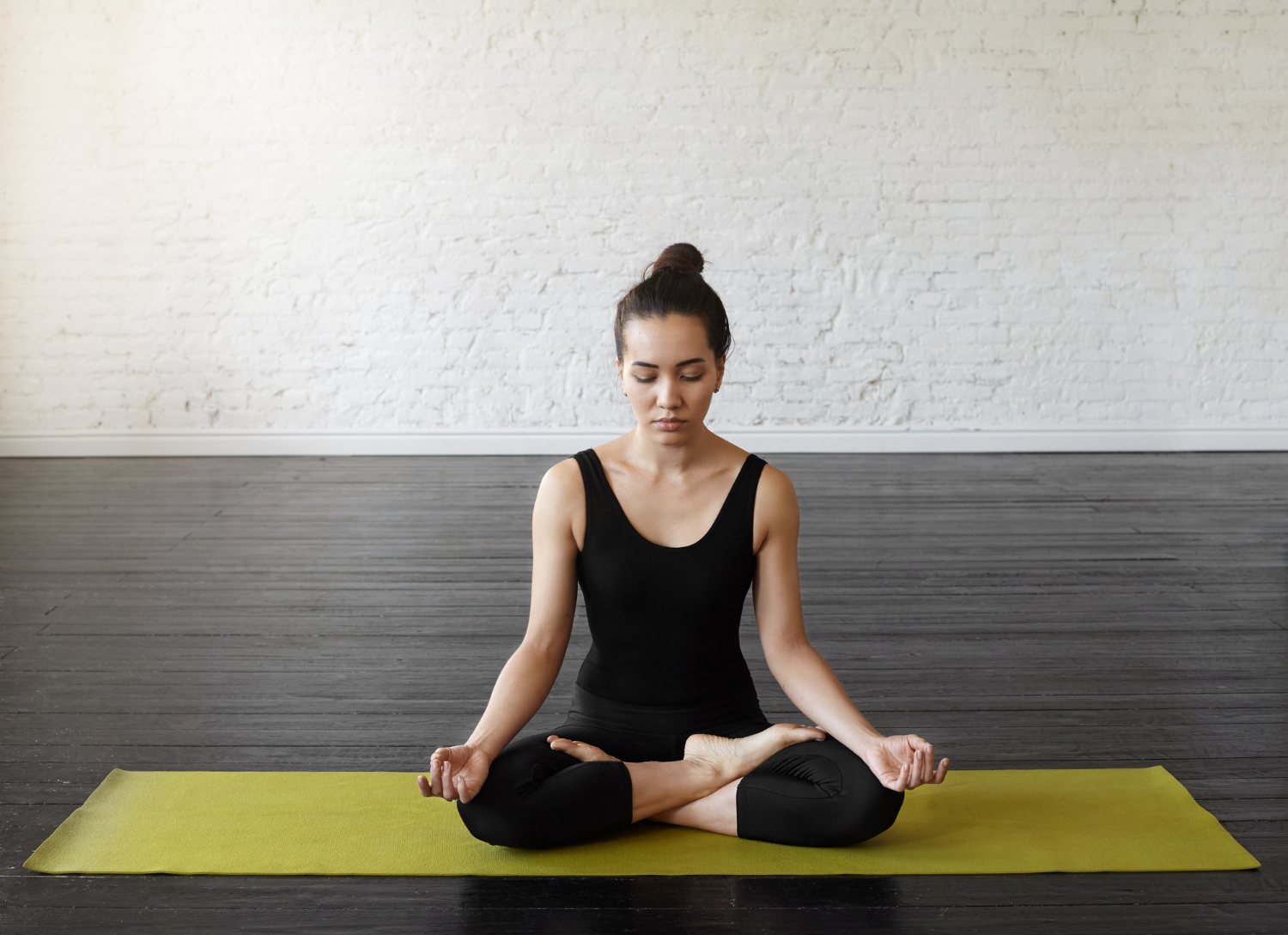
Yin Meditation Yoga poses have gained immense popularity in recent years due to their incredible benefits for the mind, body, and spirit.
This unique form of yoga combines the principles of Yin Yoga, which focuses on holding poses for extended periods, with the meditative practice of mindfulness and deep breathing.
By incorporating these elements, Yin Meditation Yoga offers a profound experience of relaxation, restoration, and self-discovery.
In this article, we will explore the amazing benefits of Yin Meditation Yoga poses and guide you through the steps to practice them effectively.
Related Stories
 Yoni Mudra: Benefits, Side Effects, How To Do and Precautions
 How Mudras Helped Me Awaken the Pineal Gland: A Practical Guide to Inner Awareness
Whether you are a seasoned yogi or a beginner seeking inner peace, this practice has something to offer for everyone. So, let’s delve into the world of Yin Meditation Yoga and unlock its transformative power.
Benefits of Yin Meditation Yoga Poses.
1 Enhances Flexibility.
Yin poses focus on stretching and lengthening the connective tissues in the body, such as ligaments, tendons, and fascia. This helps to improve overall flexibility, joint mobility, and range of motion.
2 Calms the Mind.
The slow and deliberate nature of Yin Meditation Yoga Poses cultivates a quiet and calm mental state. By holding poses for an extended duration, practitioners are encouraged to observe their thoughts without judgment, leading to increased self-awareness, reduced stress, and improved mental clarity.(1)
3 Increases Circulation.
Yin poses stimulate blood flow to various parts of the body, promoting healthy organ function and nourishing the tissues. As a result, practitioners may experience a sense of revitalization and improved overall health.
4 Balances Energy Flow.
Yin Meditation Yoga Poses target the body’s meridian lines, which are channels through which energy (known as chi or prana) flows. By unblocking and harmonizing these energy pathways, practitioners can achieve a balanced flow of energy throughout the body, promoting vitality and overall well-being.
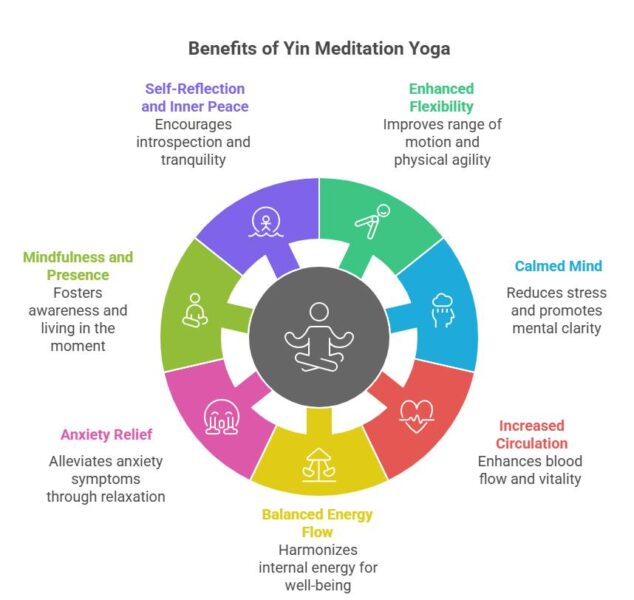
5 Yin meditation for anxiety.
Yin poses work deeply on the muscles and connective tissues, helping to release tension, anxiety, and stored emotions. This release can alleviate physical discomfort, reduce stress levels, and promote a sense of relaxation and tranquility.(2)
6 Cultivates Mindfulness and Presence.
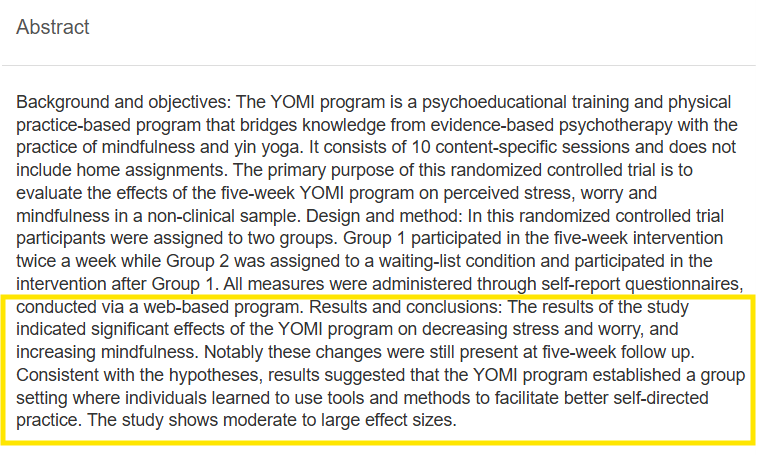
Yin Meditation Yoga Poses encourage practitioners to be fully present in the moment, fostering a deep sense of mindfulness. By focusing on the breath and bodily sensations, individuals can develop a heightened sense of awareness, acceptance, and gratitude, both on and off the mat.(3)
7 Promotes Self-Reflection and Inner Peace.
The introspective nature of Yin Meditation Yoga Poses allows for self-reflection and introspection. Through this practice, individuals can gain insight into their emotions, thoughts, and behaviors, leading to a deeper understanding of themselves and fostering a sense of inner peace and harmony.
| 💡 Tips FreakToFit.com Incorporating Yin Meditation Yoga Poses into one’s regular practice can bring about profound physical, mental, and emotional benefits. By embracing stillness, surrendering to discomfort, and nurturing the mind-body connection, practitioners can experience a heightened sense of well-being and embark on a transformative journey of self-discovery. |
Yin Meditation Yoga poses with steps.
Here are some Yin Meditation Yoga poses along with steps to help you incorporate this practice into your routine:
1 Butterfly Pose (Baddha Konasana).
– Start by sitting on the mat with your legs extended.
– Bend your knees and bring the soles of your feet together, allowing your knees to drop open.
– Gently fold forward, keeping your spine long and relaxed.
– Rest your hands on your feet or place them on the floor in front of you.
– Close your eyes, relax your body, and focus on your breath.
– Hold this pose for 3-5 minutes, allowing your body to release tension and surrender to the stretch.
2 Sphinx Pose (Salamba Bhujangasana).
– Lie on your belly with your legs extended and feet hip-width apart.
– Place your forearms on the mat, parallel to each other and shoulder-width apart.
– Press your forearms into the mat, lifting your chest and head while keeping your pelvis grounded.
– Relax your shoulders away from your ears, lengthening your neck.
– Close your eyes, soften your gaze, and breathe deeply into your belly.
– Hold this pose for 2-4 minutes, allowing your spine to gently stretch and release any tension.
3 Reclining Butterfly Pose (Supta Baddha Konasana).
– Start by lying on your back with your knees bent and feet on the floor.
– Bring the soles of your feet together, allowing your knees to drop open.
– Use blocks or blankets to support your knees if needed.
– Place your arms by your sides, palms facing up.
– Close your eyes, relax your body, and focus on your breath.
– Allow your body to sink into the mat, releasing any muscle tension.
– Hold this pose for 5-7 minutes, embracing the sensations and surrendering to the present moment.
4 Child’s Pose (Balasana).
– Begin on your hands and knees, with your knees wider than hip-width apart.
– Sit back on your heels, bringing your forehead to rest on the mat.
– Extend your arms forward or alongside your body, palms facing up.
– Relax your shoulders, soften your gaze, and breathe deeply into your back.
– Sink into this pose, allowing your body to release tension and find comfort.
– Hold this pose for 3-5 minutes, focusing on your breath and cultivating inner peace.
| 💡 Tips FreakToFit.com Remember, Yin Meditation Yoga is a practice of stillness and surrender. Be patient with yourself, listen to your body, and allow the practice to unfold naturally. As you integrate these poses into your routine, you’ll experience a deeper sense of relaxation, improved flexibility, and a heightened state of mindfulness. |
How These 4 Yin Meditation Poses Helped Me Find Calm, Balance, and Deeper Stillness- My Personal Experience.
I am Pamela Sharma, 29, Wellness Coach & Meditation Guide, for years, I struggled with constant restlessness during meditation. No matter how hard I tried, my mind would jump from one thought to another, making it impossible to feel grounded.
When I discovered Yin Meditation Yoga, everything changed.
Holding the poses for several minutes felt uncomfortable at first, but slowly I began to understand the magic of stillness. Butterfly Pose and Reclining Butterfly became my go-to practices.
These postures helped me release deep emotional tension I didn’t even know I was carrying.
Within a few weeks, I noticed a profound shift — my anxiety reduced, my breath became softer, and my meditations finally felt peaceful.
Yin Meditation Yoga didn’t just improve my flexibility; it helped me connect with myself on a deeper level. Today, I incorporate these poses into every meditation session I teach because I’ve experienced their transformative power firsthand.
“Yin Meditation Yoga taught me that true peace begins the moment I allow my body to slow down and simply be.”
Expert Opinion.
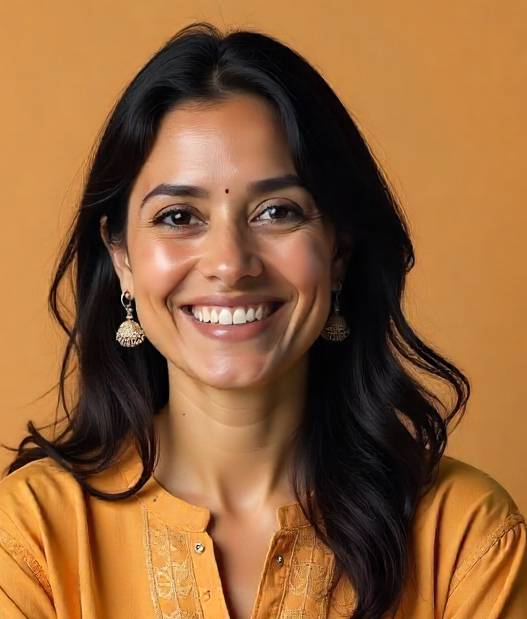
As per Dr. Kavita Rao, Yoga Therapist & Holistic Wellness Specialist, Yin Meditation Yoga is one of the most effective practices for regulating the nervous system and releasing deep-rooted tension. By holding gentle poses for several minutes, the body shifts into a parasympathetic state, allowing the muscles, fascia, and even emotional layers to soften.
This slow, mindful approach not only enhances flexibility but also supports long-term stress reduction, mental clarity, and emotional balance.
I often recommend Yin poses to clients who struggle with anxiety, overthinking, or burnout because it helps them reconnect with their breath and restore inner harmony.
Frequently Asked Questions.
1 Is Yin Yoga good for meditation and anxiety relief?
Yes. Yin Yoga slows down the body, activates the parasympathetic nervous system, and helps release deep physical and emotional tension — making it highly effective for meditation and anxiety relief.
2 How long should I hold Yin Meditation Yoga poses?
Typically, Yin poses are held for 2–7 minutes, depending on your comfort level and experience. Longer holds allow deeper release in the fascia and promote mindfulness.
3 Can beginners practice Yin Meditation Yoga?
Absolutely. Yin Yoga is beginner-friendly because it uses gentle, passive postures. Props like cushions, blocks, or blankets can be added for support.
4 What is the best time to practice Yin Meditation Yoga?
Evenings or before bedtime are ideal because Yin Yoga calms the mind and relaxes the body, helping improve sleep and reducing stress. However, it can be practiced anytime you need grounding.
5 Do Yin Meditation Yoga poses improve flexibility?
Yes. Because Yin poses target deep connective tissues and involve long holds, they significantly improve flexibility, joint mobility, and overall ease of movement over time.
Bottom Line.
Yin Meditation Yoga Poses offer a unique and transformative experience for individuals seeking inner peace, deep relaxation, and increased self-awareness. By holding passive poses for an extended period of time, practitioners can access the deeper layers of their physical, mental, and emotional being.
These poses encourage stillness, patience, and acceptance, allowing for a profound release of tension and a heightened sense of connection with oneself. Incorporating Yin Meditation Yoga Poses into a regular practice can lead to improved flexibility, reduced stress, enhanced mindfulness, and an overall sense of well-being. Whether practiced alone or in combination with other forms of yoga, Yin Meditation Yoga Poses provide a powerful tool for self-discovery, personal growth, and inner harmony.
+3 Sources
FreakToFit has strict sourcing guidelines and relies on peer-reviewed studies, educational research institutes, and medical organizations. We avoid using tertiary references. You can learn more about how we ensure our content is accurate and up-to-date by reading our editorial policy.
- Five-week yin yoga-based interventions decreased plasma adrenomedullin and increased psychological health in stressed adults: A randomized controlled trial; https://pmc.ncbi.nlm.nih.gov/articles/PMC6051627/
- The effect of yin yoga intervention on state and trait anxiety during the COVID-19 pandemic; https://pmc.ncbi.nlm.nih.gov/articles/PMC10973109/
- Yin yoga and mindfulness: a five week randomized controlled study evaluating the effects of the YOMI program on stress and worry; https://www.researchgate.net/publication/314851680_Yin_yoga_and_mindfulness_a_five_week_randomized_controlled_study_evaluating_the_effects_of_the_YOMI_program_on_stress_and_worry