











































 Workout

 Meditation


 Podcast
 E-book



In today’s fast-paced world, most of us are perpetually hunting for ways to lose weight effectively and improve our overall well-being. While traditional exercise and diet are the most widely discussed options, there’s been a swelled interest in alternative healthcare solutions that target both the mind and body. One of those approaches is somatic yoga for weight loss.
What is Somatic Yoga?
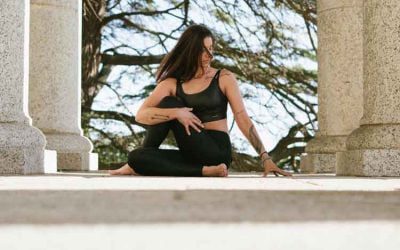
Somatic yoga is a fusion of yoga and the elements of somatics—the latter refers to a method of body awareness which helps you become aware of and to feel the inner landscape of your body. The word “somatic” is derived from the Greek word “soma,” which translates to “the living body.” It underscores the concept of knowing your body’s inside rather than simply the external movements or appearances.
When you do somatic yoga, slow, mindful movements are that you are to engage in, not only which ensure an awakening, release of energy and better positioning, but that also produce inner space through outer space and hence have an “antigravity” effect on the body. This calm way teaches your body to regenerate, it is very applicable specifically to the stressed, chronically pained, and traumatizeds.
How Somatic Yoga Supports Weight Loss?
Somatic yoga as a form of slimming may appear slow and restorative, but it works well for weight loss by engaging the mind as well as the body.
Related Stories
 Hakini Mudra: Benefits, Side Effects, How To Do and Precautions
 My Journey With Katonah Yoga: What It Is, Its Benefits, and How You Can Start
1 Increased Body Awareness.
Somatic yoga basically educates you on your body-sensations signals, which allows you to recognize when you are hungry, when you have eaten enough, and your level of energy. With this raised body awareness, you are in a better position to desist from the type of eating that is mechanical or unthinking or even eating more than the body needs, and these conditions are typical not only to weight loss but also to weight gain.
2 Reduction of Stress and Cortisol Levels.
Undoubtedly, stress is the root cause of our problems in the society, especially the ones related to weight. One of the body’s responses to stress is the release of Cortisol hormone which is responsible for storing fat in the abdomen, primarily.
According to a study published in 2016 by the journal Frontiers in Human Neuroscience, somatic practices had great effect of lowering stress levels and elevating mood that is key to long-term success with weight loss.
3 Improved Digestion.
A large part of the population is affected by digestion owing to stress, bad eating habits, and or other situations. Somatic yoga, which primarily focuses on deep breathing and relaxation, improves digestion and this is made possible by the parasympathetic nervous system, which is also known as the “rest and digest” system, getting into action, thereby, the body metabolizes or breaks down food in a more efficient manner.
4 Mindful Movement and Gentle Exercise
Somatic yoga is different since it is not very intense, yet effective like any other high-intensity exercise. It maintains a slow but steady motion which activates the deep muscles and contributes to flexibility, balance and core strength. Although it can never burn as many calories as running or weightlifting, it can be used to supplement other exercises since it benefits in terms of muscle coordination and efficacy of movement, and thereby prevents the occurrence of injuries, and strengthen the overall fitness regime of a person.
How to Practice Somatic Yoga for Weight Loss?
Now that you have decided to give somatic yoga a chance, it is time to introduce some concrete steps to take to jump into it.
1 Set a Calm Environment.
In somatic yoga, one operates in a quiet and undisturbed place. Seek a quiet space so that you may concentrate on movements and breathing. You will not require any special gears; just use a yoga mat or a cushy place to exercise.
2 Focus on the Breath.
Another major component of somatic yoga is the breath. Slow breathing in and out activates the parasympathetic nervous system and allows releasing the stress and inducing relaxation. When you begin each session, breathe in through your nose slowly and deeply a few times and breathe out through your mouth.
3 Move Slowly and Mindfully.
Somatic yoga performs movements slowly and carefully. We should not do poses quickly, but experience each stretch and movement. This gradual speed enables you to get one in touch with their body and avoid injuries which could happen in the event that one runs too fast.
Interview with an Expert: Insights from a Somatic Yoga Practitioner.
We interviewed Julie Sanders, a qualified teacher of somatic yoga, having been instructing since more than 15 years. Julie claims that somatic yoga is life changing to her customers and especially those in need to lose weight.
I have experienced clients that were angered by conventional weight loss practices. As soon as they began to do some somatic yoga, they would feel much more in balance with their bodies and the weight would simply fall off. They were not simply burning calories but they became aware of their body and the relationship they developed with food.”
Julie points out that somatic yoga is not the solution to dropping a few pounds but a permanent change of lifestyle. It is putting yourself closer to yourself and then the real person emerges in the process of change.
Scientific Evidence Supporting Somatic Yoga for Weight Loss.
An increasing number of studies come to affirm the hypothesis that mindful movement such as somatic yoga can contribute to weight loss.
A study published in the Journal of obesity in 2014 revealed that the practice of mindfulness through somatic movements assisted the subjects in reducing emotional eating and losing weight in a significantly better manner than their counterparts who were enrolled in traditional diet and exercise based programs.(1) The researchers found that enhancing the body awareness is very important in the long-term management of weight.
A research published in Frontiers in Psychology noted that somatic practices enhance mental health; induce a better lifestyle in terms of reduced stress by the subjects and results in healthier decisions, all of which bring about weight loss.(2)

Bottom Line.
Somatic yoga is a cult of a diet neither, somatic yoga is making a change in attitude to your body and attitude to your mind. Self-aware-ness of the body, reduced stress, relationship with the self will enable making permanent changes that will not be limited to that mon helical figure to count on the scale.
Regardless of whether you have just begun your practice of yoga or you are a professional one, somatic yoga can be a nice addition to your weight loss regime because it will not only allow you to achieve your fitness goals but also feel that inner sense of peace and calm throughout the experience.
+2 Sources
Freaktofit has strict sourcing guidelines and relies on peer-reviewed studies, educational research institutes, and medical organizations. We avoid using tertiary references. You can learn more about how we ensure our content is accurate and up-to-date by reading our editorial policy.
- Mindfulness meditation as an intervention for binge eating, emotional eating, and weight loss: A systematic review; https://www.researchgate.net/publication/260043918_Mindfulness_meditation_as_an_intervention_for_binge_eating_emotional_eating_and_weight_loss_A_systematic_review
- Regular Physical Activity, Short-Term Exercise, Mental Health, and Well-Being Among University Students: The Results of an Online and a Laboratory Study; https://www.frontiersin.org/journals/psychology/articles/10.3389/fpsyg.2020.00509/full