

































 Workout

 Meditation


 Podcast
 E-book


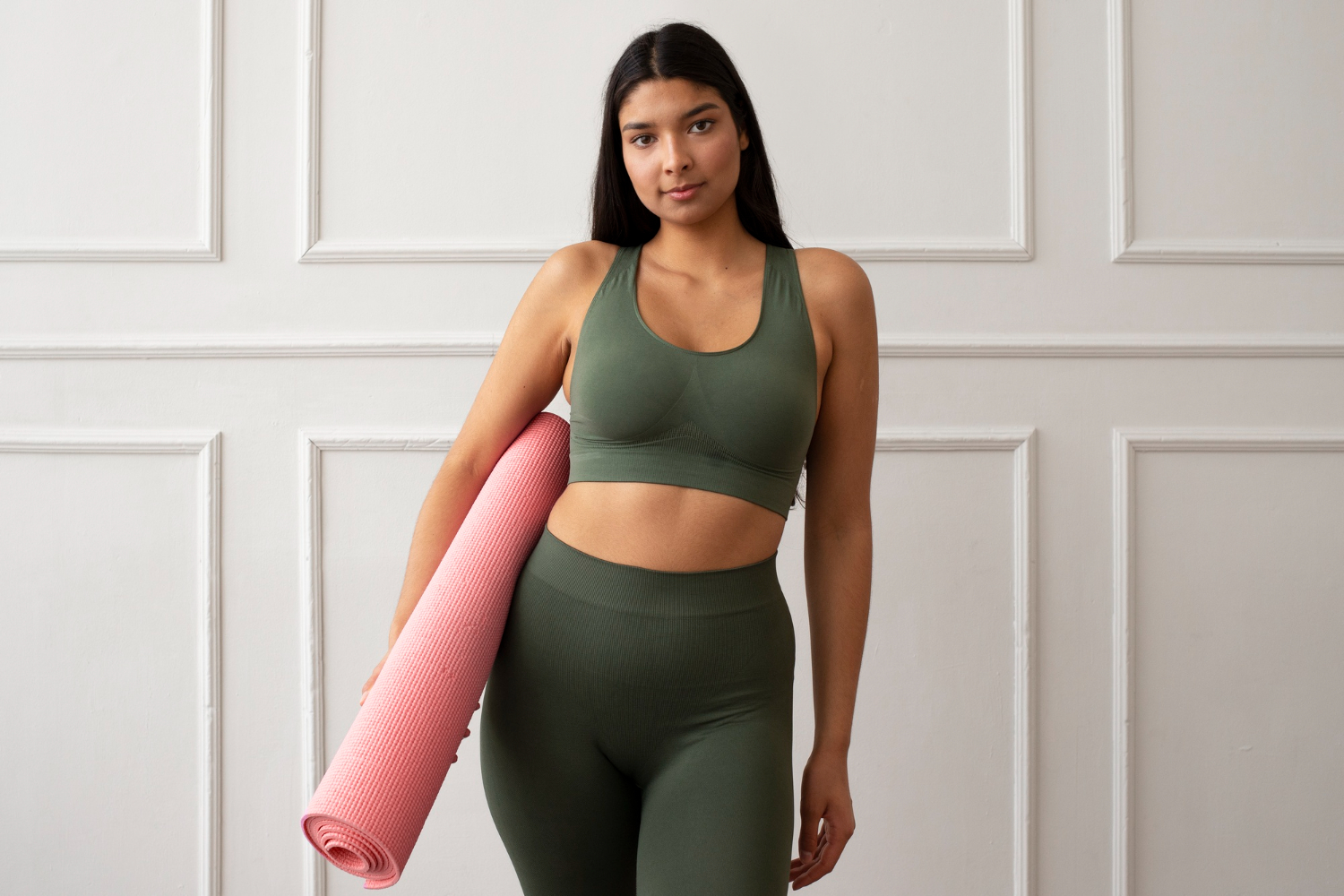
Yoga has grown to be one of the most popular forms of exercise and relaxation across the globe, offering benefits such as improved flexibility, mental clarity, stress relief, and strength. But if you’re just starting your yoga journey or even if you’ve been practicing for years, one common question arises: What should I wear for yoga? Choosing the right yoga attire is not just about looking good, but about comfort, freedom of movement, and even safety. In this article, we’ll break down the essentials of yoga wear, backed by expert advice, scientific studies, and real-life experiences.
Why Is the Right Yoga Wear Important?
It is much better that we find an answer to the question of what is necessary to wear for yoga than moving on to the clothes.
Yoga also consists of a variety of physical exercises that are aimed at encouraging flexibility and range of motion. If you wear tight or wrong clothes, you will have difficulty and might feel pain and ache because your movement is limited leading to a possible risk of injury. On the other hand, the right attire improves practice by making it easier for the body to move naturally, stay cool, and focus.
1 Yoga Tops: Breathability and Comfort First.
One of the major aspects to take into consideration while selecting yoga tops is the breathability and comfort factor.
Related Stories
 7 Amazing 3 People Yoga Poses : Try It Today
 Why Do You Shake During Meditation? Causes, Insights, and Solutions
A. Breathable Fabrics.
Your body will be warm whether you are practicing a more dynamic style like Vinyasa or a slower, meditative form like Hatha. So it is necessary to choose the most breathable fabrics to get rid of sweat and keep the body cool. Cotton blends, bamboo, or rather the new moisture-wicking material that is polyester blends are all feasible options.
Scientific Evidence.
Scientific Research indicates that specially weaved synthetic fabrics used in sportswear to wick moisture away are more efficient in thermal management during physical activity. Athletes wearing moisture-wicking fabrics recorded significantly lower skin temperatures and felt significantly more comfortable during exercise than those wearing traditional cotton clothing, according to a study conducted by OrifaY et al. (2017) and published Journal of Textile Science.(1)
B. Fit and Functionality.
Select those tops that are suitable for your size and that you can wear without fear of them slipping during the asanas like Downward-facing dog or inversions. Fitted tank tops or tees that have good body-hugging properties and, at the same time, offer unrestricted movement, are the best clothing according to experienced yogis. However, if you prefer it to be of a freer cut, then make certain it does not turn into a nuisance by puckering along the way during the performance.
Pro Tip.
Emma Clarke’s tip is to “try to find your leotard the day before the lesson, and, once you have it, lift shoulders and lean forward to see if the top is resistant to slipping or not.”
2 Yoga Bottoms: Flexibility and Mobility.
Yoga is a combination of exercises which include stretching, bending, and fusion of postures. The best pants among a wide array of materials are the ones that can help you stretch your limbs far and not hold you back from physical activity.
A. Yoga Leggings or Pants?
Both tights and pants are the most typical selections for the lower part when doing the asanas as well as relaxing poses in yoga. The most loved yoga leggings are especially the high-waisted ones as they stay where they are supposed to and fit you so well, the latter is smooth and comfortable. The yoga pants, besides being a little bit wider, have a waist drawstring for adjustments.
If your priority is your exercise in sweaty places or doing a faster-paced yoga style like Ashtanga, moisture-wicking leggings are the ones you should better go for. When there is no strong physical activity happening and the environment is more serene, for instance in Yin Yoga, loose pants made of natural materials like cotton can give you the freedom to move.
B. Fabric Considerations.
Ensure that during your exercise outfits are made of elastic materials and worn out only to be replaced when they’re not anymore useful. Stretchy and durable are the fabric requirements you’re looking for in yoga clothes. Spandex and Lycra are just the right materials for stretching, while those cotton blends are good for those who like natural and soft clothes. Look for a fabric that allows movement and does not become transparent when stretched or does not wear out as it is less tight on the bend or stretch of the clothes.
3 Sports Bras: Support Matters.
It is very important for women to use the sports bra according to the exercise they are going to do, especially in the case of more energetic yoga. The sports bra should provide the necessary support without being too suffocating.
A. Low to Medium Impact Support.
As yoga does not include activities such as high-impact movements like running or jumping, the majority of women feel comfortable in low-to-medium impact sports bras. Mind to select a top that grants you a full range of motion in your shoulders and back without the necessity of rolling your skin up.
Pro Tip:
In such cases, use the workout moisture-wicking sports bra to stay dry and avoid getting a rash by the sticky sweat.
Yoga Accessories: Socks and Hair Ties.
A. Yoga Socks.
When we talk about yoga, it’s mostly a barefoot practice, but there are people who like wearing yoga socks for a better grip or to keep their feet warm in case they are practicing in a cold environment. These socks are generally equipped with a leak-proof sole so that the grip on the mat is not lost even if one resorts to non-slip shoes.
B. Hair Ties and Headbands.
If you have long hair, you will need to tie them in place to avoid them getting in the way during the exercise. Use hair ties and headbands for keeping your focus. They are more like your accessories since metallic hair clips may have a disadvantage in certain cases such as Savasana (corpse pose).
What to Avoid: Common Yoga Wear Mistakes.
Having talked about the appropriate attire to wear, the next segment deals with what is not suitable for the yoga activity.
– Too-tight clothing: Steer clear of all the stuff that is likely to hinder your blood flow and can suffocate your skin.
– Clothes with zippers or buttons: People often tire of the trouble that comes with the wearing of these clothes leading to irksome sensations while the participants are performing on the floor.
– Oversized tops: On the one hand, it is highly convenient, but, on the other, you might find that these loose-fitting off-the-shoulder tops will prevent you from turning upside down. Also, the instructor will be unable to check your posture to make sure that it is correct.
Scientific Evidence on the Benefits of Proper Yoga Attire.
The proper yoga clothing has been linked not only with the comfort of the users but also with their performance. Research evidence has shown that exercise clothes which are able to stretch and allow breathing would help athletes to maintain a good posture and a perfect alignment during the practice. Also, if the right moisture-absorbing fabrics are used, the temperature of the body will be well regulated to a level where there will be an enhancement of the endurance capacity during the longer periods of workout.
Bottom Line.
Picking the most suitable yoga clothes is based on your own choice, your comfort level, and practicality. You should remember that selecting clothes that are more airy, stretchable, and which lay perfectly on your body will add more power to your practice and as a result, you will be able to concentrate more on your breath, physical activities, and cogitation. In the context of self-discovery that yoga is, make sure to prioritize the clothes that not only fit you well but let you move confidently on the yoga mat.
Now, that you are familiar with the clothes you should dress in, it is about time to lay your hands on your yoga mat, dress in the most comfortable clothes you have for yoga and start your practice with confidence!
+1 Source
Freaktofit has strict sourcing guidelines and relies on peer-reviewed studies, educational research institutes, and medical organizations. We avoid using tertiary references. You can learn more about how we ensure our content is accurate and up-to-date by reading our editorial policy.
- Impact of vitamin E in improving comfort, moisture management and mechanical properties of flame-retardant treated cotton fabric; https://pmc.ncbi.nlm.nih.gov/articles/PMC10777372/