
















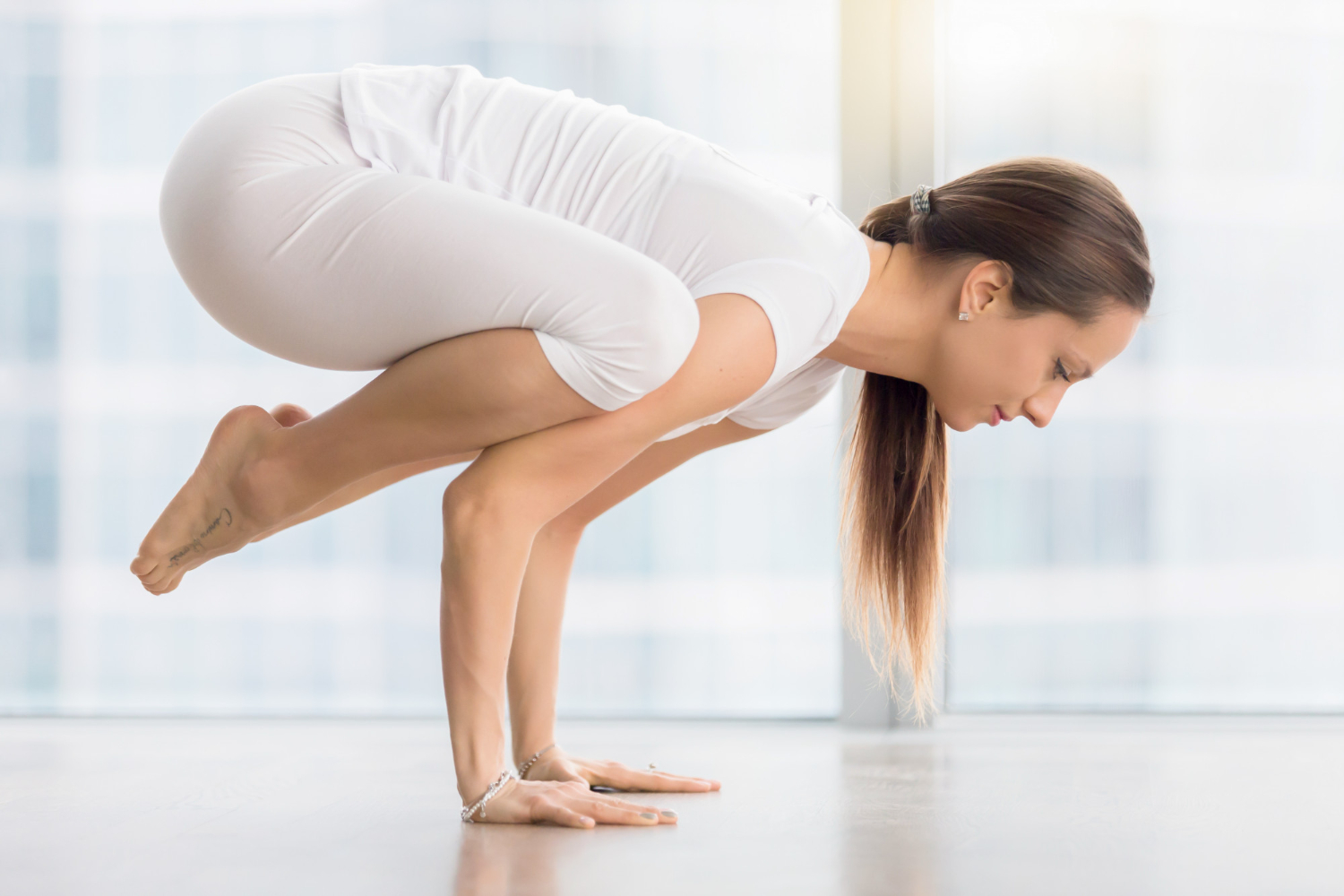
Baby Crow Pose Yoga adalah variasi keseimbangan lengan yang menantang tetapi mudah didekati yang dapat membantu pemula mengembangkan kekuatan, koordinasi, kepercayaan diri, dan keterampilan mengubah berat badan yang diperlukan untuk keseimbangan lengan yoga yang lebih canggih.
Jika Anda pernah melihat pose gagak dan berpikir, “Saya rasa saya tidak siap untuk melepaskan kedua kaki sepenuhnya dari lantai,” Baby Crow bisa menjadi batu loncatan yang berguna.
Pose sering dilakukan dengan posisi lutut tinggi di atas atau di dekat lengan atas sementara kaki tetap lebih dekat ke tanah atau diangkat hanya sebentar. Namun, terminologi tidak sepenuhnya distandarisasi di seluruh komunitas yoga, jadi “Baby Crow” dapat menjelaskan variasi yang sedikit berbeda tergantung pada guru atau sekolahnya.
Ini penting karena bayi gagak bukanlah nama pose bahasa Sansekerta yang distandarisasi secara universal. Ini umumnya digunakan sebagai istilah pengajaran informal untuk variasi gagak yang ramah pemula atau yang dimodifikasi.
Cerita terkait
 Vitarka Mudra: Manfaat, Efek Samping, Cara Melakukannya dan Tindakan Pencegahan
 Apa itu Katonah Yoga: Manfaat, Cara Melakukan, dan Tips Ahli
Gerakan yang mendasarinya terkait dengan keseimbangan lengan gagak/derek tradisional. Gagak biasanya diajarkan sebagai keseimbangan lengan menengah yang membutuhkan transfer berat ke tangan, kontrol bagasi, dan keseimbangan daripada hanya kekuatan lengan kasar.
Karena tangan dan pergelangan tangan Anda mendukung sebagian besar berat badan Anda, tekniknya penting. sehelai Pemula tidak boleh terburu-buru dalam pose Hanya karena terlihat kecil atau mudah.
ini Panduan menjelaskan apa yang diposekan oleh bayi gagak adalah, bagaimana mendekatinya dengan aman, otot apa yang terlibat, kesalahan umum, modifikasi, perkembangan, dan kapan harus menghindari pose.
Apa itu pose bayi gagak?
Bayi gagak umumnya dianggap sebagai persiapan yang dimodifikasi untuk pose gagak.
Alih-alih segera mencoba menyeimbangkan dengan kedua kaki mengambang sepenuhnya dari lantai, praktisi bekerja pada:
- Menempatkan tangan dengan benar
- Posisikan lutut pada lengan atas
- Pergeseran berat badan ke depan
- Mengaktifkan inti
- Mengembangkan kekuatan pergelangan tangan dan bahu
- Belajar bagaimana keseimbangan rasanya
Salah satu tantangan terbesar di Crow bukan hanya kekuatan lengan. Ini adalah pemahaman bagaimana menggeser pusat massa Anda di atas tangan Anda tanpa menjadi takut dengan kemungkinan terbalik.

Bayi gagak dapat membuat proses belajar ini kurang mengintimidasi.
Anggap saja sebagai Latihan Membangun Keterampilan, bukan pose yang harus Anda kuasai segera.
Apakah bayi gagak sama dengan pose gagak?
belum tentu.
Nama-nama yang digunakan untuk keseimbangan lengan dapat sangat bervariasi antara tradisi yoga.
Di banyak kelas modern:
- Pose gagak mengacu pada versi lengan bengkok.
- Pose derek mengacu pada versi lengan yang lebih lurus.
Namun, beberapa guru menggunakan nama Sansekerta secara berbeda, dan “bayi gagak” umumnya merupakan variasi informal daripada asana yang didefinisikan secara universal.
Jadi, jika instruktur Anda mendemonstrasikan pengaturan baby crow yang sedikit berbeda, itu tidak berarti satu versi salah.
Yang penting adalah memahami gerakan yang dimaksudkan dan mempraktikkannya dengan aman.
Apa yang membuat bayi gagak menantang?
Sekilas, bayi gagak mungkin tampak seperti latihan lengan.
itu tidak.
Keseimbangan lengan yang sukses membutuhkan koordinasi antara beberapa area tubuh.
tangan dan pergelangan tangan.
Tangan Anda memberikan fondasi.
Anda membutuhkan toleransi pergelangan tangan yang cukup dan kekuatan untuk menopang tubuh Anda Berat badan saat pergelangan tangan diperpanjang.
lengan bawah.
Otot lengan bawah membantu menstabilkan pergelangan tangan dan mempertahankan tekanan melalui tangan.
bahu.
Bahu Anda harus tetap aktif daripada jatuh ke lantai.
inti.
Otot perut dan otot tubuh membantu menjaga tubuh kompak dan mencegah pinggul Anda dari menjatuhkan.
pinggul.
Mobilitas pinggul membantu Anda membawa lutut ke posisi yang tepat.
paha bagian dalam.
Meremas kaki ke arah garis tengah tubuh dapat membantu menciptakan stabilitas.
keseimbangan.
Pada akhirnya, pose adalah masalah koordinasi.
Anda perlu menemukan titik di mana pusat massa Anda diposisikan dengan tepat di atas tangan Anda.
Pose Crow digambarkan sangat bergantung pada distribusi berat badan dan kontrol pusat gravitasi, bukan hanya kekuatan lengan.
Manfaat pose bayi gagak.
Karena bayi gagak adalah keseimbangan lengan yang dimodifikasi, banyak manfaat potensialnya berhubungan dengan kekuatan, koordinasi, keseimbangan, dan kesadaran tubuh.
Namun, itu penting untuk membedakan manfaat pelatihan potensial dari klaim medis.
Tidak ada bukti klinis yang kuat yang menunjukkan bahwa bayi gagak secara khusus mengobati atau mencegah suatu penyakit.
1. Membangun kekuatan tubuh bagian atas.
mendukung Anda tubuh melalui tangan Anda membutuhkan aktif Keterlibatan dari:
- pergelangan tangan
- garda depan
- pundak
- perang
Seiring kemajuan Anda, jaringan ini harus terbiasa dengan beban bantalan.
gagak Pose biasanya digambarkan sebagai penguatan pergelangan tangan, lengan bawah, lengan, dan daerah perut.
2. Menantang stabilitas inti.
Otot perut Anda tidak hanya ada di sana untuk membuat six-pack yang terlihat.
Selama keseimbangan lengan, batang tubuh harus tetap teratur sementara tubuh bagian bawah bergerak menjauh dari posisi berdiri normalnya.
Ini dapat membuat bayi gagak menjadi tambahan yang berguna untuk rutinitas pelatihan inti yang lebih luas.
3. Meningkatkan keseimbangan.
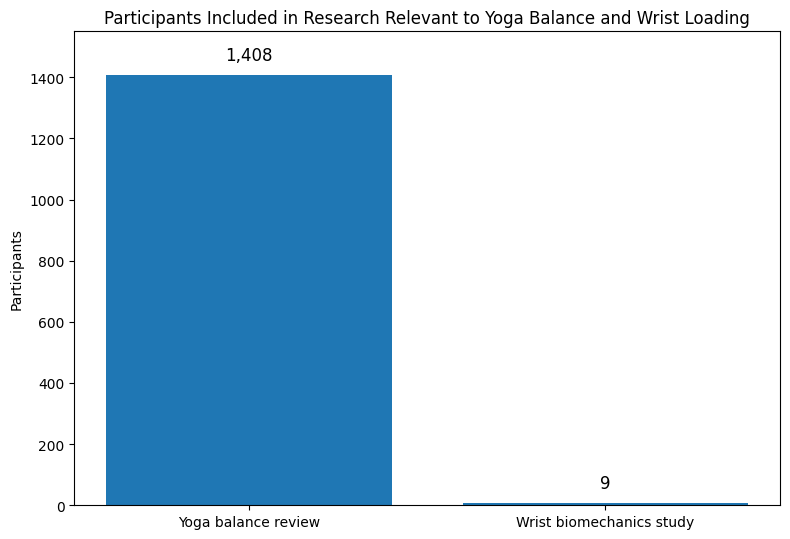
Baby Crow mengharuskan Anda untuk menemukan dan mempertahankan titik keseimbangan tertentu.(1)
Penyesuaian kecil di:
- jari-jari
- pergelangan tangan
- pundak
- pinggul
- kaki
dapat mengubah pusat massa Anda.
Mempelajari penyesuaian ini dapat meningkatkan kesadaran tubuh.
4. Mengembangkan koordinasi.
Pose membutuhkan beberapa tindakan pada saat yang sama.(2)
Anda perlu:
- Tekan melalui tangan Anda.
- Aktifkan bahu Anda.
- Bawa lutut Anda ke posisinya.
- Geser berat badan Anda ke depan.
- Libatkan bagasi Anda.
- Kendalikan kaki Anda.
Itu membuat bayi gagak menjadi latihan koordinasi yang berguna.
5. Membangun kepercayaan diri.
Keseimbangan lengan pada awalnya bisa terasa mengintimidasi.
Mempraktikkan versi yang dimodifikasi memungkinkan Anda mengalami perpindahan berat secara bertahap.
Alih-alih berpikir, “Saya harus melakukan gagak,” Anda dapat fokus pada pencapaian yang lebih kecil:
- Mendapatkan lutut lebih tinggi
- Menggeser lebih banyak beban ke depan
- Mengangkat satu kaki
- menahan satu nafas
- Kembali dengan aman
Tonggak kecil tersebut dapat membuat proses pembelajaran lebih mudah dikelola.
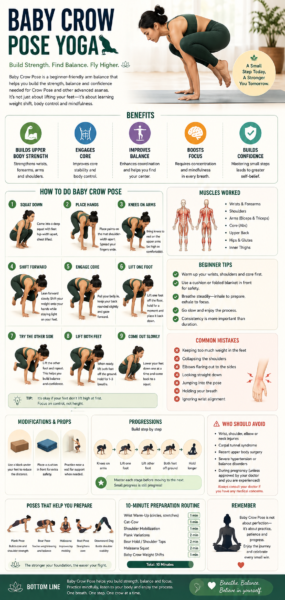
Bagaimana cara melakukan pose bayi gagak selangkah demi selangkah?
Karena Baby Crow tidak memiliki satu teknik standar universal, gunakan versi guru Anda jika Anda menghadiri kelas.
Berikut ini adalah pendekatan pemula konservatif.
Langkah 1: Pemanasan.
Jangan memulai dengan keseimbangan lengan saat pergelangan tangan dan bahu Anda benar-benar dingin.
Luangkan beberapa menit untuk mempersiapkan dengan lembut:
- lingkaran pergelangan tangan
- Telapak tangan
- anak sapi
- gerakan bahu
- Variasi papan
- jomblo
Artikel klinis tentang pose gagak juga merekomendasikan pemanasan pergelangan tangan, bahu, pinggul, dan inti sebelum melatih keseimbangan lengan.
Langkah 2: Masuk ke jongkok.
Berdirilah dengan kaki terpisah dengan nyaman.
Turun menjadi jongkok yang dalam.
Jika tumit Anda tidak mencapai lantai dengan nyaman, jangan memaksanya.
Langkah 3: Letakkan tangan Anda.
Letakkan telapak tangan Anda di atas matras selebar bahu.
Lebarkan jari-jari Anda.
Daripada membiarkan semua tekanan untuk duduk di tumit tangan Anda, tekan secara aktif melalui jari dan ujung jari Anda.
Ini memberi Anda kontrol yang lebih besar.
Langkah 4: Posisikan lutut Anda.
Bawa lutut ke arah lengan atas.
Posisi yang tepat tergantung pada anatomi Anda dan variasi yang Anda latih.
Jangan memaksakan lutut Anda secara agresif ke ketiak Anda.
Langkah 5: Geser ke depan.
Ini adalah bagian yang paling penting.
Gerakkan bahu secara bertahap ke depan.
Banyak pemula takut jatuh dan karenanya Pertahankan berat badan mereka terlalu jauh di belakang tangan mereka.
Gagak membutuhkan pergeseran berat badan ke depan yang sesuai untuk memungkinkan kaki menjadi lebih ringan.
Langkah 6: Jaga inti Anda tetap aktif.
Tarik otot perut ke dalam.
Pikirkan tentang membuat tubuh Anda kompak daripada membiarkan pinggul jatuh.
Langkah 7: Jaga pandangan Anda ke depan.
Jangan menatap langsung di antara kaki Anda.
Tatapan ke depan dapat membantu Anda mempertahankan keseimbangan dan hindari meruntuhkan kepalamu ke lantai.
Langkah 8: Angkat satu kaki.
Alih-alih segera mengangkat kedua kaki, coba angkat satu kaki sejenak.
Kembalikan ke lantai.
Ulangi di sisi lain.
Ini mengajarkan Anda bagaimana rasanya bergeser.
Langkah 9: Cobalah kedua kaki.
Saat Anda merasa nyaman, Anda dapat bereksperimen dengan mengangkat kedua kaki secara singkat.
Anda tidak perlu Tahan pose untuk waktu yang lama.
Satu detik terkontrol lebih berguna daripada penangguhan lima detik yang dicapai melalui teknik yang buruk.
Berapa lama Anda harus menggendong bayi gagak?
Tidak ada durasi ideal universal.
Jika Anda mempelajari gerakan ini, mulailah dengan:
1-3 napas
Saat teknik Anda meningkat, Anda dapat secara bertahap bekerja menuju pegangan yang lebih lama.
Kualitas lebih penting daripada durasi.
Jika pergelangan tangan Anda mulai sakit atau bahu Anda kehilangan stabilitasnya, turunlah.
Bayi gagak untuk pemula yang lengkap.
Jika Anda belum pernah melakukan keseimbangan lengan, jangan mulai dengan mencoba mengapungkan kedua kaki.
Sebagai gantinya, gunakan progresi ini:
tingkat 1.
Tangan di atas tikar + lutut diposisikan di lengan.
Tingkat 2.
mengalihkan Berat ke depan tanpa mengangkat kaki.
Tingkat 3.
Angkat satu kaki.
Tingkat 4.
kaki alternatif.
Tingkat 5.
Angkat kedua kaki secara singkat.
Tingkat 6.
Tahan gagak bayi untuk beberapa napas terkontrol.
Tingkat 7.
kemajuan menuju variasi Gagak Penuh pilihan Anda.
Pendekatan bertahap ini memungkinkan Anda mempelajari gerakan daripada hanya melemparkan tubuh Anda ke depan.
Bayi gagak berpose dengan blok.
Blok yoga dapat bermanfaat bagi pemula.
Tempatkan satu blok di bawah kaki Anda saat berlatih pengaturan.
Ini dapat mengurangi jarak Anda kumpulan perlu bepergian dan membantu Anda memahami posisinya.
Anda juga dapat menggunakan blok secara strategis untuk melatih perpindahan berat badan.
Namun, jangan letakkan benda yang tidak stabil di bawah kepala Anda atau gunakan peralatan yang tidak terduga dapat bergerak.
Gunakan bantal di depan Anda.
Ketakutan jatuh ke depan sangat umum ketika belajar keseimbangan lengan.
Selimut atau bantal yang dilipat di depan Anda dapat membuat latihan terasa kurang mengintimidasi.
Itu tidak membuat pose bebas risiko, tetapi memberikan pendaratan yang lebih lembut daerah jika Anda kalah keseimbangan.
Ini juga direkomendasikan secara umum dalam panduan keselamatan gagak.
Bayi gagak umum melakukan kesalahan.
Kesalahan 1: Menjaga terlalu banyak berat badan di kaki.
Jika Anda takut jatuh, Anda mungkin tidak akan pernah cukup menggeser beban ke tangan Anda.
Praktekkan goyangan maju yang dikendalikan.
Kesalahan 2: Menciutkan bahu.
Jangan biarkan bahu Anda tenggelam secara pasif ke lantai.
Pikirkan tentang secara aktif mendorong lantai menjauh.
Kesalahan 3: Membiarkan siku melebar.
Membiarkan siku bergerak berlebihan ke luar dapat membahayakan posisi Anda dan meningkatkan tekanan pada pergelangan tangan.
Menjaga lengan terorganisir dengan tepat adalah bagian penting dari teknik gagak.
Kesalahan 4: Melihat lurus ke bawah.
Menjatuhkan kepala Anda dapat mengubah keseimbangan Anda.
Pertahankan pandangan ke depan yang nyaman.
Kesalahan 5: Lupa jari-jari.
Jari-jari Anda tidak hanya mengikuti perjalanan.
Tekan melalui mereka dan gunakan untuk membuat koreksi keseimbangan kecil.
Kesalahan 6: Mencoba melompat ke dalam pose.
Jangan melompat agresif.
Pergeseran berat badan yang terkontrol jauh lebih mudah dipelajari daripada melompat berulang kali ke arah tangan Anda.
Kesalahan 7: menahan napas.
Pernapasan biasanya membantu Anda tetap rileks.
Jangan menahan napas hanya karena Anda sedang berkonsentrasi.
Bayi Gagak vs Gagak Penuh.
Bayi gagak umumnya digunakan sebagai variasi persiapan atau modifikasi.
Gagak penuh membutuhkan kepercayaan diri yang lebih besar dalam:
- Transfer Berat Badan
- pemuatan pergelangan tangan
- Stabilitas bahu
- Kontrol Inti
- imbangan
Perkembangan tidak perlu terjadi dengan cepat.
Beberapa orang mungkin mengembangkan keterampilan yang diperlukan dalam beberapa minggu, sementara yang lain membutuhkan waktu yang jauh lebih lama.
Anatomi Anda, pengalaman pelatihan sebelumnya, mobilitas, kekuatan, dan frekuensi latihan semuanya memengaruhi seberapa cepat Anda berkembang.
Pose bayi gagak vs bangau.
Nama-nama ini sering membingungkan.
Perbedaan yang umum digunakan adalah:
gagak: Siku tetap lebih bengkok.
derek: Lengan lebih lurus.
Crane umumnya membutuhkan kontrol dan kekuatan yang lebih besar karena lengan mendekati posisi yang lebih lurus.
Tetapi konvensi penamaan bervariasi antara sekolah yoga.
Jika Anda belajar dari seorang guru, ikuti terminologi dan teknik mereka.
Siapa yang harus menghindari pose bayi gagak?
Bayi gagak menempatkan beban substansial melalui tangan dan ekstremitas atas.
Berhati-hatilah atau hindari pose jika Anda memiliki:
- nyeri pergelangan tangan saat ini
- Cedera pergelangan tangan
- Cedera bahu
- Cedera siku
- Gejala Terowongan Karpal
- Masalah tangan atau jari yang signifikan
- Operasi tubuh bagian atas baru-baru ini
- kondisi leher atau keseimbangan tertentu
Bimbingan medis sangat penting jika Anda pulih dari cedera.
Panduan keselamatan berpose gagak secara khusus mengidentifikasi masalah pergelangan tangan, bahu, dan terowongan karpal sebagai Alasan untuk menghindari berpose atau mencari bimbingan yang tepat.
Kehamilan.
Kehamilan membutuhkan pertimbangan olahraga individual.
Karena bayi gagak adalah keseimbangan lengan dengan potensi jatuh ke depan, itu tidak boleh diperkenalkan dengan santai selama kehamilan.
Jika Anda hamil dan sudah berpengalaman dengan keseimbangan lengan, diskusikan latihan Anda dengan profesional kesehatan obstetrik Anda dan instruktur yoga prenatal yang terlatih dengan tepat.
Bagaimana jika pergelangan tangan Anda sakit?
Jangan secara otomatis menganggap ketidaknyamanan pergelangan tangan adalah sesuatu yang harus Anda “tekan.”
berhenti dan menilai.
Anda dapat mencoba:
- mengurangi durasi
- Memperbaiki posisi tangan
- Pemanasan dulu
- berlatih variasi yang kurang menuntut
- Menggunakan latihan yang berbeda untuk sementara
Jika rasa sakit berlanjut di luar praktik atau mengganggu aktivitas normal, cari penilaian dari profesional kesehatan yang memenuhi syarat.
Rasa sakit, mati rasa, atau kesemutan tidak boleh diabaikan.
Latihan yang dapat membantu Anda mempersiapkan diri.
Jika bayi gagak merasa sulit, Anda tidak perlu berlatih gagak bayi berulang kali.
Membangun komponen secara terpisah.
papan.
Mengembangkan kekuatan bahu dan batang tubuh.
tahan.
Mengajarkan menahan beban melalui tangan sambil menjaga lutut tetap dekat dengan lantai.
pengkondisian pergelangan tangan.
Penguatan pergelangan tangan dan mobilitas yang lembut dapat membantu mempersiapkan Anda untuk menahan beban.
Malasana.
Jongkok yang dalam dapat membantu Anda menjadi nyaman dengan posisi tubuh bagian bawah yang digunakan dalam banyak pengaturan gagak.
pose perahu.
Menantang kekuatan dan kontrol batang.
Push-up skapula.
Dapat membantu Anda mengembangkan kesadaran dan kekuatan di sekitar tulang belikat.
Latihan-latihan ini tidak menjamin Anda akan menguasai bayi gagak, tetapi mereka dapat mengembangkan kualitas fisik yang relevan.
Rutinitas persiapan gagak bayi selama 10 menit.
Coba ini sebelum latihan keseimbangan lengan:
1 menit: Lingkaran pergelangan tangan dan gerakan pergelangan tangan yang lembut
1 menit: anak sapi
1 menit: mobilitas bahu
2 menit: Variasi papan
2 menit: Beruang Tahan atau Beruang Keran Bahu
2 menit: Latihan Malasana
1 menit: Pergeseran berat badan gagak bayi
Tujuannya bukan untuk melelahkan diri sendiri.
Anda ingin cukup Persiapan untuk merasa hangat dan dikendalikan tanpa melelahkan otot-otot yang Anda perlukan untuk keseimbangan lengan.
Seberapa sering Anda harus berlatih?
Anda tidak perlu Latih gagak bayi setiap hari.
Untuk pemula, 2-4 latihan singkat Sesi per minggu Bisa menjadi titik awal yang masuk akal jika pergelangan tangan dan bahu Anda mentolerir beban.
Hindari berlatih berulang kali hingga gagal.
Beberapa upaya berkualitas tinggi biasanya lebih disukai daripada puluhan upaya terburu-buru.
Apakah bayi gagak baik untuk kekuatan inti?
Ini dapat menantang inti, terutama karena bagasi Anda harus tetap terkendali sementara tubuh Anda menyeimbangkan tangan Anda.
Namun, bayi gagak seharusnya tidak menjadi satu-satunya latihan inti Anda.
Program yang lengkap dapat mencakup:
- papan
- pembawaan
- jomblo
- Kutu Mati
- anjing burung
- anti -Latihan Rotasi
- Pose Yoga Lainnya
Ini memberikan jangkauan yang lebih luas dari tuntutan pelatihan batang.
Apakah bayi gagak membantu menurunkan berat badan?
tidak secara langsung.
Baby Crow adalah latihan yang relatif singkat dan berfokus pada keterampilan.
Ini dapat berkontribusi pada gaya hidup aktif, tetapi tidak boleh dipasarkan sebagai perawatan pembakaran lemak atau penurunan berat badan.
Jika tujuan Anda adalah pengurangan lemak tubuh, fokuslah pada gambaran yang lebih luas:
- Nutrisi yang sesuai
- Aktivitas fisik secara teratur
- latihan kekuatan
- aktivitas kardiovasku
- Tidur yang cukup
- Konsistensi jangka panjang
Pose bayi gagak dan fokus mental.
Keseimbangan lengan membutuhkan konsentrasi.
Anda harus memperhatikan:
- Tekanan tangan
- pernafasan
- renungan
- Posisi bahu
- Penempatan lutut
- imbangan
Itu bisa membuat latihan menjadi menarik secara mental.
Namun, hindari membuat klaim berlebihan bahwa bayi gagak mengobati kecemasan, depresi, atau kondisi kesehatan mental lainnya.
Yoga dapat menjadi bagian dari rutinitas pikiran-tubuh yang sehat, tetapi kondisi kesehatan mental layak mendapatkan perawatan profesional yang tepat.
Bagaimana mengetahui bahwa Anda siap untuk burung gagak penuh?
Anda tidak perlu memenuhi daftar periksa yang kaku.
Namun, Anda mungkin lebih siap ketika Anda bisa:
- Berikan berat badan dengan nyaman melalui tangan Anda.
- Lakukan papan dengan bahu terkontrol.
- Geser berat badan Anda ke depan tanpa panik.
- Angkat satu kaki pada satu waktu.
- mempertahankan pernapasan terkontrol.
- Berlatih tanpa nyeri pergelangan tangan atau bahu.
- Kembali ke lantai dengan aman.
Kemampuan untuk melakukan baby crow tidak secara otomatis berarti Anda siap untuk setiap variasi gagak atau bangau.
Kemajuan satu ketrampilan dalam satu waktu.
pertanyaan yang sering diajukan.
1. Apakah Pose Bayi Gagak Baik untuk Pemula?
Ini bisa menjadi pengantar yang berguna untuk penyeimbangan lengan karena memungkinkan Anda untuk melatih perpindahan berat badan dan posisi tubuh sebelum mencoba variasi yang lebih menuntut.
2 . Apakah bayi gagak lebih mudah daripada pose gagak?
Umumnya, variasi bayi gagak yang dimodifikasi dimaksudkan agar lebih mudah karena mengurangi permintaan keseimbangan. Namun, kesulitan tergantung pada versi spesifik yang diajarkan.
3. Otot apa yang bekerja dengan bayi gagak?
Ini dapat melibatkan pergelangan tangan, lengan bawah, lengan, bahu, otot perut, punggung atas, pinggul, dan paha bagian dalam sambil menantang keseimbangan seluruh tubuh.
4. Mengapa saya tidak bisa mengangkat kaki saya di bayi gagak?
Anda mungkin belum cukup menggeser beban ke arah tangan Anda, atau Anda mungkin perlu lebih banyak latihan dengan kontrol pergelangan tangan, bahu, pinggul, atau inti. Jangan memaksakan lift.
5. Haruskah lutut saya menyentuh ketiak saya?
belum tentu. Penempatan lutut bervariasi tergantung pada variasi dan anatomi Anda. Fokus pada posisi yang stabil dan terkontrol daripada memaksa lutut Anda ke lokasi tertentu.
6. Mengapa pergelangan tangan saya sakit saat bayi gagak?
Keseimbangan lengan menempatkan beban substansial melalui pergelangan tangan. Posisi yang buruk, persiapan yang tidak memadai, latihan yang berlebihan, atau masalah pergelangan tangan yang mendasarinya dapat menyebabkan ketidaknyamanan. Berhentilah jika Anda mengalami rasa sakit dan cari nasihat profesional jika terus berlanjut.
7 Bisakah saya melatih bayi gagak setiap hari?
Anda dapat melatih keterampilan secara rutin jika tubuh Anda mentolerirnya, tetapi upaya volume tinggi setiap hari tidak diperlukan. Berikan pergelangan tangan dan bahu Anda pemulihan yang memadai.
8. Bisakah bayi gagak membantu saya belajar pose gagak?
Ya, perkembangan gagak bayi yang dirancang dengan baik dapat membantu Anda berlatih perpindahan berat badan, penempatan tangan, posisi lutut, dan keseimbangan—semua keterampilan yang relevan untuk gagak.
garis bawah.
Yoga pose gagak bayi bisa menjadi batu loncatan yang berharga bagi orang-orang yang belajar keseimbangan lengan. Daripada memperlakukannya sebagai ujian kekuatan mentah, dekati sebagai kombinasi keseimbangan, koordinasi, mobilitas, kesadaran tubuh, dan perpindahan berat badan yang terkontrol.
Mulailah dengan pemanasan menyeluruh, latih variasi satu kaki, ubah berat badan Anda secara bertahap, dan jaga pandangan Anda tetap stabil. Bantal di depan Anda juga bisa membuat proses belajar menjadi kurang mengintimidasi.
Yang terpenting, jangan memaksakan pose. Keseimbangan lengan tipe gagak menempatkan beban yang berarti melalui pergelangan tangan, lengan, dan bahu, sehingga cedera yang ada atau rasa sakit yang terus-menerus harus ditanggapi dengan serius.
Anda tidak perlu menguasai Baby Crow dalam satu sesi. Latihan yang konsisten dan dikendalikan secara teknis jauh lebih berharga daripada berulang kali jatuh ke depan dalam upaya untuk melepaskan kaki Anda dari lantai.
+2 Sumber
FreaktoFit memiliki pedoman pengadaan yang ketat dan bergantung pada studi peer-review, lembaga penelitian pendidikan, dan organisasi medis. Kami menghindari penggunaan referensi tersier. Anda dapat mempelajari lebih lanjut tentang bagaimana kami memastikan konten kami akurat dan terkini dengan membaca Kebijakan Editorial.
- Pengaruh Yoga terhadap Keseimbangan, Jatuh, dan Metabolisme Tulang: Tinjauan Sistematis Uji Coba Terkendali Acak pada Individu Sehat; https://pubmed.ncbi.nlm.nih.gov/39607489/
- sudut sendi dan kekuatan pada struktur pergelangan tangan selama variasi pose yoga; https://commons.nmu.edu/isbs/vol38/iss1/76/