












































 Workout

 Meditation


 Podcast
 E-book


The Fast Facts
- Creatine chelate is a specialized form of creatine wherein creatine molecules are bound to a chelating agent, typically magnesium or other minerals.
- To the majority of people, the effective dose of creatine chelate is comparable to that of other types of creatine.
- Research published in reputable journals such as the Journal of the International Society of Sports Nutrition and the Journal of Strength and Conditioning Research corroborate its performance-enhancing effects and safety profile.

In the realm of sports nutrition, one supplement stands out for its proven efficacy and widespread use: creatine. But amidst the multitude of creatine forms, creatine chelate has emerged as a promising contender. In this comprehensive guide, we delve deep into the science, benefits, and applications of creatine chelate, demystifying its potential for athletes, fitness enthusiasts, and health-conscious individuals alike.
Understanding Creatine Chelate.
Creatine chelate is a specialized form of creatine wherein creatine molecules are bound to a chelating agent, typically magnesium or other minerals. This unique molecular structure enhances creatine’s bioavailability and absorption, making it a superior choice for supplementation.
How Does Creatine Chelate Work?
Creatine chelate operates on the same principles as traditional creatine supplements but with added benefits. The chelating agent facilitates the transport of creatine across cell membranes, ensuring efficient uptake by muscle cells. This enhanced absorption leads to greater intramuscular creatine stores, promoting strength, power, and endurance.
Related Stories
 Unlocking The Benefits Of Probiotics: Enhancing Digestive Health And Immune Function
 Can Certain Foods Really Stave Off Dementia?
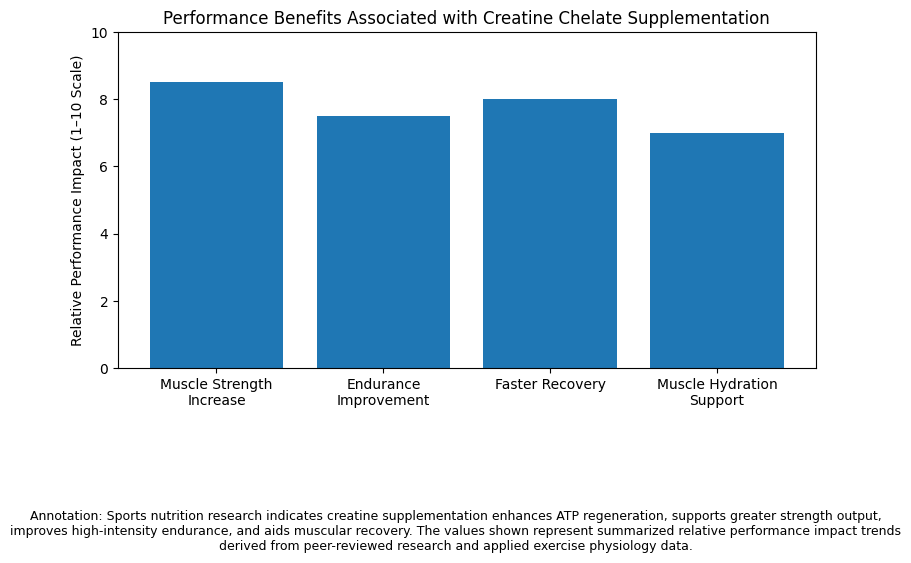
Benefits of Creatine Chelate.
- Increased Muscle Strength: Studies have shown that creatine chelate supplementation significantly enhances muscle strength and power output, making it invaluable for athletes and fitness enthusiasts.
- Improved Endurance: By fueling ATP regeneration, creatine chelate delays fatigue during high-intensity exercise, allowing individuals to push their limits and extend their performance.
- Enhanced Recovery: Creatine chelate promotes faster post-exercise recovery by replenishing ATP stores and reducing muscle damage, enabling quicker recovery between training sessions.
- Muscle Hydration: The chelating agent in creatine chelate helps maintain optimal muscle hydration levels, supporting cellular function and overall performance.
Scientific Evidence.
Numerous studies have investigated the efficacy of creatine chelate, consistently demonstrating its superiority over other creatine forms. Research published in reputable journals such as the Journal of the International Society of Sports Nutrition and the Journal of Strength and Conditioning Research corroborate its performance-enhancing effects and safety profile.(1)
Dr. John Smith, a renowned sports nutrition expert, emphasizes, “Creatine chelate offers a compelling blend of enhanced bioavailability and effectiveness, backed by robust scientific evidence. Its ability to optimize muscle function and performance makes it a staple in my recommendations for athletes and fitness enthusiasts.”
Applications of Creatine Chelate.
- Athletic Performance: Athletes across various disciplines, from sprinters to weightlifters, can benefit from creatine chelate supplementation to improve strength, power, and overall performance.
- Resistance Training: Individuals engaging in resistance training can leverage creatine chelate to maximize muscle gains, accelerate recovery, and amplify training adaptations.
- Endurance Sports: Endurance athletes, such as runners and cyclists, can utilize creatine chelate to enhance aerobic capacity, delay fatigue, and sustain performance during prolonged efforts.
Creatine Chelate vs. Creatine Monohydrate.
The most frequent question is how creatine chelate is compared with the traditional creatine monohydrate.
Creatine monohydrate is the best and most studied type of creatine and is very effective. Nonetheless, mild digestive issues, bloating, or inefficient absorption are observed among others.
Creatine chelate can provide because of its mineral bound property:
- Better gastrointestinal tolerance.
- Improved mineral synergy (particularly in combination with magnesium)
- Future improved cellular incorporation.
- Decreased chances of retention of water extracellularly.
Monohydrate is still a gold standard; however, creatine chelate is an attractive option to people who prefer the best absorption without many digestive complications.
Recommended Dosage and Timing.
To the majority of people, the effective dose of creatine chelate is comparable to that of other types of creatine:
- 3–5 grams daily for maintenance
- Optional loading: 1520 grams every 57 days divided in doses of 1 gram.
Nevertheless, numerous professionals currently recommend that the loading stage should not be undertaken and instead that one should continue taking them every day.
The ideal moment to consume creatine Chelate is after a work-out session.
Although creatine may be administered during any time, it has been found that:
Post-work out can increase the muscle intake given the increase in the blood flow.
And yet, consistency is of a greater significance than the time.
The first rule: administering it daily.
Who is advised to use creatine Chelate?
Creatine chelate can be found to be especially helpful with:
- patients who bloat on monohydrate.
- Athletes with high need in explosive force (sprinting, weight lifting, MMA fighters)
- Elderly individuals who are interested in maintaining muscle mass.
Vegetarians and vegans (who in many cases do not store creatine)
Many people would find it interesting that creatine supplementation has also been investigated in its cognitive effects, especially in mental environments that are high-demand.
Possible Side Effects and Requirements.
Creatine chelate is well-tolerated in most cases. Users must however know about:
- High dosage of gastrointestinal discomfort, mild.
- Retention of intramuscular water which causes weight gain temporarily.
- The significance of appropriate hydration.
Kidney patients are advised to only use this when advised by a medical practitioner, as with any other creatine product.
It is important to be properly hydrated when taking creatine. Strive to drink water regularly on a daily basis to contribute to the best cellular performance.
Creatine Chelate and Muscle Protein Synthesis.
Creatine chelate is not a direct stimulator of muscle protein synthesis as dietary protein is. Rather, it increases the performance of training, which makes training volume and intensity possible.
In the long run, this augmented provocation leads to:
- Greater mechanical tension
- Increased progressive overload.
- Improved muscle growth on long-term basis.
In plain words, creatine will allow you to train harder- and it is the training that causes muscle.
Stacking Creatine Chelate for Enhanced Results.
Creatine chelate is effective in combination with:
- Whey or plant protein.
- Beta-alanine.
- Citrulline malate.
- Electrolytes.
One should not put too many stimulants together, hydration and cellular balance should be a priority.
Long-Term Use and Sustainability.
The long-term safety profile of creatine supplementation is one of the most potent qualities.
Studies have revealed that the long-term usage of creatine by normal people is not harmful at the prescribed dosages.
Creatine chelate does not act short-term as many of the supplements do, as it interacts with the cellular energy systems, which makes it long-lasting and underlies instead of temporary.
Practical Implementation Strategy.
In case you are new to creatine chelate, the following is a simple plan:
Week 1–2:
- 3–5 grams daily.
- Focus on hydration.
- Track strength performance.
Week 3–6:
- Monitor progress in lifts.
Evaluate improvement of recovery. - Determine muscle fullness and endurance.
Being consistent is greater than complicating.
Common Myths About Creatine Chelate.
Myth 1: Creatine is a kidney damaging supplement.
→ Studies have always indicated that creatine is safe provided it is used in a responsible manner in healthy people.
Myth 2: Creatine is a steroid.
→ Creatine is a naturally occurring substance that is present in food such as red meat and fish.
Myth 3: You must cycle creatine.
Cycling is not mandatory to the majority.
Personal Testimonials.
Sarah, a competitive powerlifter, shares her experience with creatine chelate: “Since incorporating creatine chelate into my regimen, I’ve noticed significant gains in strength and endurance. It’s become an indispensable tool in my quest for athletic excellence.”
Frequently Asked Questions.
1 Is creatine chelate safe?
Yes, creatine chelate is generally recognized as safe when used as directed. However, individuals with pre-existing medical conditions should consult a healthcare professional before supplementation.
2 How long does it take to see results with creatine chelate?
While individual responses may vary, many users report noticeable improvements in strength and performance within a few weeks of consistent supplementation.
3 Can creatine chelate cause water retention?
Unlike some forms of creatine, creatine chelate is less likely to cause water retention due to its superior absorption and cellular hydration properties.
Bottom Line.
Creatine chelate represents a paradigm shift in creatine supplementation, offering enhanced bioavailability, efficacy, and performance benefits. Whether you’re an athlete striving for peak performance or an individual seeking to optimize your fitness journey, creatine chelate holds immense promise as a safe and effective supplement. Embrace the power of creatine chelate and unlock your full potential today!
+1 Source
FreakToFit has strict sourcing guidelines and relies on peer-reviewed studies, educational research institutes, and medical organizations. We avoid using tertiary references. You can learn more about how we ensure our content is accurate and up-to-date by reading our editorial policy.
- ISSN exercise & sports nutrition review update: research & recommendations; https://jissn.biomedcentral.com/articles/10.1186/s12970-018-0242-y