
















Alright, so we will be completely honest, we have all asked ourselves this question at some time.
Perhaps you have been hurt on one side, or perhaps you were just interested (as I once was, when my left arm had gone on a long holiday 😂).
This is the actual question then: Would you ever train one arm or leg only during a month and then expect the opposite arm or leg to become stronger?
Surprisingly — yes, it does.
But not because, as most people think.
How to Use the Crossstraining Effect on Your Brain Your Secret Workout Parnter?
Thus there is this strange and wonderful thing known as cross education or crosstraining.
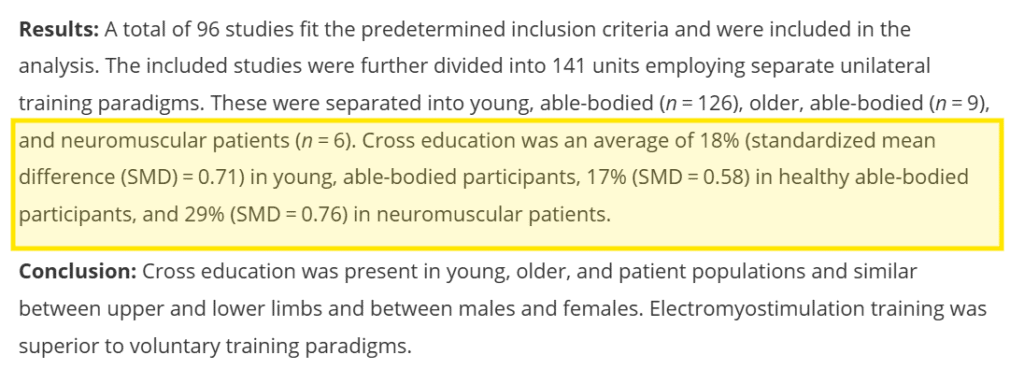
It has been tested and confirmed in dozens of studies including work by such universities as the University of Copenhagen and Ohio State. The training of one limb (e.g. the right arm) causes your nervous system to adjust – and the adjustment to that adjustment runs over to the untrained side.(1)
Related Stories
 How to Take Care of Your Health With Wall Sit Exercise?
 A Dumbbell Routine for back and arms to Do at Home in Just 30 Minutes
Think of it like this:
- Your muscles do not learn to be strong. Your brain and nerves do.
- The process of weight lifting teaches the nervous system to be able to bring more muscle fibers, shoot them, and coordinate them better.
- Though your left arm is not lifting, the blueprint of brain strength is enhanced and it upgrades you as both arms have the same brain map, it is used in the untrained side.
- And a free ride on a gadget at the gym, like the one arm.
What Studies Actually Show?
Now, the interesting science:
It was discovered that the opposite limbs could become 7-22 percent stronger through training. However, there is the catch here since, muscle size does not become any bigger; it is more or less neural. That is to say that your left arm will be stronger and may not necessarily look larger.
In a 2018 given study in the Journal of Applied Physiology, participants trained one arm in four weeks. Even the other arm, which had not been touched, was strengthened in a measure. MRI scans also revealed that there was greater neural activity on both sides but muscle growth (hypertrophy) was only in the trained arm. So, yeah. Your left arm is practically left-brained, it is not swole.(2)
Brain Gains Are Real.
This is, of course, understandable. Being strong does not necessarily mean your biceps but the ability of your brain to send stronger, quicker and more coordinated signals.
Have you ever noticed that novices have difficulties in balance or coordination with light weights? It is not the poor muscles it is the bewildered brain.
The more your body is educated on the patterns of movement, the more well your motor cortex is connected.
And in case you are performing unilateral (single-side) training – your brain provides updates to movement software in both sides.
Suppose you are typing for one month with one hand. The other hand may not be in motion yet the typing center in your brain hones the skill. That is the case with muscles as well.
What Will Happen After a Month of Training One Arm (or Leg) Only?
When you train, as an example, the right arm four weeks, this is what can be expected:
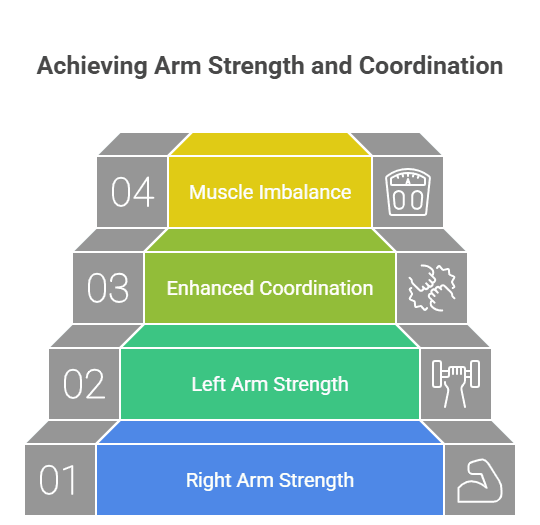
1. Right arm becomes remarkably stronger and fitter.
Obvious, right? But growth is in your own program, progressive overload, still reigns.
2. Left arm receives a smaller (and real) strength increase.
Around 1015 percent improvement is perceived by most individuals without even manipulating weights on that side.
3. The coordination is enhanced on each side.
When you finally change to working the side which is not trained, it catches you up much faster.
The reason is that this map of movements of the brain is already constructed.
4. The imbalance of muscles is still possible.
The left arm will not get any bigger, though it might be stronger. So aesthetically it will remain smaller or weaker.
So no deal, the mirror may not reflect the gains but your nervous system does.
What Happened When I Trained Only One Side of My Body for a Month?
I strained my left shoulder lifting myself on dips with weights a couple of years ago (newcomer step 🙈). My physio told me no left-arm exercise in one month. However, I do not like to rest, and I continued to exercise my right arm using dumbbell presses, curls, and pushups.
I thought that my left side would be pathetic when I returned to bilateral (two-arm) training.
Surprisingly, it didn’t.
It was feeble, all right – but no more so than I was supposed to think. The reduction in strength was not drastic, and I managed to recover my balance in a week.
It was at that point that I began researching about crosstraining. It happens that I was unconsciously training my left arm with my right.
What About Legs?
Same rule applies. When you train one leg only, e.g. using single-leg squats or lunges, the other leg also trains.
And there is even a rehabil plan that is grounded on this:
- Physical therapists tend to exercise the healthy leg violently when one breaks one leg or has a surgery.
- This aids in maintaining muscle strength and brain coordination to the injured side.
It is sort of like posting a postcard to your leg saying, Hey bro, do not lose your ability to move! 🦵😂
The Smart Way to Use this Trick.
In case you are hurt or unable to use one of your limbs, then it is not the end of the world. The other side will also enable you to be strong.
And the safest and most effective way to do it is as follows:
1. Dwelling on Unilateral Exercises.
- Single-arm dumbbell press.
- One-arm rows.
- Bulgarian split squats.
- Single-leg hip thrusts.
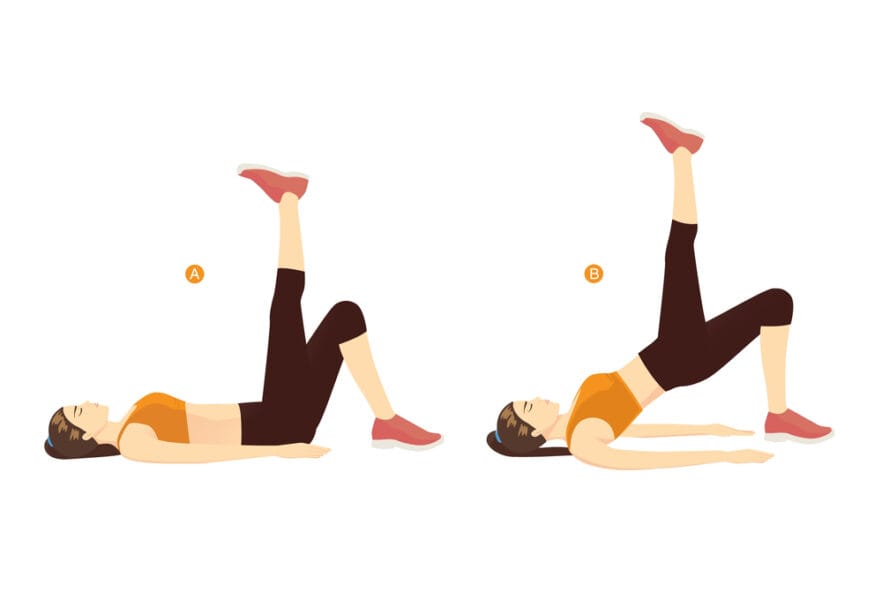
These stimulate your cross-education effect of your brain more than bilateral movements.
2. Go Heavy (Safely).
- The larger the neural signal, the larger the crossover.
- Then baby not thy working part–but challenge it (but keep in shape).
3. Add Graphical Representation or Mental Representation.
This is so woo-woo and yet not so — research indicates that when one imagines a lift, the brain regions active during a lift become active as well.
So practice in your mind, your untrained part playing with the trained one.
4. Pay in Equal Measures When you have recovered.
- As soon as you are back to normal movement, spend 2-3 weeks in evening out the strength and size.
- Work with dumbbells or cables only, no machines, to make sure that each of the sides works separately.
Don’t Get Carried Away.
Cross-training is a good thing but it doesn’t imply that you should deliberately ignore one side of your body. It is a backup mechanism, not a trick for laziness
On the one hand, over the course of time, only one side of your body can be trained, thus:
- The body becomes unbalanced in terms of posture.
- The strength utilized during compound lifts is uneven.
- The joints are under increased (especially shoulders and hips).
- Wierd aesthetic changes (hello, “one big bicep” look) that make you look asymmetric.
Therefore, a long-term plan is simply out of the question, isn’t it? How about a short-term one experiment? Absolutely!
Expert Review: Dr. Aarav Menon, Sports Physiologist.
“Cross-education is one of the most interesting things that motor neuroscience has uncovered. Strength isn’t just physically in the muscles — it’s mostly in the brain, as we have known for years. So, when one limb is trained, it results in the activation of the shared neural circuitry, which is why the untrained side gets the benefit as well. I frequently suggest one-sided training to my patients who have been through fractures or surgeries as it helps maintain neural activity on both sides. Nevertheless, don’t forget that for muscles to be symmetrical and coordinated, bilateral training is still necessary once you have got the green light to train both sides again.”
Expert Interview: Coach Rhea Kapoor, Strength & Conditioning Specialist.
Q: So, Coach Rhea — in fact, do you practice or recommend one-sided training in your programs?
A: Absolutely. Especially, the injuries recovery stages, that is when most. If a person is not able to use their left arm, I will work on the right one and thus keep the connection going between the two sides which is beneficial for both.”
Q: How can one get the greatest benefit from the cross-training activity?
A: I put emphasis on slow, controlled, and correctly executed repetitions with full mental focus as well. Furthermore, I instruct the clients to imagine the other side moving. Although it may seem absurd, the brain cannot distinguish between real and pretend movements.
Q: Do you have any final suggestion for gym-fans who want to experiment with this?
A: If you want to get better, not show off. It’s a fantastic experiment — but after the recovery of both sides, work them equally. Playing your strength against your opponent is always better than showing off. 💪
Frequently Asked Questions.
1. Does the arm which is not trained get stronger just by watching the other?
It certainly does! Experiments have indicated the strength of the untained limb can be increased by 7-22% simply through neural adaptations. The brain becomes more efficient in activating muscles on both sides even if only one side is physically trained.
2. Would this method be effective if I were injured?
Definitely. Cross-education training is a is a welcome addition to physiotherapy routines that aim at strength preservation of the injured side. It helps neural efficiency is maintained and muscle atrophy is kept at the lowest levels during a rehabilitation period.
3. Will my untrained side increase its size as well?
The answer is “not to any considerable extent”. The strength increase is due to neural, not muscular changes. Therefore, you will feel stronger, but the size (hypertrophy) will only be of the side that you have actually trained.
Takeaway.
Training one side of the body leads to the other side becoming stronger by 10-20% due to brain and nerve adaptation.
What about muscle size? Not really — most of it stays local.
The brain basically acts as a shared control center that learns once and applies twice.
This is great for injury recovery, rehab, and keeping the same level of strength/muscle while one side is healing.
In a nutshell: the brain is the real muscle here.
Bonus Thought.
The next time you see somebody doing single-arm lifts at the gym, don’t ridicule him/her — it’s possible that he/she is simultaneously improving both sides. (And, honestly, it’s kind of brilliant if you think about it.)
Therefore, please do as you please and train your one arm as if it were on a solo mission. Your other one is… learning quietly.
Which exercise challenges you most? I’ll reply!
+2 Sources
FreakToFit has strict sourcing guidelines and relies on peer-reviewed studies, educational research institutes, and medical organizations. We avoid using tertiary references. You can learn more about how we ensure our content is accurate and up-to-date by reading our editorial policy.
- The cross education of strength and skill following unilateral strength training in the upper and lower limbs; https://pubmed.ncbi.nlm.nih.gov/29668382/
- The effect of unilateral training on contralateral limb strength in young, older, and patient populations: a meta-analysis of cross education; https://www.tandfonline.com/doi/full/10.1080/10833196.2018.1499272#abstract