
















A primeira vez que ouvi falar sobre a dieta do guerreiro, imaginei comer refeições enormes depois de passar o dia treinando como um soldado antigo. Parecia extremo e, honestamente, eu não tinha certeza se era baseado na ciência ou simplesmente em outra tendência de dieta popular.
Enquanto explorei isso, percebi que a dieta do guerreiro é na verdade uma forma de alimentação com restrição de tempo que enfatiza muito pouco comer durante o dia e consumir uma refeição maior à noite.
Algumas pessoas relatam perder peso, melhorar a disciplina em torno da comida e simplificar sua rotina alimentar diária. Outros acham difícil manter o longo período de jejum.
Como muitos padrões alimentares, a dieta do guerreiro não é uma solução milagrosa. Ele tem vantagens potenciais, mas também tem limitações e não é adequado para todos.
Histórias relacionadas
 Importância da nutrição adequada durante a gravidez - Diretrizes
 Os adultos podem beber fórmula infantil? Um guia completo
Neste guia, explicarei como funciona a dieta do guerreiro, suas origens, os alimentos que ela incentiva e o que você deve saber antes de decidir se é adequado para você.
O que é a dieta do guerreiro?
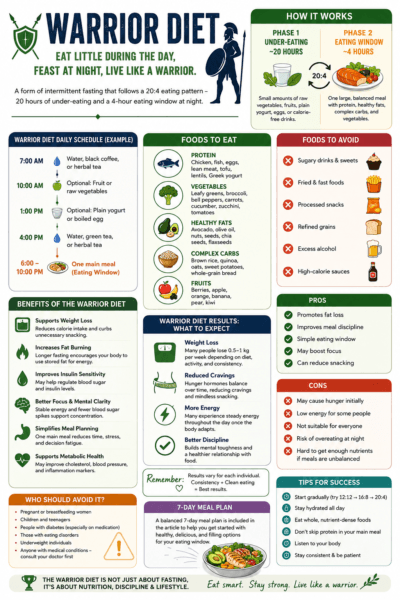
A Dieta do Guerreiro é uma forma de jejum intermitente que segue uma abordagem “subcomer durante o dia, comer à noite”.
Ao contrário do tradicional Dietas que se concentram principalmente em calorias Contando, a dieta do guerreiro enfatiza quando você come e não simplesmente o quanto você come.
A dieta geralmente consiste em duas fases:

fase de subalimentação.
Por aproximadamente 20 horas, você consome quantidades muito pequenas de alimentos ou bebidas sem calorias.
Durante esse período, as pessoas normalmente escolhem alimentos como:

- Legumes crus.
- Frutas frescas.
- Iogurte simples.
- Ovos cozidos.
- caldo de osso.
- Chá de ervas.
- Café preto.
- Água.
O objetivo não é uma fome completa, mas sim um consumo mínimo.
fase de comer demais.
Durante uma janela de 4 horas para comer, você come uma refeição substancial.
Esta refeição geralmente inclui:
- Proteína magra.
- Legumes.
- gorduras saudáveis.
- Grãos integrais ou carboidratos complexos.
- Frutas.
A ideia é comer até ficar confortavelmente satisfeito, concentrando-se em alimentos minimamente processados.
Minha primeira impressão da dieta do guerreiro.
Quando li pela primeira vez sobre Comer apenas uma refeição importante por dia, eu assumi que seria impossível.
No entanto, logo percebi que muitas pessoas naturalmente praticam padrões alimentares semelhantes por causa de:
- horários de trabalho ocupados.
- Jejum religioso.
- Tradições culturais.
- preferência pessoal.
O que torna a dieta do guerreiro único é seu tempo estruturado e ênfase em todo o alimento, rico em nutrientes Alimentos durante a refeição da noite.
A história da dieta guerreira.
A Dieta do Guerreiro foi criada por Ori Hofmekler, um autor israelense e ex-membro das Forças Especiais de Israel.
Ele introduziu o conceito em 2001 por meio de seu livro The Warrior Diet.
Hofmekler acreditava que os antigos guerreiros passavam seus dias caçando, reunindo, treinando ou Lutando com pouca comida E então consumiu refeições maiores após completar suas atividades diárias.
Inspirado por essa perspectiva histórica, ele desenvolveu uma alimentação moderna Plano destinado a imitar o que ele acreditava ser hábitos alimentares ancestrais.
Embora a precisão histórica dessa interpretação seja debatida, a Dieta do Guerreiro se tornou uma das primeiras formas populares de jejum intermitente.
A filosofia por trás da dieta do guerreiro.
A dieta do guerreiro é baseada na ideia de que o corpo humano pode funcionar de forma eficiente ao alternar entre os períodos de jejum e alimentação.
De acordo com sua filosofia:
- O dia é para atividade.
- A noite é para nutrição e recuperação.
- O corpo pode se tornar mais eficiente na utilização de energia armazenada durante o jejum.
Embora esse conceito tenha ganhado popularidade, pesquisas científicas modernas sugerem que as respostas ao jejum variam entre os indivíduos.
Como funciona a dieta do guerreiro?
A dieta do guerreiro divide o dia em duas fases distintas.
Fase 1: Subalimentação (aproximadamente 20 horas).
Durante a maior parte do dia, a ingestão de alimentos permanece muito leve.(1)
Em vez de comer refeições completas, você consome:
- Água.
- Chá sem açúcar.
- Café preto.
- Legumes crus.
- Frutas frescas.
- Pequenas quantidades de proteína, se necessário.
Este período de jejum prolongado incentiva o corpo a confiar mais na energia armazenada.
Fase 2: Janela de Comer (aproximadamente 4 horas).
A refeição da noite torna-se a principal fonte de nutrição diária.
Muitos seguidores estruturam sua refeição em etapas:
Passo 1.
Comece com legumes.
Passo 2.
Adicione fontes de proteína, como:
- Frango.
- peixe.
- Ovos.
- Feijão.
- Lentilhas.
- tofu.
Passo 3.
Inclua gorduras saudáveis.
Exemplos incluem:
- abacate.
- Azeite de oliva.
- nozes.
- sementes.
Passo 4.
Termine com carboidratos complexos, se desejar.
Exemplos incluem:
- Arroz integral.
- Batata doce.
- Quinoa.
- Aveia.
Esta sequência destina-se a incentivar a alimentação consciente e a ingestão adequada de nutrientes.
Horário do jejum da dieta guerreira.
Um cronograma típico de dieta guerreira é assim.
| tempo | atividade |
|---|---|
| 7:00 da manhã | Água, café preto ou chá de ervas |
| 10:00 AM | Frutas opcionais ou vegetais crus |
| 13:00 | Pequena porção de iogurte ou ovos cozidos (opcional) |
| 16:00 | Bebidas sem água ou sem calorias |
| 18h às 22h | refeição principal |
Muitas pessoas ajustam esses horários de acordo com seu horário de trabalho e estilo de vida.
O que você pode comer na dieta do guerreiro?
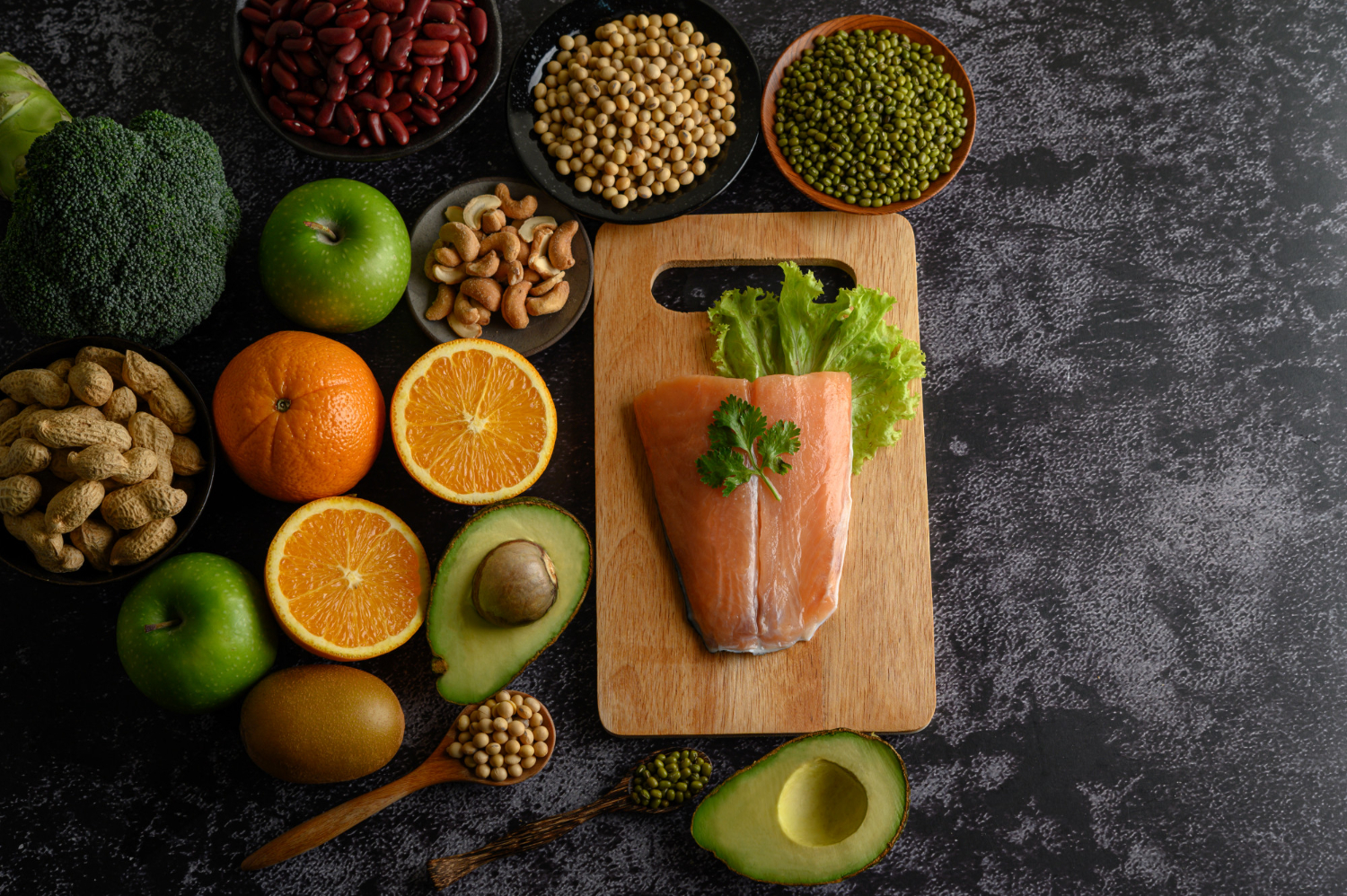
Uma coisa que aprecio na dieta do guerreiro é que ela incentiva alimentos inteiros e minimamente processados, em vez de refeições de conveniência muito processadas.
Proteína magra.
Exemplos incluem:
- Peito de frango.
- Turquia.
- peixe.
- Ovos.
- Iogurte grego.
- Queijo retrátil.
- tofu.
- tempes.
- Lentilhas.
Proteínas ajudam a apoiar o músculo Manutenção e saciedade.
Legumes.
Os vegetais devem representar uma grande parte da refeição da noite.
Boas opções incluem:
- brócolis
- espinafre
- couve
- pimentão
- pepino
- cenoura
- couve-flor
- abobrinha
- tomate
Frutas.
Frutas inteiras fornecem:
- fibra.
- vitaminas.
- doçura natural.
- antioxidantes.
Exemplos incluem:
- maçãs.
- Bagas.
- laranjas.
- Bananas.
- Peras.
- Kiwi.
gorduras saudáveis.
As gorduras saudáveis contribuem para a plenitude e fornecem ácidos graxos essenciais.
Exemplos incluem:
- Azeite de oliva.
- abacate.
- Amêndoas.
- nozes.
- pistaches.
- Sementes de Chia.
- Linhaça.
Carboidratos complexos.
Embora a dieta do guerreiro não seja necessariamente low-carb, ela enfatiza carboidratos de alta qualidade.
Exemplos incluem:
- Arroz integral.
- Batata doce.
- Aveia.
- Quinoa.
- Pão integral.
- Massa integral.
alimentos para limitar ou evitar.
Para obter o máximo da dieta do guerreiro, muitos seguidores reduzem os alimentos, como:
- Bebidas açucaradas.
- doces.
- Bolos.
- pastelaria.
- alimentos fritos.
- Lanches altamente processados.
- grãos refinados.
- excesso de álcool.
- Fast food.
A ênfase permanece em nutrientes densos Alimentos que fornecem energia duradoura.
Princípios nutricionais por trás da dieta do guerreiro.
Embora a dieta do guerreiro se concentre fortemente no momento das refeições, a qualidade dos alimentos ainda é importante.
A jantar equilibrado Deve incluir:
proteína.
Suporta o reparo e a saciedade dos músculos.
fibra.
Ajuda a digestão e promove a plenitude.
gorduras saudáveis.
Fornecer ácidos graxos essenciais e ajudar na absorção de nutrientes.
Carboidratos complexos.
Ajude a repor os estoques de glicogênio e a apoiar as necessidades de energia.
micronutrientes.
Legumes e frutas fornecem:
- vitamina C.
- vitamina A.
- potássio.
- Magnésio.
- folato.
- antioxidantes.
A dieta guerreira é diferente do jejum intermitente?
Muitas pessoas assumem que são exatamente iguais.
Na realidade, a dieta do guerreiro é um tipo específico de jejum intermitente.
Veja como eles se comparam.
| característica | dieta guerreira | Típico 16:8 Jejum intermitente |
|---|---|---|
| janela de jejum | ~20 horas | 16 horas |
| Comer janela | ~4 horas | 8 horas |
| refeições | Geralmente uma grande refeição | Duas ou três refeições |
| Comer durante o dia | muito limitado | geralmente nenhum |
| flexibilidade | diminuir | mais alto |
Como a dieta do guerreiro envolve um período de jejum mais longo, muitas pessoas acham mais desafiador do que o método 16:8 comumente usado.
Quem pode considerar a dieta do guerreiro?
A Dieta do Guerreiro pode atrair adultos que:
- Prefira comer refeições maiores.
- Não goste de lanches frequentes.
- Quer uma rotina de jejum estruturada.
- estão interessados em jejum intermitente.
- Pode tolerar confortavelmente períodos de jejum mais longos.
No entanto, não é apropriado para todos, e as condições de saúde pessoais devem ser sempre consideradas antes de fazer mudanças significativas na dieta.
Os benefícios potenciais da dieta guerreira.
Uma das razões dieta guerreira Ganhou atenção é a promessa de melhorar mais do que apenas o peso. Os apoiadores costumam afirmar que pode aumentar a energia, melhorar o foco, simplificar o planejamento das refeições e promover a perda de gordura.
Quando examinei as evidências, descobri que muitos desses Os benefícios estão associados ao jejum intermitente em geral, em vez da dieta guerreira especificamente. Como a pesquisa sobre a própria dieta guerreira é limitada, muito do que Saber vem de estudos sobre alimentação com restrição de tempo e jejum prolongado.
Vamos explorar o que sugerem as evidências atuais.
1. A dieta guerreira pode apoiar a perda de peso.
Uma das maiores razões pelas quais as pessoas tentam a dieta do guerreiro é perder peso.(2)
Ao limitar a alimentação a uma janela curta todos os dias, muitas pessoas naturalmente consomem menos calorias sem contar cada mordida.
potencial Motivos para perda de peso Incluir:
- Redução da ingestão de calorias.
- Menos lanches.
- Menor consumo de alimentos processados.
- Melhor consciência das refeições.
- Controle de porções melhorado.
No entanto, a dieta do guerreiro não garante a perda de peso. Se você consumir mais calorias do que seu corpo precisa durante a janela de alimentação, pode não ocorrer perda de peso.
2 Pode melhorar a consciência do apetite.
Antes de aprender sobre jejum, muitas vezes presumi que a fome significava que precisava de comida imediatamente.(3)
A Dieta do Guerreiro incentiva as pessoas a distinguir entre:
- verdadeira fome física.
- Comer habitual.
- Comer emocional.
- Lanches relacionados ao tédio.
Muitos seguidores relatam se tornar mais conscientes de seus hábitos alimentares ao longo do tempo.
3. Pode melhorar a sensibilidade à insulina.
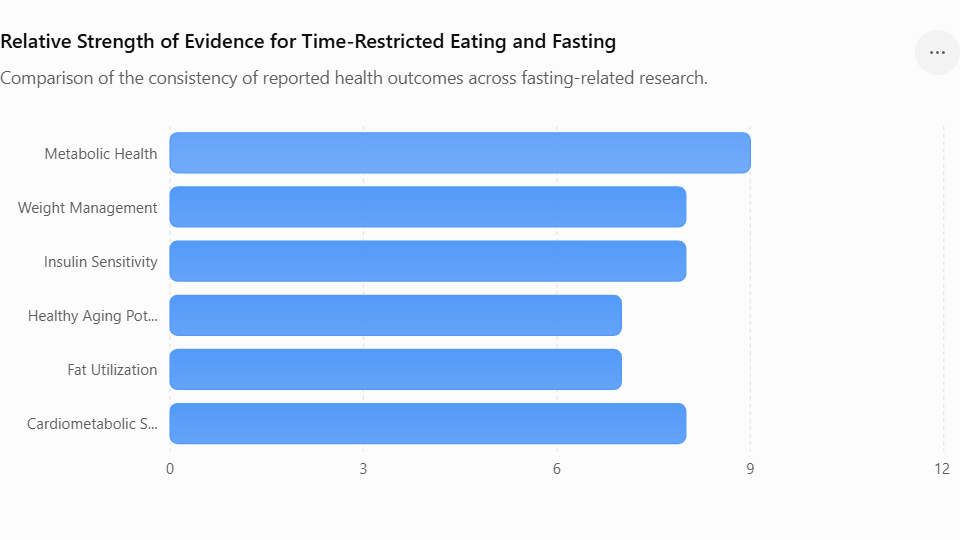
O jejum intermitente foi estudado por seus efeitos na insulina.
alguns Pesquisas sugerem que uma alimentação com restrição de tempo pode ajudar a melhorar Sensibilidade à insulina em certos indivíduos.
Melhor sensibilidade à insulina permite que o corpo regule o açúcar no sangue de forma mais eficiente.
Isso pode ser particularmente útil para pessoas com excesso de peso ou obesidade, embora qualquer pessoa com diabetes deva consultar um profissional de saúde antes de tentar o jejum prolongado.
4. Pode apoiar a queima de gordura.
Durante longos períodos de jejum, o cadáver Gradualmente, muda de usar carboidratos recentemente consumidos para a utilização de gordura armazenada para obter energia.
Esse processo não acontece imediatamente, mas janelas mais longas em jejum podem aumentar a oxidação da gordura.
É importante lembrar que o aumento gordura A queima durante o jejum não se traduz necessariamente em maior perda de gordura a longo prazo, a menos que a ingestão total de calorias também apoie esse objetivo.
5. Pode simplificar o planejamento das refeições.
Um benefício inesperado que notei enquanto aprendia sobre a dieta do guerreiro é sua simplicidade.
Em vez de planejar:
- Café da manhã.
- Lanche no meio da manhã.
- Almoço.
- Lanche da tarde.
- Jantar.
Muitos seguidores se concentram principalmente em uma refeição nutritiva.
Para pessoas com agendas lotadas, isso pode reduzir:
- Tempo de preparo de refeições.
- Compras de supermercado.
- Fadiga de decisão.
- Custos de alimentos.
6. Pode reduzir os lanches sem sentido.
Muitas pessoas consomem centenas de calorias extras por meio de lanches frequentes.
Como a dieta do guerreiro restringe o consumo de uma pequena janela noturna, naturalmente limita as oportunidades de:
- Chips.
- doces.
- Bebidas açucaradas.
- lanches processados.
- Pasto na madrugada.
Essa redução pode contribuir para um melhor controle calórico.
7 . Pode promover melhores escolhas alimentares.
Como há apenas um dos principais Refeição todos os dias, muitos seguidores se tornam mais intencionais em relação à qualidade dos alimentos.
Uma refeição de dieta balanceada com guerreiro geralmente enfatiza:
- Proteína magra.
- Legumes.
- grãos inteiros.
- gorduras saudáveis.
- Frutas.
Escolhendo Densidade de Nutrientes Os alimentos tornam-se especialmente importantes porque o corpo Tem menos oportunidades de obter vitaminas e minerais ao longo do dia.
8. Pode melhorar o foco mental de algumas pessoas.
muitas pessoas relatam Sentindo-se mentalmente mais afiado durante o jejum.
Embora as experiências variem, os motivos possíveis incluem:
- Níveis de energia estáveis.
- Menos de quedas de energia pós-refeição.
- Reduziu as flutuações do açúcar no sangue.
- Aumento da consciência.
Pessoalmente, acho que isso varia muito de pessoa para pessoa.
Algumas pessoas se sentem energizadas durante o jejum, enquanto outras acham difícil se concentrar até comer.
9. Pode estimular uma melhor satisfação das refeições.
Comer uma refeição substancial geralmente incentiva as pessoas a:
- Coma devagar.
- apreciar comida.
- Foco na nutrição equilibrada.
- Sinta-se satisfeito depois de comer.
Essa abordagem consciente pode melhorar a experiência geral de alimentação.
10. Pode apoiar a saúde metabólica.
Os pesquisadores continuam estudando se o jejum intermitente influencia a saúde metabólica.
Alguns estudos sugerem que uma alimentação com restrição de tempo pode afetar positivamente:
- Regulação do açúcar no sangue.
- pressão arterial.
- Colesterol.
- Marcadores de inflamação.
No entanto, são necessários mais estudos humanos de longo prazo, principalmente para horários de jejum, desde que a dieta do guerreiro.
Resultados da dieta do guerreiro: o que você pode esperar?
Outra pergunta comum é:
“Que tipo de resultados de dieta guerreira posso esperar?”
Os resultados variam muito dependendo de fatores como:
- Peso inicial.
- Atividade física.
- qualidade do sono.
- escolhas alimentares.
- ingestão total de calorias.
- consistência.
Algumas pessoas relatam:
- Perda de peso.
- Redução de lanches.
- aumento de energia.
- Disciplina de refeição melhorada.
Outros experimentam:
- fome.
- Baixa energia.
- Dificuldade em manter o cronograma.
- Comer demais durante a janela de comer.
A dieta do guerreiro não é igualmente eficaz para todos.
Dieta guerreira para perda de peso.
A dieta guerreira pode ajudá-lo a perder peso?
Possivelmente — se isso criar um déficit calórico.
pesar prejuízo Em última análise, depende de consumir menos calorias do que o seu corpo usa.
A dieta do guerreiro pode tornar isso mais fácil porque:
- As refeições são menos frequentes.
- O lanche diminui.
- Comer torna-se mais estruturado.
No entanto, consumindo uma noite muito grande As refeições podem eliminar qualquer caloria déficit.
Dieta e exercícios do guerreiro.
Muitas pessoas se perguntam se é Seguro para se exercitar durante o jejum.
Depende de:
- intensidade do exercício.
- Nível de condicionamento físico.
- tolerância individual.
- Hidratação.
- Nutrição geral.
exercício leve.
Geralmente compatível com o jejum.
Exemplos incluem:
- Caminhando.
- alongamento.
- Yoga.
- trabalho de mobilidade.
exercícios moderados.
Algumas pessoas têm um bom desempenho durante:
- ciclismo.
- Treinamento de resistência.
- Nadar.
Outros preferem treinar mais perto de sua janela de comer.
exercícios de alta intensidade.
Longos períodos de jejum podem reduzir o desempenho durante:
- Corrida.
- Esportes competitivos.
- Pesado de levantamento de peso.
- Eventos de resistência.
Os atletas geralmente exigem uma ingestão mais frequente de nutrientes do que a dieta guerreira fornece.
Dieta do Guerreiro Vs 16:8 Jejum intermitente.
A dieta do guerreiro é muito mais rigorosa do que o método popular 16:8.
| característica | dieta guerreira | 16:8 Jejum |
|---|---|---|
| Tempo de jejum | ~20 horas | 16 horas |
| Comer janela | ~4 horas | 8 horas |
| Número de refeições | geralmente 1 | 2–3 |
| flexibilidade | diminuir | mais alto |
| amigável para iniciantes | menos | mais |
Para a maioria dos iniciantes, muitos nutricionistas consideram a abordagem 16:8 mais fácil de manter.
Dieta do Guerreiro vs OMAD (uma refeição por dia).
Essas dietas parecem semelhantes, mas não são idênticas.
| dieta guerreira | omad |
|---|---|
| Permite pequenos alimentos durante o dia | geralmente sem calorias |
| Uma grande refeição noturna | Uma refeição de qualquer momento |
| Foca em alimentos integrais | A qualidade dos alimentos varia |
| Mais flexível durante o jejum | Normalmente mais rigoroso |
Dieta do guerreiro versus restrição calórica tradicional.
| dieta guerreira | dieta tradicional |
|---|---|
| Foca no horário das refeições | Concentra-se na contagem de calorias |
| Uma janela comendo | refeições durante todo o dia |
| Menos planejamento de refeições | Refeições mais frequentes |
| Pode reduzir o lanche | Depende dos hábitos individuais |
Nenhuma das abordagens é universalmente melhor.
A melhor dieta é aquela que você pode manter enquanto atende às suas necessidades nutricionais.
A dieta guerreira é apoiada pela ciência?
Aqui é onde é importante separar os fatos das afirmações de marketing.
Atualmente:
- Existem poucos estudos examinando especificamente a dieta do guerreiro.
- A maioria das evidências disponíveis vem de pesquisas sobre jejum intermitente e alimentação com restrição de tempo.
Estudos sugerem que o jejum intermitente pode ajudar com:
- controle de peso.
- Sensibilidade à insulina.
- Regulação do açúcar no sangue.
- Saúde cardiometabólica.
No entanto, os pesquisadores ainda não sabem se um jejum diário de 20 horas oferece vantagens significativas em relação aos cronogramas de jejum menos restritivos.
Em outras palavras, a dieta do guerreiro pode funcionar para alguns indivíduos, mas não foi provada superior a outros padrões de alimentação saudável.
Dicas práticas para o sucesso.
Se alguém decidir experimentar a dieta do guerreiro, acho que esses hábitos são especialmente importantes:
- Mantenha-se bem hidratado durante todo o dia.
- Priorize a proteína magra na refeição da noite.
- Inclua muitos vegetais.
- Não use a janela de alimentação como desculpa para comer alimentos ultraprocessados.
- Apontar para o sono adequado.
- Preste atenção à fome e aos níveis de energia.
- Ajuste a programação se for difícil sustentar.
Efeitos colaterais potenciais da dieta guerreira.
Enquanto o dieta guerreira Pode oferecer benefícios para algumas pessoas, não é a escolha certa para todos. Na minha opinião, entender os riscos potenciais é tão Importante como aprender sobre os benefícios.
Longos períodos de jejum podem ser fisicamente e mentalmente Desafiante, principalmente quando você está apenas começando.
Vejamos algumas possíveis desvantagens.
1. fome e desejos de comida.
O desafio mais comum é a fome.
Durante os primeiros dias ou semanas, muitas pessoas experimentam:
- fome frequente.
- Fortes desejos de comida.
- irritabilidade.
- Dificuldade de concentração.
Esses sintomas frequentemente Melhore como o corpo Adapta-se, mas nem todos acham o ajuste fácil.
2 Baixos níveis de energia.
Algumas pessoas relatam energia reduzida, principalmente durante a tarde.
Isso pode afetar:
- produtividade.
- desempenho do exercício.
- Atividades diárias.
Se sua energia permanecer consistentemente baixa, a dieta do guerreiro pode não ser a mais adequada para o seu estilo de vida.
3. Risco de comer demais.
Uma preocupação que tenho com os períodos de jejum muito longos é a tentação de comer demais durante a janela de alimentação.
Algumas pessoas ficam tão famintas que consomem:
- excesso de calorias.
- Alimentos altamente processados.
- Grandes porções muito rapidamente.
Isso pode reduzir ou eliminar o déficit calórico necessário para a perda de peso e também pode levar ao desconforto digestivo.
4. Desconforto digestivo.
Comer uma grande refeição após um longo jejum pode causar:
- inchaço.
- indigestão.
- refluxo ácido.
- desconforto estomacal.
Comer devagar e escolher o equilíbrio As refeições podem ajudar a reduzir esses problemas.
5. Dificuldade em atender às necessidades de nutrientes.
Como a ingestão de alimentos é limitada a um curto período de tempo, pode ser mais difícil consumir o suficiente:
- proteína.
- fibra.
- cálcio.
- Ferro.
- potássio.
- Magnésio.
- vitaminas.
Planejando refeições ricas em nutrientes torna-se especialmente importante.
6. Redução do desempenho atlético.
Atletas e indivíduos altamente ativos geralmente exigem:
- Ingestão frequente de carboidratos.
- Consumo regular de proteínas.
- Hidratação adequada.
O longo período de jejum da Warrior pode não fornecer combustível suficiente para:
- Treinamento de maratona.
- Esportes competitivos.
- Treinamento de força pesada.
- Treinos de intervalo de alta intensidade.
Quem deve evitar a dieta do guerreiro?
Embora adultos saudáveis possam optar por uma dieta guerreira, certos grupos devem evitá-la, a menos que seja informado de outra forma por um profissional de saúde qualificado.
Estes incluem:
- mulheres grávidas.
- Mães que amamentam.
- Crianças e adolescentes.
- Pessoas com tipo 1 diabetes.
- Indivíduos que tomam insulina ou medicamentos para baixar o açúcar no sangue.
- Qualquer pessoa com histórico de distúrbios alimentares.
- Indivíduos com baixo peso.
- Pessoas se recuperando de uma cirurgia ou doença grave.
- Idosos com mau estado nutricional.
Se você tiver qualquer condição médica crônica, fale com seu médico antes de começar o jejum prolongado.
7 -Day Warrior Diet Meal Plan.
Se você está curioso sobre como tentar a dieta do guerreiro, aqui está um exemplo de Plano de refeição equilibrado de uma semana.
Dia 1.
fase de subatendimento
- Água.
- Café preto.
- maçã.
- Fatias de pepino.
jantar
- Frango grelhado.
- Arroz integral.
- Brócolis cozido no vapor.
- Salada misturada.
- Iogurte grego.
Dia 2.
fase de subatendimento
- Chá de ervas.
- Paus de cenoura.
- Ovo cozido.
jantar
- Salmão assado.
- Batata doce.
- espinafre.
- Bagas misturadas.
Dia 3.
fase de subatendimento
- Água.
- Iogurte simples.
jantar
- Peito de peru.
- Quinoa.
- Legumes assados.
- abacate.
Dia 4.
fase de subatendimento
- Fatias de pimentão.
- Chá verde.
jantar
- Curry de lentilha.
- Arroz integral.
- Legumes misturados.
- Laranja.
Dia 5.
fase de subatendimento
- Ovo cozido.
- Água.
jantar
- Tofu grelhado.
- Legumes fritos.
- Quinoa.
- Frutas frescas.
Dia 6.
fase de subatendimento
- Pau de aipo.
- Café preto.
jantar
- Carne magra.
- Batata doce.
- Feijão verde.
- Salada misturada.
Dia 7.
fase de subatendimento
- Chá de ervas.
- maçã.
jantar
- Peixe grelhado.
- Arroz integral.
- brócolis.
- Iogurte com bagas.
Dicas para iniciantes.
Se eu estivesse recomendando a Dieta do Guerreiro a alguém interessado em experimentá-la, sugiro facilitar a suavidade em vez de saltar direto para um jejum de 20 horas.
Dicas úteis incluem:
- Comece com um cronograma de jejum de 12:12 ou 16:8 primeiro.
- beba bastante água ao longo do dia.
- Priorize a proteína em sua refeição noturna.
- Inclua vegetais em cada jantar.
- Evite comer compulsivamente durante a janela de alimentação.
- dormir adequadamente.
- ouça o seu Sinais de fome e energia do corpo.
Erros comuns a evitar.
Muitos iniciantes lutam por causa de erros simples.
Pulando a hidratação.
Beba água regularmente durante todo o período de jejum.
Comer principalmente junk food.
A dieta do guerreiro funciona melhor quando a refeição da noite é rica em nutrientes, não um banquete de fast-food.
Não comer proteína suficiente.
Suportes de proteína:
- Manutenção muscular.
- recuperação.
- saciedade.
Objetiva incluir uma fonte de proteína de qualidade em cada refeição principal.
ignorando os sinais de fome.
Tonturas, fraqueza ou desmaios persistentes são sinais para parar de jejuar e procurar aconselhamento médico se os sintomas continuarem.
Começando de forma muito agressiva.
Transição gradualmente, em vez de tentar imediatamente um jejum de 20 horas.
Mitos comuns sobre a dieta do guerreiro.
vamos Separar o mito do fato.
Mito 1: Você pode comer qualquer coisa durante a janela de alimentação.
fato: A qualidade dos alimentos ainda importa. Uma refeição equilibrada rica em proteínas, vegetais, gorduras saudáveis e grãos integrais é mais benéfica do que alimentos altamente processados.
Mito 2: A dieta do guerreiro é melhor do que qualquer outra dieta.
fato: Nenhuma dieta única funciona melhor para todos. O sucesso depende das preferências individuais, das condições de saúde e da adesão a longo prazo.
Mito 3: o jejum queima automaticamente gordura.
fato: Enquanto o jejum aumenta a oxidação da gordura, a perda de gordura a longo prazo ainda depende da manutenção de um déficit calórico geral.
Mito 4: Todos devem jejuar por 20 horas.
fato: muitas pessoas Obtenha excelentes resultados Com horários de jejum mais curtos, como 14:10 ou 16:8.
Mito 5: A dieta do guerreiro constrói músculos.
fato: Construir músculos depende principalmente de uma ingestão adequada de proteínas, treinamento de resistência, recuperação e calorias suficientes – não jejuando sozinho.
Perguntas frequentes.
1. O que é a dieta do guerreiro?
A Dieta do Guerreiro é um tipo de jejum intermitente que envolve comer muito pouco durante um período de jejum de 20 horas e consumir uma refeição maior e rica em nutrientes durante uma janela de 4 horas de alimentação.
2. A dieta guerreira ajuda na perda de peso?
Isso pode ajudar algumas pessoas a perder peso, reduzindo a ingestão de calorias e limitando os lanches. No entanto, os resultados dependem da manutenção de um déficit calórico e de fazer escolhas alimentares nutritivas.
3. Posso tomar café na dieta do guerreiro?
Sim. Café preto simples, chá sem açúcar e água geralmente são permitidos durante o período de jejum porque contêm pouca ou nenhuma calorias.
4. Posso fazer exercícios seguindo a dieta do guerreiro?
Sim, mas sua tolerância pode variar. Os exercícios leves a moderados geralmente são mais fáceis de controlar durante o jejum, enquanto o treinamento de alta intensidade pode exigir nutrição adicional.
5. A dieta guerreira é segura?
A dieta do guerreiro pode ser segura para alguns adultos saudáveis, mas não é adequada para todos. Pessoas com certas condições médicas, mulheres grávidas e indivíduos com histórico de distúrbios alimentares devem consultar um profissional de saúde antes de tentar.
6. Quanto tempo leva para ver os resultados da dieta do guerreiro?
Algumas pessoas notam mudanças no apetite ou no peso corporal dentro de algumas semanas, enquanto outras podem demorar mais. Os resultados dependem da qualidade da dieta, da ingestão de calorias, atividade física, sono e consistência.
7 Posso comer carboidratos na dieta do guerreiro?
Sim. A Dieta do Guerreiro incentiva fontes de carboidratos integrais, como arroz integral, aveia, quinoa, batata doce e frutas como parte de uma refeição noturna equilibrada.
8. A dieta guerreira é melhor que o jejum de 16:8?
Não necessariamente. Embora a dieta do guerreiro use uma janela de jejum mais longa, não há evidências fortes de que seja superior à abordagem 16:8 mais flexível para a maioria das pessoas.
9. O que acontece se eu jejuar por 20 horas todos os dias?
O jejum por 20 horas diárias pode ajudar a reduzir a ingestão de calorias, promover a queima de gordura e apoiar a perda de peso para algumas pessoas. No entanto, também pode causar fome, fadiga, deficiências de nutrientes ou comer demais, se não for planejado adequadamente.
10. Quais são as diferenças entre as dietas OMAD e Warrior?
A dieta OMAD (uma refeição por dia) envolve comer todas as calorias diárias em uma refeição com um período de jejum estrito. A Dieta do Guerreiro também se concentra em uma refeição noturna principal, mas permite pequenas quantidades de alimentos como frutas, vegetais ou iogurte durante o período diurno.
11. O que é a fase 1 da dieta guerreira?
A fase 1 é a fase de subalimentação, que dura cerca de 20 horas. Durante esse período, você consome quantidades muito pequenas de alimentos ricos em nutrientes ou bebidas sem calorias, como água, chá de ervas, vegetais crus, frutas ou iogurte natural, antes de fazer uma refeição principal à noite.
Considerações finais.
A Dieta do Guerreiro é uma das formas mais estruturadas de jejum intermitente, construída em torno da ideia de comer muito pouco durante o dia e desfrutar de uma refeição substancial à noite. Para algumas pessoas, essa rotina pode simplificar o planejamento de refeições, reduzir os lanches desnecessários e o suporte Controle de peso naturalmente limitando a ingestão de calorias.
No entanto, não é uma solução de tamanho único. A longa janela de jejum pode ser difícil de sustentar e pode não ser adequada para pessoas com trabalhos físicos exigentes, atletas, certas condições médicas ou qualquer pessoa que tenha dificuldades com fome prolongada. O sucesso na dieta do guerreiro depende não apenas do jejum, mas também de comer refeições equilibradas e ricas em nutrientes durante a janela de alimentação.
Na minha opinião, o melhor padrão alimentar é aquele que você pode manter de forma consistente, atendendo às suas necessidades nutricionais e apoiando sua saúde geral. Se a dieta do guerreiro se adequa ao seu estilo de vida e é medicamente apropriada para você, pode valer a pena explorar. Se não, formas menos restritivas de jejum intermitente – como 14:10 ou 16:8 – podem oferecer benefícios semelhantes com maior flexibilidade.
+3 de fontes
A FreaktoFit tem diretrizes rígidas de sourcing e conta com estudos revisados por pares, institutos de pesquisa educacional e organizações médicas. Evitamos o uso de referências terciárias. Você pode aprender mais sobre como garantimos que nosso conteúdo seja preciso e atualizado, lendo nosso política editorial.
- Efeitos do jejum intermitente na saúde, envelhecimento e doenças; https://pubmed.ncbi.nlm.nih.gov/31881139/
- Efeitos da alimentação com restrição de tempo na perda de peso e outros parâmetros metabólicos em mulheres e homens com sobrepeso e obesidade; https://jamanetwork.com/journals/jamainternalmedicine/fullarticle/2771095
- Apertando o interruptor metabólico: compreender e aplicar os benefícios para a saúde do jejum; https://pubmed.ncbi.nlm.nih.gov/29086496/