




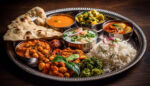













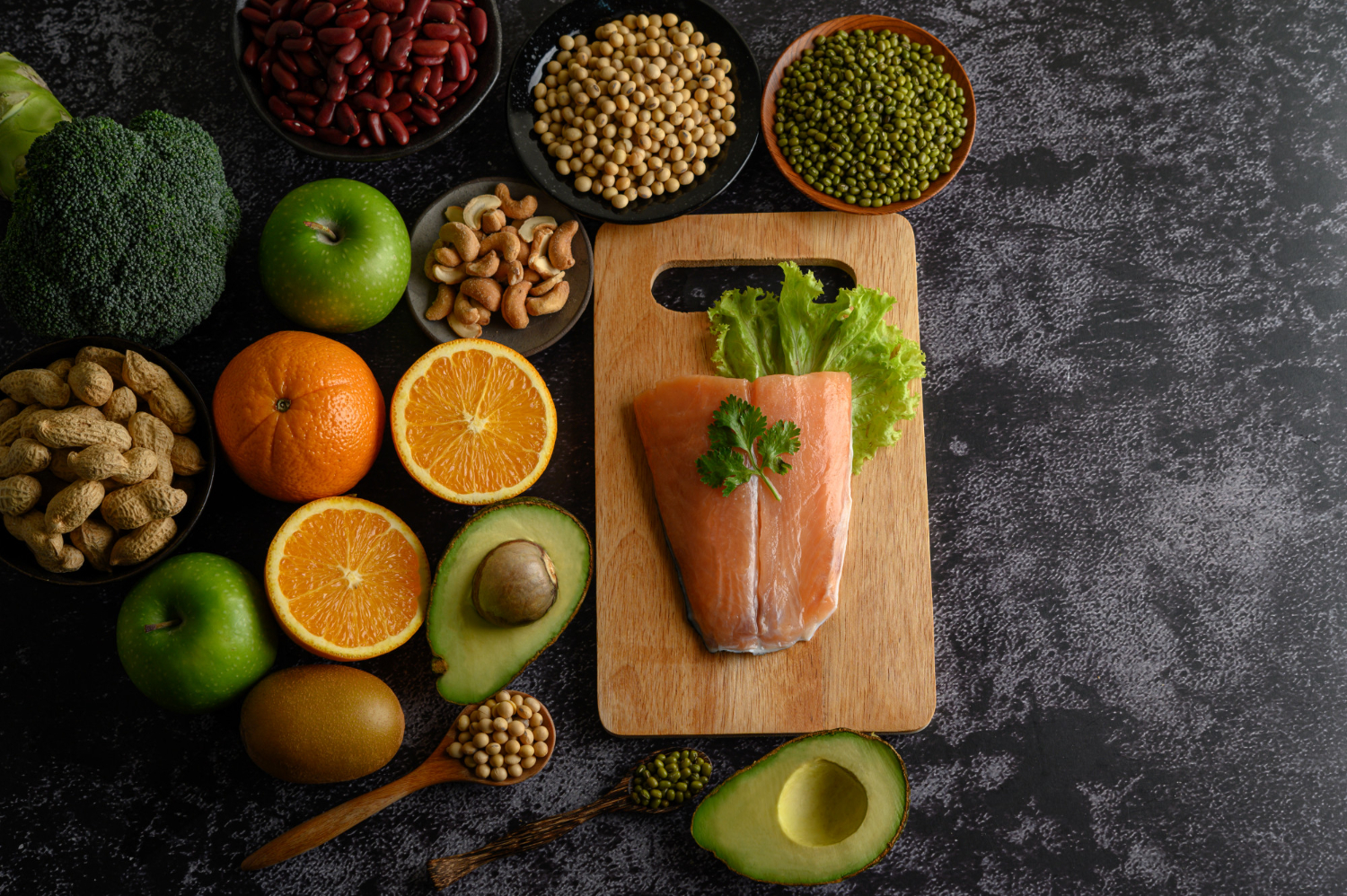
Pertama kali saya mendengar tentang Diet Prajurit, saya membayangkan makan makanan besar setelah menghabiskan hari berlatih seperti seorang prajurit kuno. Kedengarannya ekstrem, dan sejujurnya, saya tidak yakin apakah itu didasarkan pada sains atau sekadar tren diet populer lainnya.
Saat saya menjelajahinya lebih jauh, saya menyadari bahwa diet prajurit sebenarnya adalah bentuk makan terbatas waktu yang menekankan makan sangat sedikit di siang hari dan makan satu kali makan yang lebih besar di malam hari.
Beberapa orang melaporkan penurunan berat badan, meningkatkan disiplin di sekitar makanan, dan menyederhanakan rutinitas makan sehari-hari mereka. Yang lain menemukan periode puasa yang panjang sulit dipertahankan.
Seperti banyak pola makan, Diet Warrior bukanlah solusi ajaib. Ini memiliki keuntungan potensial, tetapi juga dilengkapi dengan keterbatasan dan tidak cocok untuk semua orang.
Cerita terkait
 Minyak Ikan - Manfaat Kesehatan, Dosis dan Efek Samping
 Sepsis dan manajemen diet lengkapnya
Dalam panduan ini, saya akan menjelaskan cara kerja Diet Prajurit, asal-usulnya, makanan yang dianjurkannya, dan apa yang harus Anda ketahui sebelum memutuskan apakah itu tepat untuk Anda.
Apa itu Diet Prajurit?
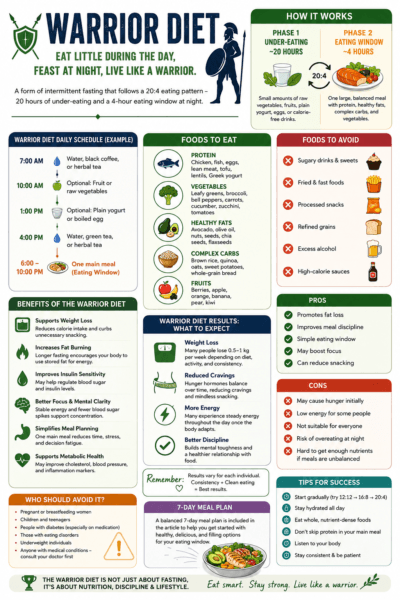
Diet prajurit adalah bentuk puasa intermiten yang mengikuti pendekatan “di bawah makan di siang hari, makan di malam hari”.
Tidak seperti tradisional Diet yang fokus terutama pada kalori Menghitung, Diet Warrior menekankan saat Anda makan daripada sekadar seberapa banyak Anda makan.
Diet umumnya terdiri dari dua fase:

fase kurang makan.
Selama kurang lebih 20 jam, Anda mengonsumsi makanan atau minuman bebas kalori dalam jumlah yang sangat kecil.
Selama periode ini, orang biasanya memilih makanan seperti:

- sayuran mentah.
- buah segar.
- yoghurt polos.
- telur rebus.
- kaldu tulang.
- teh herbal.
- Kopi hitam.
- air.
Tujuannya bukanlah kelaparan total melainkan makan minimal.
fase makan berlebihan.
Selama 4 jam makan jendela, Anda makan satu kali makan yang cukup banyak.
Makanan ini biasanya meliputi:
- Protein kurus.
- sayuran.
- lemak sehat.
- biji-bijian utuh atau karbohidrat kompleks.
- buah-buahan.
Idenya adalah makan sampai puas dengan nyaman sambil fokus pada makanan olahan minimal.
Kesan pertama saya tentang Diet Prajurit.
Ketika saya pertama kali membaca tentang Makan hanya satu kali makan besar setiap hari, saya berasumsi itu tidak mungkin.
Namun, saya segera menyadari bahwa banyak orang secara alami mempraktikkan pola makan serupa karena:
- jadwal kerja yang sibuk.
- puasa keagamaan.
- tradisi budaya.
- preferensi pribadi.
Apa yang membuat The Warrior Diet unik adalah waktu yang terstruktur dan penekanannya pada kesuburan yang padat nutrisi makanan saat makan malam.
Sejarah Diet Prajurit.
Diet prajurit diciptakan oleh Ori Hofmekler, seorang penulis Israel dan mantan anggota Pasukan Khusus Israel.
Dia memperkenalkan konsep tersebut pada tahun 2001 melalui bukunya The Warrior Diet.
Hofmekler percaya bahwa prajurit kuno sering menghabiskan hari-hari mereka berburu, mengumpulkan, berlatih, atau Berkelahi dengan sedikit makanan dan kemudian mengkonsumsi makanan yang lebih besar setelah menyelesaikan aktivitas sehari-hari mereka.
Terinspirasi dari perspektif sejarah ini, ia mengembangkan makan modern Rencana yang dirancang untuk meniru apa yang dia yakini sebagai kebiasaan makan leluhur.
Sementara keakuratan sejarah dari interpretasi ini diperdebatkan, Diet Prajurit menjadi salah satu bentuk puasa intermiten paling awal.
Filosofi di balik diet pejuang.
Diet Warrior didasarkan pada gagasan bahwa tubuh manusia dapat berfungsi secara efisien saat bergantian antara periode puasa dan makan.
Menurut filosofinya:
- Siang hari adalah untuk aktivitas.
- malam adalah untuk makanan dan pemulihan.
- Tubuh mungkin menjadi lebih efisien dalam memanfaatkan energi yang tersimpan selama puasa.
Meskipun konsep ini telah mendapatkan popularitas, penelitian ilmiah modern menunjukkan bahwa respons terhadap puasa bervariasi antar individu.
Bagaimana cara kerja Diet Warrior?
The Warrior Diet membagi hari menjadi dua fase yang berbeda.
Fase 1: Kurang makan (sekitar 20 jam).
Selama sebagian besar hari, asupan makanan tetap sangat ringan.(1)
Daripada makan makanan lengkap, Anda mengkonsumsi:
- air.
- teh tanpa pemanis.
- Kopi hitam.
- sayuran mentah.
- buah segar.
- protein dalam jumlah kecil jika diperlukan.
Periode puasa yang berkepanjangan ini mendorong tubuh untuk lebih bergantung pada energi yang tersimpan.
Fase 2: Jendela makan (sekitar 4 jam).
Makan malam menjadi sumber utama nutrisi harian.
Banyak pengikut menyusun makanan mereka secara bertahap:
Langkah 1.
Mulailah dengan sayuran.
Langkah 2.
Tambahkan sumber protein seperti:
- ayam.
- ikan.
- telur.
- kacang.
- Kacang lentil.
- tahu.
Langkah 3.
termasuk lemak sehat.
Contohnya meliputi:
- alpukat.
- minyak zaitun.
- Kacang.
- benih.
Langkah 4.
Selesaikan dengan karbohidrat kompleks jika diinginkan.
Contohnya meliputi:
- beras merah.
- ubi jalar.
- Quinoa.
- gandum.
Urutan ini dimaksudkan untuk mendorong makan yang penuh perhatian dan asupan nutrisi yang cukup.
Jadwal puasa diet warrior.
Jadwal diet khas Warrior terlihat seperti ini.
| waktu | kegiatan |
|---|---|
| 7:00 pagi | air, kopi hitam, atau teh herbal |
| 10:00 pagi | buah atau sayuran mentah opsional |
| 13:00 | yogurt kecil atau telur rebus (opsional) |
| 16:00 | Minuman bebas air atau kalori |
| 18:00–10:00 | makanan utama |
Banyak orang menyesuaikan waktu ini sesuai dengan jadwal kerja dan gaya hidup mereka.
Apa yang bisa Anda makan di Diet Warrior?
Satu hal yang saya hargai tentang Diet Prajurit adalah bahwa makanan itu mendorong makanan olahan yang utuh dan minimal daripada makanan ringan yang diproses secara berat.
Protein kurus.
Contohnya meliputi:
- Dada ayam.
- Turki.
- ikan.
- telur.
- Yoghurt Yunani.
- Keju cottage.
- tahu.
- Tempe.
- Kacang lentil.
Protein membantu otot pemeliharaan dan kenyang.
sayuran.
Sayuran harus membuat sebagian besar makan malam.
Pilihan yang baik meliputi:
- brokoli
- bayam
- kubis
- paprika
- mentimun
- wortel
- bungkul
- timun Jepang
- tomat
buah-buahan.
Buah utuh menyediakan:
- Serat.
- vitamin.
- rasa manis alami.
- antioksidan.
Contohnya meliputi:
- apel.
- buah beri.
- Jeruk.
- pisang.
- pir.
- Kiwi.
lemak sehat.
Lemak sehat berkontribusi pada kepenuhan dan menyediakan asam lemak esensial.
Contohnya meliputi:
- minyak zaitun.
- alpukat.
- Kacang almond.
- kenari.
- Pistachio.
- Biji chia.
- biji rami.
karbohidrat kompleks.
Meskipun diet Warrior tidak selalu rendah karbohidrat, diet ini menekankan karbohidrat berkualitas lebih tinggi.
Contohnya meliputi:
- beras merah.
- ubi jalar.
- gandum.
- Quinoa.
- Roti gandum utuh.
- pasta gandum utuh.
makanan yang harus dibatasi atau dihindari.
Untuk mendapatkan hasil maksimal dari Diet Warrior, banyak pengikut mengurangi makanan seperti:
- minuman manis.
- permen.
- kue.
- kue-kue.
- makanan gorengan.
- Camilan olahan tinggi.
- biji-bijian olahan.
- alkohol berlebih.
- Makanan cepat saji.
Penekanan tetap pada padat nutrisi Makanan yang memberikan energi tahan lama.
Prinsip nutrisi di balik diet prajurit.
Meskipun Diet Warrior sangat berfokus pada waktu makan, kualitas makanan masih penting.
A Makan malam yang seimbang harus mencakup:
protein.
Mendukung perbaikan otot dan kenyang.
Serat.
Membantu pencernaan dan meningkatkan kepenuhan.
lemak sehat.
Menyediakan asam lemak esensial dan membantu penyerapan nutrisi.
karbohidrat kompleks.
Membantu mengisi kembali simpanan glikogen dan mendukung kebutuhan energi.
mikronutrien.
Sayur dan buah menyediakan:
- vitamin C.
- vitamin A.
- kalium.
- magnesium.
- folat.
- antioksidan.
Apakah Diet Warrior berbeda dari puasa intermiten?
Banyak orang menganggap mereka sama persis.
Pada kenyataannya, Diet Prajurit adalah salah satu jenis puasa intermiten tertentu.
Begini cara mereka membandingkan.
| ciri | Diet pejuang | Khas Puasa Intermiten 16:8 |
|---|---|---|
| jendela penahan puasa | ~20 jam | 16 Jam |
| jendela makan | ~4 jam | 8 Jam |
| makanan | Biasanya satu kali makan besar | dua atau tiga kali makan |
| Makan siang hari | sangat terbatas | biasanya tidak ada |
| keluwesan | menyungkurkan | lebih tinggi |
Karena diet warrior melibatkan periode puasa yang lebih lama, banyak orang merasa lebih menantang daripada metode 16:8 yang umum digunakan.
Siapa yang mungkin mempertimbangkan Diet Prajurit?
Diet Warrior mungkin menarik bagi orang dewasa yang:
- Lebih suka makan makanan yang lebih besar.
- Jangan sering-sering menikmati ngemil.
- menginginkan rutinitas puasa terstruktur.
- tertarik pada puasa intermiten.
- Dapat dengan nyaman mentolerir periode puasa yang lebih lama.
Namun, itu tidak sesuai untuk semua orang, dan kondisi kesehatan pribadi harus selalu dipertimbangkan sebelum membuat perubahan pola makan yang signifikan.
Manfaat Potensial dari Diet Prajurit.
Salah satu alasan yang Diet pejuang Telah mendapatkan perhatian adalah janjinya untuk meningkatkan lebih dari sekedar bobot. Pendukung sering mengklaim itu dapat meningkatkan energi, meningkatkan fokus, menyederhanakan perencanaan makan, dan mempromosikan kehilangan lemak.
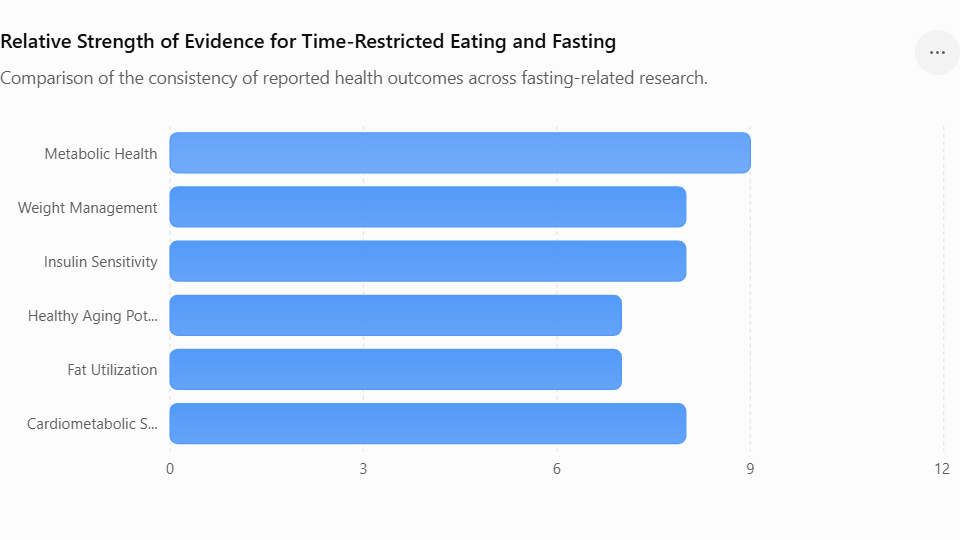
Ketika saya melihat bukti, saya menemukan bahwa banyak dari ini Manfaat terkait dengan puasa intermiten umumnya, bukan diet Warrior secara khusus. Karena penelitian tentang diet Warrior itu sendiri terbatas, banyak dari apa yang kita Tahu berasal dari studi tentang makan terbatas waktu dan puasa yang berkepanjangan.
Mari kita jelajahi apa yang ditunjukkan oleh bukti saat ini.
1. Diet prajurit dapat mendukung penurunan berat badan.
Salah satu alasan terbesar orang mencoba diet Warrior adalah menurunkan berat badan.(2)
Dengan membatasi makan pada jendela pendek setiap hari, banyak orang secara alami mengonsumsi lebih sedikit kalori tanpa menghitung setiap gigitannya.
kekuatan Alasan penurunan berat badan Termasuk:
- Mengurangi asupan kalori.
- Kurang ngemil.
- Konsumsi makanan olahan lebih rendah.
- kesadaran makan yang lebih baik.
- Kontrol porsi yang ditingkatkan.
Namun, Diet Warrior tidak menjamin penurunan berat badan. Jika Anda mengonsumsi lebih banyak kalori daripada yang dibutuhkan tubuh Anda selama jendela makan, penurunan berat badan mungkin tidak terjadi.
2 Dapat meningkatkan kesadaran nafsu makan.
Sebelum belajar tentang puasa, saya sering berasumsi bahwa lapar berarti saya membutuhkan makanan segera.(3)
Diet Warrior mendorong orang untuk membedakan antara:
- Kelaparan fisik yang benar.
- kebiasaan makan.
- makan emosional.
- Ngemil yang berhubungan dengan kebosanan.
Banyak pengikut melaporkan menjadi lebih sadar akan kebiasaan makan mereka dari waktu ke waktu.
3. dapat meningkatkan sensitivitas insulin.
Puasa intermiten telah dipelajari untuk efeknya pada insulin.
sedikit Penelitian menunjukkan bahwa makan terbatas waktu dapat membantu meningkatkan sensitivitas insulin pada individu tertentu.
Sensitivitas insulin yang lebih baik memungkinkan tubuh untuk mengatur gula darah lebih efisien.
Ini mungkin sangat membantu bagi orang dengan kelebihan berat badan atau obesitas, meskipun siapa pun dengan diabetes harus berkonsultasi dengan profesional kesehatan sebelum mencoba puasa yang berkepanjangan.
4. Dapat mendukung pembakaran lemak.
Selama periode puasa yang diperpanjang, kumpulan Secara bertahap bergeser dari penggunaan karbohidrat yang baru saja dimakan untuk memanfaatkan lemak yang disimpan untuk energi.
Proses ini tidak segera terjadi, tetapi jendela puasa yang lebih panjang dapat meningkatkan oksidasi lemak.
Penting untuk diingat bahwa peningkatan tambun Membakar selama puasa tidak selalu berarti kehilangan lemak jangka panjang yang lebih besar kecuali asupan kalori total juga mendukung tujuan itu.
5. dapat menyederhanakan perencanaan makan.
Satu manfaat tak terduga yang saya perhatikan saat belajar tentang diet Warrior adalah kesederhanaannya.
Alih-alih merencanakan:
- sarapan.
- Camilan tengah hari.
- makan siang.
- Camilan sore.
- makan malam.
Banyak pengikut yang berfokus terutama pada satu makanan bergizi.
Untuk orang-orang dengan jadwal sibuk, ini dapat mengurangi:
- waktu persiapan makan.
- belanja bahan makanan.
- kelelahan keputusan.
- biaya makanan.
6. Dapat mengurangi snack tanpa berpikir.
Banyak orang mengonsumsi ratusan kalori ekstra melalui camilan yang sering.
Karena Diet Warrior membatasi makan pada jendela malam yang pendek, secara alami membatasi peluang untuk:
- keripik.
- permen.
- minuman manis.
- makanan ringan olahan.
- Penggembalaan larut malam.
Pengurangan ini dapat berkontribusi pada peningkatan kontrol kalori.
7 . dapat mempromosikan pilihan makanan yang lebih baik.
Karena hanya ada satu jurusan makan setiap hari, banyak pengikut menjadi lebih disengaja tentang kualitas makanan.
Makanan diet seimbang sering menekankan:
- Protein kurus.
- sayuran.
- biji-bijian utuh.
- lemak sehat.
- buah-buahan.
Memilih padat nutrisi Makanan menjadi sangat penting karena tubuh Memiliki lebih sedikit kesempatan untuk mendapatkan vitamin dan mineral sepanjang hari.
8. dapat meningkatkan fokus mental bagi sebagian orang.
Banyak orang melaporkan Merasa lebih tajam saat berpuasa.
Meskipun pengalaman bervariasi, kemungkinan alasan termasuk:
- tingkat energi yang stabil.
- Penurunan energi pasca makan lebih sedikit.
- fluktuasi gula darah berkurang.
- peningkatan kesadaran.
Secara pribadi, saya pikir ini sangat bervariasi dari orang ke orang.
Beberapa orang merasa berenergi saat berpuasa, sedangkan yang lain merasa sulit untuk berkonsentrasi sampai mereka makan.
9. dapat mendorong kepuasan makan yang lebih baik.
Makan satu kali makan yang cukup sering mendorong orang untuk:
- Makan perlahan.
- menghargai makanan.
- Fokus pada gizi seimbang.
- merasa puas setelah makan.
Pendekatan yang penuh perhatian ini dapat meningkatkan pengalaman makan secara keseluruhan.
10. dapat mendukung kesehatan metabolik.
Para peneliti terus mempelajari apakah puasa intermiten mempengaruhi kesehatan metabolisme.
Beberapa penelitian menyarankan makan yang dibatasi waktu dapat mempengaruhi secara positif:
- pengaturan gula darah.
- tekanan darah.
- kolesterol.
- penanda peradangan.
Namun, penelitian pada manusia yang lebih jangka panjang diperlukan, terutama untuk jadwal puasa selama diet prajurit.
Hasil Diet Prajurit: Apa yang Dapat Anda Harapkan?
Pertanyaan umum lainnya adalah:
“Hasil diet prajurit macam apa yang bisa saya harapkan?”
Hasilnya sangat bervariasi tergantung pada faktor-faktor seperti:
- Berat awal.
- aktivitas fisik.
- kualitas tidur.
- pilihan makanan.
- Total asupan kalori.
- konsistensi.
Beberapa orang melaporkan:
- penurunan berat badan.
- Snacking berkurang.
- energi yang meningkat.
- disiplin makan yang lebih baik.
Pengalaman lain:
- lapar.
- energi rendah.
- kesulitan menjaga jadwal.
- Makan berlebihan selama jendela makan.
Diet Warrior tidak sama efektifnya untuk semua orang.
Diet prajurit untuk menurunkan berat badan.
Bisakah Diet Warrior Membantu Anda Menurunkan Berat Badan?
mungkin—jika itu menciptakan defisit kalori.
berat kehilangan Pada akhirnya tergantung pada konsumsi kalori lebih sedikit daripada yang digunakan tubuh Anda.
Diet Warrior mungkin membuat ini lebih mudah karena:
- Makan lebih jarang.
- ngemil berkurang.
- Makan menjadi lebih terstruktur.
Namun, mengkonsumsi malam yang sangat besar Makanan dapat menghilangkan kalori defisit.
Diet dan olahraga prajurit.
Banyak orang bertanya-tanya apakah itu Aman untuk berolahraga saat berpuasa.
itu tergantung pada:
- intensitas latihan.
- tingkat kebugaran.
- toleransi individu.
- hidrasi.
- Nutrisi secara keseluruhan.
Latihan ringan.
Umumnya cocok dengan puasa.
Contohnya meliputi:
- Berjalan.
- peregangan.
- Yoga.
- pekerjaan mobilitas.
Latihan sedang.
Beberapa orang berkinerja baik selama:
- bersepeda.
- pelatihan ketahanan.
- berenang.
Yang lain lebih suka pelatihan lebih dekat ke jendela makan mereka.
Latihan intensitas tinggi.
Periode puasa yang panjang dapat mengurangi kinerja selama:
- Berlari.
- olahraga kompetitif.
- Angkat berat yang berat.
- peristiwa ketahanan.
Atlet sering membutuhkan asupan nutrisi yang lebih sering daripada yang disediakan oleh Diet Prajurit.
Diet Prajurit vs 16:8 Puasa Intermiten.
Diet Warrior jauh lebih ketat daripada metode 16:8 yang populer.
| ciri | Diet pejuang | 16:8 Puasa |
|---|---|---|
| waktu puasa | ~20 jam | 16 Jam |
| jendela makan | ~4 jam | 8 Jam |
| Jumlah makanan | biasanya 1 | 2–3 |
| keluwesan | menyungkurkan | lebih tinggi |
| Pemula ramah | kurang | tambahan |
Bagi kebanyakan pemula, banyak ahli diet menganggap pendekatan 16:8 lebih mudah dipertahankan.
Warrior Diet vs Omad (satu kali makan sehari).
Diet ini tampak serupa tetapi tidak identik.
| Diet pejuang | omad |
|---|---|
| Memungkinkan makanan kecil di siang hari | Biasanya tidak ada kalori |
| Satu kali makan malam yang besar | Satu kali makan kapan saja |
| Fokus pada makanan utuh | Kualitas makanan bervariasi |
| Lebih fleksibel saat puasa | Biasanya lebih ketat |
Diet prajurit vs pembatasan kalori tradisional.
| Diet pejuang | Makanan tradisional |
|---|---|
| Fokus pada waktu makan | Fokus pada penghitungan kalori |
| Satu jendela makan | makanan sepanjang hari |
| Perencanaan makan kurang | Makan lebih sering |
| Dapat mengurangi ngemil | Tergantung pada kebiasaan individu |
Tidak ada pendekatan yang secara universal lebih baik.
Diet terbaik adalah yang dapat Anda pertahankan sambil memenuhi kebutuhan nutrisi Anda.
Apakah Diet Warrior Didukung oleh Sains?
Di sinilah penting untuk memisahkan fakta dari klaim pemasaran.
Saat ini:
- Ada beberapa penelitian yang secara khusus meneliti diet prajurit.
- Sebagian besar bukti yang tersedia berasal dari penelitian tentang puasa intermiten dan makan terbatas waktu.
Studi menyarankan puasa intermiten dapat membantu dengan:
- manajemen berat badan.
- sensitivitas insulin.
- pengaturan gula darah.
- kesehatan kardiometabolik.
Namun, para peneliti masih tidak tahu apakah puasa 20 jam setiap hari menawarkan keuntungan yang signifikan dibandingkan jadwal puasa yang tidak terlalu ketat.
Dengan kata lain, Diet Warrior mungkin berhasil untuk beberapa individu, tetapi belum terbukti lebih unggul dari pola makan sehat lainnya.
Tips praktis untuk sukses.
Jika seseorang memutuskan untuk mencoba Diet Warrior, saya pikir kebiasaan ini sangat penting:
- Tetap terhidrasi dengan baik sepanjang hari.
- Prioritaskan protein tanpa lemak saat makan malam.
- Sertakan banyak sayuran.
- Jangan gunakan jendela makan sebagai alasan untuk makan makanan ultra-olahan.
- bertujuan untuk tidur yang cukup.
- Perhatikan tingkat kelaparan dan energi.
- Sesuaikan jadwal jika sulit untuk dipertahankan.
Efek samping yang potensial dari diet prajurit.
Sementara Diet pejuang Mungkin menawarkan manfaat bagi sebagian orang, itu bukan pilihan yang tepat untuk semua orang. Menurut saya, memahami potensi risiko sama seperti penting seperti belajar tentang manfaat.
Periode puasa yang panjang dapat fisik dan mental menantang, terutama ketika Anda baru memulai.
Mari kita lihat beberapa kemungkinan kelemahan.
1. Kelaparan dan mengidam makanan.
Tantangan yang paling umum adalah kelaparan.
Selama beberapa hari atau minggu pertama, banyak orang mengalami:
- Sering kelaparan.
- Mengidam makanan yang kuat.
- ketergesaan.
- kesulitan berkonsentrasi.
Gejala-gejala ini sering membaik sebagai tubuh Beradaptasi, tetapi tidak semua orang menganggap penyesuaian itu mudah.
2 Tingkat energi rendah.
Beberapa orang melaporkan pengurangan energi, terutama pada sore hari.
Hal ini dapat mempengaruhi:
- produktivitas.
- kinerja latihan.
- kegiatan sehari-hari.
Jika energi Anda tetap rendah secara konsisten, Diet Warrior mungkin bukan yang paling cocok untuk gaya hidup Anda.
3. risiko makan berlebihan.
Salah satu kekhawatiran yang saya miliki dengan periode puasa yang sangat lama adalah godaan untuk makan berlebihan selama jendela makan.
Beberapa orang menjadi sangat lapar sehingga mereka mengkonsumsi:
- kalori yang berlebihan.
- makanan olahan tinggi.
- porsi yang besar terlalu cepat.
Ini dapat mengurangi atau menghilangkan defisit kalori yang diperlukan untuk menurunkan berat badan dan juga dapat menyebabkan ketidaknyamanan pencernaan.
4. Ketidaknyamanan pencernaan.
Makan satu kali makan besar setelah berpuasa yang lama dapat menyebabkan:
- kembung.
- gangguan pencernaan.
- refluks asam.
- Ketidaknyamanan perut.
Makan perlahan dan pilih yang seimbang Makanan dapat membantu mengurangi masalah ini.
5. Kesulitan memenuhi kebutuhan nutrisi.
Karena asupan makanan terbatas pada waktu yang singkat, mungkin lebih sulit untuk mengkonsumsinya:
- protein.
- Serat.
- kalsium.
- besi.
- kalium.
- magnesium.
- vitamin.
Merencanakan makanan padat nutrisi menjadi sangat penting.
6. penurunan kinerja atletik.
Atlet dan individu yang sangat aktif sering membutuhkan:
- asupan karbohidrat yang sering.
- konsumsi protein secara teratur.
- hidrasi yang cukup.
Periode puasa panjang Diet Prajurit mungkin tidak menyediakan bahan bakar yang cukup untuk:
- Pelatihan maraton.
- olahraga kompetitif.
- Latihan kekuatan berat.
- Latihan interval intensitas tinggi.
Siapa yang harus menghindari diet pejuang?
Meskipun orang dewasa yang sehat dapat memilih untuk mencoba diet prajurit, kelompok tertentu harus menghindarinya kecuali disarankan sebaliknya oleh profesional kesehatan yang berkualifikasi.
Ini termasuk:
- wanita hamil.
- ibu menyusui.
- anak-anak dan remaja.
- Orang dengan tipe 1 diabetes.
- Individu yang menggunakan insulin atau obat penurun gula darah.
- Siapa saja yang memiliki riwayat gangguan makan.
- individu yang kurang berat badan.
- orang yang pulih dari operasi atau penyakit serius.
- orang dewasa yang lebih tua dengan status gizi yang buruk.
Jika Anda memiliki kondisi medis kronis, bicarakan dengan penyedia layanan kesehatan Anda sebelum memulai puasa yang berkepanjangan.
7 -Rencana makan Diet Prajurit Hari.
Jika Anda penasaran mencoba diet Warrior, berikut adalah contoh dari a Rencana makan satu minggu yang seimbang.
Hari 1.
fase kurang makan
- air.
- Kopi hitam.
- apel.
- irisan mentimun.
waktu makan siang
- Ayam bakar.
- beras merah.
- brokoli kukus.
- Salad campur.
- Yoghurt Yunani.
Hari 2.
fase kurang makan
- teh herbal.
- Tongkat wortel.
- telur rebus.
waktu makan siang
- salmon panggang.
- ubi jalar.
- bayam.
- Beri campuran.
Hari 3.
fase kurang makan
- air.
- yoghurt polos.
waktu makan siang
- Dada kalkun.
- Quinoa.
- Sayuran panggang.
- alpukat.
Hari 4.
fase kurang makan
- Irisan paprika.
- teh hijau.
waktu makan siang
- Kari lentil.
- beras merah.
- Sayuran campur.
- oranye.
Hari ke 5.
fase kurang makan
- telur rebus.
- air.
waktu makan siang
- tahu panggang.
- Sayuran goreng.
- Quinoa.
- buah segar.
Hari 6.
fase kurang makan
- tongkat seledri.
- Kopi hitam.
waktu makan siang
- Daging sapi tanpa lemak.
- ubi jalar.
- kacang hijau.
- Salad campur.
Hari ke 7.
fase kurang makan
- teh herbal.
- apel.
waktu makan siang
- Ikan bakar.
- beras merah.
- brokoli.
- Yoghurt dengan buah beri.
Tips untuk pemula.
Jika saya merekomendasikan The Warrior Diet kepada seseorang yang tertarik untuk mencobanya, saya sarankan untuk menguranginya daripada melompat langsung ke puasa 20 jam.
Tips bermanfaat meliputi:
- Mulailah dengan jadwal puasa 12:12 atau 16:8 terlebih dahulu.
- Minum banyak air sepanjang hari.
- Prioritaskan protein saat makan malam Anda.
- Sertakan sayuran di setiap makan malam.
- Hindari makan berlebihan selama jendela makan.
- tidur yang cukup.
- Dengarkan Anda Kelaparan tubuh dan sinyal energi.
kesalahan umum yang harus dihindari.
Banyak pemula berjuang karena kesalahan sederhana.
Melewatkan hidrasi.
Minumlah air secara teratur selama periode puasa.
Makan kebanyakan junk food.
Diet Warrior bekerja paling baik saat makan malam padat nutrisi—bukan pesta makanan cepat saji.
Tidak makan cukup protein.
Protein mendukung:
- pemeliharaan otot.
- pemulihan.
- kenyang.
Bertujuan untuk memasukkan sumber protein berkualitas di setiap makanan utama.
Mengabaikan sinyal rasa lapar.
Pusing, kelemahan, atau pingsan yang terus-menerus adalah tanda untuk berhenti berpuasa dan mencari nasihat medis jika gejalanya berlanjut.
Mulai terlalu agresif.
transisi secara bertahap daripada segera mencoba puasa 20 jam.
Mitos umum tentang diet prajurit.
mari Pisahkan mitos dari fakta.
Mitos 1: Anda bisa makan apa saja selama jendela makan.
Fakta: Kualitas makanan masih penting. Makanan seimbang yang kaya akan protein, sayuran, lemak sehat, dan biji-bijian lebih bermanfaat daripada makanan olahan tinggi.
Mitos 2: Diet Warrior lebih baik daripada diet lainnya.
Fakta: Tidak ada satu pun diet yang paling cocok untuk semua orang. Keberhasilan tergantung pada preferensi individu, kondisi kesehatan, dan kepatuhan jangka panjang.
Mitos 3: Puasa secara otomatis membakar lemak.
Fakta: Sementara puasa meningkatkan oksidasi lemak, kehilangan lemak jangka panjang masih tergantung pada mempertahankan defisit kalori secara keseluruhan.
Mitos 4: Setiap orang harus berpuasa selama 20 jam.
Fakta: banyak orang mencapai hasil yang sangat baik dengan jadwal puasa yang lebih pendek, seperti 14:10 atau 16:8.
Mitos 5: Diet prajurit membangun otot.
Fakta: Membangun otot terutama tergantung pada asupan protein yang cukup, latihan ketahanan, pemulihan, dan kalori yang cukup—tidak berpuasa saja.
pertanyaan yang sering diajukan.
1. Apa itu Diet Prajurit?
The Warrior Diet adalah jenis puasa intermiten yang melibatkan makan sangat sedikit selama periode puasa 20 jam dan mengonsumsi satu makanan yang lebih besar dan kaya nutrisi selama 4 jam makan.
2. Apakah Diet Warrior membantu menurunkan berat badan?
Ini dapat membantu beberapa orang menurunkan berat badan dengan mengurangi asupan kalori secara keseluruhan dan membatasi ngemil. Namun, hasil tergantung pada mempertahankan defisit kalori dan membuat pilihan makanan bergizi.
3. Bisakah saya minum kopi dengan diet Warrior?
YA. Kopi hitam polos, teh tanpa pemanis, dan air umumnya diperbolehkan selama periode puasa karena mengandung sedikit atau tidak ada kalori.
4. Bisakah saya berolahraga sambil mengikuti diet prajurit?
Ya, tetapi toleransi Anda mungkin berbeda. Olahraga ringan hingga sedang umumnya lebih mudah dikelola selama puasa, sementara pelatihan intensitas tinggi mungkin memerlukan nutrisi tambahan.
5. Apakah Diet Warrior Aman?
Diet Warrior mungkin aman untuk beberapa orang dewasa yang sehat, tetapi itu tidak cocok untuk semua orang. Orang dengan kondisi medis tertentu, wanita hamil, dan individu dengan riwayat gangguan makan harus berkonsultasi dengan profesional kesehatan sebelum mencobanya.
6. Berapa lama waktu yang dibutuhkan untuk melihat hasil diet prajurit?
Beberapa orang melihat perubahan nafsu makan atau berat badan dalam beberapa minggu, sementara yang lain mungkin memakan waktu lebih lama. Hasil tergantung pada kualitas diet, asupan kalori, aktivitas fisik, tidur, dan konsistensi.
7 Bisakah saya makan karbohidrat pada diet Warrior?
YA. The Warrior Diet mendorong sumber karbohidrat makanan utuh seperti beras merah, gandum, quinoa, ubi jalar, dan buah sebagai bagian dari makan malam yang seimbang.
8. Apakah Diet Warrior lebih baik dari puasa 16:8?
belum tentu. Sementara diet Warrior menggunakan jendela puasa yang lebih panjang, tidak ada bukti kuat bahwa itu lebih unggul daripada pendekatan 16:8 yang lebih fleksibel bagi kebanyakan orang.
9. Apa yang terjadi jika saya berpuasa selama 20 jam setiap hari?
Puasa selama 20 jam setiap hari dapat membantu mengurangi asupan kalori, meningkatkan pembakaran lemak, dan mendukung penurunan berat badan bagi sebagian orang. Namun, juga dapat menyebabkan rasa lapar, kelelahan, kekurangan nutrisi, atau makan berlebihan jika tidak direncanakan dengan benar.
10. Apa perbedaan antara diet omad dan warrior?
Diet OMAD (satu kali makan sehari) melibatkan makan semua kalori harian dalam satu kali makan dengan periode puasa yang ketat. Diet Warrior juga berpusat pada satu makan malam utama tetapi memungkinkan sejumlah kecil makanan seperti buah-buahan, sayuran, atau yogurt selama periode puasa siang hari.
11. Apa Fase 1 dari Diet Prajurit?
Fase 1 adalah fase undereating, yang berlangsung sekitar 20 jam. Selama waktu ini, Anda mengonsumsi makanan kaya nutrisi atau minuman bebas kalori dalam jumlah yang sangat kecil, seperti air, teh herbal, sayuran mentah, buah-buahan, atau yogurt biasa, sebelum makan utama di malam hari.
pemikiran akhir.
The Warrior Diet adalah salah satu bentuk puasa intermiten yang lebih terstruktur, dibangun di sekitar gagasan makan sangat sedikit di siang hari dan menikmati satu kali makan besar di malam hari. Bagi sebagian orang, rutinitas ini dapat menyederhanakan perencanaan makan, mengurangi camilan yang tidak perlu, dan mendukung Manajemen berat badan secara alami membatasi asupan kalori.
Namun, ini bukan solusi satu ukuran untuk semua. Jendela puasa yang panjang bisa sulit dipertahankan, dan mungkin tidak cocok untuk orang-orang dengan pekerjaan fisik yang menuntut, atlet, kondisi medis tertentu, atau siapa saja yang berjuang dengan kelaparan yang berkepanjangan. Sukses pada diet Warrior tidak hanya bergantung pada puasa tetapi juga pada makan seimbang, makanan kaya nutrisi selama jendela makan.
Dalam pandangan saya, pola makan terbaik adalah pola makan yang dapat Anda pertahankan secara konsisten sambil memenuhi kebutuhan nutrisi Anda dan mendukung kesehatan Anda secara keseluruhan. Jika Diet Warrior sesuai dengan gaya hidup Anda dan secara medis sesuai untuk Anda, mungkin perlu ditelusuri. Jika tidak, bentuk puasa intermiten yang tidak terlalu membatasi—seperti 14:10 atau 16:8—dapat menawarkan manfaat serupa dengan fleksibilitas yang lebih besar.
+3 Sumber
FreaktoFit memiliki pedoman pengadaan yang ketat dan bergantung pada studi peer-review, lembaga penelitian pendidikan, dan organisasi medis. Kami menghindari penggunaan referensi tersier. Anda dapat mempelajari lebih lanjut tentang bagaimana kami memastikan konten kami akurat dan terkini dengan membaca Kebijakan Editorial.
- efek puasa intermiten pada kesehatan, penuaan, dan penyakit; https://pubmed.ncbi.nlm.nih.gov/31881139/
- efek makan terbatas waktu pada penurunan berat badan dan parameter metabolisme lainnya pada wanita dan pria dengan kelebihan berat badan dan obesitas; https://jamanetwork.com/journals/jamainternalmedicine/fullarticle/2771095
- Membalikkan sakelar metabolik: memahami dan menerapkan manfaat puasa bagi kesehatan; https://pubmed.ncbi.nlm.nih.gov/29086496/