















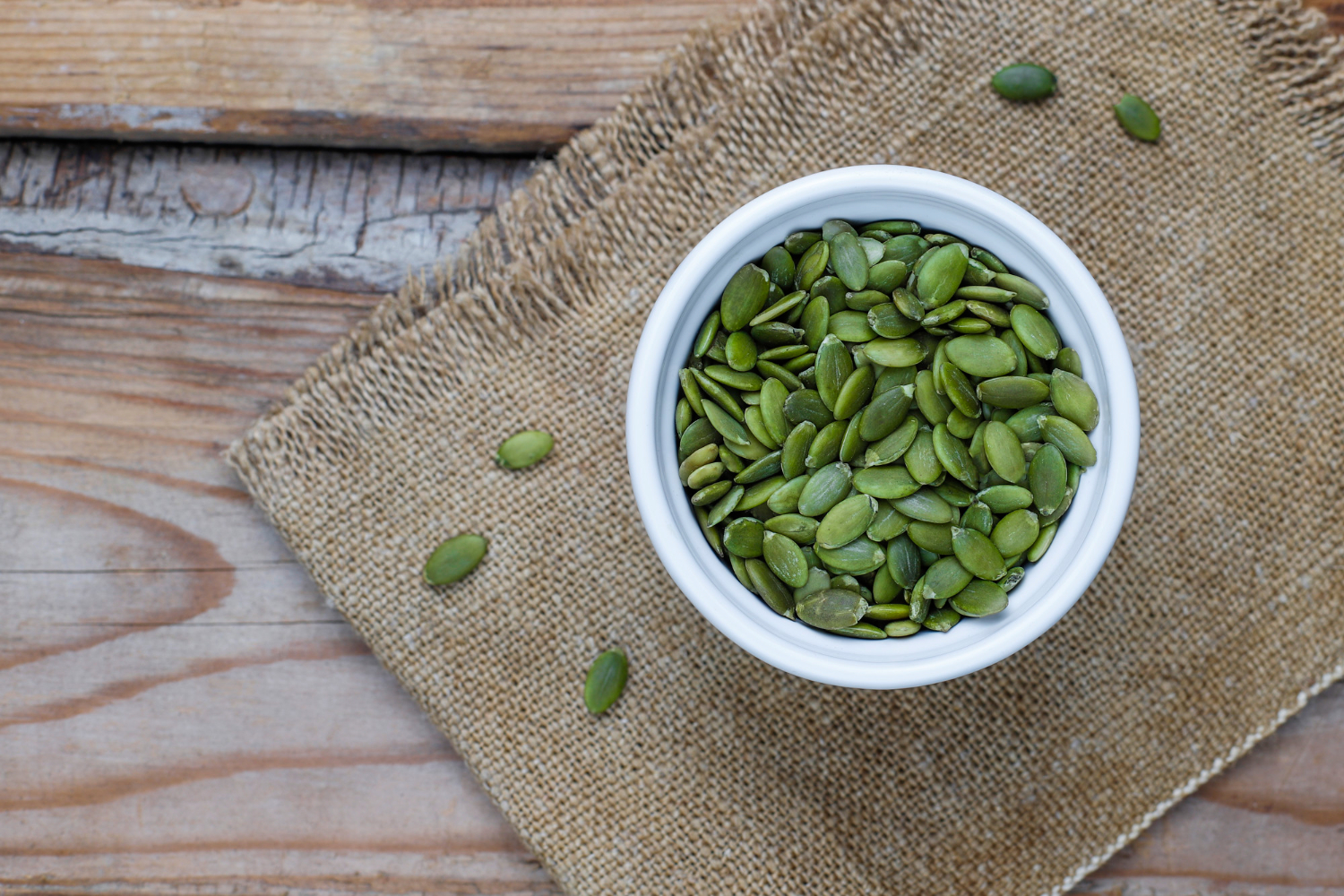
Pumpkin seeds are the edible seeds found inside pumpkins and other varieties of squash. They are commonly eaten raw or roasted and are used in everything from salads and oatmeal to trail mixes, breads, smoothies, granola, and traditional dishes.
They may be small, but pumpkin seeds are nutritionally dense. They provide protein, unsaturated fats, fiber, magnesium, zinc, phosphorus, iron, copper and other nutrients.
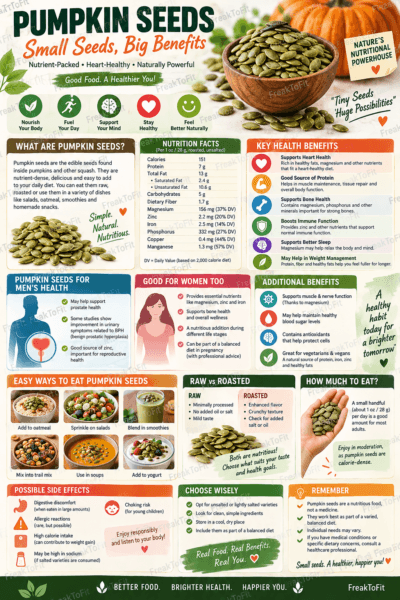
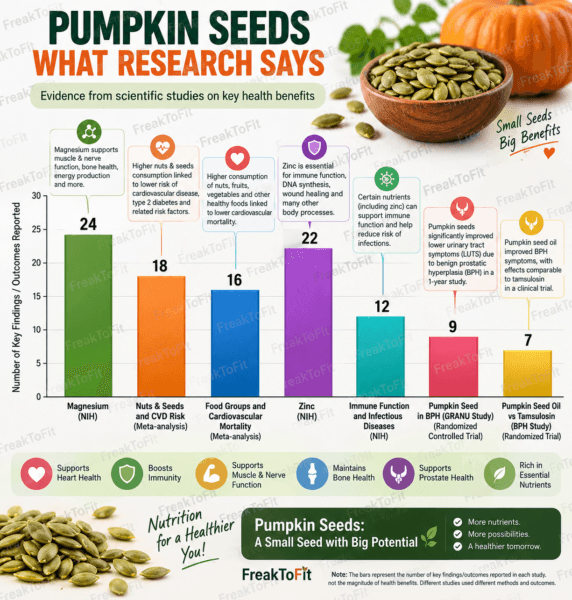
One particularly notable nutrient is magnesium. According to the U.S. National Institutes of Health, one ounce of roasted pumpkin seeds provides about 156 mg of magnesium, or approximately 37% of the Daily Value.(1)
Pumpkin seeds are therefore an easy way to add nutrient density to meals without requiring a large serving.
Cerita terkait
 Diet hiperbolik- diet ajaib untuk menurunkan berat badan
 Apakah Kacang Jagung Sehat : Tahu dari para ahli
However, “nutrient-dense” does not mean “eat unlimited amounts.” Seeds are relatively energy-dense because they contain substantial amounts of fat, so portion size can matter, especially for people monitoring calorie intake.
Pumpkin Seeds Nutrition.
The nutritional composition varies according to whether the seeds are raw, roasted, salted, shelled or eaten with their shells.
A typical small serving of pumpkin seed kernels provides a combination of:
- Plant protein
- Unsaturated fats
- Dietary fiber
- magnesium
- seng
- fosfor
- besi
- tembaga
- batu kawi
- Other vitamins and minerals
Magnesium is one of their standout nutrients. The NIH lists pumpkin seeds among good food sources of magnesium and notes that magnesium is involved in muscle and nerve function, blood glucose regulation, blood pressure regulation, protein production, bone health and DNA production.

Zinc is another important nutrient found in seeds and other plant foods. Zinc contributes to immune function, protein and DNA synthesis and wound healing.
This combination makes pumpkin seeds particularly useful as a small addition to a balanced diet.

Pumpkin Seeds Benefits.
1. Pumpkin Seeds Are Rich in Magnesium.
One of the most recognized pumpkin seeds benefits is their magnesium content.
The body uses magnesium in hundreds of biochemical reactions. It contributes to normal muscle and nerve function, blood glucose regulation, blood pressure regulation, protein production and bone health.
The recommended amount of magnesium for adults varies by age and sex, generally ranging from approximately 310 to 420 mg per day.
An ounce of roasted pumpkin seeds provides around 156 mg, making them a concentrated dietary source.
This does not mean pumpkin seeds should be considered a treatment for magnesium deficiency. If a person has a diagnosed deficiency or symptoms associated with a nutritional problem, the underlying cause should be evaluated by a healthcare professional.
Nevertheless, incorporating magnesium-rich foods such as pumpkin seeds, legumes, whole grains and leafy vegetables can contribute to overall nutritional adequacy.
2 .Dapat mendukung kesehatan jantung.
Pumpkin seeds contain unsaturated fats, minerals and other bioactive compounds that make them compatible with a heart-healthy eating pattern.
Research on nuts and seeds as a broader food category has found associations between higher consumption and lower cardiovascular disease risk. A 2023 systematic review and meta-analysis involving more than 1.8 million participants found that higher total nuts and seeds consumption was associated with lower risks of cardiovascular disease and coronary heart disease. The authors described the evidence for cardiovascular disease and coronary heart disease as probable, while emphasizing that more research is needed for individual types of seeds.(2)
This distinction matters.
The research does tak prove that eating pumpkin seeds alone prevents heart disease.
Rather, pumpkin seeds can be one component of an overall dietary pattern that includes vegetables, fruits, whole grains, legumes, nuts, seeds and other nutrient-rich foods.
A separate systematic review of long-term dietary intake found that higher consumption of nuts, fruits and vegetables and whole grains was associated with lower cardiovascular mortality.(3)
3. Provide Healthy Unsaturated Fats.
Pumpkin seeds contain a substantial amount of fat, but much of it is unsaturated fat.
Unsaturated fats are commonly emphasized in heart-healthy dietary patterns, particularly when they replace substantial amounts of saturated fat.
This is one reason seeds can be useful alternatives to highly processed snacks.
For example, instead of reaching for a heavily salted snack food, you could add a small portion of unsalted pumpkin seeds to:
- yogurt
- Oatmeal
- Salads
- Vegetable bowls
- Homemade trail mix
However, pumpkin seeds are still calorie-dense.
A handful can contain considerably more calories than a piece of fruit or a serving of many vegetables. Portion awareness is therefore useful for people who are trying to maintain or reduce body weight.
4. May Help Support Adequate Protein Intake.
Pumpkin seeds provide plant-based protein.
Protein is needed for:
- Perawatan otot
- Muscle growth
- Tissue repair
- Enzyme production
- Hormone production
- Immune function
- Structural tissues
Pumpkin seeds are not necessarily the most economical or concentrated protein source compared with foods such as lentils, beans, tofu or dairy products.
However, they can complement those foods.
For example, adding pumpkin seeds to a bowl containing yogurt and fruit can increase the overall protein and nutrient content of the meal.
For athletes and people trying to build muscle, pumpkin seeds should be considered one part of the overall protein strategy rather than the primary protein source.
5. Pumpkin Seeds Provide Zinc.
Zinc is another important nutrient found in pumpkin seeds.
The NIH notes that zinc is required for numerous cellular processes and plays important roles in immune function, protein synthesis, DNA synthesis and wound healing. Adult zinc requirements are generally around 8–12 mg per day, depending on sex and life stage. (4)
Pumpkin seeds can contribute to dietary zinc intake, particularly for people who eat predominantly plant-based diets.
However, plant foods also contain phytates, compounds that can reduce zinc absorption. The NIH specifically notes that people following vegetarian or vegan diets may have more difficulty obtaining absorbable zinc because beans and grains contain phytates.
This does not make plant foods unhealthy.
It simply means that people following highly plant-based diets should consume a varied diet and pay attention to nutrient adequacy.
6. May Support Normal Immune Function.
Because pumpkin seeds contain zinc, they can contribute to normal immune function.
Zinc is involved in both innate and adaptive immune processes.(5)
However, eating more pumpkin seeds does not automatically “boost” immunity beyond normal physiological requirements.
This is an important distinction.
If someone is deficient in zinc, correcting the deficiency is important. But consuming very large amounts of zinc through supplements or fortified products is not necessarily better and can cause problems.
A balanced diet is generally preferable to relying on a single food.
7. May Support Bone Health.
Pumpkin seeds contain magnesium and phosphorus, nutrients involved in maintaining normal bone structure and metabolism.
Magnesium is particularly relevant because it contributes to bone health and participates in many processes involved in mineral metabolism.
But healthy bones require much more than magnesium.
Important factors include:
- Adequate calcium
- vitamin D
- protein
- aktivitas fisik
- latihan kekuatan
- Overall nutrition
- Hormonal health
Therefore, pumpkin seeds can contribute useful nutrients but should not be described as a standalone treatment for osteoporosis or weak bones.
8. May Be Helpful as Part of a Balanced Diet for Blood Sugar Management.
Pumpkin seeds contain protein, fat and fiber, which can make them more filling than many refined carbohydrate snacks.
Adding seeds to a meal can therefore help create a more balanced nutritional profile.
Research on nuts and seeds overall has produced interesting findings regarding metabolic health, but evidence for Diabetes tipe 2 is less consistent than the evidence for cardiovascular outcomes. A large systematic review found that the relationship between nuts/seeds and type 2 diabetes was not conclusive.
Therefore, it would be inaccurate to claim that pumpkin seeds lower blood sugar or prevent diabetes by themselves.
For someone with diabetes, pumpkin seeds can generally be incorporated into a balanced meal plan, but the total carbohydrate and calorie content of the entire diet still matters.
9. May Support Satiety and Weight Management.
Pumpkin seeds combine:
- protein
- tambun
- urat
These nutrients can help make a snack more satisfying.
For example, a small portion of pumpkin seeds paired with fruit may be more filling than eating a highly refined carbohydrate snack alone.
However, pumpkin seeds are energy-dense.
This creates an important balance:
They may be filling, but eating very large quantities can substantially increase calorie intake.
For weight management, portion size matters.
A practical serving might be around a small handful, depending on your overall nutritional needs.
10. Pumpkin Seeds May Support Men’s Prostate Health.
One of the more interesting areas of pumpkin seed research concerns lower urinary tract symptoms associated with benign prostatic hyperplasia (BPH).
A one-year randomized, placebo-controlled GRANU study included 1,431 men aged 50–80 with symptoms suggestive of BPH. Participants received pumpkin seeds, pumpkin seed extract or placebo. The researchers reported a clinically relevant improvement in symptom scores in the pumpkin-seed group compared with placebo, while noting that the evidence required further confirmation before recommending pumpkin seeds as a treatment for moderate symptoms.(6)
Another randomized clinical trial compared pumpkin seed oil with tamsulosin in men with BPH. Both groups experienced improvements in symptoms and quality of life over three months, although the reduction in symptom score was greater with tamsulosin at some time points.(7)
These studies are interesting, but they do not mean that pumpkin seeds cure prostate enlargement.
BPH is a medical condition, and persistent urinary symptoms should be evaluated by a healthcare professional.
Symptoms such as:
- Difficulty starting urination
- Weak urine flow
- Frequent nighttime urination
- Incomplete bladder emptying
- retensi urin
should not simply be self-treated with pumpkin seeds.
11. May Provide Antioxidant Compounds.
Pumpkin seeds contain various bioactive compounds, including phytochemicals and antioxidant-related compounds.
Antioxidants are substances that help protect cells from oxidative damage.
However, nutrition science has moved away from the simplistic idea that eating an “antioxidant food” directly neutralizes all harmful molecules in the body.
Health outcomes are influenced by the overall dietary pattern and physiological processes.
Pumpkin seeds can therefore be included as part of a varied diet rich in plant foods rather than being treated as a miracle antioxidant.
12. Pumpkin Seeds Can Be Useful for Vegetarians and Vegans.
For people following vegetarian or vegan diets, pumpkin seeds provide a convenient source of:
- protein
- magnesium
- seng
- besi
- Lemak sehat
However, they do not supply every nutrient needed in a plant-based diet.
For example, vitamin B12 requires particular attention in vegan diets because reliable natural plant sources are limited.
A well-planned plant-based diet should include a variety of legumes, whole grains, vegetables, fruits, nuts, seeds and fortified foods, with supplements when appropriate.
Pumpkin seeds can be part of that pattern rather than being expected to provide everything.
13. May Support Muscle and Nerve Function.
The magnesium in pumpkin seeds is relevant to normal muscle and nerve function.
Magnesium participates in processes involved in nerve signaling and muscle contraction.
This is one reason magnesium-rich foods can be useful in a balanced diet.
However, the popular claim that eating pumpkin seeds will automatically prevent muscle cramps is too strong.
Muscle cramps can have many causes, including exercise, dehydration, medication effects, electrolyte disturbances and underlying medical conditions.
If cramps are frequent or severe, the cause should be investigated rather than assuming that more pumpkin seeds are the answer.
Pumpkin Seeds for Women.
Pumpkin seeds can be a nutritious addition to a woman’s diet because they provide magnesium, zinc, protein, iron and healthy fats.
These nutrients are relevant across different stages of life.
Women of reproductive age, for example, have increased nutritional considerations around iron because of menstrual blood loss.
Pumpkin seeds contain iron, but plant-based iron is non-heme iron, which is absorbed differently from the heme iron found in animal foods.
Combining plant sources of iron with vitamin C-rich foods can be a practical strategy.
During pregnancy and breastfeeding, nutritional needs change substantially. Pumpkin seeds can be included in a balanced diet, but they should not be used as a substitute for prenatal supplements or individualized dietary guidance.
Pumpkin Seeds for Men.
Pumpkin seeds are particularly interesting in discussions about men’s nutrition because of their zinc content and the limited clinical research investigating pumpkin seeds and BPH symptoms.
As discussed above, some studies have reported improvements in urinary symptoms with pumpkin seed or pumpkin seed oil interventions.
However, these findings should not be interpreted as proof that pumpkin seeds prevent prostate cancer or eliminate prostate enlargement.
They are a nutritious food—not a prostate medication.
Pumpkin Seeds and Sleep.
Pumpkin seeds are sometimes promoted online as a “natural sleep food” because they contain magnesium and other nutrients.
Magnesium is involved in normal nervous-system and muscle function, but there is insufficient evidence to say that eating pumpkin seeds before bed will reliably improve sleep in everyone.
If you enjoy them as an evening snack, a small portion can fit into a balanced diet.
For persistent insomnia, focus on evidence-based sleep habits and seek professional evaluation when necessary.
How Many Pumpkin Seeds Should You Eat Per Day?
There is no universal required serving size.
A practical portion for many adults is approximately 1 ounce, or a small handful, depending on the rest of the diet.
The NIH’s magnesium fact sheet uses 1 ounce of roasted pumpkin seeds as a reference serving and lists about 156 mg of magnesium in that amount.
People with higher calorie needs may consume more, while those managing calorie intake may choose a smaller portion.
Think of pumpkin seeds as a nutrient-dense addition, not a food that needs to be consumed in large quantities to obtain benefits.
Raw vs Roasted Pumpkin Seeds.
Both raw and roasted pumpkin seeds can fit into a healthy diet.
Raw Pumpkin Seeds.
Potential advantages include:
- Minimal processing
- No added oil
- No added salt
Roasted Pumpkin Seeds.
Roasting can enhance flavor and texture.
When purchasing roasted seeds, check the label for:
- Added salt
- Added sugar
- Added oils
- Flavoring ingredients
If you are monitoring sodium intake, choose unsalted or lightly salted varieties.
Dry roasting can be a simple preparation method at home.
Pumpkin Seeds With Shells vs Shelled Seeds.
Pumpkin seeds are available both with and without their shells.
Shelled pumpkin seed kernels are often called pepitas.
The edible kernels are convenient for cooking and snacking.
Whole seeds with shells can contain additional fiber from the shell, but the shell can be harder to digest and may be unpleasant for some people.
If buying packaged pumpkin seeds, check whether the product contains kernels or whole seeds.
Easy Ways to Eat Pumpkin Seeds.
Pumpkin seeds are versatile.
Add Them to Oatmeal.
Sprinkle a small amount over oatmeal with fruit and yogurt.
Add Them to Salads.
They provide crunch and healthy fats.
Mix Them Into Trail Mix.
Combine pumpkin seeds with nuts and dried fruit.
Add Them to Smoothies.
Ground pumpkin seeds can increase the nutrient density of a smoothie.
Use Them in Homemade Granola.
Combine oats, pumpkin seeds, nuts and spices.
Add Them to Soups.
They work particularly well with pumpkin, squash and lentil soups.
Sprinkle Over Yogurt.
Combine plain yogurt, fruit and pumpkin seeds for a balanced snack.
Use Them in Chutneys or Seed Mixes.
Ground pumpkin seeds can be incorporated into homemade spice and seed preparations.
Are Pumpkin Seeds Good for Weight Loss?
Pumpkin seeds can be part of a weight-management diet, but they are not a fat-burning food.
Their protein, fat and fiber can contribute to satiety.
At the same time, their high energy density means that eating large amounts can make it easier to exceed your calorie needs.
The best approach is to use them as a topping or small snack rather than consuming large bowls without considering portion size.
Pumpkin Seeds and Cholesterol.
Pumpkin seeds contain unsaturated fats and phytosterol-like compounds that have attracted scientific interest.
Research involving nuts and seeds as a category suggests potential improvements in blood lipid profiles and cardiovascular risk. A systematic review and meta-analysis found that nut intake was associated with reductions in total and LDL cholesterol, although evidence varies by food and population.
However, pumpkin seeds specifically should not be marketed as a cholesterol-lowering treatment.
If you have high LDL cholesterol, follow the treatment plan recommended by your healthcare professional.
Possible Pumpkin Seeds Side Effects.
Pumpkin seeds are generally well tolerated as a food, but they are not suitable for absolutely everyone.
1. Reaksi alergi.
Seed allergies can occur.
People with a known pumpkin or seed allergy should avoid the relevant product and seek medical advice if symptoms occur.
Severe allergic reactions can cause:
- Difficulty breathing
- bengkak
- Hives
- kepuyengan
- Loss of consciousness
These symptoms require urgent medical attention.
2. Digestive Discomfort.
Eating a large quantity at once can cause:
- kembung
- Gas
- Abdominal discomfort
- Changes in bowel movements
Gradually increasing intake can help some people.
3. High Calorie Intake.
Because seeds are energy-dense, frequent large portions can contribute significant calories.
4. Added Sodium.
Salted pumpkin seeds can contain substantial sodium.
If you have high blood pressure or have been advised to limit sodium, unsalted versions may be preferable.
5. Choking Risk.
Whole seeds can present a choking risk for young children.
Children should consume appropriately prepared foods according to their developmental stage and under appropriate supervision.
Who Should Be Careful With Pumpkin Seeds?
Speak with a healthcare professional if you have:
- A known seed allergy
- Significant digestive disorders
- A medically prescribed calorie restriction
- A condition requiring a specialized diet
- Difficulty swallowing
- A history of kidney-related dietary restrictions
Pumpkin seeds are a food, not a supplement or medication, but individual circumstances can change what is appropriate.
Pumpkin Seeds vs Pumpkin Seed Oil.
Pumpkin seed oil is different nutritionally from whole pumpkin seeds.
Whole seeds provide:
- protein
- urat
- bahan galian
- tambun
Pumpkin seed oil is primarily a source of fat and does not provide the same amount of protein or fiber as whole seeds.
Some clinical research has investigated pumpkin seed oil for BPH symptoms, but those results should not be automatically applied to eating whole pumpkin seeds.
For everyday nutrition, whole pumpkin seeds generally offer a broader nutrient package.
Are Pumpkin Seeds a Superfood?
The term “superfood” is mainly a marketing term rather than a scientific classification.
Pumpkin seeds are certainly nutrient-dense, but no single food can provide everything the body kebutuhan.
A healthier perspective is to include pumpkin seeds alongside:
- sayur-may
- buah-buahan
- biji-bijian utuh
- kacang-kacangan
- Dairy or suitable alternatives
- Other nuts and seeds
- Adequate protein sources
Dietary diversity is more important than searching for one “superfood.”
pertanyaan yang sering diajukan.
1. What are the main benefits of pumpkin seeds?
Pumpkin seeds provide magnesium, zinc, protein, healthy fats, fiber and other nutrients. They can contribute to heart-healthy and nutrient-dense eating patterns.
2. How many pumpkin seeds should I eat daily?
A small handful, around 1 ounce, is a practical serving for many adults, although individual requirements vary.
3. Are pumpkin seeds good for men?
They can be a nutritious source of zinc and magnesium. Some clinical studies have also investigated pumpkin seeds and pumpkin seed oil for urinary symptoms associated with BPH, but they are not a replacement for medical treatment.
4. Are pumpkin seeds good for women?
Yes. They provide several nutrients relevant to women’s health, including magnesium, zinc, iron, protein and healthy fats.
5. Do pumpkin seeds help with sleep?
They provide magnesium, which is involved in normal nervous-system function, but there is not enough evidence to say that pumpkin seeds reliably treat insomnia.
6. Do pumpkin seeds help with weight loss?
They can support a satisfying diet but do not directly burn fat. Portion control is important because they are calorie-dense.
7. Are pumpkin seeds high in magnesium?
Yes. The NIH lists approximately 156 mg of magnesium in 1 ounce of roasted pumpkin seeds.
8. Are pumpkin seeds high in zinc?
They provide zinc and can contribute to dietary zinc intake. Plant-based diets may require particular attention to zinc because phytates can reduce zinc absorption.
9. Can I eat pumpkin seeds every day?
For most people, a moderate serving can be included in a balanced diet every day if desired.
10. Are salted pumpkin seeds healthy?
They can still provide nutrients, but added sodium can be significant. Unsalted or lightly salted varieties are preferable for people limiting sodium.
11. Are raw pumpkin seeds healthier than roasted ones?
Not necessarily. Both can be nutritious. The main differences often involve preparation, added salt, oil and serving size.
12. Can pumpkin seeds lower cholesterol?
They may contribute to a dietary pattern associated with healthier blood lipids, but evidence is stronger for nuts and seeds collectively than for pumpkin seeds specifically. They should not replace prescribed cholesterol treatment.
13. Can pumpkin seeds improve prostate health?
Some studies have reported improvements in urinary symptoms associated with BPH following pumpkin seed or pumpkin seed oil interventions. However, more evidence is needed, and pumpkin seeds should not be considered a cure for prostate disease.
14. Are pumpkin seeds safe during pregnancy?
They can generally be part of a balanced pregnancy diet, but pregnancy has increased nutritional requirements. Individual dietary and supplement needs should be discussed with a healthcare professional.
Takeaway akhir.
Pumpkin seeds are a small but nutrient-dense food that can make a useful addition to a balanced diet. Their most notable nutritional strengths include magnesium, zinc, protein, unsaturated fats and other minerals.
Among the best-supported reasons to include pumpkin seeds are their contribution to overall nutrient intake and their fit within dietary patterns rich in nuts, seeds, whole grains, fruits and vegetables. Research on nuts and seeds as a broader category has found favorable associations with cardiovascular outcomes, although these findings cannot automatically be attributed specifically to pumpkin seeds.
There is also interesting but more specific research involving pumpkin seeds and prostate-related urinary symptoms. A large randomized trial found clinically relevant improvement in urinary symptoms among men consuming pumpkin seeds for one year, while another randomized study examined pumpkin seed oil against tamsulosin. These findings are promising but do not establish pumpkin seeds as a replacement for medical treatment of BPH.
The practical message is straightforward: you do not need to eat huge quantities of pumpkin seeds to benefit from their nutritional value. A small serving added to oatmeal, yogurt, salads, soups or homemade snack mixes can increase the nutrient density of a meal.
Choose unsalted or lightly salted varieties when appropriate, pay attention to portion size, and vary your sources of protein, healthy fats, fruits, vegetables and whole grains.
Most importantly, avoid viewing pumpkin seeds as a miracle food.
Good nutrition comes from the overall dietary pattern, not from one ingredient.
+7 sumber
FreaktoFit memiliki pedoman pengadaan yang ketat dan bergantung pada studi peer-review, lembaga penelitian pendidikan, dan organisasi medis. Kami menghindari penggunaan referensi tersier. Anda dapat mempelajari lebih lanjut tentang bagaimana kami memastikan konten kami akurat dan terkini dengan membaca Kebijakan Editorial.
- Magnesium; https://ods.od.nih.gov/factsheets/Magnesium-HealthProfessional/
- Nuts and seeds consumption and risk of cardiovascular disease, type 2 diabetes and their risk factors: a systematic review and meta-analysis; https://pubmed.ncbi.nlm.nih.gov/36816545/
- Long-Term Consumption of 10 Food Groups and Cardiovascular Mortality: A Systematic Review and Dose Response Meta-Analysis of Prospective Cohort Studies; https://pubmed.ncbi.nlm.nih.gov/36811594/
- seng; https://ods.od.nih.gov/factsheets/Zinc-HealthProfessional/
- Dietary Supplements for Immune Function and Infectious Diseases; https://ods.od.nih.gov/factsheets/ImmuneFunction-HealthProfessional/
- Effects of pumpkin seed in men with lower urinary tract symptoms due to benign prostatic hyperplasia in the one-year, randomized, placebo-controlled GRANU study; https://pubmed.ncbi.nlm.nih.gov/25196580/
- Pumpkin seed oil (Cucurbita pepo) versus tamsulosin for benign prostatic hyperplasia symptom relief: a single-blind randomized clinical trial; https://pubmed.ncbi.nlm.nih.gov/34666728/