






































 Workout

 Meditation


 Podcast
 E-book


The Fast Facts
- Its also helps to improve the flexibility of the shoulders and at the same time you can move it forward by making some changes like snow angels, reverse snow angels, when you are ready to make it quite tough.
- Now slide your arms slowly toward the wall in snow angel or jumping jack motion, then hold it for seconds and then slowly come back to the starting position and complete….
- Reverse Snow Angel is another variation of the snow angel that helps to improve your body posture and also improves your range of motion.

Among several other exercises snow angel is one of the most effective strength exercise. It strengthens your shoulders and helps to stabilize the muscles. Strengthening your shoulder muscles helps to pull back the shoulders to support good posture and reduce neck, shoulder and back pain. Snow Angel is not a Pilates exercise, even it is not necessary that you have a foam roller when you are practicing this exercise.
Such type of exercise opens your chest and stretches your shoulders. Its also helps to improve the flexibility of the shoulders and at the same time you can move it forward by making some changes like snow angels, reverse snow angels, when you are ready to make it quite tough.
How To Do Snow Angel Exercise?
At first start by lying on your back, keeping your feet flat on the floor and your arms on your side. Turn your feet one or two inches above the floor and turn them sideways and backwards, hovering the whole time.
Related Stories
 High Intensity Interval Training Workouts for Seniors
 How To Get Breasts Back After Weight Loss
At the same time, move your legs, pushing your arms out of your side in a circular motion above your head, placing them close to the floor. You have to keep your abdominal muscles engage throughout the exercise and keep your lower back attached to the floor.
Then turn your arms and legs back to your side and center at the same time. Your pace simulates creating an snow angel, except that you want to focus on keeping your hands and feet from ever touching the floor.
Targeted Body Parts.
Lower Back, Abs, Glutes, Shoulder and Quadriceps.
Which Muscles Work in Snow Angel?
Snow Angel exercise focuses on the external rotator of your shoulder. It works on the back, shoulder, and neck muscles. By doing this regularly it helps to build strength in the shoulder area and also helps to improve mobility in your upper body.
This exercise helps to improve the posture of the body. If you’re looking for a simple exercise that can also target different muscles then Snow Angel and its variations are perfect for your training plan.
Types of Snow Angel Exercise.
1 Reverse Snow Angel Exercise.
Reverse Snow Angel is another variation of the snow angel that helps to improve your body posture and also improves your range of motion. This workout also helps to strengthen not only your abdominal muscles but also the shoulders.
This practice requires stabilizing tasks in each movement, due to this it has become one of the widely practiced in fitness as well as sports. Here are the instructions to do the right reverse snow angels;
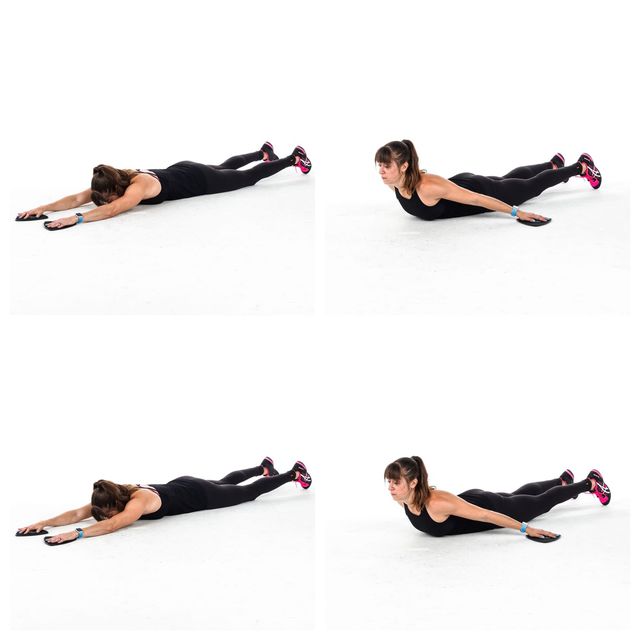
To begin exercising you have to lie down with your face down on your yoga mat, then stretch your legs together then raise your head a little more slowly off the ground.
Then lower the palms, stretch your arms to the front and pull your elbows downwards. Make sure you don’t forget to squeeze your scapula and shoulders and keep your legs straight throughout the exercise.
This exercise is perfect for beginners, not only because it improves your shoulder mobility but it also effective in scapular stability and rotation.
2 Standing Snow Angel Exercise.
Standing Snow Angel is another version of snow angel exercise that is to exercise standing against a wall. The Standing Snow Angel exercise targets the scapular alignment and motion using the wall to perform this exercise. Here we give you instructions so that you can do the standing snow angel exercise in the right way;
Start by standing against the wall, facing away from the wall, then keep your arms downwards, keeping your palms away from the wall.
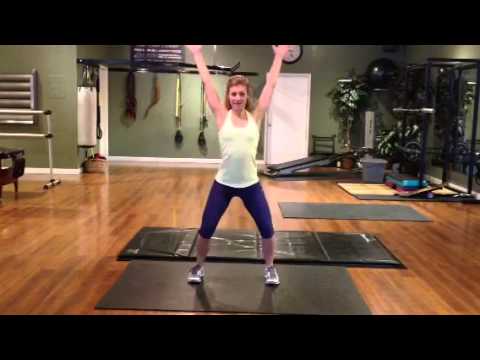
Now slide your arms slowly toward the wall in snow angel or jumping jack motion, then hold it for seconds and then slowly come back to the starting position and complete the standing snow angel exercise.
Once you reach 90-degrees, it’s quite difficult to maintain contact with the wall, especially when you experience a slight tightness in your shoulders. If this happens to you then you should try to slow down your speed and pay attention to your performance technique.
The aim of the exercise is to improve and strengthen the range of motion. So you don’t need to add some extra weight, you just have to focus on the proper technique, controlled and slow pace throughout your workout.
3 Supine Snow Angel Exercise.
- It’s a good practice for those requiring excellent overhead mobility such as swimmers or tennis players.
- Like any exercise you should do the exercise only if it is painless during, after and after exercise and the next day.
- Lie on the floor with your back on your back, bend your knee upwards and keep your feet flat.
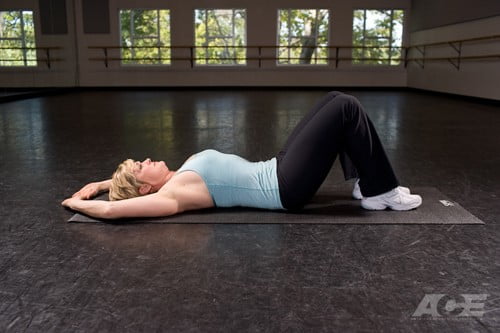
- Squeeze your arms together with your arms, your shoulder blades together and downwards.
- Then use your abdominals to push your lower back into the ground.
- These two elements need to remain the same throughout the exercise.
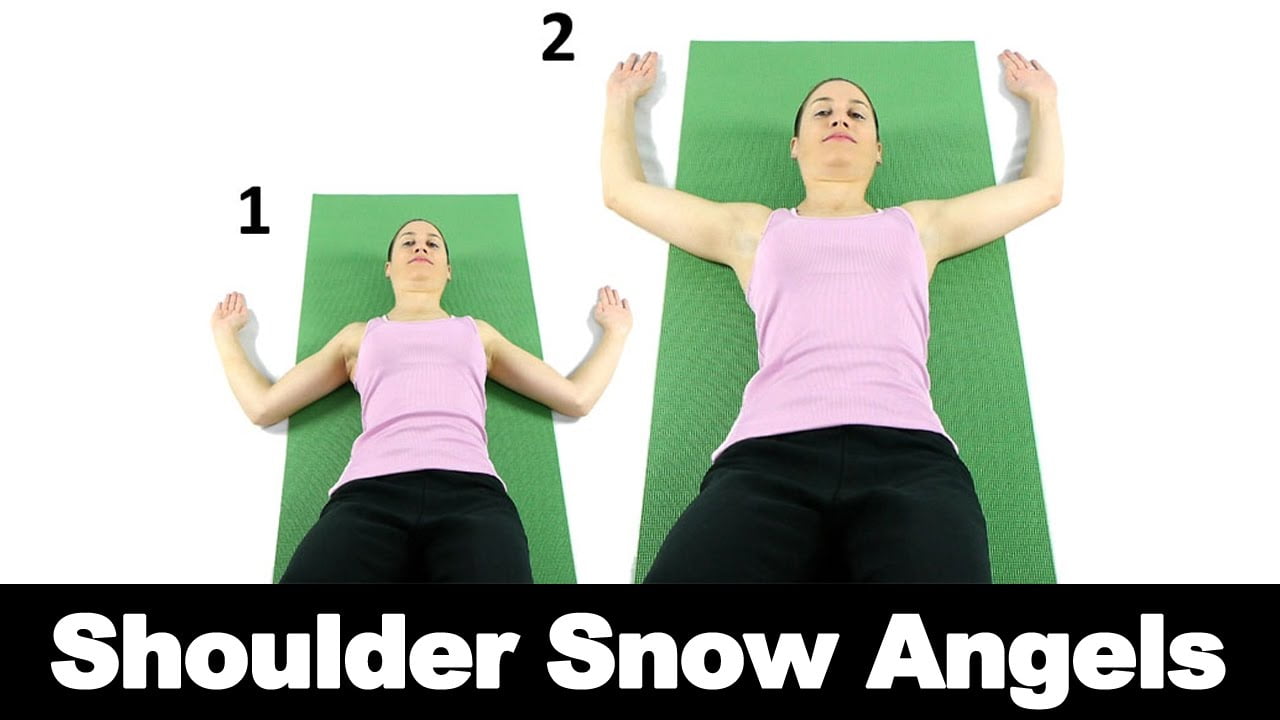
- Now move your arms towards the sides perpendicular to the body, bend your elbows to 90 degrees and keep the entire arm in contact with the floor, palm upwards.
- Then raise your arms up until they are above your head.
- Remember not to lose the position of your lower back or shoulder blade and keep your arms in full contact if possible.
- Next slowly return to the initial position and repeat.
- Do 10 reps and you should aim to do this stretch 4-6 times daily.
4 Snow Angel Exercises For The Shoulders.
Shoulder mobility is important no matter which sport you compete in, so having a full range of motion in the shoulders is just as important as the legs and hips. By doing snow angel exercises for the shoulders, you can increase your mobility and improve your posture while reducing shoulder pain.
The workout is perfect for beginners. Not only because it effective for shoulder mobility, but it also helps to promote scapular stability and rotation. While it can be surprisingly tiring and frustrating at times, this exercise can be beneficial not only for athletes, but for all types of people.
So if you’re looking for a workout that offers variety, try adding one of the snow angel variations to your strength and mobility plan.
When completing any of the snow angel shoulder exercises, make sure that the proper form is used and remember not to increase weight too quickly.
The primary objective of the exercise is to improve the range of motion and speed. So there is no need to add any extra weight. Just focus on the proper technique and slow, controlled speed.
Bottom Line.
Snow Angel exercise is one of the perfect exercises to add to your regular strength workout and should be included in your training 3 to 4 times a week. It is a simple workout and it is not so hard to learn and it takes just a few moments to master.