










































 Workout

 Meditation


 Podcast
 E-book


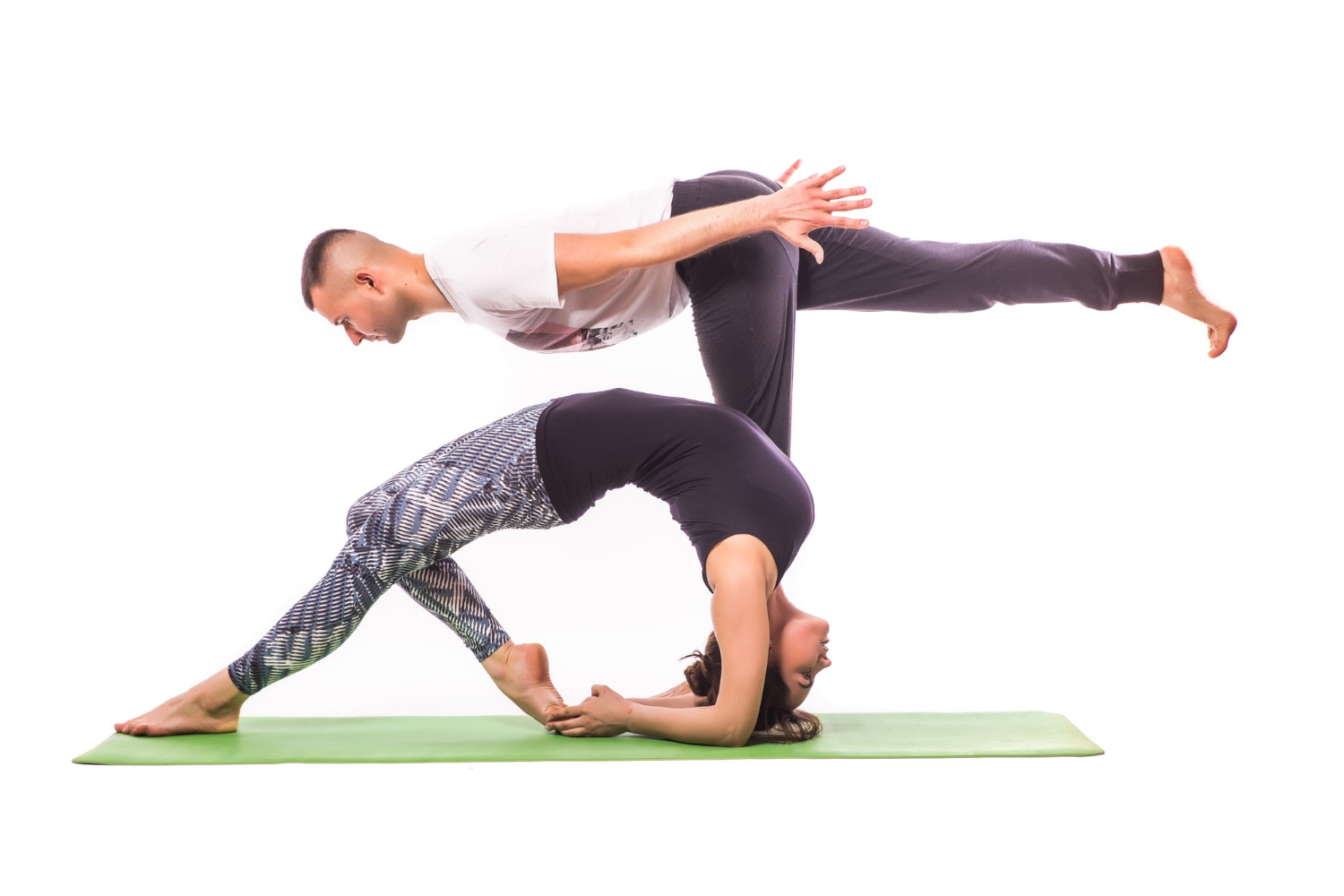
Yoga is a great practice, not only for the body and soul but also for relationships as it can be practiced by two or more people. Everyone is familiar with traditional yoga poses, but partner yoga will be a new experience that will not only bring partners closer but also challenge, connect, and support them. Now, what about extreme yoga for two people? These postures require not only physical but also communication and trust skills. This article will discuss various extreme yoga poses for two, the advantages of practicing these poses, and the steps to take in doing these poses safely without harming yourself and the person you are performing them with.
What Is Partner Yoga?
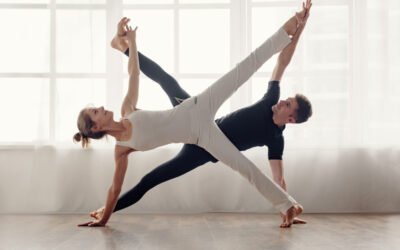
Partner yoga, or acroyoga, is a partnership yoga that requires two people to support each other in poses that are based on strength, balance, flexibility, and trust. This form of yoga combines physical exercise with a lot of collaboration, such as communication, cooperation, and being supportive of one another. Improving the life of a duo by doing demanding yoga poses and it doesn’t matter if you pair up with a friend, partner, or a yoga instructor.
Characterizing it as a person who lives and breathes yoga, Karen Thompson mentions, “The partner yoga is a way for people to reach each other on a deeper level. Our work is not only physical postures, but we also find the trust between us when we cover each other’s back – support, balance, and strength.”
Benefits of Extreme Yoga Poses for Two People.
One of the benefits of extreme yoga with a partner is the revelation of hidden skills that lie in both the physical and mental realms. These not only are the poses challenging but are also satisfying as they boost and nurture variety of capabilities:
Related Stories
 6 Effective Yoga Asanas For Skin Disease or Skin Problems
 10 Best Yoga Poses For Thyroid With Steps
- Strength and Flexibility: Several couples of extreme partner yoga poses are there exposing both participants to using their whole body, which will not only build muscle strength but will also increase flexibility.
- Improved Balance: Partner yoga makes you work out your core and balance differently than solo yoga, as you will be the one to maintain balance by using the base of your partner.
- Trust and Communication: Successful performance of very extreme poses calls for a constant back and forth of communication, trust and synchronization with the partner.
- Enhanced Focus: They are challenging poses that require you to be focused and attentive to the movement at every moment, this will help you keep your mind in a relaxed state and being aware of the self and partner movements.
Extreme Yoga Poses for Two People.
We have listed below a compilation of advanced partner yoga poses that are artistically appealing as well as physically demanding. All of the partners should bear in their mind that each of these poses is not just about building their own skills but also respect, care, and understanding of their partner’s abilities.
1 Double Plank.
A variation of the regular plank, the pose has one person performing a plank while the other partner performs a plank on top of the partner.
How to Perform It:
– One of the partners should be in a straight-arm elbow plank position.
– Partner 2 places his feet on Partner 1’s shoulders and hands on Partner 1’s ankles very carefully to get a stacked plank.
Benefits: Tones the core, arms, shoulders, and back of both movers.
Expert Insight: “Engaging the core of your body and keeping that continuous tension means both duo members can make use of this posture as a muscle-building exercise,” comments the yoga teacher Michael Reyes. “Besides, you have to make sure your fellow-mate fully trusts in you, since keeping balance is the most important thing here.”
2 Flying Bow Pose.
Flying Bow Pose is more of a dynamic pose that fuses acrobatics and yoga into the one.
How to Perform It:
– Partner 1 is lying on his back with his knees bent and feet up, taking the form of a base.
– Partner 2 is standing over Partner 1, bending his back into a bow pose, and carefully putting his pelvis on Partner 1’s feet.
– Partner 1 pulls up Partner 2 while holding the latter’s ankles, allowing Partner 2 to stretch his arms to make a flying bow pose.
Benefits: Stretches and strengthens the back, chest, and legs, and improves the flexibility of the spinal column.
Safety Tip: The essential principles of this asana are balance and control, communicated through voice between the partners and gradualness of the implementation stages.
3 Double Downward Dog.
One partner supports the other partner’s weight when both are in downward dog position, making it an inverted version of the traditional downward dog pose.
How to Perform It:
– Partner 1 starts by adopting a downward dog position which entails placing the hands and feet on the ground.
– Partner 2, in turn, places their hands in front of Partner 1’s hands and raises their feet so that they come to rest on Partner 1’s back.
Benefits: It is stretching the hamstrings, shoulders, and spine muscles while at the same time improving the skills of balance and trust.
Quote: “The Double Downward Dog not only deepens the bonding of solidarity between a partnership but also helps in fostering a meditative connection with the other,” Sarah Collins, a qualified yoga teacher, states. “The pose not only demands both flexibility and balance but it also helps create a sense of oneness.”
4 Partner Handstand.
This pose is not only visually attractive but also extremely hard. Apart from that, it requires a lot of shoulder muscles to balance, and not to forget, poise.
How to Perform It:
– Partner 1 makes sure they are in a stable base position, with feet apart shoulder width.
– Partner 2 is the one who holds the handstand position while Partner 1 is helping them and allowing the ankles to remain steady; in other words, he/she is the one who takes the main support and has to make sure that the position is maintained.
Benefits: It is an exercise that helps to build the muscles of the arms, shoulders, and core of the body as well as develop coordination.
5 Acro Yoga Throne Pose.
This pose is where Partner 2 sits on the feet of Partner 1 who is lying on their back with their legs straight up.
How to Perform It:
– Partner 1 lies on the ground and lifts the legs to form a 90-degree angle with the abdomen.
– Partner 2 carefully positions himself/herself on the feet of Partner 1, with a straight back and legs if he/she seems seated on a throne.
Benefits: This pose not only strengthens the legs of Partner 1 but also improves balance for both of the partners.
A safety tip: Start practicing with a small amount, and it is wise to use a surface with a gentle touch in case of stumbling.
Scientific Evidence Behind Partner Yoga.
It is proven by a conducted study that such activities as partner-based physical activities like yoga are able to foster social bonding and lower stress. The study of 2016 published in the Journal of Clinical Sport Psychology revealed that activities like trust games and cooperative exercises (such as partner yoga) had a significant impact on emotional health, fostering deeper connections and better well-being.(1)
Besides, a study in Frontiers in Psychology states that the practice of yoga, together with extreme poses, is very effective in raising body consciousness and is very useful in mental health well-being.(2)
Common Mistakes to Avoid.
Here are the points you should take note of though practicing the extreme yoga postures for two that in the end will protect you from stress and injury:
– Trying to execute asap: In complex postures, patience is the key.
Without speaking: No communication equals no support so communicate clearly.
– Ignoring warm-ups: Always do a low-intensity warm-up with gentle stretches and the simpliest poses for the body, in order to get it ready for the main part of the training.
Bottom Line.
Very demanding yoga positions for a couple are not only a matter of the physical challenge they are also fostering the spirit of trust, communication, and the establishment of a strong bond with one’s partner. Whether you are a yoga beginner or a person who would like to improve the skills acquired, these postures will help you grow both physically and mentally. Remember to approach every single one of them with patience, understanding of the other person, and with a sense of exploration and then enjoy the journey of together mastering these incredible feats.
“Always a pleasure to be reminded by Michael Reyes, ‘In partner yoga, it’s all about the team. It is not the pose but the cooperation with your partner that counts the most” advocate an experienced person.
Be patient, be careful, and most importantly have fun while you and your partner are exploring these amazing yoga positions!
+2 Sources
Freaktofit has strict sourcing guidelines and relies on peer-reviewed studies, educational research institutes, and medical organizations. We avoid using tertiary references. You can learn more about how we ensure our content is accurate and up-to-date by reading our editorial policy.
- The effects of yoga-psychological skills training on mental health coping in injured young athletes: A case study; https://www.researchgate.net/publication/379575313_The_effects_of_yoga-psychological_skills_training_on_mental_health_coping_in_injured_young_athletes_A_case_study
- The effects of a complex yoga-based intervention on healthy psychological functioning; https://www.frontiersin.org/journals/psychology/articles/10.3389/fpsyg.2023.1120992/full