










































 Workout

 Meditation


 Podcast
 E-book


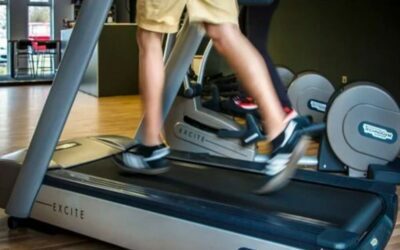
The best way to use the treadmill if you want to lose weight is simply by walking. Walking is an excellent physical exercise for weight loss. But in order not boring and monotonous process, include some variation such as 8 shaped walking exercise in your daily walk. Each day you should set aside a certain amount of time that will do as follows: run one minute, walk three minutes, rest one minute.
For example, you run one minute at 60 kilometers per hour, then walk for three minutes with 15-20 miles an hour pace and rest for a minute. This is the best exercise to lose weight on the treadmill.
You will get maximum results by doing this type of training every day for a long time. In addition, there are some other exercises for weight loss on a treadmill that you can do to increase the intensity.
8 shaped walking exercise?
This is a model of training for the treadmill. In each shape, you run and walk in turns so that the session lasts 10 minutes in total, at maximum level. Here are some variations:
Related Stories
 King Javien Conde: Lifestyle, Fitness Routine, Diet Plan & Personal Life Explained
 Which Outdoor Sport Can Combine Both Aerobic and Anaerobic Exercise?
1 Shape 4×1.
In this section, you have to do sets of four minutes with a one-minute break between each set. This gives a total of four sets. In a set, you run for one minute at 60 kilometers per hour speed.
Then take the three-minute rest during which you walk at 20 miles an hour pace. The fourth part is the fast group (1×4), which means that you have to run for four full minutes in this section.
2 Shape 5×2.
In this section, you run for two minutes at 60 kilometers per hour speed, followed by a three-minute break during which you walk at 20 miles an hour pace. After the break is over, you continue running for one minute and repeat again, doing five parts (5×2).
3 Shape 6×3.
The first part of this shape is the same as the first one – 4 sets of runs with breaks between them. Each set consists of four minutes of running and one minute of rest.
Between each series, there’s a three-minute break. You have to walk at 20 miles an hour pace. After completing all four series, you had walked 120 meters (total of 240 meters) in 3 minutes duration.
4 Shape 7×2+1.
In this model, you first run for 2 minutes with breaks between them (7×2). Then do one full set without breaks (1×7).
This means you run for seven minutes at 60 kilometers per hour speed, with one-minute breaks after every other minute. A typical example of this workout is running for 2 minutes, then walking for 1:30 minutes.
5 Shape 8×2+2.
In the first part of this model, you have to do eight runs of two full sets (8×2). Next comes the second part of the session. You do four additional runs without a break.
It means that there will be twelve sets, and they all consist of running for two full minutes and taking a short break (resting) during which you walk for one minute.
6 Shape 9×3+1.
The first three parts of this shape are the same as the previous three shapes – you run for three minutes with breaks in between. The last part, 1×9, means that after completing all nine parts, you run uninterrupted for 9 minutes at 60 kilometers per hour speed while resting for a minute after every other set.
7 Shape 10×3+2.
This section consists of ten sets of running. The first three sections are exactly like in shape number 5 (8×2). In the remaining seven runs, there’s one additional full run without breaks (1×10).
It means that instead of taking 1-minute rest between each set, you have to take a 2-minute break and walk, during which time it takes you to cover 120 meters distance.
So after completing all the parts of this section, you’re going to have walked 240 meters in 2 minutes.
Importance of 8 shaped walking exercise for weight loss.
This is the most effective way to reduce weight by using a treadmill. Shape number eight also has some other benefits – it strengthens the heart, lungs, and muscles.
So if you have no problem doing such training, we highly recommend this type of workout for weight loss on a treadmill.
8 shaped walking exercises can be performed with equipment from any brand that meets your needs. It’s important that the model you choose allows increasing or decreasing the speed.
So that you could do various exercises and reach your target heart rate zone within only two minutes of the warming-up session.
To make your daily walk more interesting and fun, try exercises as follows:
- Walk fast with short strides and lean forward at a faster speed as possible. Your body should move slightly in front of him (when walking forward).
- Walk with short strides, upright posture, and move the arms from side to side. While moving arms forward and backward at a faster speed as possible. This will help you burn calories and build some muscle in your upper body.
- Taller than normal stride and lean slightly forward. If you let your back become straight, then the benefits will be better.
- Fast walk and “stomp” your feet on the ground with each step. This is a good exercise for weight loss. If you do it properly, try to put weight on heels and toes go down as deep as possible.
- Walk at an angle from one side of the treadmill to the other.
- Walk-in circles at a moderate pace. This is good for those who have more weight and whose legs do not perform well. You just need to use the handrails to keep your balance and move around the treadmill in a circle.
- You can simply turn on the treadmill and make a few turns in both directions at a fast pace. This type of exercise will help you lose weight quickly, especially if you do it for five minutes every time or more. The main thing here is to get into shape and be careful not to fall off balance because that will be a problem for safety and health.
- By increasing the speed of the treadmill, you will burn more calories in less time. Increase the speed of 1 or 2 notches every day until you reach a maximum level (most machines can reach 18 km/hour). Then reduce the speed by one notch each day and keep doing this step by step until you reach the lowest speed.
Bottom Line.
The 8 Shaped Walking Exercise for Weight Loss is a great way to get in shape and lose weight. You can do this exercise by walking your dog, taking the stairs instead of the elevator or escalator, going on an outdoor walk with friends, etc.