






































Trending
Trauma and Its Complete Dietary Management Is Cryotherapy for Cellulite Really Effective? 14 Golden Rules for Natural Weight Gain Understanding and Managing Neck Pain During Pregnancy: Expert Advice and Effective Solutions Best Exercises and Yoga for Epidural Lipomatosis Best Cranberry Juice For UTI When Was Walking Invented? Subway Sandwich Nutrition Calculator – Know the Calories Before You Order 13 Best Exercises for Lumbar Spondylosis with Home Remedy What is Trikatu: Health Benefits, Side Effects And How to Use? Tabata Yoga : History, Benefits & Types What I Learned From Markiplier’s OnlyFans Physique and Fitness Transformation Yoga During Cancer: Surprising Benefits & Guidance from Experts 10 Essential Yoga Poses Every Athletic Woman Should Practice for Strength and Recovery Is Korean BBQ Healthy : Know The Truth Scarecrow Exercise: Best Exercise For Your Abs and Shoulders 7 Yoga Poses To Ease Endometriosis Symptoms Lord of Dance Yoga Pose: Benefits, How To Do And Variations Leg Exercise For Runners : Enhance Flexibility With Running Spinning Through the Emerald Isle: Fueling Your Ride and Recharging Your Soul 5 Major Benefits Of High-Quality Kratom For Your Health Why Should You Consider Buying Delta 9 THC Products Online? Unlocking Inner Peace: The Profound Benefits of Mrigi Mudra My Journey With Water Pilates: Discover the Benefits and Learn How to Start Best Superfoods For Men : Get Tremendous Benefits Does Mayo Have Dairy? Extreme Yoga Poses for Two People: A Journey into Strength, Balance, and Trust 9 Strategy For Avoiding Chronic Diseases Caused By A High-Calorie Diet How to Cure Erectile Dysfunction Naturally and Permanently? Know The Amazing Effect Of Preacher Curl Workout White Tea vs Green Tea : Which Is Healthier? Uveitis Eye Exercises: Effective Techniques for Managing Inflammation and Enhancing Vision Amber Heard Nude Fitness: Reclaiming Strength, Confidence, and Body Awareness 10 Essential Variations of Push Ups with Steps My Experience With Sat Kriya: Benefits, Precautions, and the Right Way to Practice What is the Uvea of the Eye? Is Stevia Bad For Your Teeth? Is Cancer Curable with Ayurveda: What Do Studies Say? The Truth About Vasectomy: Debunking Myths and Exploring Age Limits 14 Amazing Health Benefits of Fenugreek Seeds
Appointment
Ask Question
Talk2Expert
Q&A
Health Tracker
Workout
Nutritious
Meditation
Well-Being
Mood Music
Social Service
Podcast E-book
✓ Evidence Based
12.2k
Reads
1.5k

Patellar Subluxation Exercises : 4 Amazing Workouts

Medically reviewed
Our Review Process
Our content undergoes a rigorous editorial process, including fact-checking and clinical review by qualified medical experts.
READ MORE →

Our Editorial Team
Uttam (Fitness & Yoga Trainer), PT
AUTHOR
Kapil Yadav
MEDICAL ADVISOR
by   Kapil Yadav
Kapil Yadav ✔ Verified Expert
Kapil Yadav, based in Indore, Madhya Pradesh, India, is a Certified Fitness Trainer and Transformation Expert. Grounded in his educational journey at Devi Ahilya Vishwavidyalaya,…
READ MORE →
—Written by   Uttam (Fitness & Yoga Trainer), PT
Uttam (Fitness & Yoga Trainer), PT
Completed Certified Personal Fitness Trainer Course from American  Council on Exercise with 10 years of experience. Besides, Uttam is a sports writer. After graduating, he wrote for several sites in regards to sports. He has an excellent knowledge in the field of sports.  Know More. Learn about our editorial process.
READ MORE →
Updated on May 13, 2025
Why This Was Updated
We continuously monitor the health landscape and update our articles to reflect the latest evidence.

Updated on May 13, 2025

VIEW ALL HISTORY →
—Published on March 21, 2022
Our editorial process ensures that the information we provide is well-researched and reliable. Learn about our commitment to quality in our editorial policy.
Listen to this article

The Fast Facts

  • Whether it is a chronic condition or the result of an acute injury, you must always consult your doctor or physical therapist to determine the right way of treatment.
  • The AAOS suggests that the aim of loose patella exercises will be mainly to strengthen the muscles of the quadriceps in front of the thigh, which provide support &amp.
  • According to the American Academy of Orthopedic Surgeons (AAOS), knee dislocation often damages the lower part of the knee, which can lead to the development of permanent pain and arthritis.
FreakToFit logo

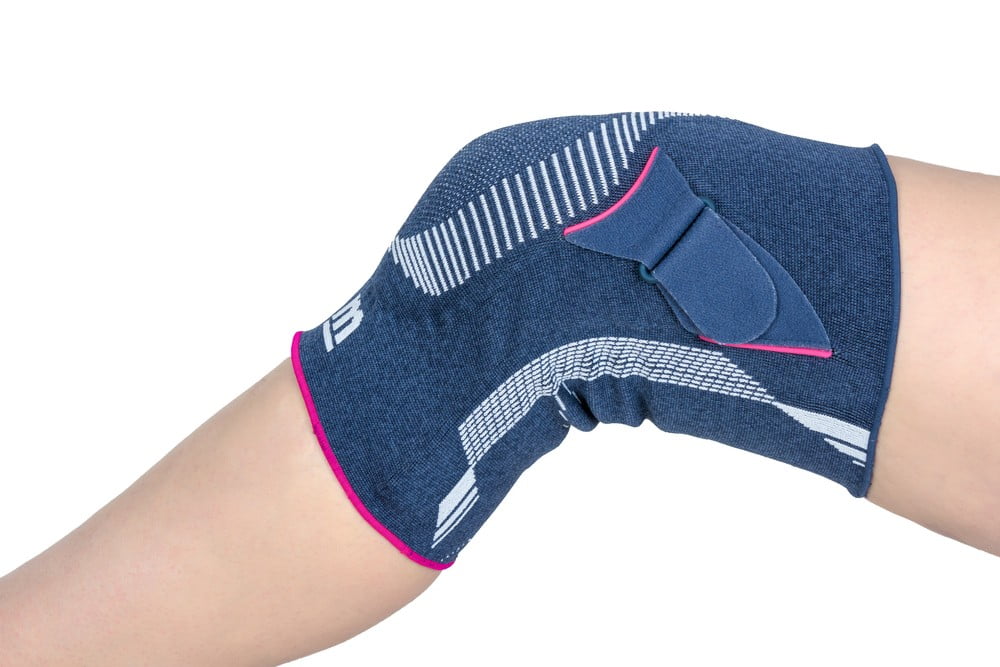
Many conditions, including Patellar dislocation or instability and knee dislocation, can cause loose knee. Some cases will require surgical treatment, while others can be treated with braces and exercise. Working with a physical therapist is the best way to learn patellar subluxation exercises. So, today we will tell you about some best patellar subluxation exercises.

What Is Patellar Subluxation?

A little bit of anatomy helps to understand what patellar subluxation really is. The patella, or kneecap, is one of the three bones that form the knee joint. Each of these bones has a protective layer of cartilage where their surface comes in contact. Patella is also covered with a tendon. This tendon connects the quadriceps muscle of the thigh to the shin (tibia) below the knee.

As the knee bends, the kneecap slides partly out of the groove. This groove is called the Subluxation. The kneecap is designed to fit into the center of the trochlear groove and to slide evenly within the grooves.

In some people, the esophagus is drawn to the outside of the trochlear groove. As it happens, the kneecap does not slide centrally within its grooves – we call it patellar subluxation.

What Are The Causes of Patellar Dislocation?

Patella dislocation usually occurs in young people and mainly during sports activity. There are many factors that make people more prone to Patellar Subluxation. Those are;
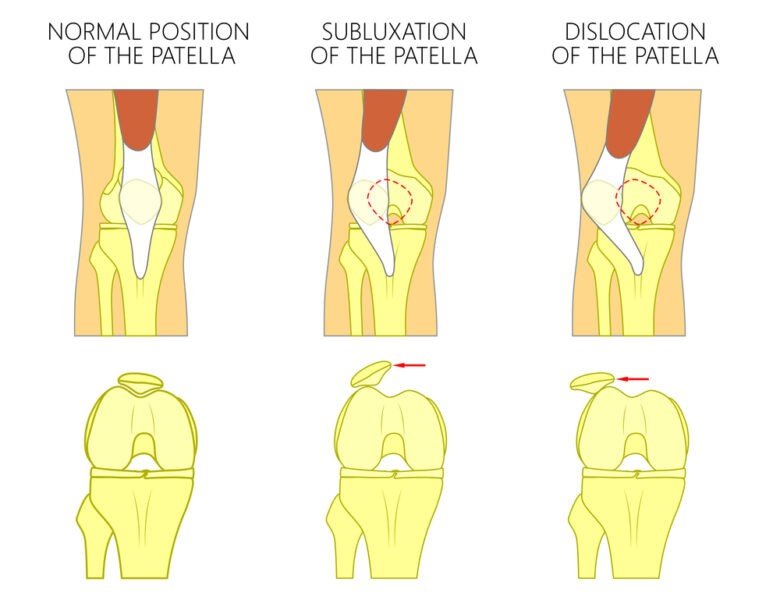
Patellar Subluxation
  • Tightness of the thigh muscles.
  • Generalized joint dysfunction (hypermobility).
  • Knee arthritis.
  • Flat feet.
  • Weakness in the thigh muscles.
Read Now: Leg Exercise For Runners : Enhance Flexibility With Running

Treatment of Patellar Subluxation.

Whether it is a chronic condition or the result of an acute injury, you must always consult your doctor or physical therapist to determine the right way of treatment.

According to the American Academy of Orthopedic Surgeons (AAOS), knee dislocation often damages the lower part of the knee, which can lead to the development of permanent pain and arthritis.(1)

The U.S. National Library of Medicine reports that repeated and untreated kneecap subluxations can cause more damage to the knee each time they occur. It is important to get an accurate diagnosis and treatment plan that may include working with a physical therapist or exercising yourself.

You should not do any exercise until you have obtained permission from your treatment provider. Your knee may need to stay in the brace or cast for several weeks, and you may have to avoid putting weight on the affected leg. The strengthening and conditioning will begin after the splint or brace is removed.

Patellar Subluxation Exercises.

The AAOS suggests that the aim of loose patella exercises will be mainly to strengthen the muscles of the quadriceps in front of the thigh, which provide support & stabilization to the knee.(2)

When you sit in the chair the quads are muscles at the top of your upper leg. In the case of Patellar tracking disorder, Michigan Medicine suggests that strengthening hip muscles can also help.(3)

The right exercises depend on your specific situation, but the following are some common exercises which your physical therapist’s often told you to do.

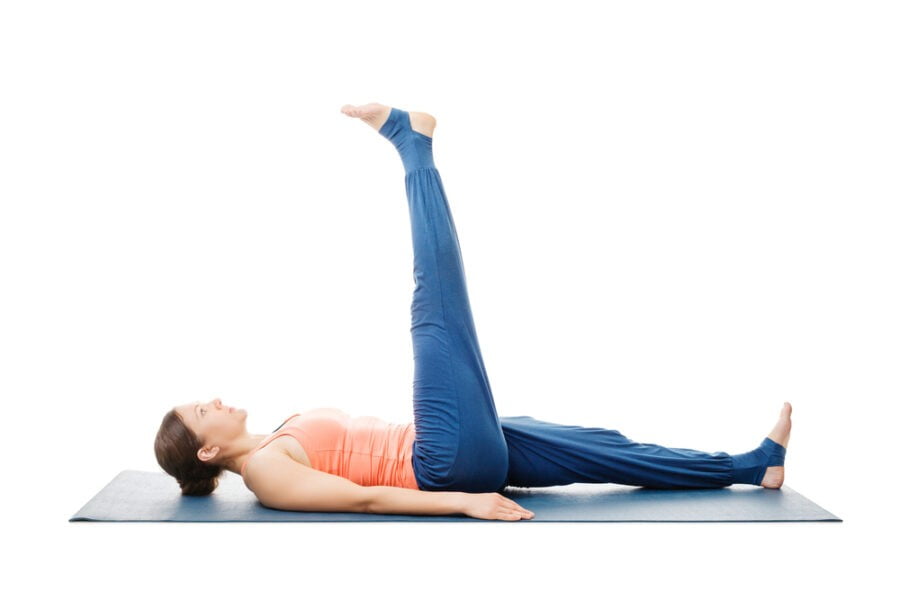
1 Straight Leg Raise.

Straight Leg Raise
Straight Leg Raise
  • At first lie down on the floor or on a hard bed. Bend the knee of your unaffected foot, and keep your foot flat on the floor.
  • Then extend other leg & maintain a natural curve in your spine.
  • Shrink your quadriceps muscles on the extended leg and keep your leg straight.
  • Raise your foot 12 to 18 inches above the floor and keep it there for 6 seconds.
  • Slowly lower your leg & rest for few seconds.
  • Repeat 8 to 12 times.
  • Exercise three times a day.

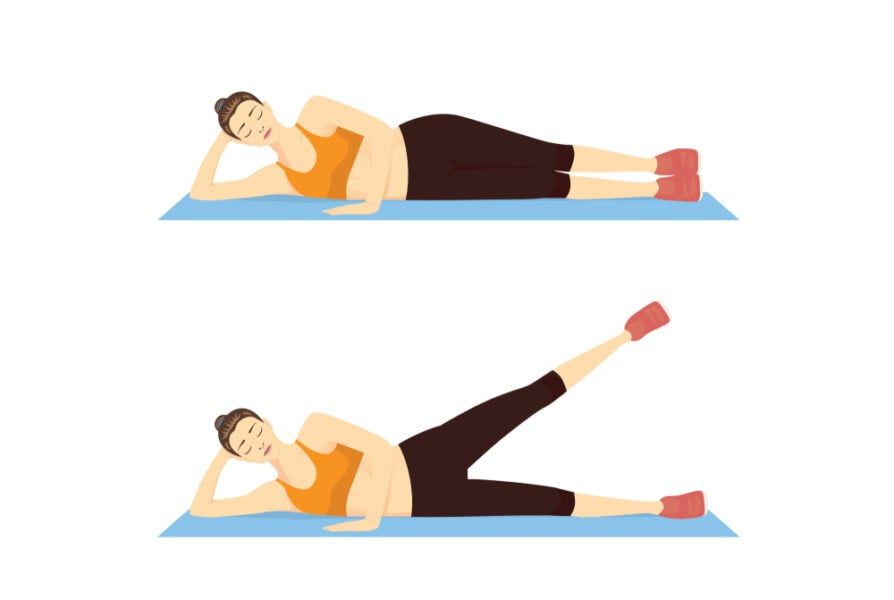
2 Side-Lying Leg Raise.

Side Leg Lift
Side Lying Leg Raise
  • Lie on your side on top with your injured leg. Bend your lower leg and stretch your top leg.
  • Slowly lift your upper leg to 45 degrees & keep your knee straight but don’t lock.
  • Hold on for 5 seconds, then slowly release.
  • Relax for 2 seconds, then repeat.
  • Do a total of three sets of 20 repetitions four to five times a week.
  • As exercise gets easier, AAOS says you can wear ankle weights to increase the challenge. Start with 5 pounds and slowly raise to 10 pounds.
Read Now: Night Leg Cramps : Reason And Proven Home Remedies

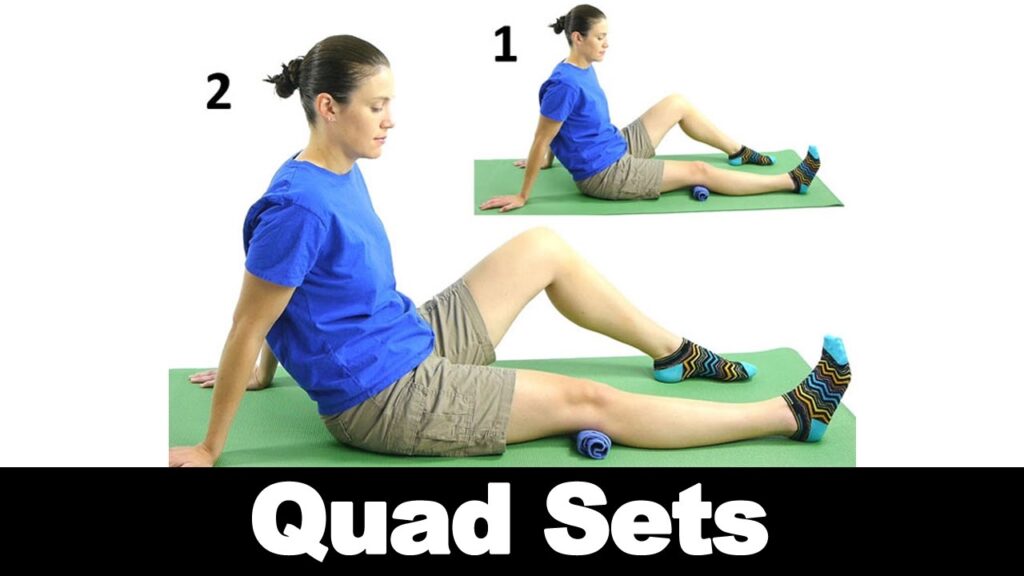
3 Quad Sets.

Quad Sets
Quad Sets Image Source: Quad Sets – Ask Doctor Jo
  • Sit on the floor with your legs stretched out or on a hard bed.
  • Tighten the quadriceps muscle of your affected foot and press your knee flat on the floor.
  • Pause for 6 seconds, then rest for 10 seconds.
  • Repeat for 8 to 12 times.
  • Exercise several times each day.

If your knee feels uncomfortable, it would be good placing a rolled towel under your knee for support.

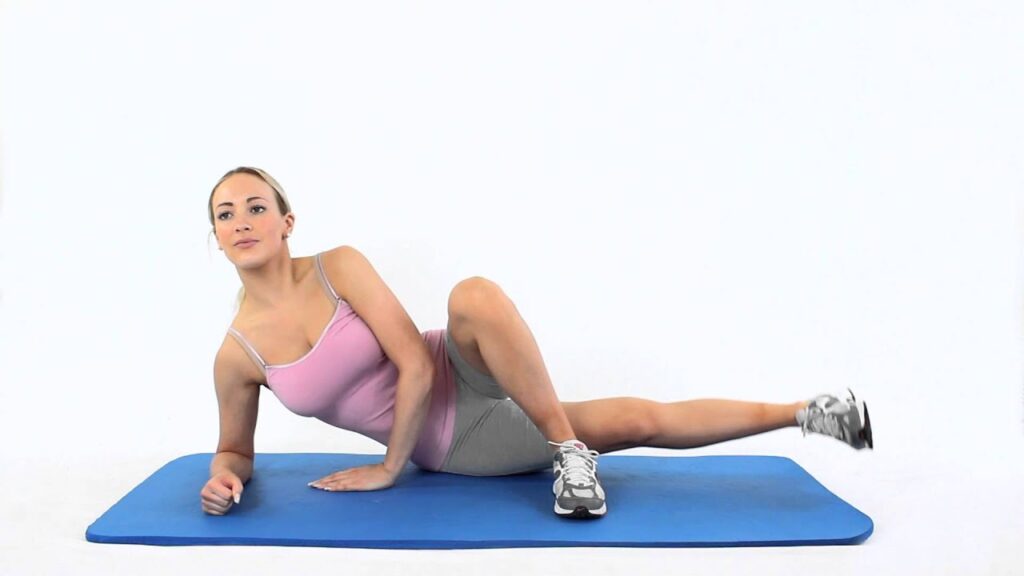
4 Hip Adduction.

Hip Adduction
Hip Adduction Image Source:  Hip adduction side lying
  • Lie down on your side with the affected knee down. Stretch out both legs.
  • Bend your upper knee and cross your foot in front of your lower leg for support.
  • Lift your lower leg 6 to 8 inches above the floor and hold for 5 seconds.
  • Lower your leg & rest for 2 seconds.
  • Repeat four to five times a week for a total of three sets of 20 repetitions.
  • Increase the challenge by placing a 5 to 10 pound ankle weight on your lower leg.

Bottom Line.

Patellar Subluxation Exercises is an effective way to cure such kind of problems. However, regular exercise under the supervision of a professional is also required. You can also practice such exercises at home with the help of your friends or family.

+3 Sources

Freaktofit has strict sourcing guidelines and relies on peer-reviewed studies, educational research institutes, and medical organizations. We avoid using tertiary references. You can learn more about how we ensure our content is accurate and up-to-date by reading our editorial policy.

  1. Unstable Kneecap; https://orthoinfo.aaos.org/en/diseases–conditions/unstable-kneecap/
  2. Knee Conditioning Program; https://orthoinfo.aaos.org/globalassets/pdfs/2017-rehab_knee.pdf
  3. Patellar Tracking Disorder: Exercises; https://www.uofmhealth.org/health-library/ut1197

Last reviewed on

How we reviewed this article:

ⓘ SOURCES 🕖 HISTORY

FreakToFit follows strict sourcing guidelines and relies on peer-reviewed studies, academic research institutions, and reputable medical organizations. We only use high-quality, credible sources to ensure the accuracy and integrity of our content.

    Our experts continually monitor the health and wellness space, and we update our articles when new information becomes available.

    Current Version
    May 13, 2025

    Written By: Uttam (Fitness & Yoga Trainer), PT

    Reviewed By: Kapil Yadav

    Mar 21, 2022

    Written By: Uttam (Fitness & Yoga Trainer), PT

    Reviewed By: Kapil Yadav

    This workout advice is for general fitness guidance. Always check with your doctor or certified trainer before beginning any exercise program, especially if you have pre-existing conditions or injuries. Know More

    Uttam (Fitness & Yoga Trainer), PT

    Author
    Completed Certified Personal Fitness Trainer Course from American  Council on Exercise with 10 years of experience. Besides, Uttam is a sports writer. After graduating, he wrote for several sites in regards to sports. He has an excellent knowledge in the field of sports.  Know More. Learn about our editorial process.

    Kapil Yadav

    Fitness Expert
    Kapil Yadav, based in Indore, Madhya Pradesh, India, is a Certified Fitness Trainer and Transformation Expert. Grounded in his educational journey at Devi Ahilya Vishwavidyalaya,…

    Leave a Comment