











































Chocolate has always been one of my favorite comfort foods. Whether it was a cup of hot cocoa on a rainy day or a piece of dark chocolate after dinner, I Jessica Corwin Nutritionist, never really imagined there could be a healthier alternative that still satisfied my sweet cravings. Then I came across carob, a Mediterranean superfood that many people have overlooked for decades.
At first, I assumed it was just another trendy health food. But the more I researched what carob is, the more surprised I became. Not only has it been used as food for centuries, but modern research also suggests that it may support heart health, digestion, blood sugar management, and even healthy aging. Unlike regular cocoa, carob naturally contains no caffeine, very little fat, and enough natural sweetness that it often doesn’t require added sugar.
I was also fascinated by its history. During difficult periods such as the Spanish Civil War, many families relied on carob as an affordable source of nutrition when other foods were scarce. For years afterward, it was unfairly labeled as livestock feed, causing many people to forget about its nutritional value. Today, however, it’s making a remarkable comeback as one of the most talked-about plant-based superfoods.
If you’ve ever wondered whether there’s a healthier substitute for chocolate, I genuinely think carob deserves your attention. It may not taste exactly like cocoa, but it has its own naturally sweet, caramel-like flavor that works beautifully in drinks, desserts, baked goods, and snacks.
Histórias relacionadas
 8 benefícios surpreendentes para a saúde de corações de frango
 Zaxby's Chicken Fingers & Buffalo Wings : Fatos incríveis
In this guide, I’ll explain everything I’ve learned about carob—from its nutritional profile and impressive health benefits to the many ways you can use carob powder, carob chips, and even carob chocolate in your daily diet. I’ll also compare it with cocoa, discuss what carob bean gum is, answer common questions, and help you decide whether it’s worth adding to your pantry.
If you’re looking for a delicious, caffeine-free alternative to chocolate, keep reading—you might discover your next favorite ingredient.
What Is Carob?
When I first heard about carob, I honestly thought it was some type of cocoa powder with a different name. After digging deeper, I realized that carob is something entirely different.
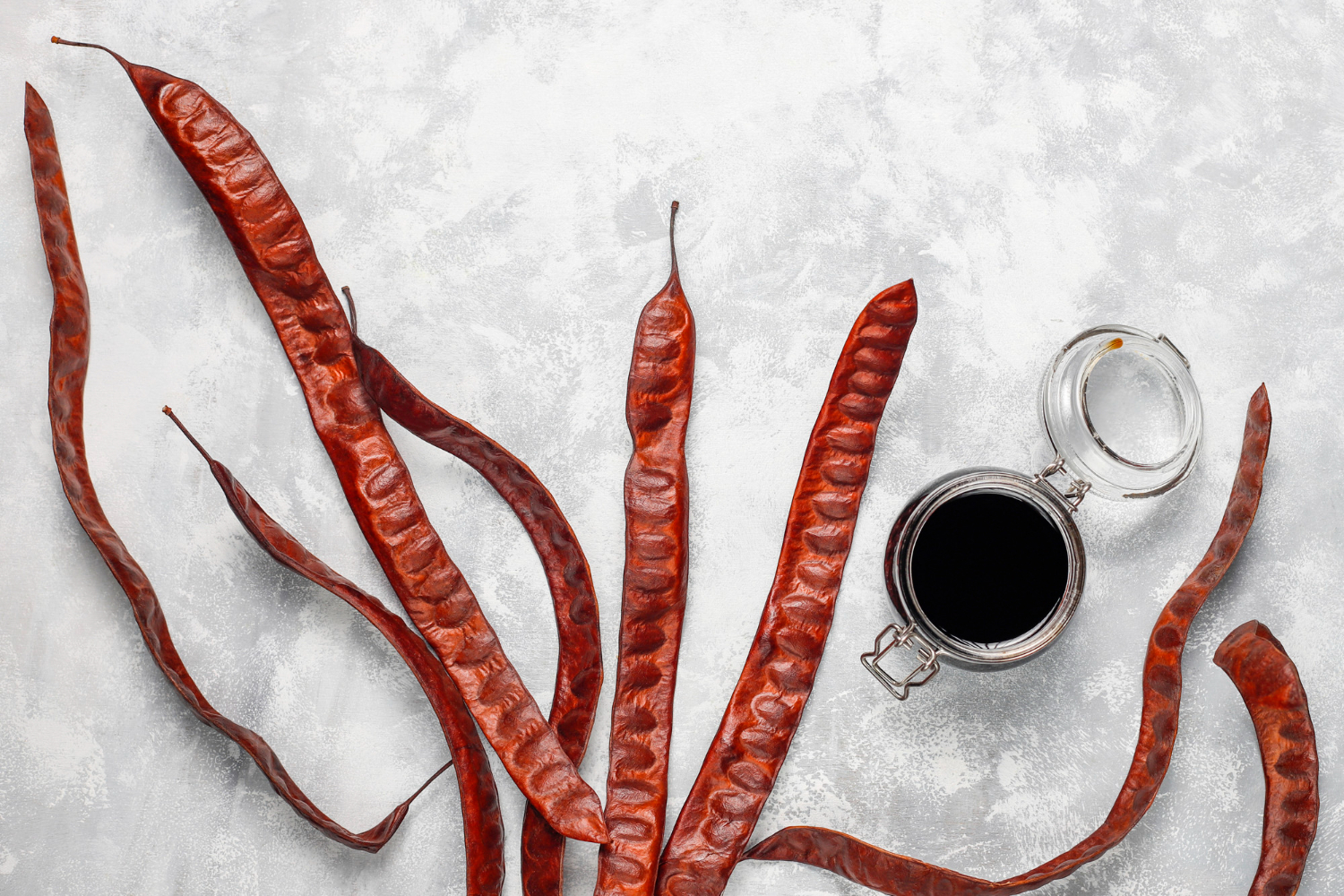
Carob is the fruit of the carob tree (Ceratonia siliqua), an evergreen tree native to the Mediterranean region. The tree produces long, dark brown seed pods that can grow up to 20 centimeters (about 8 inches) in length. These pods become naturally sweet as they ripen under the summer sun.

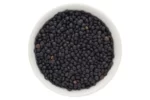
Inside every pod are several hard seeds surrounded by a naturally sweet pulp. Once the pods mature, they are harvested, dried, roasted, and ground into a fine powder known as carob powder. This powder has a rich brown color that closely resembles cocoa powder, which is why it’s often used as a chocolate substitute in recipes.
One thing I found particularly interesting is that the entire pod can be used. The pulp becomes carob powder or syrup, while the seeds are processed to make carob bean gum, a natural thickening agent widely used in ice cream, yogurt, sauces, infant formula, and many packaged foods.

Unlike cocoa, carob is naturally sweet. This means many recipes made with carob require little or no additional sugar. I think that’s one of its biggest advantages, especially for people trying to reduce their intake of refined sugar without sacrificing flavor.
Another feature that stood out to me is that carob is naturally:
- Caffeine-free.
- Gluten-free.
- Low in fat.
- Cholesterol-free.
- Rich in dietary fiber.
- Packed with antioxidants and minerals.
These qualities make it appealing to people following plant-based, gluten-free, or heart-conscious diets.
Today, you can find carob in many different forms, including:
- Carob powder.
- Carob chips.
- Carob syrup.
- Carob flour.
- Carob snack bars.
- Carob spreads.
- Carob chocolate products.
Each form has its own culinary uses, making it easy to incorporate into everyday meals.
Carob Definition.
If I had to define carob in the simplest way possible, I’d say this:
Carob is the naturally sweet fruit pod of the Mediterranean carob tree that is dried and processed into powder, chips, syrup, and other products as a nutritious alternative to chocolate.
Unlike chocolate, which comes from cacao beans, carob comes from an entirely different plant. Even though both produce brown powders used in desserts, they differ significantly in taste, nutrition, and chemical composition.
One reason I appreciate carob is that it doesn’t contain the stimulants naturally present in cocoa, such as caffeine and theobromine. Because of this, many parents choose carob-based snacks for children, and some adults prefer it in the evening without worrying about sleep disruption.
As I continued learning about carob, I realized that it’s much more than a chocolate replacement. It’s a highly versatile ingredient with a long history, impressive nutritional value, and a growing reputation in healthy cooking.
The Fascinating History of Carob.
When I started researching carob, I was surprised to discover that it’s far from being a modern health trend. In fact, carob has been cultivated and consumed for thousands of years. Long before it became known as a healthy substitute for chocolate, civilizations around the Mediterranean relied on it as a valuable source of nutrition.
Historical records suggest that the carob tree has been grown for more than 4,000 years in countries such as Spain, Italy, Greece, Turkey, Cyprus, and parts of North Africa. Because the tree thrives in hot, dry climates where many other crops struggle, it became an important food source during periods of drought and famine.
One story that particularly caught my attention was its role during the Spanish Civil War. During those difficult years, many families had limited access to traditional foods. Carob pods were readily available, inexpensive, and naturally sweet, making them an important source of nourishment when sugar and cocoa were scarce.
Unfortunately, as living conditions improved, carob gradually developed a poor reputation. Many people began associating it with poverty and livestock feed rather than nutritious human food. For decades, it remained in the background while chocolate became the preferred choice worldwide.
Today, however, I think carob is finally getting the recognition it deserves. Thanks to growing interest in natural foods and plant-based nutrition, researchers have revisited its impressive nutritional profile. As more studies explore its potential health benefits, carob has earned a place among today’s most popular superfoods.
The Carob Tree: Where It All Begins.
To truly understand carob, I believe it’s importante saber about the remarkable tree it comes from.
The carob tree (Ceratonia siliqua) is an evergreen tree belonging to the legume family (Fabaceae). Unlike many fruit trees that require regular watering and intensive care, the carob tree is incredibly resilient. It flourishes in warm Mediterranean climates with very little rainfall, making it an environmentally sustainable crop.
A mature tree can grow anywhere from 10 to 15 meters (33–50 feet) tall and may continue producing pods for over a century. I found it fascinating that some carob trees are known to live for more than 200 years.
One of the reasons I admire this tree is its minimal environmental impact. Compared to many commercial crops, the carob tree:
- Requires very little irrigation once established.
- Helps prevent soil erosion with its extensive root system.
- Thrives without heavy pesticide use.
- Produces fruit even in poor-quality soil.
- Tolerates long periods of drought.
As climate change continues to affect agriculture, many experts consider the carob tree a promising sustainable crop because it can withstand harsh growing conditions while still producing nutrient-rich pods.
Where Is Carob Grown?
Before researching this topic, I assumed carob could only be found in Europe. I soon discovered that its cultivation has expanded to several regions around the world.
Today, carob is primarily grown in:
- Spain.
- Portugal.
- Italy.
- Greece.
- Turkey.
- Cyprus.
- Morocco.
- Algeria.
- Tunisia.
- Israel.
- Lebanon.
- India.
- Australia.
- South Africa.
- Parts of California in the United States.
Spain remains one of the world’s largest producers, supplying much of the global demand for carob products.
Interestingly, carob is also cultivated in India, particularly in dry regions where the climate is suitable for its growth. Although it isn’t as widely consumed as in Mediterranean countries, awareness of carob is steadily increasing among health-conscious consumers.
How Carob Is Harvested and Processed?
I was curious about how those long brown pods eventually become the fine powder sold in health food stores.
The process is surprisingly straightforward.
1. Harvesting.
The pods are allowed to mature fully on the tree until they develop a deep brown color and become naturally sweet. This usually happens toward the end of summer.
Unlike many fruits, ripe carob pods contain very little moisture, making them naturally suitable for storage.
2. Drying.
After harvesting, the pods are dried to reduce any remaining moisture and improve their shelf life.
3. Roasting.
Depending on the desired flavor, manufacturers lightly roast the pods. Roasting enhances the natural caramel-like taste and deepens their brown color.
4. Grinding.
The dried pods are finely ground into carob powder, one of the most popular forms available today.
5. Seed Separation.
The hard seeds are separated from the pulp. While the pulp becomes powder, syrup, or flour, the seeds are processed into carob bean gum, an ingredient widely used in the food industry.
I appreciate that very little of the pod goes to waste. Nearly every part of it has a useful purpose.
What Is Carob Powder?
If someone asked me which carob product to start with, I’d probably recommend carob powder because it’s the easiest to use.
Carob powder is made by roasting and grinding dried carob pods into a smooth, cocoa-like powder. Although it looks similar to cocoa powder, its flavor is quite different.
Instead of having chocolate’s slightly bitter taste, carob has a naturally sweet, mild flavor with hints of caramel and toasted nuts. Because of this sweetness, I often find that recipes made with carob require much less added sugar.
Carob powder can easily replace cocoa powder in many recipes, including:
- Smoothies.
- Hot drinks.
- Pancakes.
- Muffins.
- Brownies.
- biscoitos.
- Bolos.
- Energy balls.
- Homemade protein bars.
- Overnight oats.
One thing I particularly like is that it dissolves well in warm milk, making a comforting drink without the caffeine found in traditional hot chocolate.
What Are Carob Chips?
The first time I heard about carob chips, I assumed they were simply chocolate chips with a different name. They’re actually quite different.
Carob chips are made from roasted carob powder combined with natural fats such as palm oil or coconut oil to create small baking chips similar in appearance to chocolate chips.
Because carob is naturally sweet, these chips usually contain less refined sugar than traditional chocolate chips.
I think they’re an excellent option for people who:
- Avoid caffeine.
- Want lower-fat dessert options.
- Are reducing their refined sugar intake.
- Need chocolate-free baking alternatives.
I like adding carob chips to homemade granola, oatmeal cookies, trail mix, and yogurt parfaits for a naturally sweet flavor.
What Is Carob Chocolate?
One phrase I kept seeing during my research was carob chocolate, which can be a little confusing.
Technically, carob chocolate isn’t true chocolate because it doesn’t contain cacao. Instead, it’s a chocolate-like confection made primarily from carob powder.
Its texture is creamy, while its flavor is naturally sweeter and milder than dark chocolate. Although it doesn’t perfectly mimic chocolate, I think it satisfies sweet cravings surprisingly well.
Carob chocolate is commonly available as:
- Chocolate bars
- Snack bites
- doce
- Baking squares
- Dessert coatings
- Filled treats
For people who are sensitive to caffeine or theobromine, carob chocolate can be a pleasant alternative.
Why Is Carob Becoming Popular Again?
Over the last few years, I’ve noticed carob appearing in more health food stores, recipe blogs, and wellness discussions. After learning more about it, I can understand why.
Several factors have contributed to its renewed popularity:
- Growing interest in natural sweeteners.
- Increased demand for caffeine-free foods.
- Rising awareness of plant-based diets.
- Consumers looking for sustainable ingredients.
- Interest in fiber-rich foods for digestive health.
- Demand for healthier dessert alternatives.
- Greater focus on reducing refined sugar intake.
Rather than trying to replace chocolate completely, I see carob as offering something unique. It has its own flavor, nutritional profile, and culinary versatility, making it much more than just a substitute.
As I continued researching, I became even more impressed by what carob offers nutritionally. In the next section, I’ll dive into its nutrition facts, explain the vitamins and minerals it contains, and explore why researchers believe this humble Mediterranean pod may provide so many health benefits.
Carob Nutrition Facts: What Makes It So Nutritious?
One of the biggest reasons I became interested in carob was its impressive nutritional profile. At first glance, it might seem like just another chocolate substitute, but after comparing it with cocoa, I realized it offers several unique advantages.
Carob is naturally rich in dietary fiber, minerals, antioxidants, and plant compounds while being remarkably low in fat. It also contains no caffeine or theobromine—two natural stimulants found in cocoa. That makes it an appealing option for people who are sensitive to caffeine or simply want to enjoy a comforting drink before bedtime.
Unlike many commercial chocolate products, which often contain large amounts of refined sugar, carob gets much of its sweetness from naturally occurring sugars. This means many recipes made with carob require little or no additional sweetener.
Although the exact nutritional values vary depending on the product and processing method, carob generally contains:
- Dietary fiber.
- Natural carbohydrates.
- Plant protein.
- cálcio.
- potássio.
- Magnesium.
- Ferro.
- fósforo.
- Copper.
- Manganese.
- Vitamins B2 and B6.
- Polyphenols and antioxidants.
Another thing I appreciate is that carob is naturally gluten-free, making it suitable for people with celiac disease or gluten sensitivity when processed in certified gluten-free facilities.
Nutritional Properties of Carob.
Here’s a quick overview of why I think carob deserves its reputation as a nutritious ingredient.
Naturally Low in Fat.
One of the first things I noticed is that carob contains significantly less fat than cocoa.
Traditional cocoa powder contains anywhere between 10% and 24% fat, depending on how it’s processed. Carob powder, on the other hand, usually contains around 1% fat, making it a lighter option for desserts and beverages.
If you’re trying to reduce your overall fat intake without giving up sweet treats, this is definitely a point in carob’s favor.
Excellent Source of Dietary Fiber.
Fiber is probably one of carob’s greatest strengths.
Carob contains both soluble and insoluble fiber, each serving a different purpose.
Soluble fiber helps:
- Slow digestion.
- Promote fullness.
- Support healthy cholesterol levels.
- Moderate blood sugar spikes.
Insoluble fiber helps:
- Improve bowel regularity.
- Prevent constipation.
- Support digestive health.
I always pay attention to fiber intake because it’s one of those nutrients that many people don’t get enough of, and carob makes increasing it surprisingly easy.
Naturally Sweet.
Unlike cocoa, which has a distinctly bitter taste, carob naturally contains sugars such as:
- Fructose.
- Glucose.
- Sucrose.
These natural sugars give carob its pleasant sweetness without requiring large amounts of added sugar in recipes.
That doesn’t mean it’s sugar-free, but I like that its sweetness comes directly from the pod itself rather than refined sugar.
Rich in Calcium.
One fact that genuinely surprised me was the amount of calcium found in carob.
muitos people associate calcium only with dairy products, but carob is actually a good plant-based source of this essential mineral.
Calcium supports:
- Healthy bones.
- Strong teeth.
- Muscle contraction.
- Nerve function.
- Normal heart rhythm.
For people following plant-based diets, every additional dietary source of calcium can be valuable.
Packed with Minerals.
Carob also provides several important minerals that contribute to overall health.
Estes incluem:
potássio.
Suporta pressão arterial saudável, muscle contractions, and fluid balance.
magnésio.
Helps with muscle function, nerve signaling, and energy production.
ferro.
Essential for producing healthy red blood cells and transporting oxygen throughout the body.
cobre.
Supports collagen formation and immune function.
Manganese.
Plays an important role in bone health and antioxidant defense.
Although carob shouldn’t be considered a replacement for a balanced diet, it certainly contributes useful nutrients.
Contains Beneficial Plant Compounds.
Carob also contains naturally occurring plant chemicals called polyphenols.
Polyphenols are antioxidants that help protect the body’s cells from oxidative stress caused by unstable molecules known as free radicals.
Oxidative stress has been linked with aging and several chronic diseases, so including antioxidant-rich foods in your diet is generally considered beneficial.
This is one reason why researchers continue studying carob’s potential role in promoting long-term health.
Carob vs. Cocoa: Nutritional Comparison.
Before trying carob myself, I wanted to know whether it was truly healthier than cocoa or simply marketed that way.
The answer isn’t entirely straightforward because both have their own nutritional advantages. However, there are several important differences.
| nutriente | Carob | Cocoa |
|---|---|---|
| gordura | Very low | Higher |
| cafeína | nenhum | Present |
| Theobromine | nenhum | Present |
| Natural Sweetness | em alta | mugir |
| fibra | em alta | em alta |
| cálcio | Higher | Lower |
| antioxidantes | em alta | Very High |
| Gluten | Naturally gluten-free | Naturally gluten-free |
While cocoa contains exceptionally high levels of flavonoid antioxidants, carob offers benefits that cocoa doesn’t.
For example, carob is:
- Naturally sweet.
- Easier to digest for some individuals.
- Lower in calories from fat.
- Completely caffeine-free.
- Suitable for children and people avoiding stimulants.
Personally, I don’t think one ingredient is necessarily better than the other. Instead, I see them as serving different purposes depending on your dietary goals.
Is Carob Healthier Than Chocolate?
This is probably the question I hear most often whenever carob comes up.
After reviewing scientific studies and comparing nutritional information, I’d say the answer depends on what you’re looking for.
If your priority is reducing:
- Added sugar.
- Fat intake.
- Cafeína.
- Stimulants.
then carob may be the healthier option.
However, if you’re specifically looking for the unique flavonoids found in cocoa, dark chocolate still has important nutritional benefits.
I don’t think carob should replace chocolate entirely. Instead, I like viewing it as another healthy ingredient that offers its own unique nutritional advantages.
For many people—including children, older adults, and individuals sensitive to caffeine—it can be an excellent alternative.
Top Health Benefits of Carob.
Once I understood carob’s nutritional profile, I wanted to reconhecer whether those nutrients actually translate into meaningful health benefits.
As it turns out, researchers have been studying carob for years, and while more human research is still needed in some areas, the findings so far are encouraging.
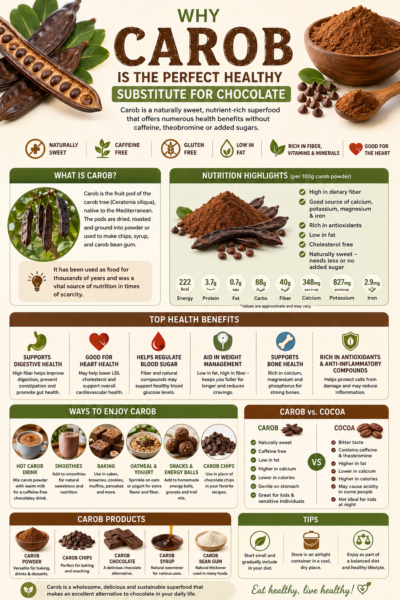
The health benefits associated with carob include:
- Supporting digestive health.
- Helping maintain healthy cholesterol levels.
- Assisting with weight management.
- Providing antioxidant protection.
- Supporting heart health.
- Helping regulate blood sugar.
- Promoting bone health.
- Offering anti-inflammatory properties.
I think it’s important to remember that no single food is a miracle cure. Carob won’t prevent or treat diseases on its own, but when included as part of a balanced diet, it may contribute to overall health.
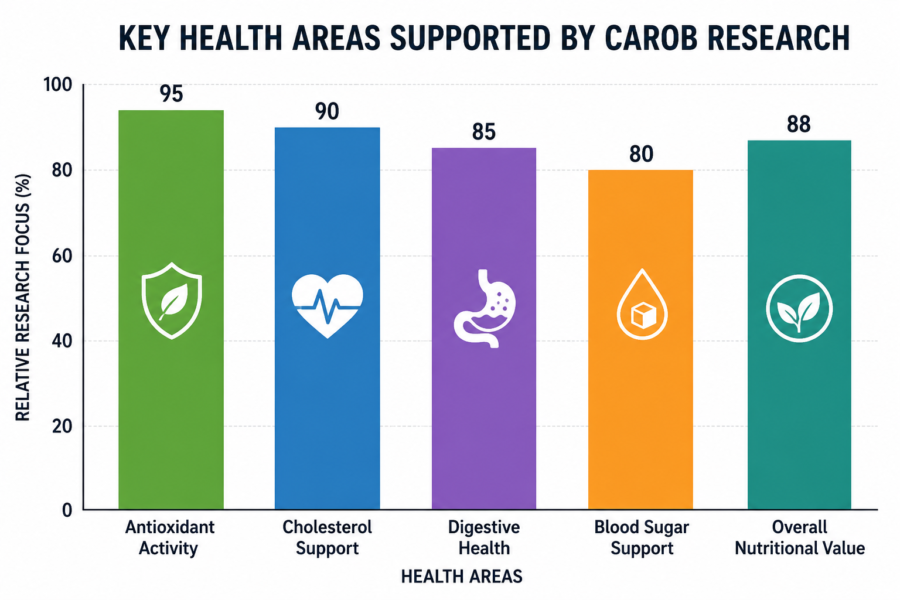
In the following sections, I’ll explore each of these potential benefits in greater detail, explain what current research suggests, and share why I believe carob has earned its reputation as one of today’s most promising functional foods.
1. Carob May Support Digestive Health.
One of the first benefits I noticed repeatedly during my research was carob’s positive effect on digestion.
Because it’s naturally rich in dietary fiber and tannins, carob has traditionally been used to support digestive health in Mediterranean cultures.
Fiber helps:
- Add bulk to stool.
- Promote regular bowel movements.
- Feed beneficial gut bacteria.
- Support overall gut health.
Some studies have also explored the use of carob preparations in managing mild diarrhea, particularly in children, due to the binding properties of its tannins. However, anyone considering carob for a medical condition should consult a healthcare professional rather than self-treat.
From my perspective, one of the easiest ways to support digestive wellness is simply by eating more fiber-rich foods, and carob is certainly one of them.
2. Carob May Help Maintain Healthy Cholesterol Levels.
One of the health benefits that caught my attention during my research was carob’s potential role in supporting heart health—particularly when it comes to cholesterol.
Carob is naturally rich in insoluble and soluble dietary fiber, especially compounds known as polyphenols. Soluble fiber acts like a sponge inside the digestive tract by binding to bile acids, which are made from cholesterol. As these bile acids are eliminated, the body uses cholesterol from the bloodstream to produce more, which may help maintain healthy cholesterol levels.
Several studies have suggested that consuming carob fiber regularly may help reduce LDL (“bad”) cholesterol while supporting overall cardiovascular health. While the results are promising, it’s important to remember that carob should complement—not replace—a heart-healthy lifestyle that includes regular exercise and a balanced diet.(1),(2)
I’ve started looking at carob not just as a dessert ingredient but as a functional food that can contribute to long-term wellness.
3. Carob May Support Healthy Blood Sugar Levels.
One concern many people have with sweet foods is their effect on blood sugar. Since carob tastes naturally sweet, I initially assumed it would quickly raise glucose levels. Surprisingly, that isn’t necessarily the case.
Although carob contains natural sugars, it’s also rich in fiber. Fiber slows the Digestão e absorção of carbohydrates, helping prevent rapid spikes in blood sugar after meals.
Researchers have also shown interest in a naturally occurring compound found in carob called D-pinitol. Early studies suggest that D-pinitol may play a role in improving insulin sensitivity and glucose metabolism. While more clinical research is needed, these findings have generated considerable interest in carob as part of a diabetes-friendly eating pattern.(3)
That said, if you have diabetes or prediabetes, I would still recommend enjoying carob in moderation and discussing dietary changes with your healthcare provider.
4. Carob Can Be Helpful for Weight Management.
As someone who enjoys sweet foods, I’m always looking for healthier ingredients that don’t leave me feeling deprived. This is one area where carob really impressed me.
Carob may support healthy weight management for several reasons:
It’s Naturally Low in Fat.
Compared with cocoa, carob contains only a small amount of fat. That makes it useful for preparing lighter desserts without sacrificing flavor.
It’s Rich in Fiber.
High-fiber foods generally take longer to digest, helping you feel fuller for longer. Personally, I find that meals containing plenty of fiber reduce my urge to snack between meals.
It Requires Less Added Sugar.
Since carob already has a naturally sweet taste, many recipes call for little or no refined sugar. Reducing added sugar intake can make a meaningful difference over time.
Of course, even healthy foods should be enjoyed in moderation. Eating large amounts of carob desserts every day won’t magically lead to weight loss, but swapping high-sugar treats for carob-based alternatives may support healthier eating habits.
5. Carob Is Good for Bone Health.
One nutritional fact that genuinely surprised me was how much calcium carob contains.
We often think of milk and dairy products as the primary sources of calcium, but carob offers a respectable amount of this important mineral in a plant-based form.
Calcium plays an essential role in:
- Maintaining strong bones.
- Supporting healthy teeth.
- Helping muscles contract properly.
- Supporting nerve communication.
- Contributing to normal blood clotting.
Carob also contains magnesium and phosphorus, two minerals that work together with calcium to maintain healthy bones.
Although carob shouldn’t replace other calcium-rich foods, I think it’s an excellent way to diversify your nutrient intake.
6. Rich in Antioxidants That Help Protect Your Cells.
One of the reasons nutrition experts encourage us to eat a variety of plant foods is because they contain antioxidants. Carob is no exception.
Carob is naturally rich in polyphenols, flavonoids, and other antioxidant compounds that help neutralize free radicals. Free radicals are unstable molecules that can damage cells through a process known as oxidative stress.(4),(5)
Oxidative stress has been linked to:
- Premature aging.
- inflamação crônica.
- Doença cardíaca.
- Certain neurodegenerative conditions.
- alguns Tipos de câncer.
While antioxidants alone cannot prevent disease, diets rich in antioxidant-containing foods are generally associated with better long-term health.
For me, that’s another compelling reason to include a wider variety of plant-based foods like carob in my diet.
7. Can Carob Help Reduce Inflammation?
Inflammation is the body’s natural response to injury or infection. However, when inflammation becomes chronic, it may contribute to several health conditions.
Laboratory and animal studies suggest that some compounds found in carob may have anti-inflammatory properties. Researchers believe its polyphenols and tannins could help reduce markers of inflammation, although more high-quality human studies are needed.
I think it’s encouraging to see this area of research expanding, but it’s also important to avoid overstating the evidence. Carob isn’t an anti-inflammatory medication—it simply contains compounds that may support the body’s natural defenses.
8. Carob and Cancer Research.
One of the most exciting areas of research involves carob’s antioxidant compounds.
Scientists have been investigating whether certain plant chemicals found in carob may help protect cells from oxidative damage associated with cancer development.
Some laboratory studies have shown promising results, particularly regarding polyphenols and other bioactive compounds. However, these findings are still preliminary.
From what I’ve learned, it’s important not to say that carob treats or prevents cancer. Instead, it’s more accurate to say that researchers are studying its antioxidant compounds because they may contribute to overall cellular health.
Eating a balanced diet rich in fruits, vegetables, legumes, and whole grains remains one of the best-supported strategies for long-term health.
9. Carob May Support Mood and Better Sleep.
One reason some people choose carob over chocolate is its lack of caffeine.
Chocolate naturally contains caffeine and theobromine, both of which can stimulate the nervous system. While many people tolerate these compounds well, others find that they increase nervousness or interfere with sleep.
Because carob contains no caffeine, it’s often enjoyed as an evening drink or bedtime snack.
Carob also contains small amounts of the amino acid tryptophan, which the body uses to produce serotonin and melatonin—chemicals involved in mood regulation and sleep. Although the amount isn’t high enough to be considered a treatment, it adds another interesting aspect to carob’s nutritional profile.
Personally, I enjoy the idea of having a warm mug of carob with milk in the evening without worrying about staying awake afterward.
What Is Carob Bean Gum?
During my research, I kept seeing the term carob bean gum, and I wanted to understand exactly what it was.
Carob bean gum, also known as locust bean gum, is a natural thickening and stabilizing agent extracted from the seeds of the carob pod.
Unlike carob powder, which comes from the pod’s pulp, carob bean gum is produced from the seed endosperm.
It’s commonly used in foods such as:
- Ice cream.
- Iogurte.
- Cream cheese.
- Plant-based milk.
- Sauces.
- sopas.
- Baby formula.
- Salad dressings.
- Frozen desserts.
Its primary role is to improve texture, prevent ingredient separation, and create a smooth consistency.
I found it interesting that something most of us never notice on ingredient labels actually comes from the same tree that produces delicious carob powder.
Easy Ways I Like to Use Carob Every Day.
One thing I appreciate about carob is how easy it is to incorporate into everyday meals.
Some of my favorite ideas include:
Morning Smoothies.
I add one tablespoon of carob powder to a banana smoothie with oats and almond milk.
Homemade Hot Carob Drink.
Instead of hot chocolate, I stir carob powder into warm milk with a pinch of cinnamon.
Overnight Oats.
Mixing carob into overnight oats gives them a naturally sweet, dessert-like flavor.
Baking.
Carob works wonderfully in:
- Brownies.
- Muffins.
- Pancakes.
- Waffles.
- biscoitos.
- Banana bread.
Energy Balls.
I love combining oats, peanut butter, dates, chia seeds, and carob powder for quick homemade snacks.
Yogurt Topping.
A sprinkle of carob powder over Greek yogurt with berries makes a delicious breakfast or afternoon snack.
Homemade Trail Mix.
Adding carob chips to a mixture of nuts and dried fruit creates a healthier alternative to chocolate-based trail mix.
The more I experiment with carob, the more versatile I find it.
Carob vs. Chocolate: Which One Do I Prefer?
This was probably the question I asked myself the most while researching carob. Is it really better than chocolate, or is it simply another health trend?
After trying both in different recipes and comparing their nutritional profiles, I realized there isn’t a single winner. Instead, each has its own strengths.
If I’m craving the rich, slightly bitter taste of dark chocolate, I’ll still enjoy it in moderation. But when I want something naturally sweet, caffeine-free, and lower in fat, I often reach for carob instead.
Here’s how they compare.
| Feature | Carob | Chocolate (Cocoa) |
|---|---|---|
| Source | Carob tree pods | Cacao beans |
| gosto | Naturally sweet, caramel-like | Rich, bittersweet |
| cafeína | nenhum | sim |
| Theobromine | nenhum | Present |
| gordura | Very low | Higher |
| fibra | em alta | em alta |
| Natural Sugars | sim | Very little |
| Added Sugar Needed | Usually less | Usually more |
| cálcio | Higher | Lower |
| Gluten | Naturally gluten-free | Naturally gluten-free |
I don’t believe one should completely replace the other. Instead, I see carob as another healthy ingredient that expands my options, especially when baking or preparing snacks for children or anyone sensitive to caffeine.
Potential Side Effects of Carob.
Although I found carob to be generally safe for most healthy individuals, I also wanted to understand whether there were any drawbacks.
Like any food, moderation is important.
Digestive Discomfort.
Because carob contains a significant amount of dietary fiber, eating large quantities too quickly may cause:
- inchaço.
- Gas.
- Mild stomach discomfort.
If you’re new to high-fiber foods, I recommend introducing carob gradually and drinking plenty of water.
reações alérgicas.
Carob allergy is considered uncommon, but it can occur.
Possible symptoms include:
- coceira.
- Skin rash.
- inchaço.
- Difficulty breathing (rare).
Anyone experiencing signs of an allergic reaction should seek immediate medical attention.
Blood Sugar Awareness.
Although carob contains natural sugars and fiber, people with diabetes should still monitor portion sizes.
Natural sugar is still sugar, and consuming excessive amounts may affect blood glucose levels.
Digestive Conditions.
Individuals with certain digestive disorders should speak with a healthcare professional before making significant dietary changes.
Who Might Benefit Most from Carob?
After learning more about it, I think carob can be especially useful for:
- People reducing caffeine intake.
- Children who enjoy chocolate-flavored snacks.
- Individuals looking for healthier dessert ingredients.
- Those wanting more dietary fiber.
- People trying to lower added sugar consumption.
- Individuals following gluten-free diets (using certified gluten-free products).
- Vegetarians and vegans looking for plant-based ingredients.
Of course, everyone’s nutritional needs are different, so what works well for one person may not be ideal for another.
Who Should Be Cautious?
Although carob is generally considered safe, I believe these groups should consult a healthcare provider before making it a regular part of their diet:
- Individuals with known legume allergies.
- People managing diabetes who need individualized carbohydrate guidance.
- Anyone with chronic digestive diseases.
- Those following medically prescribed diets.
How I Buy Carob?
If you’re trying carob for the first time, here are a few things I usually look for when shopping.
Choose 100% Pure Carob Powder.
I always check the ingredient list.
Ideally, it should contain only:
Ingredients: Carob Powder.
Some products contain added sugar or artificial flavors that aren’t necessary.
Look for Organic Options.
Whenever possible, I prefer organic products because they’re produced with fewer synthetic pesticides.
Read Nutrition Labels.
Some commercial carob chocolate and carob chips still contain added sugar and oils.
I compare labels before buying.
Purchase from Trusted Brands.
Buying from reputable manufacturers helps ensure better quality and freshness.
How I Store Carob?
Proper storage helps preserve both flavor and nutritional quality.
I keep carob powder:
- In an airtight container.
- Away from direct sunlight.
- In a cool, dry place.
When stored correctly, it generally stays fresh for many months.
Perguntas frequentes.
1. Does carob taste exactly like chocolate?
No. In my experience, carob has its own unique flavor. It’s naturally sweeter, milder, and has subtle caramel-like notes rather than the rich bitterness of cocoa.
2. Is carob healthier than chocolate?
It depends on your nutritional goals. Carob is naturally caffeine-free, lower in fat, and usually requires less added sugar, while dark chocolate provides higher levels of certain antioxidants.
3. Can I replace cocoa powder with carob powder?
Yes. In most baking recipes, I simply substitute carob powder for cocoa powder. Because carob is naturally sweeter, I often reduce the amount of added sugar.
4. What is carob powder made from?
Carob powder is made by drying, roasting, and grinding ripe carob pods into a fine brown powder.
5. What are carob chips?
Carob chips are small baking chips made from carob powder and plant-based fats. They’re commonly used as a caffeine-free alternative to chocolate chips.
6. What is carob bean gum?
Carob bean gum, also known as locust bean gum, is a natural thickener extracted from carob seeds. It’s widely used in foods such as ice cream, yogurt, sauces, and plant-based beverages.
7. Is carob safe for children?
Since carob naturally contains no caffeine or theobromine, many parents choose it as an alternative to chocolate. However, it’s always a good idea to introduce new foods gradually and consult a pediatrician if your child has food allergies or specific dietary concerns.
8. Is carob gluten-free?
Yes. Carob is naturally gluten-free. However, if you have celiac disease or gluten sensitivity, choose products labeled as certified gluten-free to avoid cross-contamination.
9. Can people with diabetes eat carob?
Carob may fit into a diabetes-friendly diet because it’s rich in fiber, but it still contains natural sugars. Portion control and guidance from a healthcare provider are important.
10. Is carob grown in India?
Yes. Although it’s more commonly associated with Mediterranean countries, carob is also cultivated in certain dry regions of India.
11. Can I drink carob instead of hot chocolate?
Absolutely. One of my favorite ways to enjoy carob is by mixing carob powder with warm milk or a plant-based alternative, along with a pinch of cinnamon for extra flavor.
12. Is carob vegan?
Yes. Pure carob powder is naturally vegan. Just remember to check the ingredients on processed products like carob chocolate or snack bars, as some may contain milk or other animal-derived ingredients.
Considerações finais.
Before researching this article, I honestly thought carob was simply a lesser-known substitute for chocolate. The more I learned, the more I realized it’s much more than that.
Carob has a fascinating history, an impressive nutritional profile, and remarkable versatility in the kitchen. From carob powder and carob chips to carob chocolate and carob bean gum, every part of the humble carob pod has a practical use.
What I appreciate most is that carob doesn’t try to imitate chocolate perfectly. Instead, it offers something unique—a naturally sweet flavor, plenty of fiber, valuable minerals, and the added benefit of being caffeine-free.
While it isn’t a miracle alimento or a replacement for a balanced diet, I believe it can be a smart addition to a healthy lifestyle. Whether you’re baking healthier desserts, looking for a chocolate alternative, or simply exploring new plant-based ingredients, carob is definitely worth trying.
If you’ve never tasted it before, I’d encourage you to start with a small bag of pure carob powder. You may discover, just as I did, that this ancient Mediterranean ingredient deserves a place in your modern kitchen.
+5 fontes
A FreaktoFit tem diretrizes rígidas de sourcing e conta com estudos revisados por pares, institutos de pesquisa educacional e organizações médicas. Evitamos o uso de referências terciárias. Você pode aprender mais sobre como garantimos que nosso conteúdo seja preciso e atualizado, lendo nosso política editorial.
- Carob pulp preparation rich in insoluble fibre lowers total and LDL cholesterol in hypercholesterolemic patients; https://pubmed.ncbi.nlm.nih.gov/14569404/
- Insoluble carob fiber rich in polyphenols lowers total and LDL cholesterol in hypercholesterolemic sujects; https://pubmed.ncbi.nlm.nih.gov/20094802/
- Effects of Specific Carob (Ceratonia siliqua L.) Liquid Concentrate on Glucose Metabolism in Subjects with Prediabetes: A Randomized Double-Blind Controlled Clinical Trial; https://pubmed.ncbi.nlm.nih.gov/42196981/
- Polyphenols in carobs: A review on their composition, antioxidant capacity and cytotoxic effects, and health impact; https://pubmed.ncbi.nlm.nih.gov/30100447/
- Nutritional, biochemical, and clinical applications of carob: A review; https://pubmed.ncbi.nlm.nih.gov/37457186/