











































 Workout

 Meditation


 Podcast
 E-book


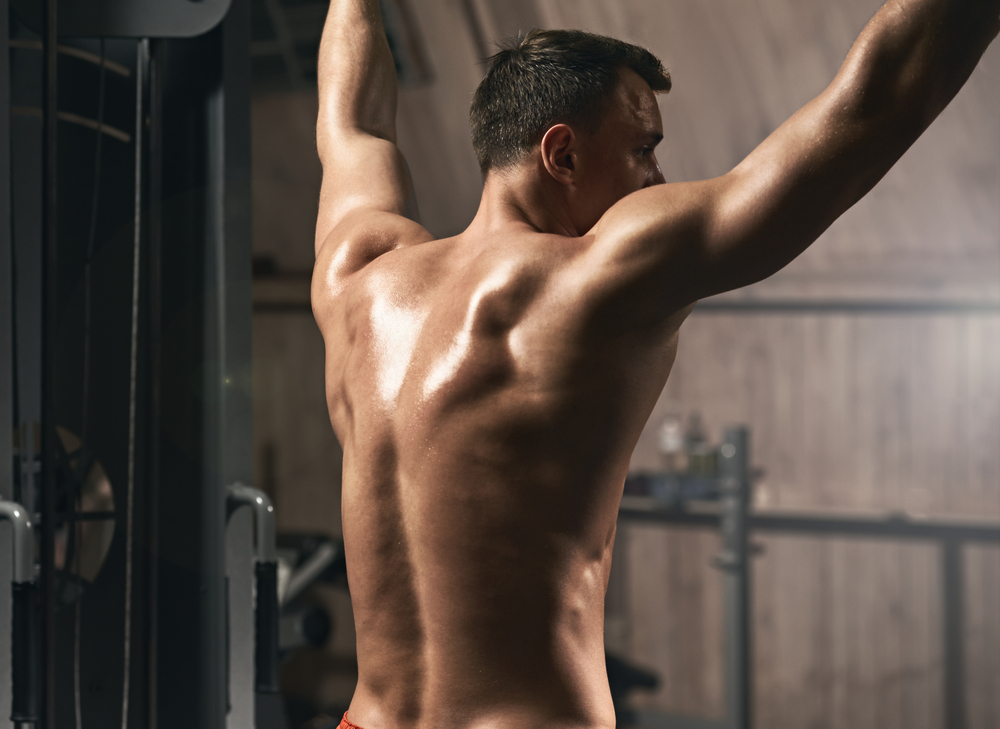
AT A GLANCE
- The best way to do a pull up is to start by facing away from the bar and grip it with your hands at shoulder width.
- Unlike push ups, pull ups do not put pressure on the lower back, which makes them a good option if you have back pain or an injury.
- To do a push up, you’ll need to place your hands on the ground and then lower yourself towards it while keeping your back straight.

When it comes to working out, people are often torn between push-ups vs pull-ups. Both exercises are great for building upper body strength, but one of them seems to be the favorite when it comes to working out at home and in gyms around the world—the pull-ups. Let’s take a closer look at each exercise, how you can do them right, and which one might be better suited to your individual needs and fitness goals.
Push Ups.
Push ups are one of the most common exercises you’ll see in a gym. They’re also one of the simplest, and with a little practice, they can be done anywhere with just your body and the floor.
Start by getting down into a plank position, making sure to tuck your elbows close to your body and keep your back straight.
Related Stories
 How Many Days to Workout to Stay Fit
 Top 10 Workouts on Terrace For Rapid Weight Loss
Begin lowering yourself towards the ground until you feel tension in your muscles, then push yourself back up without losing the tension in those muscles. Repeat as many times as needed or desired.
Benefits of Push Ups.
Push ups are one of the most common and effective exercises out there. What’s great about push ups is that you can do them anywhere, anytime. It not only work your chest muscles and triceps, but also your abs and back muscles as you brace your core to keep from falling over.(1)
They are also a great way to improve balance and stability in your shoulders, which can help prevent injury down the line.
Push ups are also easy to scale- so you can make them easier by bending your knees or feet, or harder by going into full plank position or adding weights.
pull ups.
Pull ups are an upper body exercise that engage the muscles of the back, arms and shoulders. The best way to do a pull up is to start by facing away from the bar and grip it with your hands at shoulder width.
Keep your arms straight and lift your legs off the ground so you’re hanging in mid-air. With your back straight, bend your elbows to pull yourself up until your chin reaches the bar.
Slowly lower yourself down to the starting position and repeat.
Benefits of Pull Ups.
Pull ups are a beneficial exercise because they build upper body strength and can help you to achieve a toned physique. Unlike push ups, pull ups do not put pressure on the lower back, which makes them a good option if you have back pain or an injury. They also engage your shoulders and abs in addition to your arm muscles.(2)
In contrast, pushups only work your arms, so it may be beneficial to pair them with another form of exercise that works the rest of your body. Pushups also place more stress on your wrists and lower back.
Difference Between Push Ups vs Pull Ups.
| Push Ups | Pull Ups |
| Push-ups are one of the most common exercises. | Pull ups are a more advanced exercise that require more upper body strength. |
| A push ups are a compound exercises as it engage more than one muscle groups. | Pull ups are also considered as compound exercises. |
| Push ups primarily work your chest, triceps, and shoulders. | A pull up works your lats, biceps, and back muscles. |
| To do a push up, you’ll need to place your hands on the ground and then lower yourself towards it while keeping your back straight. | It’s done by hanging from a bar with an overhand grip, pulling your body weight up until the chin reaches level with or past the bar. |
| Push-ups will give you better definition. | While pull-ups will help develop mass. |
| If you want to improve both definitions and size, then use a variation of both push-up variations (e.g., decline push-up). | Pull up variations (e.g., chin up). |
| Push ups engage upper body. | Pull ups engage back muscle. |
Are There Any Pre-Requisites Before Start a Workout Routine?
There are a few things to keep in mind before start a new workout routine i.e Push Ups vs Pull Ups. First, if you have never worked out before then it is important to consult with your doctor first and learn the basics about exercise.
Second, start small by choosing an activity that will be easy for you at first, then gradually work your way up to more difficult activities.
Finally, it is important to find what works best for you by trying different activities until one sticks.
How to Perform the Basic Movements.

A push up is when a person lowers their chest to the ground, does a push up and then raises their body again. It can be done anywhere while other types of exercise equipment might not be available nearby if you’re trying to work out at home or at work. Initially you can do push ups by taking support of your friends or gym colleague with a towel or physical support.
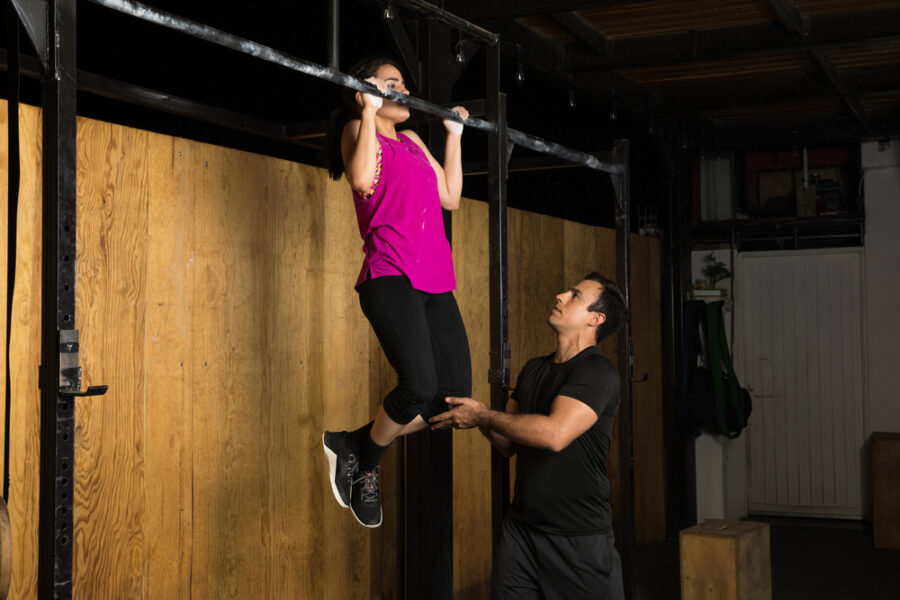
A pull up requires a person to grip something stable, like the edge of a desk or doorframe, and use both hands to pull their body up over the bar. So, you may practice basic movements at initial stage with the support of your friends or gym colleague. However you may take support of a chair placing under your feet.
Should You Try This Workout at Home or in the Gymnasium?
Yes you must incorporate this workout at home or in the gym as Push Ups and Pull Ups are two of the most popular exercises which target your chest, triceps, and anterior core muscles. lats, biceps, and shoulders.
Push ups are easier to execute than pull ups so it might be a good idea if you’re just starting out to start with push ups first before moving on to the pull up variation.
You might also want to consider doing this at home because they’re easier on your joints while still being challenging enough that you can see progress in a short amount of time.
How Many Push-Ups is Equal to One Pull-Ups?
Push-ups and pull-ups are two exercises that both work the same muscle groups. As such, they have many of the same benefits. However, push-ups and pull-ups differ in terms of difficulty level and target areas of the body.
While most people can perform a high number of push-ups with ease, only those with an advanced fitness level can do high numbers of pull ups.
For this reason, it’s difficult to set a one to one conversion rate between push-ups and pull ups because most people can’t do enough push ups in order to match a single pull up.
That said, it’s possible to estimate how many push ups equate to one pull up by using your current ability level as a guide.
Bottom Line.
Fitness enthusiasts often debate over whether push-ups or pull-ups are better at strengthening the chest and triceps, but this really depends on what you’re trying to accomplish.
Push-ups are one of the most common exercises. Push-ups work your chest, shoulder, and triceps muscles. It can also be modified to make them easier or more difficult based on your current fitness level.
Pull ups are a more advanced exercise that require more upper body strength. They work different muscle groups than push-ups and require more coordination. However, some people cannot do pull ups because they lack the upper body strength needed to get their chin over the bar.
Both push-ups and pull ups will give you a great workout but which one you should do depends on what you’re trying to focus on when working out.
+2 Sources
Freaktofit has strict sourcing guidelines and relies on peer-reviewed studies, educational research institutes, and medical organizations. We avoid using tertiary references. You can learn more about how we ensure our content is accurate and up-to-date by reading our editorial policy.
- The rise of push-ups: A classic exercise that can help you get stronger; https://www.health.harvard.edu/blog/rise-push-ups-classic-exercise-can-motivate-get-stronger-2019021810165
- Resistance training is medicine: effects of strength training on health; https://pubmed.ncbi.nlm.nih.gov/22777332/