











Dharmachakra Mudra is a traditional symbolic hand gesture associated particularly with Buddhist teachings and representations of the Buddha. The Sanskrit term Dharmachakra is commonly translated as the “Wheel of Dharma” or “Wheel of Teaching.” The gesture symbolizes the setting of the Dharma into motion and is strongly associated with teaching, wisdom, spiritual understanding and the transmission of Buddhist teachings.
Unlike some yoga mudras that are primarily taught as practices for meditation or breathwork, Dharmachakra Mudra also has an important iconographic and philosophical meaning. It is frequently seen in Buddhist art and statues, particularly representations associated with the Buddha’s first teaching.
In modern yoga and meditation settings, practitioners may use Dharmachakra Mudra as a contemplative hand position while reflecting on knowledge, truth, learning, compassion and personal growth.
It is important, however, to distinguish between the traditional spiritual symbolism of a mudra and scientifically established physiological effects. Holding the hands in a particular position should not be presented as a treatment for a disease or medical condition. Any benefits experienced during meditation are more appropriately understood in the broader context of relaxation, mindfulness, attention and contemplative practice.
Cerita terkait
 14 Manfaat Yoga Kesehatan yang Tak Terduga
 6 Yoga Asana Efektif untuk Penyakit Kulit atau Masalah Kulit
Dharmachakra Mudra Meaning.
The meaning of Dharmachakra Mudra is closely connected with the Buddhist concept of the Dharma.
The word cakra means wheel, while Dharma can have several meanings depending on context, including teaching, truth, principle, or the path of practice.
Together, Dharmachakra represents the Wheel of Dharma.
The gesture is traditionally connected with teaching and the communication of spiritual knowledge. It can therefore represent:

- Wisdom
- Teaching
- Truth
- Spiritual learning
- kecerdikan
- rasa kasihan
- The continuation of Buddhist teachings
- The movement from ignorance toward understanding
- The sharing of knowledge with others
For practitioners using the mudra during meditation, these ideas can provide a meaningful focus for contemplation.
Historical and Spiritual Significance.
Dharmachakra Mudra is particularly important within Buddhist iconography.

Images of the Buddha displaying this hand gesture are commonly interpreted as representing the turning of the Wheel of Dharma, especially the Buddha’s first teaching.
This symbolic connection makes Dharmachakra Mudra different from a simple hand exercise.
Its significance comes from the philosophical and religious tradition surrounding it.
The gesture can be viewed as a visual representation of teaching: knowledge is not simply acquired but also communicated and shared.
For this reason, Dharmachakra Mudra may be especially meaningful during meditation focused on:
- Learning
- Wisdom
- pemanfaatan diri
- rasa kasihan
- Truth
- Ethical living
- Understanding one’s thoughts
- Spiritual development
People from different traditions may interpret the gesture differently, so it is useful to approach its symbolism respectfully rather than assigning exaggerated or universal claims to it.
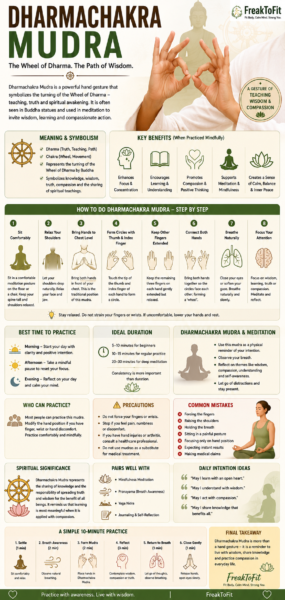
How to Perform Dharmachakra Mudra?
The exact hand positioning can vary somewhat across artistic and teaching traditions, but a commonly depicted form can be practiced as follows.
Langkah 1: Duduklah dengan nyaman.
Choose a comfortable seated position.
You may sit:
- On a meditation cushion
- On a yoga mat
- On a chair
- In a comfortable cross-legged position
There is no requirement to force yourself into a particular sitting posture.
The spine can be comfortably upright while the shoulders remain relaxed.
Langkah 2: Rilekskan bahu Anda.
Biarkan bahu Anda jatuh secara alami.
Avoid lifting or stiffening them.
Relax your jaw and facial muscles as well.
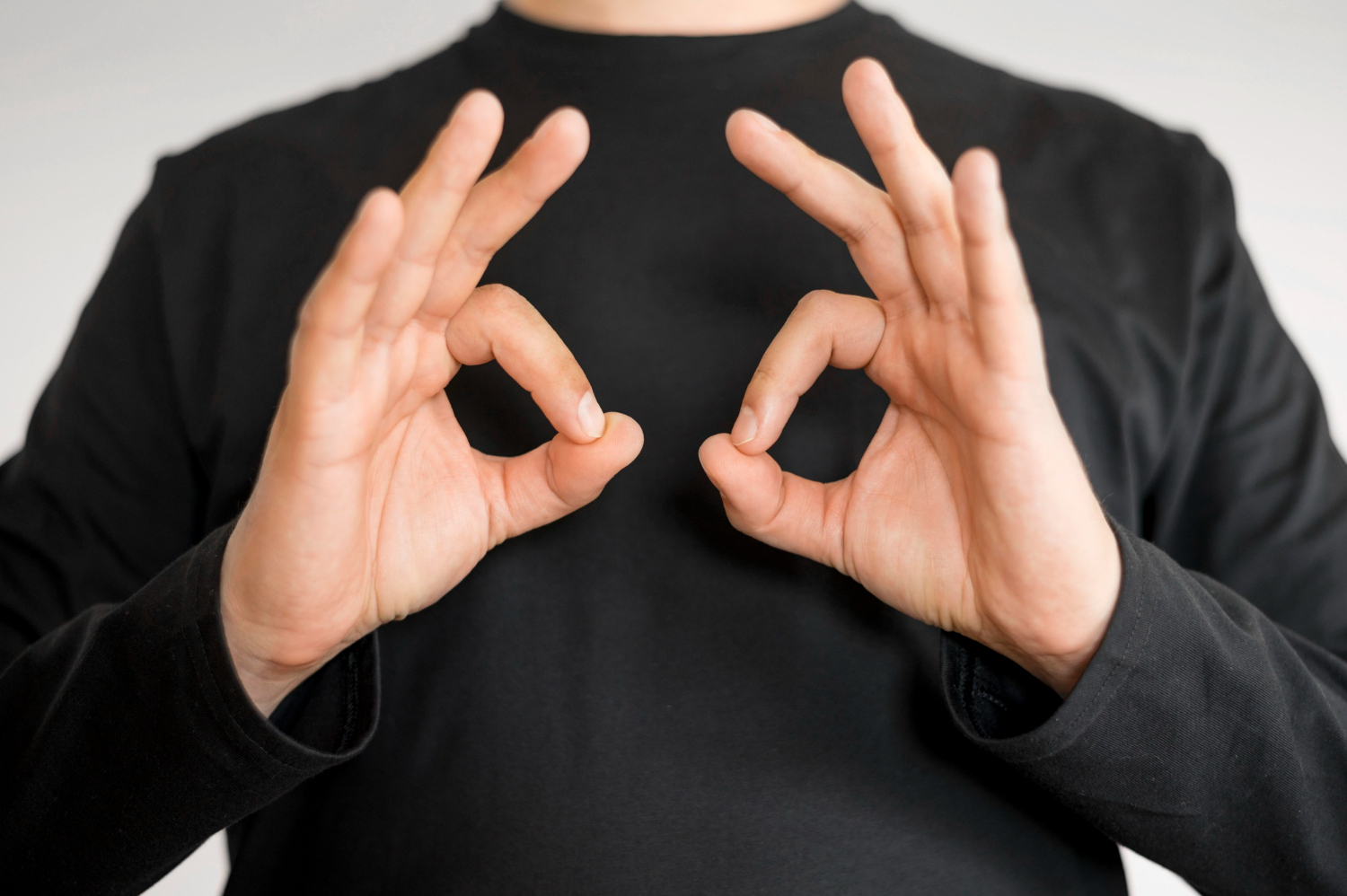
Step 3: Bring the Hands Toward the Chest.
Position the hands approximately in front of the chest.
This location is significant in traditional depictions because the gesture is associated with teaching and the turning of the Dharma.
Step 4: Form the Finger Connection.
In a commonly represented version, the thumb and index finger of each hand form circles.
The remaining fingers extend naturally.
The hands are positioned together so that the gesture forms a balanced, wheel-like arrangement.
Step 5: Keep the Hands Comfortable.
Do not force the fingers into a rigid position.
The gesture should be relaxed.
If your fingers or wrists become uncomfortable, release the position and rest your hands.
Step 6: Close or Soften Your Gaze.
You can close your eyes or maintain a soft downward gaze.
Choose whichever allows you to remain comfortable and attentive.
Step 7: Breathe Naturally.
Take slow, comfortable breaths.
There is no need to force deep breathing.
Simply observe the natural rhythm of inhalation and exhalation.
Step 8: Focus Your Attention.
Use the gesture as a reminder of a chosen theme.
Misalnya:
“May I continue learning with wisdom and compassion.”
You can silently reflect on knowledge, understanding, truth or compassion.
Dharmachakra Mudra Benefits.
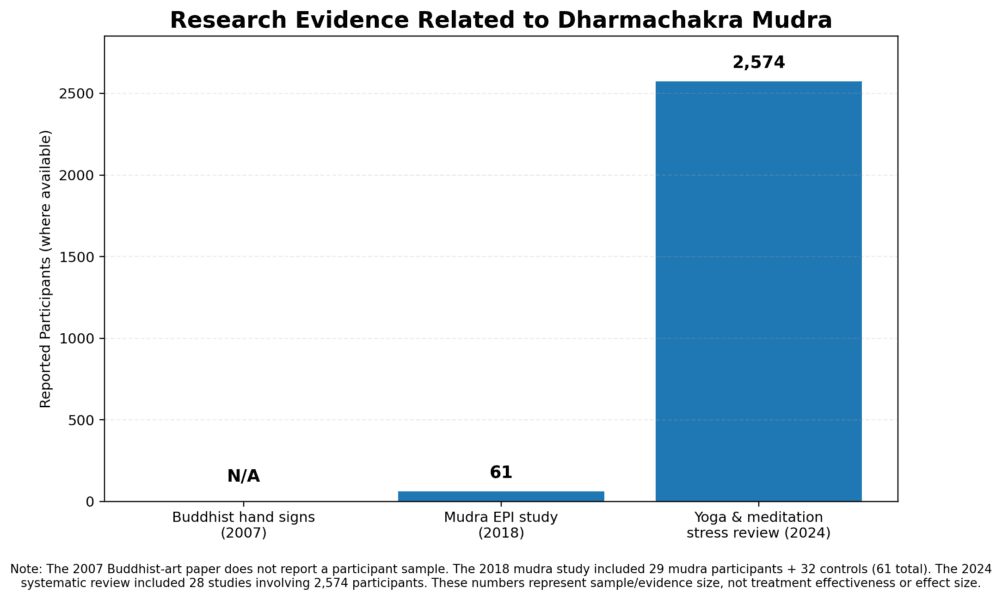
Many traditional yoga and meditation sources associate mudras with physical, energetic and spiritual benefits. However, claims about specific physiological effects should be interpreted carefully because evidence for individual mudras is limited compared with the broader research on meditation and mindfulness.
Potential practical benefits of practicing Dharmachakra Mudra as part of meditation include:
1. Encourages Mindful Attention.
Using a specific hand position gives the pikiran fisik point of reference.
Instead of allowing the hands to move unconsciously, the practitioner maintains awareness of their position.
This can complement mindfulness practice.
2. Supports Meditation.
Dharmachakra Mudra can be incorporated into seated meditation.(1)
The symbolic meaning of the gesture may help practitioners establish an intention before meditation begins.
3. Encourages Reflection.
Because the mudra is associated with teaching and wisdom, practitioners may use it while Merefleksikan pribadi experiences and lessons.
4. Provides a Sense of Ritual.
Repeating the same hand gesture before meditation can create a consistent routine.(2)
A familiar ritual may help some people transition from everyday activity into a quieter practice.
5. Promotes Mind-Body Awareness.
Holding the fingers in a particular arrangement encourages awareness of sensations in the hands, wrists and arms.
This can become part of a broader body-awareness practice.(3)
6. Can Complement Relaxation Practices.
When combined with comfortable breathing and meditation, the mudra may become part of a relaxing routine.
The relaxation should not be attributed solely to the hand position; the broader meditation practice, environment and breathing pattern can all contribute.
7. Encourages Contemplation of Wisdom.
The symbolic meaning of Dharmachakra Mudra can encourage practitioners to reflect on learning, understanding and compassionate action.
8. Can Support a Consistent Meditation Habit.
Because the gesture is easy to reproduce, it can become a recognizable cue for meditation.
Consistency is often more important than performing a mudra for a specific number of minutes.
Dharmachakra Mudra for Meditation.
Dharmachakra Mudra can be incorporated into a simple meditation practice.
Start by sitting comfortably.
Place the hands into the mudra and bring your attention to the breath.
Observe each inhalation and exhalation without trying to control it excessively.
After several breaths, choose a simple theme such as:
Wisdom.
Notice what the word means to you.
You might reflect on the difference between knowledge and understanding.
Alternatively, choose:
Compassion.
Consider how compassion can influence your interactions with yourself and other people.
If your mind wanders, gently return your attention to the breath and the sensation of the hands.
A meditation session does not need to be long to be meaningful.
Beginners can start with approximately 5–10 minutes and gradually increase the duration if comfortable.
Dharmachakra Mudra and Breathing.
Breathing is not something that needs to be forced while practicing Dharmachakra Mudra.
A simple mendekat is to breathe through the nose naturally if comfortable.
Allow the abdomen and rib cage to move naturally.
Try not to deliberately exaggerate every breath.
You can use the following pattern:
Inhale → notice the breath → exhale → relax → repeat.
If a particular breathing technique causes dizziness, discomfort or anxiety, return to normal breathing.
The purpose of the practice is awareness rather than forcing a particular physiological response.
Dharmachakra Mudra for Beginners.
Beginners often worry about whether they are forming the fingers perfectly.
This can distract from the purpose of meditation.
Instead, focus on three things:
- kenyamanan
- Awareness
- maksud
The fingers should be positioned comfortably rather than forcefully.
If the hands become tired, place them on your lap and continue the meditation.
You can also practice the gesture for a few minutes before gradually extending the duration.
How Long Should You Practice Dharmachakra Mudra?
There is no universally established duration specifically required for Dharmachakra Mudra.
A practical beginner routine could be:
5 minutes: orang yg baru mulai
10–15 minutes: Regular practitioners
20–30 minutes: Experienced meditation practitioners
These are practice suggestions rather than medically established requirements.
You can also use the mudra for shorter periods during reflection or prayer.
The quality of attention matters more than simply accumulating minutes.
Best Time to Practice Dharmachakra Mudra.
Dharmachakra Mudra can be practiced at various times.
pagi.
Morning meditation may provide a quiet beginning to the day.
sore.
A short session can provide a mindful pause between activities.
malam.
The practice can be used as part of a reflective evening routine.
There is no scientifically established “best” time for the mudra.
The most useful time is the one you can practice consistently.
Dharmachakra Mudra During Yoga.
Although Dharmachakra Mudra has strong Buddhist iconographic associations, it can also be incorporated into contemplative yoga sessions.
For example, you could practice it after gentle movements.
A simple sequence might include:
Gentle warm-up → seated movement → breathing → Dharmachakra Mudra → meditation
This allows the body to settle before the contemplative portion of the practice.
There is no need to combine the mudra with physically demanding yoga poses.
Dharmachakra Mudra and Spiritual Practice.
For people who approach yoga or meditation spiritually, Dharmachakra Mudra can represent the relationship between knowledge and practice.
Learning something intellectually is different from applying it in everyday life.
The symbolism of the Wheel of Dharma can therefore serve as a reminder to transform learning into action.
For example, someone might meditate on:
- Speaking thoughtfully
- Practicing compassion
- Developing patience
- Learning from mistakes
- Acting ethically
- Letting go of harmful habits
- Developing greater self-awareness
This makes the practice more than simply holding the fingers in a particular position.
Dharmachakra Mudra vs Other Mudras.
Dharmachakra Mudra is one of many traditional hand gestures found within Indian and Buddhist traditions.
Misalnya:
Gyan Mudra is commonly represented with the thumb and index finger touching and is frequently used during meditation.
Anjali Mudra involves bringing the palms together and is widely used as a gesture of respect or greeting.
Dhyana Mudra is commonly associated with meditation and involves placing the hands together in the lap.
prana mudra is another traditional hand gesture involving specific finger connections.
Each mudra has its own cultural, symbolic and traditional context.
It is therefore better to memahamkan mudras individually rather than assuming that all mudras produce identical effects.
Common Mistakes While Practicing Dharmachakra Mudra.
memaksa jari-jari.
The fingers should not be pushed into an uncomfortable position.
Raising the Shoulders.
Keep the shoulders relaxed.
menahan nafas.
Natural breathing is sufficient for beginners.
Sitting in Pain.
You do not need to sit cross-legged if that position causes discomfort.
Use a chair or cushion if necessary.
Focusing Only on Hand Position.
The mudra is a tool for awareness, not a test of finger flexibility.
Expecting Instant Results.
Meditation and contemplative practices generally require consistency.
Avoid expecting dramatic changes after one session.
Making Medical Claims.
Dharmachakra Mudra should not be presented as a treatment for medical diseases.
Its traditional spiritual significance and its potential role within a relaxation or meditation routine should be distinguished from medical treatment.
Who Can Practice Dharmachakra Mudra?
Most people can perform the hand gesture comfortably because it does not require strenuous physical activity.
However, people with significant:
- Finger pain
- Wrist pain
- Hand arthritis
- Operasi tangan baru-baru ini
- Nerve symptoms
- Severe joint stiffness
may need to modify the position.
You can place the hands comfortably in the lap if forming the traditional finger arrangement causes discomfort.
There is no reason to force the gesture.
tindakan pencegahan.
Dharmachakra Mudra is generally gentle, but several practical precautions are appropriate.
Do not force your fingers or wrists.
Stop if you develop pain, numbness or significant discomfort.
If you have a recent hand or wrist injury, ask your healthcare professional whether the position is appropriate.
People with medical or mental-health conditions should not use mudras as substitutes for prescribed treatment.
Meditation should also be approached gradually by individuals who find prolonged inward attention uncomfortable or distressing.
How to Make Dharmachakra Mudra More Meaningful?
Instead of simply holding the gesture mechanically, establish an intention.
Before beginning, ask yourself:
What am I trying to understand?
It could be:
- A personal habit
- A difficult experience
- A relationship
- A decision
- An emotional reaction
- A lesson from the past
Spend several minutes observing your thoughts without immediately judging them.
The goal is not necessarily to find an answer during every meditation session.
Sometimes the value comes from creating space for reflection.
A 10-Minute Dharmachakra Mudra Practice.
Try this simple routine.
Minute 1: Settle.
duduk dengan nyaman.
Relax your shoulders and jaw.
Minutes 2–3: Observe the Breath.
Notice your natural breathing.
Menit 4–6: Bentuk mudra.
Bring the hands into Dharmachakra Mudra.
Notice the contact between the fingers.
Minutes 7–8: Reflect.
Choose one theme such as wisdom, compassion or understanding.
Allow thoughts to arise naturally.
Minute 9: Return to the Breath.
Let go of deliberate reflection and simply observe breathing.
Minute 10: Finish Slowly.
Release the hands.
Open your eyes if they were closed.
Take a moment before returning to your normal activities.
pertanyaan yang sering diajukan.
1. What does Dharmachakra Mudra mean?
Dharmachakra Mudra represents the Wheel of Dharma and is strongly associated with teaching, wisdom and the transmission of Buddhist teachings.
2. What are the benefits of Dharmachakra Mudra?
Traditionally, the gesture has spiritual and symbolic significance. When used during meditation, it may serve as a physical focus for mindfulness, reflection and contemplation. Specific medical benefits should not be attributed to the mudra without appropriate evidence.
3. How do you perform Dharmachakra Mudra?
Sit comfortably, bring the hands toward the chest, form the traditional finger arrangement with the thumbs and index fingers, and maintain the position without forcing the hands. Exact representations can vary between traditions.
4. Can beginners practice Dharmachakra Mudra?
Yes. Beginners can practice it for a few minutes while focusing on comfortable breathing and awareness.
5. How long should I hold Dharmachakra Mudra?
There is no universally established duration. Starting with 5–10 minutes during meditation is a practical option.
6. Can Dharmachakra Mudra be practiced while standing?
It can be adapted, although it is commonly associated with seated contemplative practice. Comfort and stability should be prioritized.
7. Can I practice Dharmachakra Mudra every day?
If the position is comfortable, it can be incorporated into a regular meditation routine.
8. Is Dharmachakra Mudra a yoga mudra?
Mudras are used across several Indian and South Asian contemplative traditions. Dharmachakra Mudra is particularly prominent in Buddhist iconography and should be understood within its cultural and historical context.
9. Does Dharmachakra Mudra reduce stress?
The hand gesture itself has not been established as a standalone treatment for stress. However, using it as part of a calming meditation routine may support relaxation for some people.
10. Can Dharmachakra Mudra cure diseases?
No. It should not be promoted as a cure or substitute for evidence-based medical treatment.
11. Can I practice Dharmachakra Mudra with hand arthritis?
You may need to modify the gesture if your fingers or wrists are painful or stiff. Never force a painful position, and seek professional guidance when necessary.
Takeaway akhir.
Dharmachakra Mudra is a meaningful traditional hand gesture associated with the Wheel of Dharma, teaching, wisdom and spiritual understanding. Its significance extends beyond the physical arrangement of the fingers, particularly within Buddhist philosophy and iconography.
For modern practitioners, the gesture can be incorporated into meditation, mindfulness and personal reflection. It may serve as a simple physical reminder to focus on learning, compassion, awareness and wise action.
The practice does not need to be complicated. Sit comfortably, form the gesture without forcing your fingers, breathe naturally and choose a meaningful intention.
Most importantly, approach Dharmachakra Mudra with respect for its cultural and spiritual origins. Avoid exaggerated claims about healing or medical effects, and remember that a traditional contemplative practice should complement—not replace—appropriate healthcare when medical treatment is needed.
+3 Sumber
FreaktoFit memiliki pedoman pengadaan yang ketat dan bergantung pada studi peer-review, lembaga penelitian pendidikan, dan organisasi medis. Kami menghindari penggunaan referensi tersier. Anda dapat mempelajari lebih lanjut tentang bagaimana kami memastikan konten kami akurat dan terkini dengan membaca Kebijakan Editorial.
- Pengaruh satu sesi yoga dan meditasi pada reaktivitas stres: tinjauan sistematis; https://pubmed.ncbi.nlm.nih.gov/37822096/
- Interpretation of hand signs in Buddhist art; https://pubmed.ncbi.nlm.nih.gov/17606078/
- Klasifikasi gambar elektrofotonik praktik yoga mudra melalui jaringan saraf; https://pmc.ncbi.nlm.nih.gov/articles/PMC5934951/